
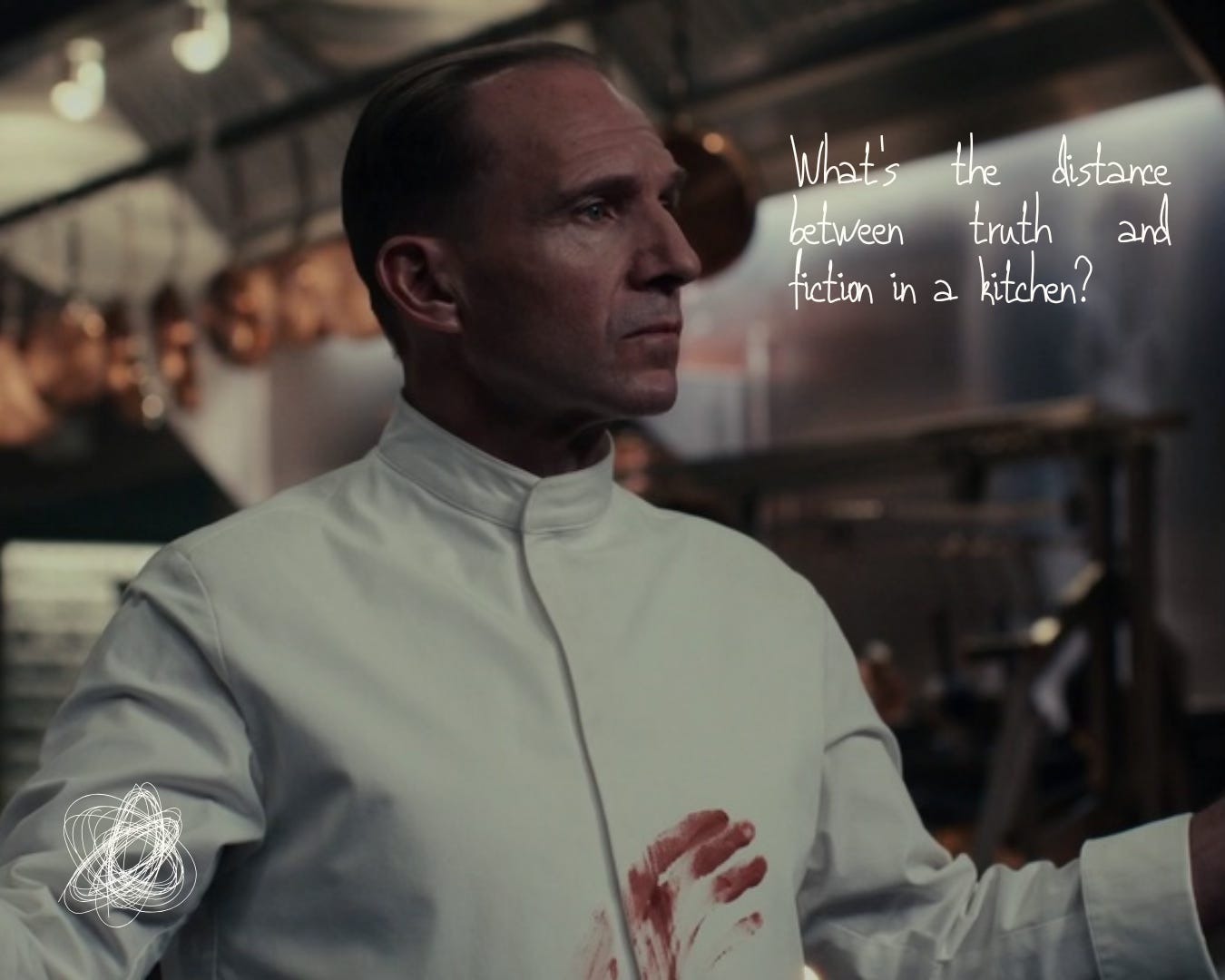
One of the most honest genres on screen right now is set in kitchens.
The Bear is about past trauma. The Menu is about horror. Burnt is about abuse. Boiling Point is about pressure. Breakout fine dining projects of the last five years, at their core, have been about power, hierarchy, and what we are willing to let happen in rooms we don’t see for the sake of food and experiences.
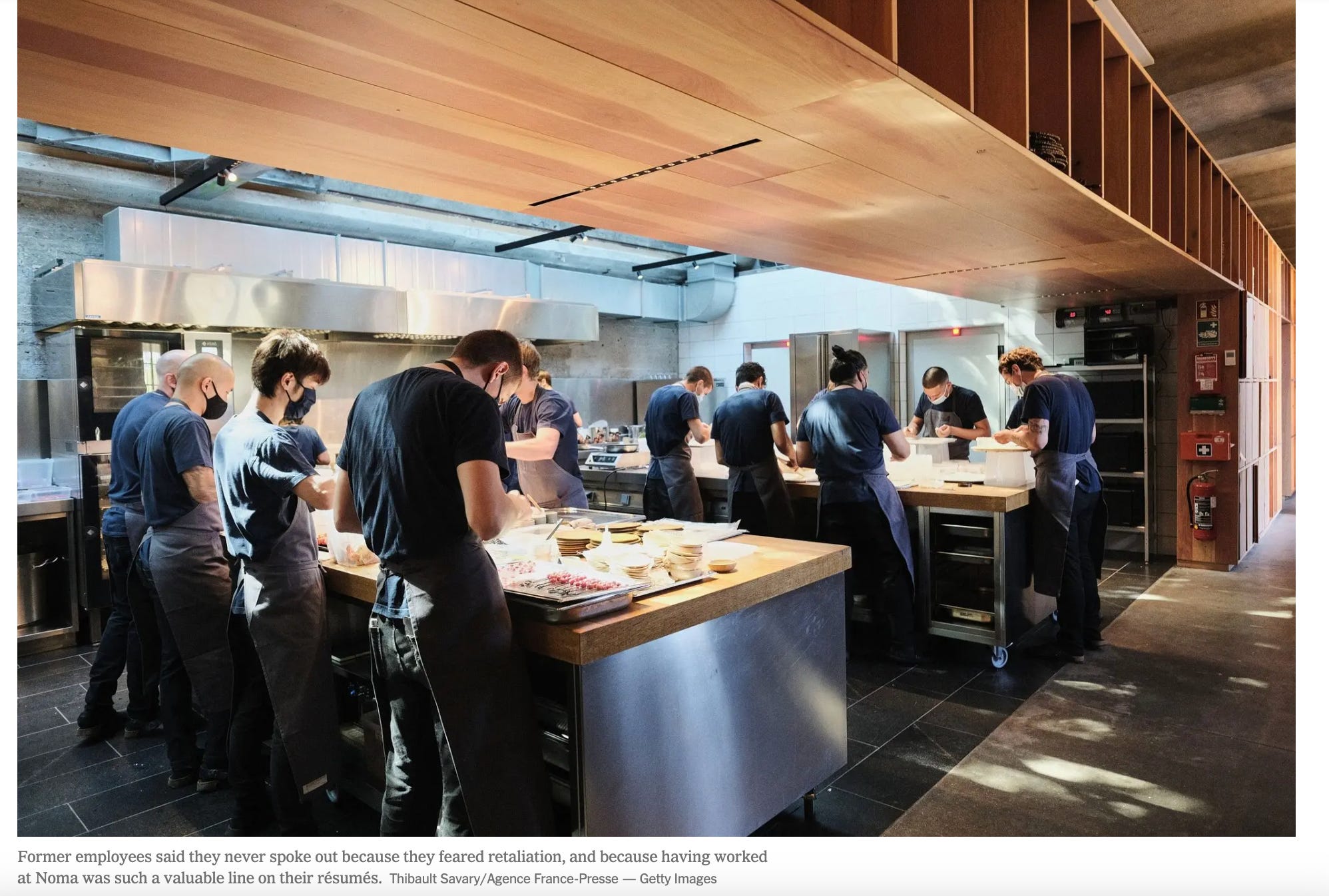
I was reminded of this reading Caper, a new editorial about the ins and outs of the food industry. They broke down The New York Times investigation into René Redzepi’s top rated kitchen at Noma: years of physical abuse, public humiliations, and a staff culture that treated cruelty as craft. The reporting was specific, sourced, and damning. What struck me wasn’t just the reporting itself, but how closely aligned it was with what we’re seeing on film and TV screens.
The alignment isn't a coincidence. Audiences aren't discovering these stories, we’re catching up to them.
IMDb lists 55 upcoming films, scripted series, and unscripted series in the food-and-dining horror space. Food-themed horror, cannibal stories, butcher-shop thrillers, restaurant-set dark comedies. The professional culinary world, covering chefs, restaurants, critics, kitchens, and fine dining gone wrong, accounts for 15 to 25 notable projects, with roots dating back to the 1970s. And still we consume.
The question isn’t whether audiences want these stories. They’ve told us, loudly, that they want to see them. The question is who gets to tell them, and how honestly.
The Bear works because it’s actually a documentary in disguise. When chefs keep saying the show “gets it right,” that isn’t just a compliment to the writers. It’s an indictment of the industry. The scenes viewers find hardest to watch, a sous-chef punched for being late, a cook humiliated for a cooler-door mistake, a young chef told he’s worthless until he believes it, are the scenes working chefs recognize from their own resumes.
The New York Times investigation into Noma is the subtext. Former employees described René Redzepi physically assaulting a sous-chef and orchestrating public humiliations over things as small as a music choice. What The Bear dramatizes, one of the most celebrated restaurants in the world allegedly lived.
Audiences aren’t watching despite the discomfort. They’re watching because of it. The kitchen has become the last culturally permitted stage for ritualized cruelty among affluent people, and we’ve collectively decided we want to see it. The cultural appetite is real. The responsibility that comes with it is where most of the industry is failing.
The first is told at distance. The Bear, The Menu, Burnt. Mid-budget or higher, star-dependent, platform-driven. Christopher Storer’s FX deal for The Bear is reportedly $5M a year. Jeremy Allen White reportedly earns $750K per episode. The Menu made $79.6M worldwide on a $30M budget, becoming Searchlight’s highest-grossing North American release since The Shape of Water. These are serious films made with serious capital, and they’ve done something important: they’ve proven audiences will sit with the subject. Without them, the rest of this conversation doesn’t happen.
But they also tell the story from outside. The abuser is a genius. The kitchen is a cathedral. The violence is aestheticized. The camera loves the plating as much as it fears the chef. The workers at the bottom of the hierarchy, the ones the reporting is actually about, are often the ones with the fewest lines.
The second version is the one told with proximity. Piggy (Cerdita) on a $2.6M budget, festival-anchored, told from inside the body of the bullied teenager rather than from above her. The Cook, the Thief, His Wife & Her Lover on $8.5M worldwide, a film that never once lets the audience forget who is trapped in whose kitchen. These films don’t aestheticize power. They sit with the people subjected to it.
This is where independent producers live, and it’s not a coincidence. The distance required to make the first version is the distance that independent producers don’t have. That’s the thing the industry keeps calling a limitation, and it’s actually the thing that makes the work matter.
If we’re advising a creator or producer right now, here’s where we’d look.
The kitchens outside the frame. Almost every film on the list above sit in a similar kitchen dynamic. And the look and personality of the aggressor in the kitchen is typically the same. The actual kitchen economy in America and the UK runs on immigrant labor, diaspora cuisine, and line cooks who’ve never been near a Michelin tasting menu, The Bear alludes to this its latest seasons. Boiling Point gestured at the intensity of that world but stayed inside the British fine-dining frame. Nobody has claimed the immigrant kitchen horror lane yet or the delivery drivers in the midst of London streets. We hope somebody will.
Front of house. The server class, tipping culture, the specific economics of hospitality abuse. The dining room is where the class drama the industry is built on actually plays out in front of the audience. It’s also cheaper to shoot than a working kitchen.
The critic and media ecosystem. The chef-auteur myth doesn’t build itself. It’s built by food media, star systems, and the institutional power that decides which abusive genius gets called visionary and which gets called a problem. There’s a whole film in who gets protected and who gets exposed, and why.
What happens after. The post-Redzepi accountability story. The kitchen that reopens. The sous-chef who testifies. The owner who rebrands. The staff who stayed. This is where the genre goes next, because this is where the culture is actually going.
None of these require a $20M budget. All of them require a creative team willing to tell the story from the perspective the bigger budgets can't afford to take.

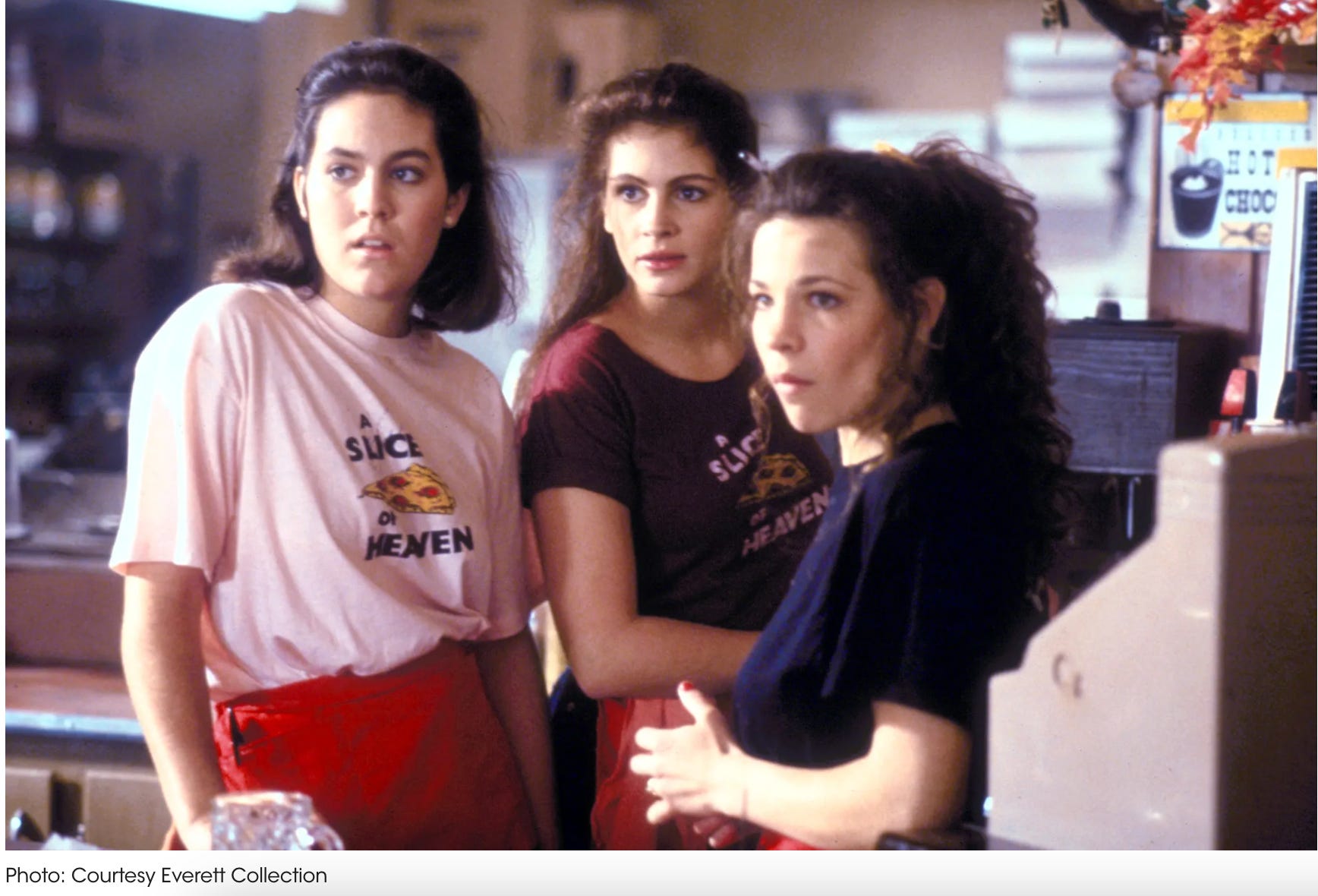
Before the horror wave, there was the hangout kitchen. Mystic Pizza (1988), three teenage sisters waitressing at a family-owned pizzeria in working-class Connecticut. $6M budget, $12.8M worldwide. Diner (1982), twenty-something friends in 1950s Baltimore using the local diner as their emotional anchor. $5M budget, $14.1M worldwide. Fast Times at Ridgemont High (1982), a teen pizza-restaurant subplot that became a template. $4.5M budget, $27M worldwide.
These films built the mythology that the new wave is dismantling. They established tone, rhythm, and a sense of belonging and community, and they matter as reference points. But they worked by ignoring what the industry actually runs on. Exploitative labor, entrenched hierarchies, racism, unequal power. They functioned as aspirational myths. They should be held close as craft references, and named honestly as what they were.
As viewers, we’re not just observing these worlds we’re participating in them with parasocial attachment. We consume the food, the stories, the aesthetics, without confronting the real cost behind them.
The top of the industry has spent a decade proving that audiences will show up for stories about what happens behind the food we eat. That’s real, and it matters. But the version of the genre that’s been told so far is the version told from outside, by people with the distance and capital to aestheticize the real stories. That version is close to finished.
The next version, the one told from inside the kitchens that haven’t been filmed, from the perspective of the workers whose names aren’t in the credits, from the accountability story the industry has been slow to reckon with, is the one that hasn’t been made yet. It requires less money. It requires more nerve. And it’s the one independent creators and producers are structurally best positioned to tell.
If you’re a storyteller or producer building within the food space about real stories or people, we built Callo for you. Join here to get started, set up your studio, and get support.
Comments
Nothing yet. Say the first thing.
Sign in to join the conversation.