
Most scripts that actually get bought right now don’t “start” in the traditional sense. They drop you into an already active social system, built for network effects. There’s no clean introduction, no backstory framing, no setup explaining who people are or what the world is. Instead, you arrive mid-moment: a conversation already carrying tension, a relationship already out of balance, a space already loaded with unspoken rules.
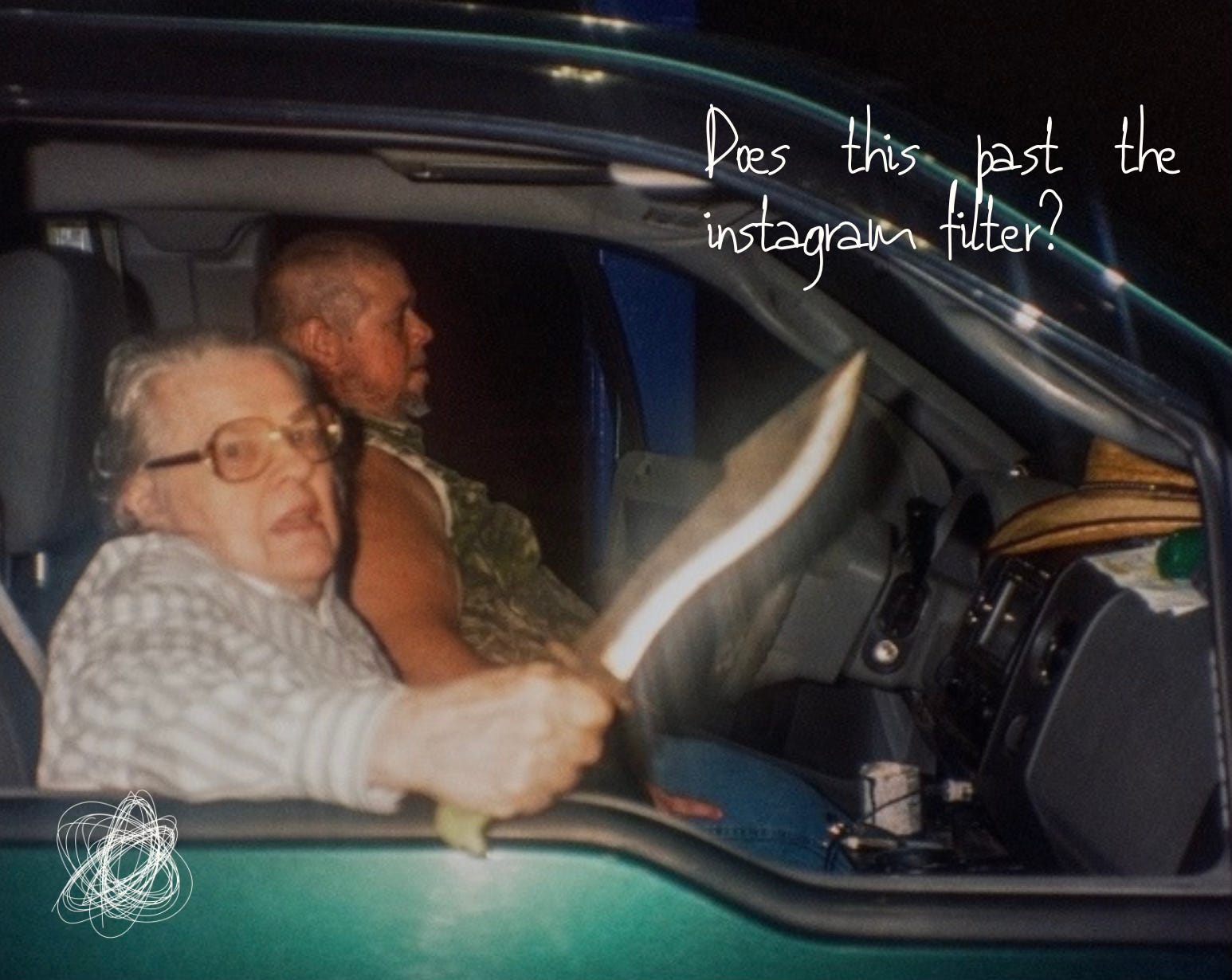
We’ve spent some time looking at the buying patterns of MUBI, Neon, A24 and over the next few weeks will break down the structural and stylistic overlap for festival markets/premieres.
We start with our MUBI observation.
The films that survive the first filter.
The Python Hunt is a 2025 American documentary directed and produced by Xander Robin that follows hunters competing in an invasive python removal contest in the Everglades over ten nights. If that’s not a hot sticky intense situation, we don’t know what is. Produced by Lance Oppenheim and backed by Artists Equity, the SXSW film has a limited theatrical showings in select cinemas, including pop‑up and microcinema‑style runs in Vidiots’ (MUBI Microcinema in California). In parallel, Oscilloscope Laboratories handles the traditional limited theatrical release in the U.S. starting May 8, 2026, as MUBI bundles that with its platform subscription‑ticket model as current “film of the week”, living simultaneously in both physical theaters and MUBI’s streaming slate.
So what’s with this specific film? It could most definitely also be serving the Instagram era (“Florida‑man” absurdity, swamp, meme‑ready characters). The very specific subcultures that read beautifully as stills or reels; but, the film is quintessential MUBI. Period.
Why MUBI sees The Python Hunt as “their” film.
The film gives off an enormous duality that is almost‑fictional spectacle while being earnest in it’s environmental message. MUBI sees it as a signature “cinephile‑accessible” title—exactly the kind of double‑play that takes on the Netflix/Instagram‑style platforms of the world. It works because:
It’s a first‑feature doc from a distinctive director (Xander Robin) with prior indie‑horror credibility (Are We Not Cats), which fits the “director‑driven” curation MUBI loves.
It’s both entertaining and idea‑rich—“Florida‑man” meets ecological crisis.
The audience isn’t guided into the story—they’re inserted into a functioning emotional environment and forced to orient themselves through behavior, not exposition. Within the first few pages, the script proves it valued micro-social precision rather than plot. Power dynamics are inferred instantly through interruption patterns, shadows, hesitation, proximity, and tone. A small misread, awkward silence, or emotional visual mismatch. This is in the same lane that follows other MUBI pick ups:
Sound of Falling — picked up out of Cannes 2025 for North America plus several international territories.
Die, My Love — acquired at Cannes 2025 for multiple territories, with reporting calling it one of MUBI’s biggest buys of last year.
The History of Sound — acquired at Cannes 2025 and later dated for MUBI release.
The Secret Agent — MUBI had distribution rights tied to its Cannes 2025 run and later streaming rollout.
The common denominator: The story starts with pressure.
In 2025–2026, MUBI’s acquisition strategy has become defined less by volume and more by selectivity shaped almost entirely by festival validation. Only a small fraction of films secure distribution, as MUBI emerges not as a bulk buyer but as a precision curator.
That curation look less like “Message-forward dramas that feel like this film is about X issue” and more like hunting low-friction emotional extremes with clear identity hooks that are narratively simple and coupled with an emotional condition and psychological instability amplified.
If you’re writing stories inside this type of context setting than the question is “what kind of film does MUBI usually take?”
Die My Love → maternal collapse as identity erasure
The Substance → self-replacement horror
Together → relational fusion/body horror hybrid
What the data reveals is a consistent acquisition MUBI logic that looks a bit like:
The Korean sci-fi thriller, HOPE was aquired ahead of the film’s world‑competition premiere at Cannes 2026, and after a planned theatrical window, the film will move onto MUBI’s streaming platform. While MUBI runs the film in parts of Europe and Latin America, in parallel NEON will focus on the U.S. and Anglosphere territories.
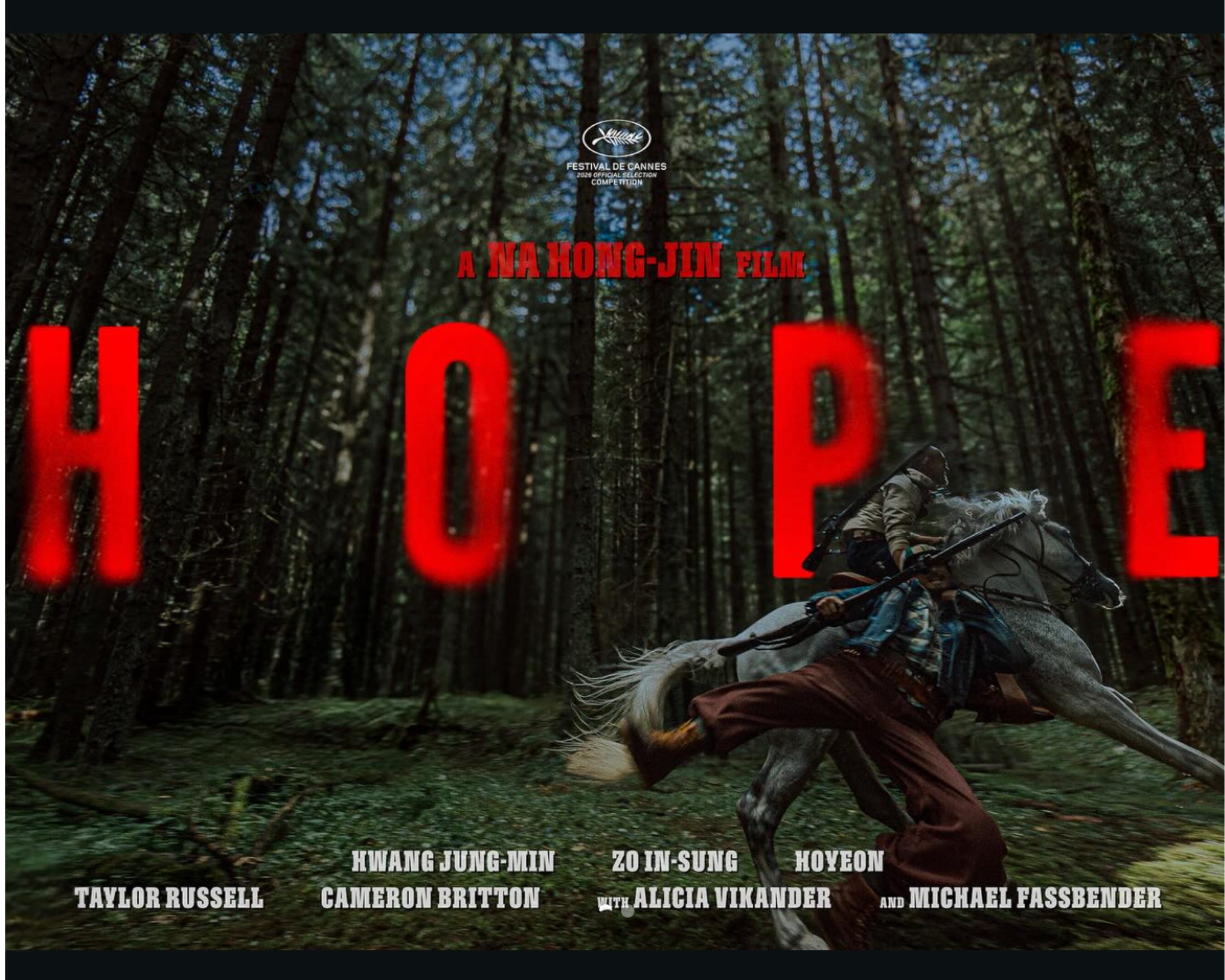
Plot setup.
The film is set in Hope Harbor, a fictional remote village near the DMZ, where a report of a tiger roaming the hills sparks chaos. It sounds like an Edgar Wright plot, but shot by Parasite cinematographer Hong Kyung-pyo. It reunites real-life couple Alicia Vikander and Michael Fassbender on screen for the first time in ten years. The story expands into a stranger, more threatening mystery that forces the whole town into a fight for survival confrontation with the unknown. That local emergency is the trigger for the larger crisis. The opening leans into verbal circuitry with context of who are we supposed to trust? Making the first act feel like a social experiment being filmed.
The tone quickly becomes uneasy, morally ambiguous, and claustrophobic rather than jump‑scare‑driven story. Hope is written and directed by Na Hong‑jin, the Korean auteur known for The Wailing and is produced by Forged Films (Na’s own company). It’s described as a deeper mystery with sci-fi and thriller elements, suggesting the danger is far more unsettling than wildlife attacks.
But, audiences have seen creepy sci‑fi dread‑adjacent animal paranoia. Structurally, you can think of the film in five beats as:
Isolated village, simmering tension – the tiger‑like threat emerges; the locale and politics feel tightly contained and watchful.
A“hero” arrives, but is morally ambiguous – Hope, an outsider brought in as a “hero,” flips the viewer’s expectations and keeps the tone morally slippery.
Paranoia and surveillance escalate – the village turns on itself, amplifying psychological dread more than overt action.
Genre‑wise payoff - but not just horror, so it feels earned, not exploitative.
MUBI positioning - “Korean‑film‑nerd” moments that goes deliberately beyond pure Instagram bait. But IG worthy.
MUBI prioritizes films that compress a single dominant emotional condition— instability, grief, obsession, surveillance, relational collapse—into a formally controlled cinematic structure. This is kind of storytelling is what is squarely in the indie filmmakers wheelhouse. The entry point is not premise or message, but behavior under a microscope: how people interact when stability breaks down. Again, challenging Netflix/Instagram platforms.
Meme friendly.
This is also why films like Atropia work, a character is literally placed inside a system where roleplay replaces identity. Atropia performed as a festival validation asset that MUBI could program into its “emotional instability institutional satire” lane as satire of military simulation culture making it a meme friendly.
But what’s not being bought are 2015 era traditional indies.
What’s actually happening across MUBI’s ecosystem (and the wider A24 / NEON orbit) is less a “taste shift” and more a cultural reprogramming of what cinema is supposed to do emotionally. The protagonist isn’t a stable character with an arc they’re a signal of emotional overflow showing up in four dominant archetypes that are quietly structuring what gets acquired and circulated.
Archetype 1: “Emotional Leakage Character” The non-obvious truth (is what’s new)
Films are no longer trending because they are liked.
They are trending because they are emotionally unresolved.
The protagonist cannot contain their internal state in social space and continuously destabilizes rooms. That’s the distinction. Why it works — Cinema now values psychological volatility over plot
Not:
popular
viral
algorithmically boosted
But:
unfinished emotional processing
discomfort that lingers
identity instability on screen
Archetype 2: “Intimacy Becomes Horror” MUBI programs in moods, not categories
Right now those moods are:
emotional breakdown
relational instability
body/identity disruption
institutional satire
memory fragmentation
Core idea: Relationships stop being emotional and become physical systems of entrapment.
Examples:
Together
The Substance (self-relationship version)
Die My Love
Why it works:
Modern intimacy is experienced as pressure, not romance
Archetype 3: “Institution as Absurd Theater”
Core idea: Workplaces, military systems, or bureaucracies behave like surreal performance spaces.
Examples:
Atropia
parts of The Mastermind tone-set
Behavior is shaped by external system pressure
Structure:
people acting roles they don’t believe in
systems continuing despite emotional collapse
Why it works:
Everyone feels slightly fake inside systems now
Archetype 4: Memory-Surveillance Cinema
Core idea: identity is reconstructed from recorded fragments (digital + psychological)
Features:
camcorder aesthetics
archival structure
social media reconstruction of self
past selves “watching” present selves
nonlinear emotional causality
Films:
Aftersun
Sound of Falling
internet-native experimental films
Why it’s emerging: Because lived experience is now permanently recorded and reinterpreted.
What’s out, but in.
If you strip the industry layer away, what MUBI, A24 and NEON are really doing is setting a new baseline for what “a film” has to feel like in order to survive in the indie ecosystem. Message-first dramas, clean arcs, clever dialogue scenes, and “quirky realism” no longer read as distinctive — they read as familiar, even dated. What now signals viability is not just concept or theme, but emotion that can be turned into a duality that includes a meme for IG.
Thanks for reading Move by Callo! Subscribe for free to receive new posts and support our work. If you like what you’ve read, please share.
Comments
Nothing yet. Say the first thing.
Sign in to join the conversation.