
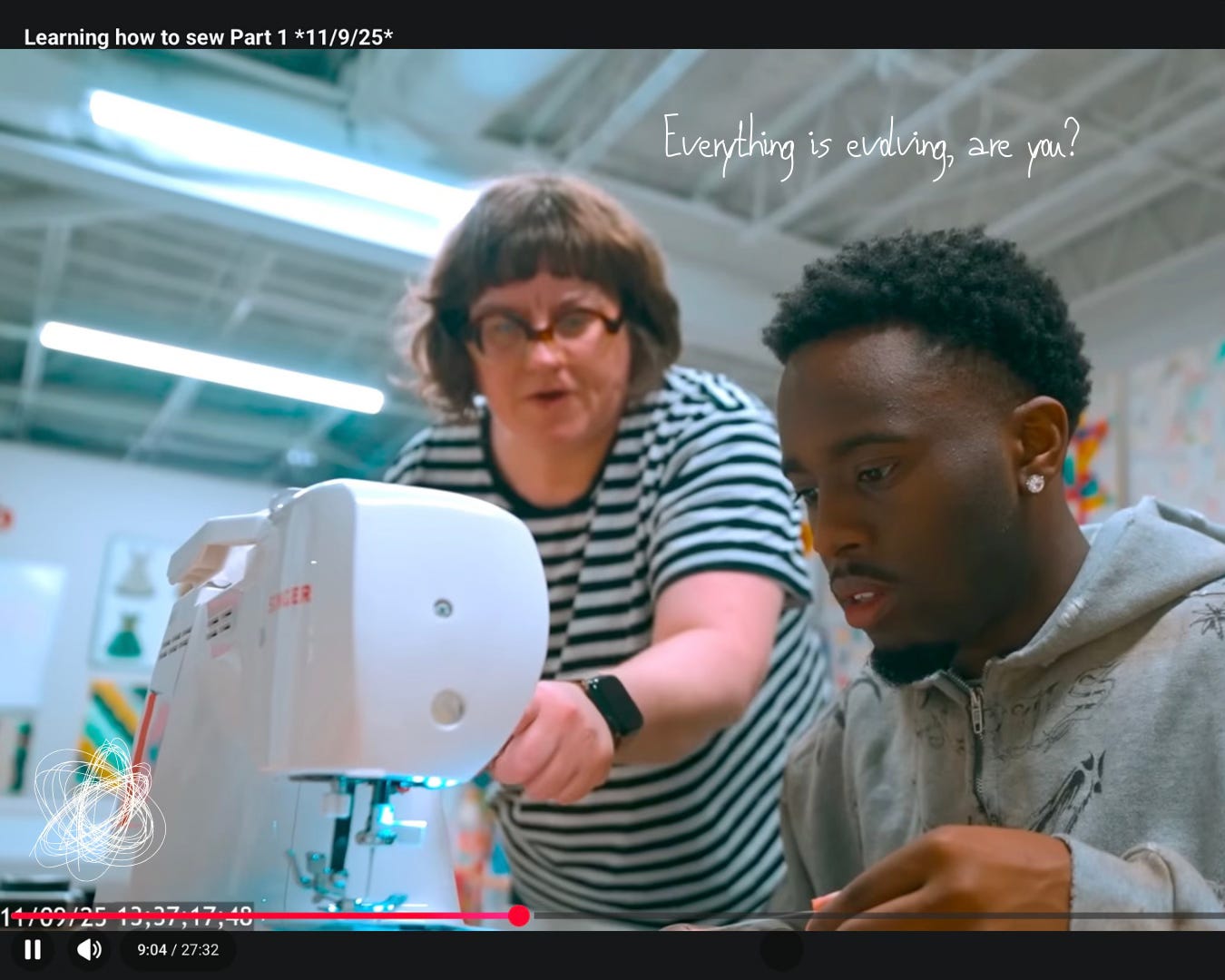
This week we're tracking the shift happening across entertainment, starting with Matt Damon and Ben Affleck on the Joe Rogan Experience.
They broke silence walked through how streaming changed the game—theaters demand your full attention, but at home "the lights are on, other s*** is going on, the kids are running around, the dog is running around."
Netflix's response? Notes asking for big action in the first five minutes and plot points repeated "three or four times" to compensate for viewers on their phones.
They also tackle the industry’s issue of fair wages: through their company Artists Equity, and how they pushed Netflix to provide performance-based bonuses for all 1,200 crew members on their latest film, The Rip—a departure from Netflix's upfront-only model. Affleck said there is an evolution happening "This business is changing, and in order to provide the decent middle class wages for people in this craft it's provided for decades in this country, you have to have compensation that works for people."
By the way, those notes—The Rip was the highest first week opener for Netflix ever, reaching 41.6 million views in its first three days.
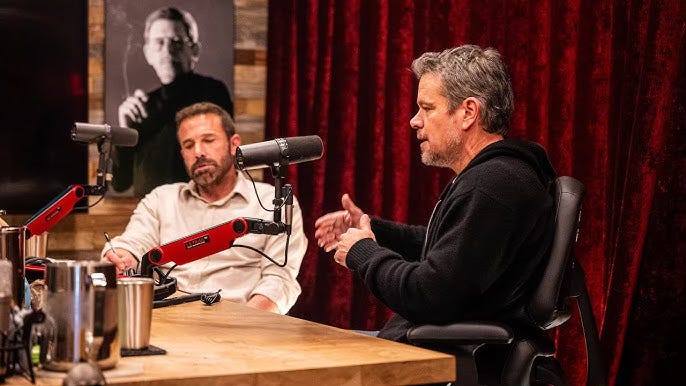
Known for his high-energy “Just Chatting” streams and massive gaming personality, Kai Cenat has built a one-man media empire. By pairing viral celebrity guest spots with record-breaking engagement, he’s become a permanent fixture at the top of every “must-sign” list for talent agents. Now, at 24, Cenat is seeking a new center of gravity: fashion.
Cenat is currently taking a hiatus from his position as Twitch’s most-followed creator. He leaves behind staggering numbers—20 million followers, 75K concurrent viewers per stream, and a record-shattering 1 million concurrents during Mafiathon 3. His goal? To build his fashion brand, Vivek.
This isn’t just a side project; it’s a masterclass in modern audience building. Rather than a “surprise drop,” Cenat is documenting the entire process through 20-minute episodes and personal journals. By sharing the milestones and the setbacks in real-time, he ensures his audience is emotionally invested long before the first product ever ships.

In an era where AI-generated content and “efficiency” are the norms, Cenat is taking the opposite path. He is prioritizing the “craft,” bringing in expert guests to teach both him and his audience the technicalities of design.
His reach is undeniable. Cenat dominates the 18–24 male demographic, outpacing traditional media brands not just in the U.S., but across the Philippines, Germany, Canada, and the UK. While the typical trajectory for a creator is Media Personality → Actor, Cenat is proving that fashion and film can grow in parallel. He isn’t just building a brand; he’s evolving the creator archetype.
“I feel like sometimes, people need to self-reflect and take a step back... I believe that there is more to the world that is much greater than myself. The energy and passion to want to do more and create is within me. That’s why I quit. I quit overthinking. I quit staying in my head about the goals I have—wondering if I pursue them, whether they are going to work or not. I want to push limits to see what I can truly create in life.”
Cenat isn’t just “taking a break”; he is intentionally deconstructing his identity as a “streamer” to rebuild himself as a “creator.” Today, you won’t find him behind a desk in a gaming chair. Instead, you’ll find him in places like Italy, hunched over a sewing machine, learning the technicalities of the craft by hand and treating his future with the seriousness it deserves.
Will Disney CEO Bob Iger step down? When will Iger step down? Who will be his successor?
Kalshi—the CFTC-regulated prediction market that’s “financializing everything”—is pushing aggressively into Hollywood predictions, from Netflix rankings to Oscar winners. Kalshi CEO Tarek Mansour is betting on entertainment becoming a tradable asset class creating "any difference in opinion" worth monetizing. The platform works like a stock exchange: buy “Yes” or “No” contracts (priced in pennies on the dollar) on future events, with prices fluctuating based on crowd wisdom. Except the “crowd” increasingly includes insiders who can influence the outcomes.
Disney’s board is expected to name Iger’s successor early this year.
The race is down to two front-runners on the Kalshi platform: Josh D’Amaro (Parks Chairman) and Dana Walden (Entertainment Co-Chair). D’Amaro is emerging as the leading contender, while Variety described Walden as a “spiritual successor” to Iger.
The quirky twist? Industry insiders are predicting they might become co-CEOs—a-la-Netflix-style power-sharing arrangement that could either prevent another new Bob (Chapek) moment leading the old Bob to return in the middle of his retirement to havoc and dismay including firing and rehiring his friend Jimmy Kimmel, while making a deal with Open AI that gives it’s 800 million users access to 200 Disney characters (including props and costumes) for “expressive user-generated content” on Sora and ChatGPT—but nowhere in the carefully worded press release mentions compensating the original creators who built those characters.
Reportedly, Iger is curious about the co-CEO concept and called Netflix’s Ted Sarandos to chat about it.
But if Kalshi traders are right that “content is king for Disney,” then Dana—not Josh—should be the bet.
Let’s see.
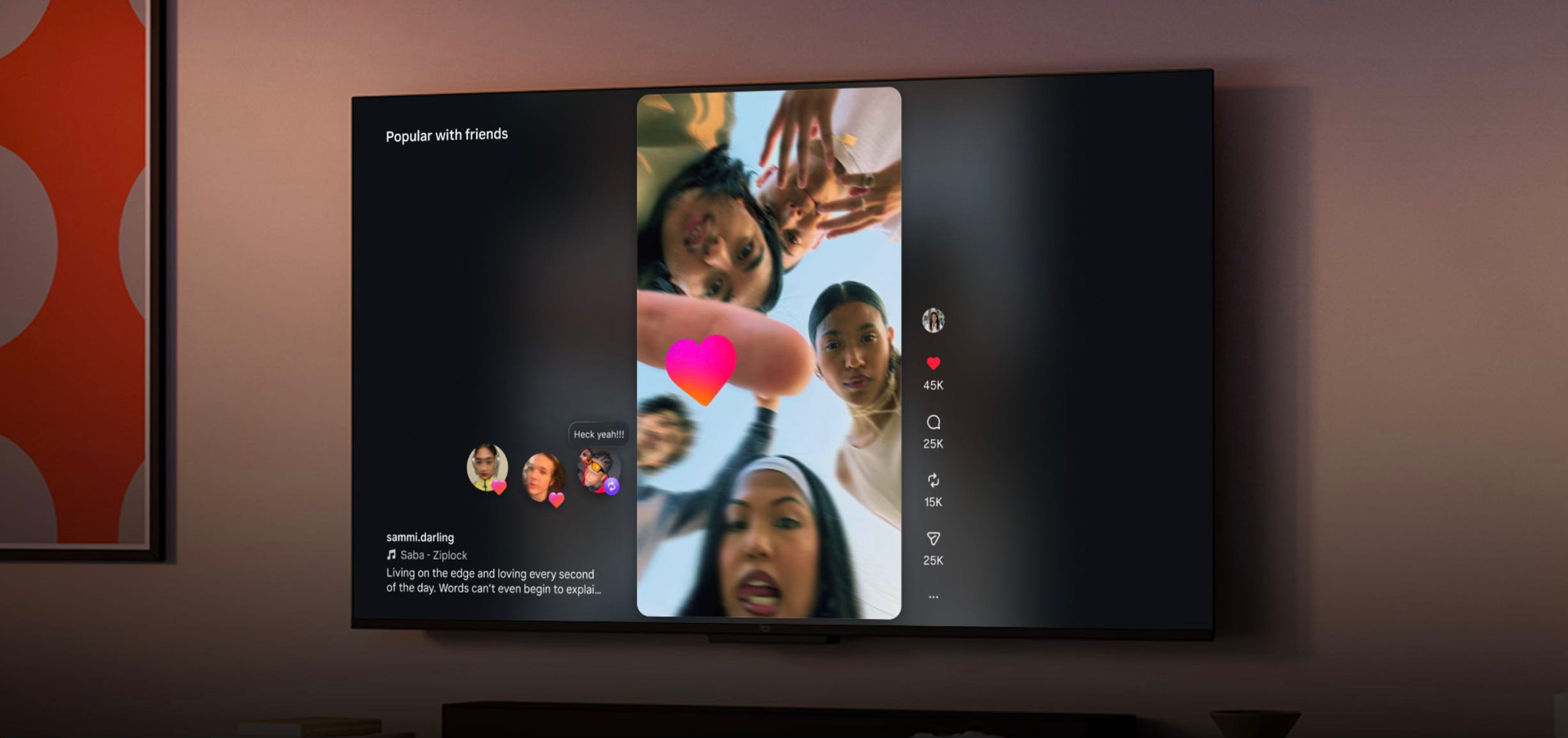
Meta just launched “Instagram for TV”—a Fire TV app that brings Reels to your living room. It’s like TikTok for big screens, with personalized channels (sports, music, travel) and autoplay designed to keep you scrolling on the couch and feeling like Netflix’s interface.
What changed: Original Instagram TV (2018-2022) supported 60-minute vertical videos. Meta killed it to prioritize 3-minute Reels. Now they’re reviving the name confusingly, for a TV app that has nothing to do with long-form content.
The play: YouTube Shorts views doubled year-over-year on connected TVs. Meta wants a piece. The TV app has added watch parties, multi-account support, and algorithmic channels treating the TV like a shared device.
For filmmakers: This is vertical short-form (under 3 minutes, 9:16 format) taking over the biggest screen in the house. If you're creating for Instagram, your Reels now have a living room audience, the bad news it’s vertical with 60-70% of screen wasted, so the question is how does it affect the types of stories you tell?
The TV app pulls from existing Reels: The app aggregates Reels that already exist on Instagram and organizes them into channels based on topics, trends, and your following/interests.
And, if you like this: Substack, also wants a piece of the living room:
Substack is the home for the best longform—work creators put real care into and subscribers choose to spend time with. Now these thought-provoking videos and livestreams have a natural home on the TV, where subscribers can settle in for the extended viewing that great video deserves.
But, stay tuned for our next article on distribution, many thoughts…
Find us in New York and Los Angeles over the next few weeks. Got projects you are interested in building, need support, guidance, community IRL?
Callo Sessions in New York. We’re hosting project sessions for members in NYC, meet us!
Starting Monday, February 5th
Email to RSVP here:
hello@wearecallo.com
FilmStack’s Los Angeles in-person meetup.
Sunday, January 25th, 4PM-7PM
Link to RSVP here:
https://luma.com/fs0309j7
Comments
Nothing yet. Say the first thing.
Sign in to join the conversation.