
In this Sunday evening read, we’ll take you back to the archives to show you the future. If you are building a slate of TV, film or digital, subscribe to CALLO .
Walking into any studio exec meeting in 2021 was like: “Make more, for less, and make sure people don’t cancel after they finish it.” Meeting adjourned.
The reality was that Disney was spending $25 million per episode on miniseries. Netflix was burning $17 billion a year with 2-3 year gaps between seasons. Everyone was lighting money on fire by out doing each other on spend and prestige while viewers churned anyway.
Casey Bloys said the quiet part out loud: Max Originals wants “52 weeks of new programming a year.” Translation—$100 million prestige seasons are great for headlines and awards, but they’re lousy retention tools. This is a philosophical pivot. “52 weeks” is a break from scarcity-as-brand and an acknowledgment that over-investing in shows that don’t sustain engagement is bad business.
HBO historically resisted volume on principle. Now it’s admitting: brand purity doesn’t pay the bills. Retention does. Then Warner Bros. went the other direction.
Hey Move by Callo Subscribers, if this one hits, share it!
The transition from broadcast TV to streaming never recalibrated for what television actually did best. Seasons collapsed from 22 episodes to 10, eight, sometimes six—four, in Netflix’s Adolescence. A TV job stopped being a yearlong livelihood. Writers’ rooms shrank. Crews got leaner. And that type of muscle memory that made television sticky, became weaker in the streaming environment. Especially procedurals— a crime, medical, or legal scenario—while sometimes weaving in ongoing character arcs.
Cop shows. Medical dramas. Legal thrillers. Problem-solving with just enough character development to keep viewers emotionally invested. For more than 50 years, procedurals—from Perry Mason, Hill Street Blues, NYPD Blue, Law & Order, The Closer, Veronica Mars, Nip/Tuck, NCIS, Dexter, and the Chicago franchise—were the habit engine of television. Same time. Same day. 22 episodes a year. Week after week. They pioneered ensemble dramas that didn’t just entertain but trained us in serialized arcs that created parasocial engagement.
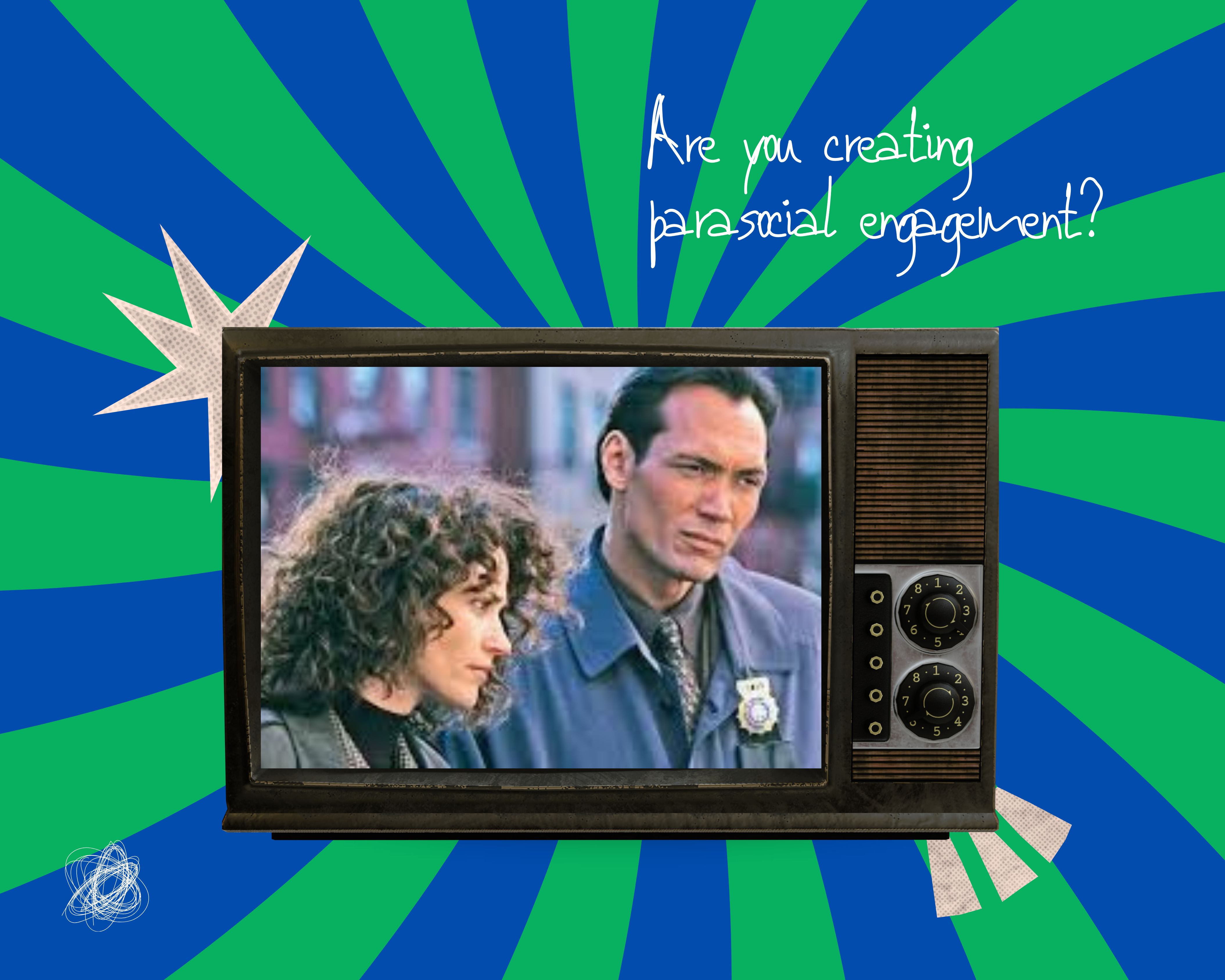
The clearest example is 20th Century Fox Television’s NYPD Blue. With a catalog of 261 episodes, the show understood parasocial behavior before anyone put a name to it. Detective Bobby Simone and Diane Russell’s romance became the emotional spine of the series. When Bobby died, Diane and his partner Andy Sipowicz unraveled—over seasons, not episodes. Millions of viewers didn’t just watch that grief; they lived it with the characters.
What NYPD Blue did differently:
Serialized emotional arcs were front and center. Prior procedurals sprinkled in personal stories. NYPD Blue made the detectives’ personal lives—romance, addiction, moral failings—core to the storytelling.
Graphic realism and emotional stakes. The raw, adult approach made viewers feel the stakes. Bobby Simone’s death was a drawn-out emotional experience affecting multiple characters over months.
Habit-forming attachment via consistent weekly presence. Unlike shorter-run miniseries or irregular plot-heavy shows, NYPD Blue showed up every week, 22–24 episodes a year, plus repeats, keeping viewers invested in both story and character.
Parasocial behavior at scale. People didn’t just like the characters—they were emotionally invested week after week.
While NYPD Blue was not the first, it elevated the technique to a new standard—it was the first to really fuse serialized emotional drama with procedural structure at a scale and intensity that trained audiences to habitually tune in and care for a sustained period of time.
Warner Bros. Television, HBO Max’s The Pitt is the newest procedural model, explicitly designed to recreate that habitual viewing with character attachment.
Format: Each episode delivers a self-contained story—patient walks in, gets treated, episode ends—while long-running character arcs simmer underneath. One hour per episode represents one hour of an actual 15-hour ER shift; the full season unfolds in real time.
Borrowed structure: Fifteen episodes, cut down from broadcast’s 22-24—but way more than the 6-8 streaming gives you, signals consistency and reliability while turning a lean catalog into a future licensing asset.
Cost: Fifteen episodes at $4–6 million each are easier to greenlight, signaling scalable, repeatable TV instead of high-risk auteur bets.
Release: Weekly modular episodes, faster production—cement predictable habits for budgets, cast, crew, and audiences. Fifteen consecutive weeks instead of a single weekend binge; Thursdays at 9pm ET. January through April. In season 2, season 3 locked in.
Cadence: Season 1 January 2025. Season 2 January 2026. Season 3 January 2027.
Five Emmys first season, including Outstanding Drama Series. Two pilots already ordered under this model: cop drama American Blue and family drama How To Survive Without Me. Both through Warner Bros. Television.
For fifty years, procedurals were a network aristocracy: studios, slots, 22-episode contracts. Indies? Door closed.
HBO Max isn’t hunting the next billion-dollar franchise—they want a world, a self-sustaining playground where new problems walk in and the characters deal with them and audiences become locked-in. Contained. Character-driven. Resourceful. This is literally how you’ve been working for years, only with less coffee and more crying on set.
You’ve been training for this: serial storytelling, low budgets, first-time talent. The Pitt model just elevates and scales it up with characters people actually care about.
The Singers is a 20-minute Netflix acquired short that hits like a double-shot of espresso. Sam Davis took a 19th-century Turgenev story—people life hit hard, meet in a pub, start a spontaneous sing-off—and turned it into something raw, modern, and unforgettable. One of 15 shorts competing for an Oscar out of 207 qualifiers.
The kicker? Every actor is a first-timer Davis found in viral TikTok and YouTube videos. Zero training. Pure lived experience. Scrappy. Internet-born. Authentic. Unpolished.
—And if Netflix is thinking anything like the Callo team, this is ripe for an HBO Max Pitt format series.
Imagine The Singers as a 15-episode elevated procedural where each week drops new character stories, new songs—internet voices rotating through, world and natural community building—episode by episode. Scaling it to The Pitt model of weekly voices, slow-burn arcs. Closed-ended episodes satisfy, first-time actors keep costs down and made for habit-forming, TV we’ve literally never seen before.
Check out The Singers cast and their original videos below:
Mike Young (Instagram / Viral Singing Video) – soulful singer from New York City, semifinalist on America’s Got Talent, rose to fame in 2016 when a viral video of him singing “Unchained Melody” captivated millions
Will Harrington (Instagram / Singing Video) – pianist, street performer, and piano technician who started busking in Provincetown as a teen
Judah Kelly (Instagram / The Voice Australia Video) – Australian singer-songwriter who won The Voice Australia in 2017
Matthew Corcoran (Instagram) – operatic tenor, voice teacher and doctoral student at the University of Oklahoma; has performed with renowned opera ensembles across the U.S.
Hutch (Instagram / “Soft White Underbelly” Video) – U.S. Army war veteran, storyteller and survivor
Comments
Nothing yet. Say the first thing.
Sign in to join the conversation.