
Page through old editions of Corporate Interiors, the once nearly annual guide from Interior Design to the best of, well, corporate spaces and you come across profile after profile of airline lounges.
American Airlines Admirals Clubs. Delta Air Lines Crown Rooms. US Airways Clubs. A Virgin Atlantic Clubhouse.
It is a fascinating window into more than a decade of lounge design from the late 1980s through the 2000s that, frankly, does not speak highly of the segment. Image after image show derivations on a theme that is, no pun intended, corporate. Dark or muted colors; lots of wood, steel and glass; the same boxy seemingly comfortable but not oversized chairs; marble; mood lighting. And don’t forget the obligatory bar, self-service buffet and assistance desk.
Most of the lounges look more akin to a Fortune 500 boardroom than a relaxing place to spend a few hours before a flight. None inspire. And at least one, from my own travels, remains basically unchanged today decades later.

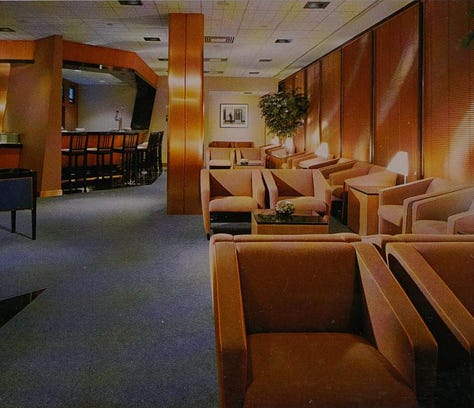
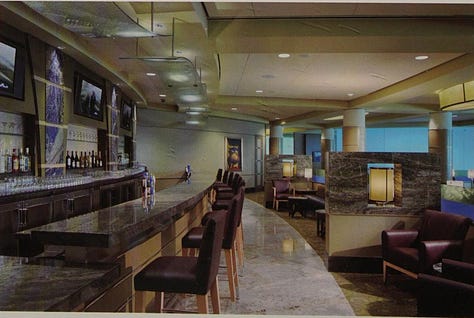

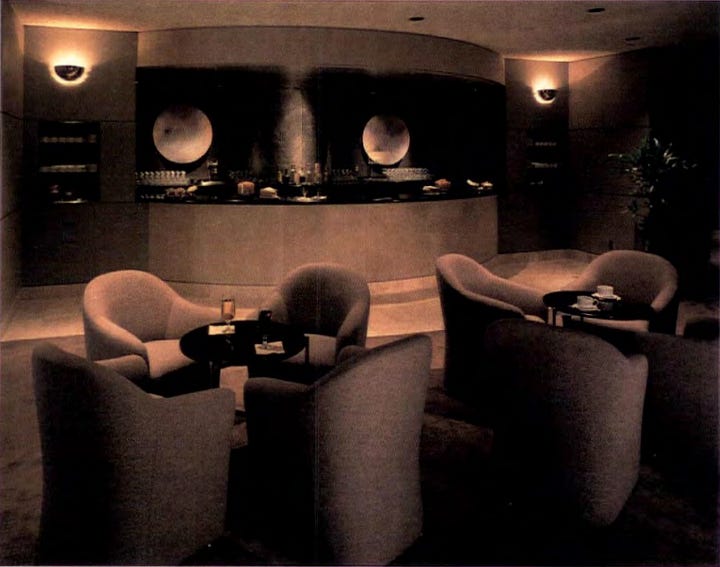
Fast forward to 2026 and we are living in lounge world. Airlines, credit card companies and private companies all want and have their own bespoke spaces. Travelers increasingly expect, rather than yearn for, access. And airports are even designing common spaces with lounge-like features to meet expectations.
But are the lounges of today, in terms of design, fundamentally better than those staid corporate spaces of the ‘90s? Fellow Substacker William O’Connor, after seeing this image of a Cathay Pacific lounge in 1998, wrote last year that it is “remarkable how little has changed since then.”
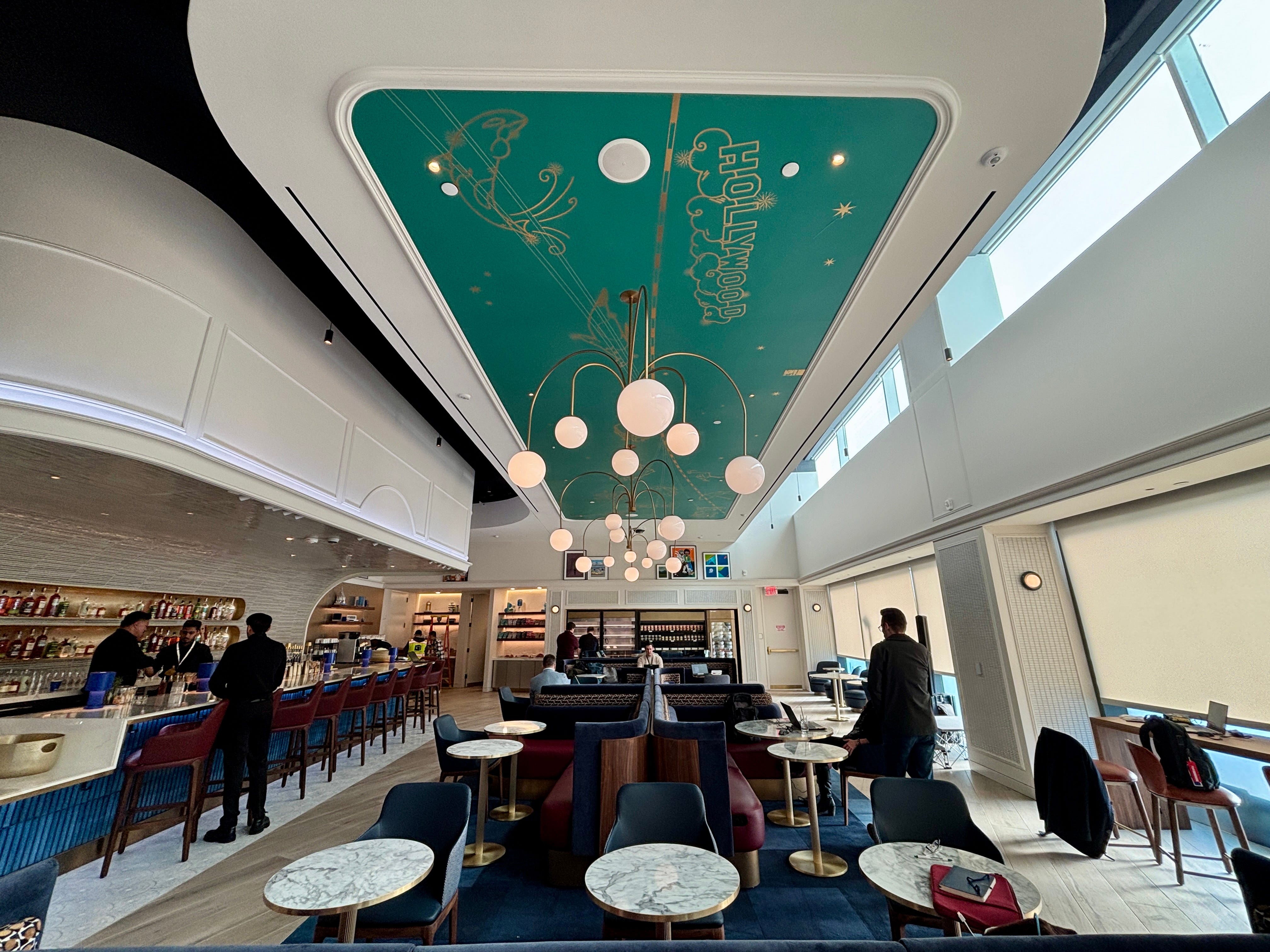
I’ve been mulling the question of lounge design — not the food, hospitality or amenities — for months now. Their function is unchanged: to offer people a space of respite where they can, as the Oxford English Dictionary puts it, pass time “without definite occupation.” That said, I’d argue that lounges have improved while hewing closely to those spaces of old.
Comments
Nothing yet. Say the first thing.
Sign in to join the conversation.