
Sneak in for ☻free → Grow your creative muscle with design tips, AI‑powered workflows and creative strategies straight to your inbox. Unsubscribe anytime, no hard feelings.
You know that feeling when you start noticing something everywhere and realize it’s not coincidence? That’s ASCII art in 2025.
From Coinbase or Vanity Fair special campaigns, to studios like Porto Rocha (Hiro ―1st REF) and Koto (Uniqode ―2nd REF) building brand worlds entirely from character sets — what started as early-internet nostalgia has evolved into something much deeper. ASCII isn’t just a throwback. It’s the new shorthand for creative credibility in a digital-first era.
ASCII has become the visual language for brands that want to signal “we speak code” — but with irony, warmth, and intention.
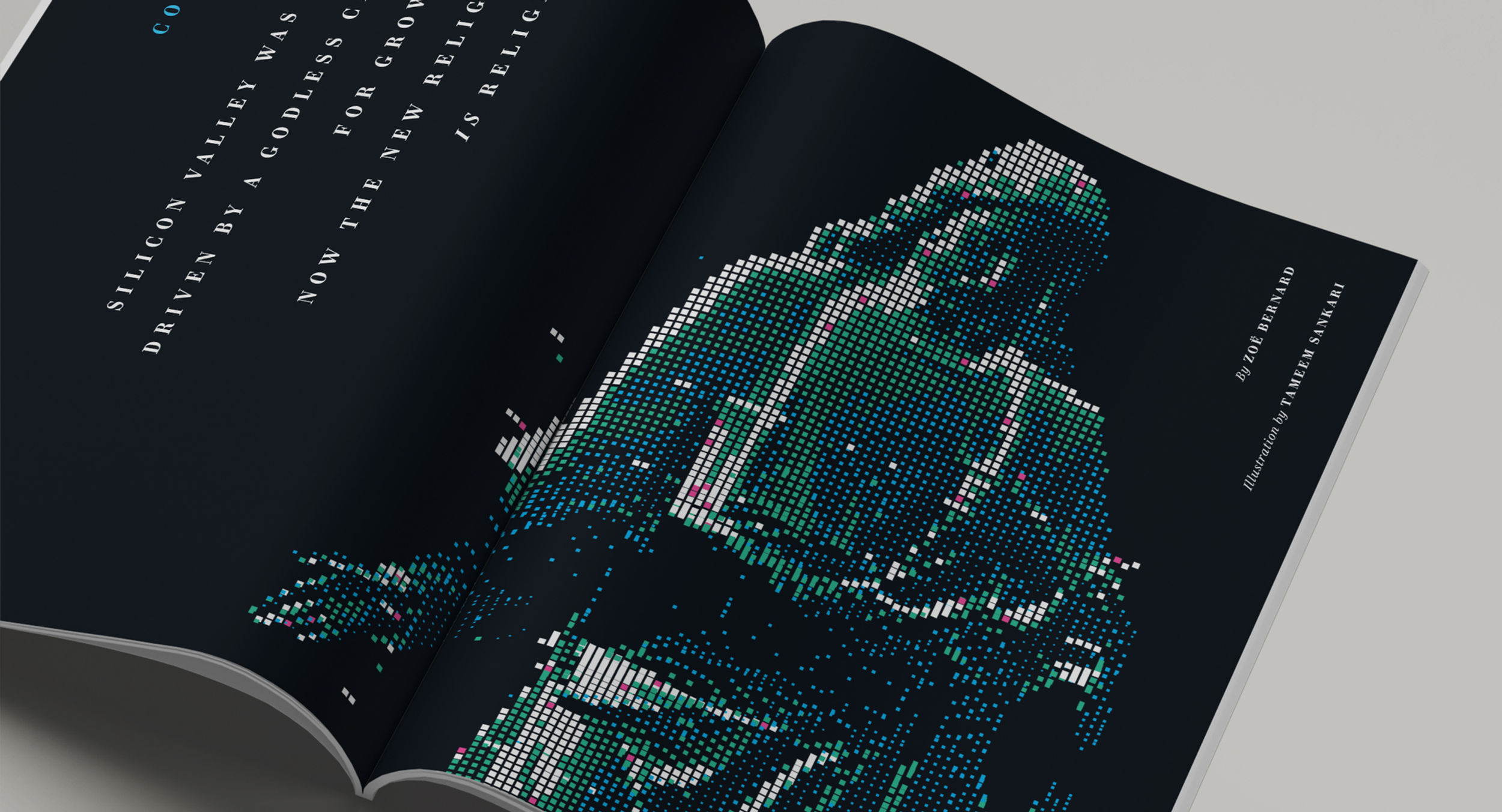
Why ASCII art is everywhere right now
ASCII art uses 95 printable characters from the American Standard Code for Information Interchange to create images, typography, and motion. In short: it’s the original pixel art — design born from constraint.
But here’s the difference: this isn’t your dad’s forum signature ASCII or 4chan-era memes. The 2025 version is layered, controllable, (and sometimes) cinematic, and rendered with the kind of precision that makes you ask how did they do that? instead of why?
It’s design minimalism with a post-digital twist — constraint as craft.
And the timing couldn’t be better.
We’re in a visual culture obsessed with imperfection and tactility. Designers are tired of hyper-smooth AI renders and corporate gradients. Audiences crave something that feels touched by a human. ASCII art — born from code, yet unmistakably handmade — hits that sweet spot.
As The Brand Identity recently called it, this is the “codepunk” era: a rebellion against overproduced digital polish.
Add in the tech nostalgia cycle (think: Windows 95 palettes, Netscape blue, and terminal green) — and ASCII becomes more than a gimmick. It’s a visual manifesto.
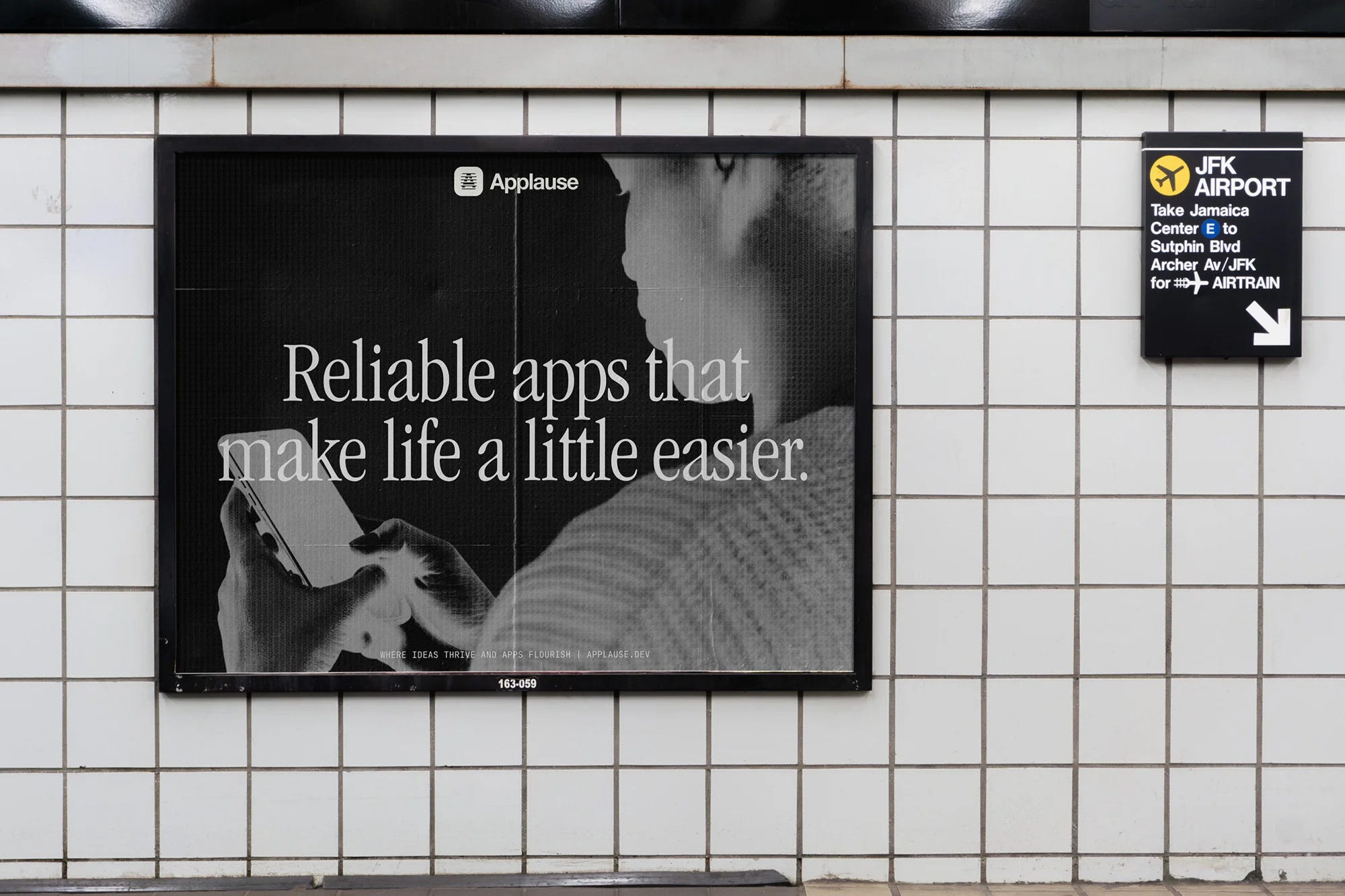
Cool things I’ve saved this year
2025 has been the year of the ASCII flex — and not just for tech brands. Let’s break down some of the most interesting examples worth studying (and stealing from):
1. Coinbase (by BUCK & Isle of Any)
The fake Blue Screen of Death that hijacked TV broadcasts and live NBA playoff screens — instantly causing collective panic and delight.
BUCK’s team built a procedural ASCII system that responds to physics, gravity, and dynamic disruption. The result: motion that feels coded, not simulated. It was cinematic, clever, and self-aware.
2. Nike “Why Do It?
While not explicitly ASCII-focused, Nike’s 2025 “Why Do It?” campaign relaunch coincided with broader retro-tech aesthetic trends. Can you spot where they included it?

3. Explorations by Enigmatriz
Artists like Enigmatriz layer ASCII with archival video, cutout art, and painting scans. It’s less nostalgia and more exploration — mixing the tension between code and emotion.
Cultural decoding: why now?
ASCII’s comeback isn’t random. It sits at the intersection of three macro-trends shaping design in 2025:
Digital nostalgia → The new luxury is memory. We crave reminders of the analog internet — command lines, connection sounds, and the slow-loading charm of early browsers.
Authenticity in craft → As AI floods feeds with flawless visuals, constraint-driven design feels more “real.” ASCII is the anti-AI aesthetic — algorithmic yet handcrafted.
Code fluency as identity → In a world run by software, understanding code (or at least pretending to) is cultural capital. ASCII lets brands perform that fluency without alienating non-tech audiences.
ASCII also has that hybrid quality designers love: it looks techy without being sterile. It references systems and logic — but feels oddly poetic.
ASCII’s new design language
Let’s talk design.
Today’s ASCII work isn’t made with copy-paste converters. It’s built with particle systems, physics simulations, and procedural typography rigs. Studios are treating characters as materials, not pixels.
the motion rules you need to control
Contrast ramps first, motion later. Define your density map, AKA your shape (
. , : ; + * ? % S # @) before animating.Letterforms as texture. Design your character palette to reflect tone.
Stay legible. At speed, ASCII collapses into noise. Test readability at playback resolutions early.
Use with caution. If ASCII doesn’t serve story, it’s a filter. And filters die fast.
the technical renaissance
Here’s how the modern ASCII pipeline looks across levels of complexity:
⚙️ Entry-level:
Online ASCII generators with real-time color mapping, animation export, and density control. Perfect for quick prototypes or motion R&D. Try tools like ASCIIFlow or Patorjk’s ASCII Generator.
💻 Mid-tier:
After Effects workflows using Particle Playground, Mosaic + Extract combos, and CC RepeTile to distribute character grids. Add Track Mattes and custom ramps for legibility.
🚀 High-end:
Houdini and Cavalry setups where ASCII behaves like a physics system. Characters respond to forces, collide, and dissolve into controlled chaos. This is how BUCK and FutureDeluxe achieved that high-end, cinematic ASCII look.
the After Effects free file (for ♡paid subscribers♡)
If you’ve made it this far, it’s your turn to get hands-on.
Start small — swap in your own footage, tweak luminance, adjust density, and see how those 95 characters start to tell a completely different story. Play with motion speed, contrast, and rhythm until the text feels alive.
The file isn’t a tutorial — it’s a sandbox. You can edit shapes or letterforms, test different ASCII formats, or overlay the effect on existing projects to add a tactile, “coded” texture. Every adjustment changes the mood.
Try breaking it. Combine ASCII with 3D renders, or link character motion to audio for kinetic typography. You’ll see how easily this constraint turns into creativity.
I want to see what you create with it! Post it in the comments or tag me on LinkedIn (Blanca Villalobos) so I can feature your work in an upcoming post.
To remove paywall and see the 100% off coupon code → support the work by becoming a ☻VIP and keep the ideas flowing. I’m running a special sale with 20% off for 1 year!

Comments
Nothing yet. Say the first thing.
Sign in to join the conversation.