
In the 1980s, a company called Soloflex sold home gym equipment through magazine advertisements. No television campaign. No celebrity endorsement. No retail distribution. Just one photograph, run as a print ad in men’s and fitness magazines, backed by a direct-response phone number.
The photograph was stark and simple: a sculpted male figure, shot in black and white, using the Soloflex machine. The lighting was dramatic. The composition was clean. There was nothing else in the frame — no clutter, no props, no distractions.
That single image sold $400 million worth of home gym equipment.
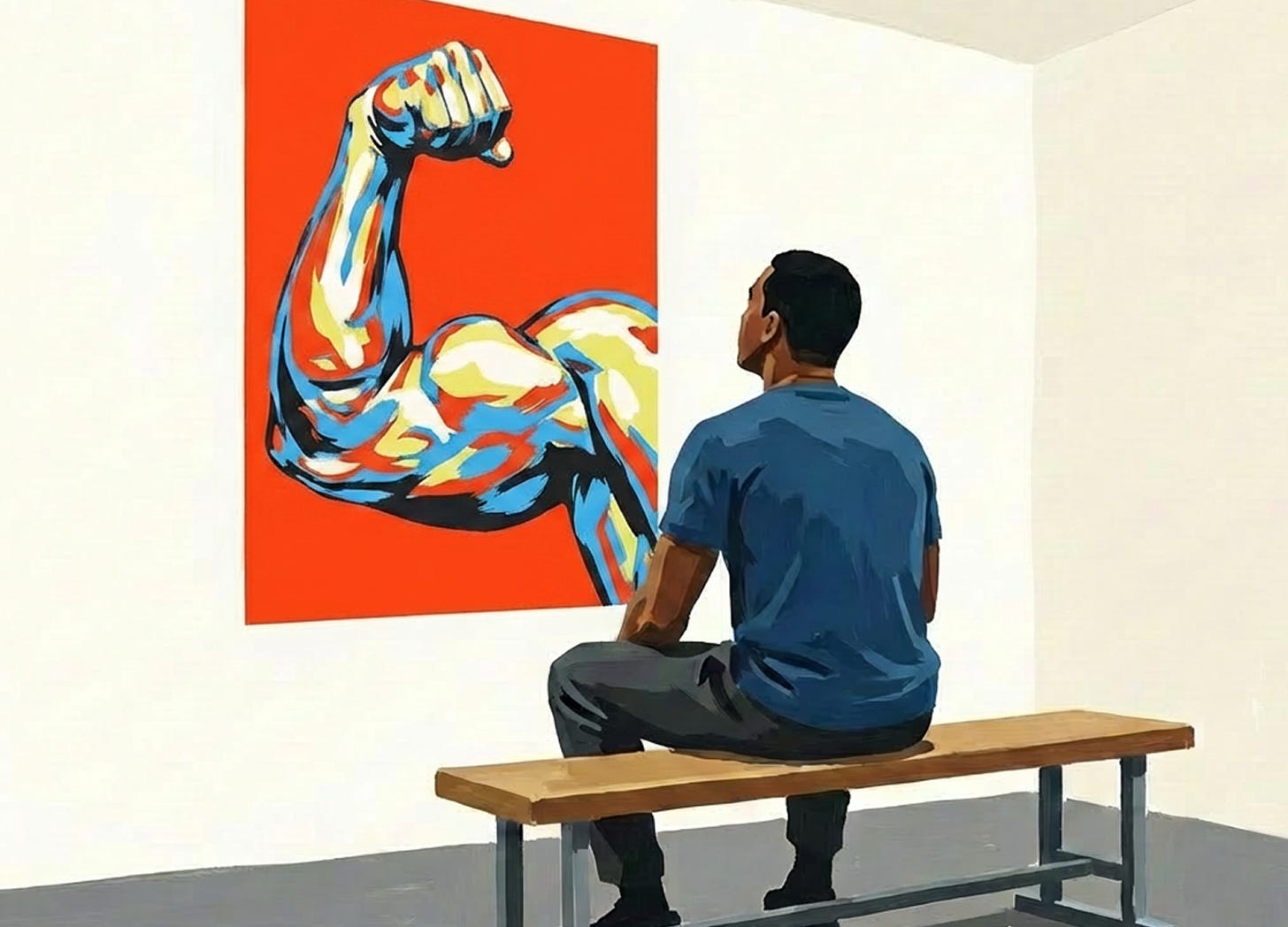
Soloflex proved that a single, perfectly executed visual can be more powerful than an entire multi-channel campaign. They sold aspiration, not equipment.
Get weekly breakdowns of how businesses actually grow by learning how they did it.
The Machine
Soloflex was founded in 1978 by Jerry Wilson in Hillsboro, Oregon. The machine used rubber resistance bands instead of free weights, which made it compact, affordable, and suitable for home use. But the real innovation wasn’t the equipment — it was the marketing.
Wilson understood something that most home fitness companies didn’t: he wasn’t selling a machine. He was selling a body. He was selling the aspiration of what you could become. The Soloflex ads didn’t feature product specifications, comparison charts, or technical explanations. They featured the result.
The ads ran primarily in magazines like Sports Illustrated, GQ, and various fitness publications throughout the 1980s and early 1990s. They were direct-response ads — you called a phone number to order, and the machine was shipped to your home. There was no middleman, no retail markup, and no need for a sales force.
The Ad
The minimalism of the ads was their power. In a market where home gym advertising was cluttered with busy layouts, feature lists, and before-and-after photos, Soloflex stripped everything away. One body. One machine. One phone number. The restraint was what made people stop turning the page.
The campaign became a case study in the power of a single image. It proved that in print advertising, you don’t need complexity to sell a complex product. You need an image that makes the reader feel something — aspiration, desire, the gap between where they are and where they want to be.
Soloflex eventually faced increased competition from other home gym companies and the rise of commercial gym chains in the 1990s. But for a solid decade, a single photograph in a magazine was all it took to build a $400 million business.
But How Did They Do It?
They sold the outcome, not the product. The ads didn’t show the machine’s features. They showed the body you’d build using it. The reader’s desire did the selling.
They used one image to communicate everything. No feature lists, no comparison charts, no testimonials. One photograph carried the entire sales message. The simplicity was the strategy.
They chose the right medium. Magazine ads were perfect for Soloflex because they allowed high-quality photography to do its work. The image demanded a full page, and a full page in a glossy magazine was the best possible canvas for the aesthetic they were selling.
Direct response eliminated the middleman. No retail stores, no distribution partners, no sales team. You saw the ad, you called the number, the machine showed up at your house. Every dollar of margin stayed in the company.
Restraint was the differentiator. While competitors crammed their ads with features and fine print, Soloflex stripped everything away. In a cluttered market, minimalism was the most attention-grabbing choice.
How You Can Do This
Soloflex proves that one perfect piece of content can build an entire business. You don’t need to be everywhere — you need to be unforgettable in one place.
Sell the transformation, not the tool. Soloflex didn’t sell a rubber-band resistance machine. They sold the body you’d have after using it. Whatever you sell — a service, a course, a product — show the after, not the during. What does your customer’s life look like once the problem is solved? That’s your ad.
Invest in one incredible visual. Soloflex’s entire business was built on the quality of a single photograph. If you’re going to invest in one thing this quarter, make it a set of professional images that communicate your brand at the highest level. One great photo on your homepage, your social feed, or your pitch deck can do more than a dozen mediocre ones.
Strip away everything that doesn’t serve the message. The Soloflex ad had no fine print, no feature bullets, no “but wait, there’s more.” Just one image and a phone number. Look at your current marketing materials: what can you remove? What’s cluttering your landing page, your social posts, your proposals? The answer to “what should I add?” is often “nothing — what should I take away?”
Go direct when you can. Soloflex shipped directly to customers, cutting out retail entirely. If you can sell directly to your audience — through your own website, your own email list, your own DMs — you keep the margin and control the experience. Every intermediary you eliminate is profit and relationship you retain.
Find the one channel where your message hits hardest. Soloflex didn’t try to be on TV, radio, billboards, and magazines. They chose magazine print ads because the medium perfectly served their aesthetic. What’s the one channel where your brand shows up best? A platform where your visuals shine? A format where your voice comes through clearly? Double down on that instead of spreading thin across five channels.

But How Did You Do It? is powered by Kajabi, the most robust all-in-one platform.
Claim your 30-day free trial and start creating, selling, and growing.
Thanks for reading But How Did You Do It? This post is public so feel free to share it.
Comments
Nothing yet. Say the first thing.
Sign in to join the conversation.