
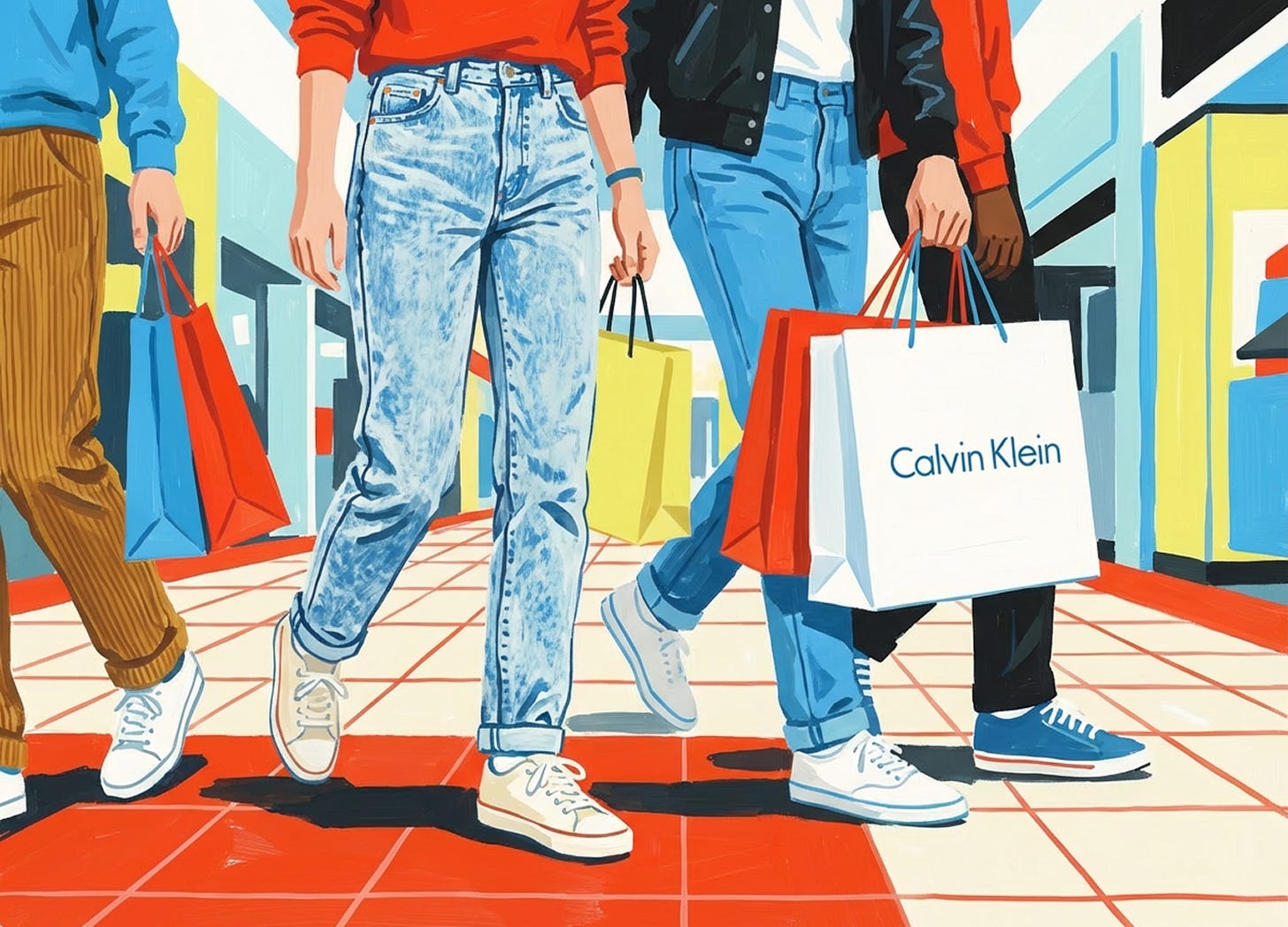
In the fall of 1980, a 15-year-old Brooke Shields stared into a camera and delivered a line that would define controversy marketing for the next four decades: “You want to know what comes between me and my Calvins? Nothing.”
The commercial was directed by legendary fashion photographer Richard Avedon. The production was minimal — stark backdrops, tight denim, a single devastating line. The ads ran in print and on television, and the reaction was immediate and enormous.
America lost its mind.
Women’s groups, parenting organizations, and television watchdog groups decried the campaign as exploitative. CBS and ABC refused to air the commercials. The ads were banned in multiple countries. The media firestorm generated more coverage than Calvin Klein could have bought with ten times the advertising budget.
And sales of Calvin Klein jeans skyrocketed — reportedly jumping 300%.
Calvin Klein himself later told Diane Sawyer in a 1985 interview that he intentionally tried to provoke. He acknowledged that he sometimes stepped beyond what was considered good taste. But, he said, it worked.
Shields, for her part, has said repeatedly over the decades that she didn’t understand the sexual interpretation at the time. She was naive, she’s explained — she thought of it the way you’d say “nothing comes between me and my sister.” In a 2021 interview with Vogue, she reflected on how she was sequestered and protected as a young woman, and the assumption that she was more worldly than she actually was. The campaign put her at the centre of a cultural debate she didn’t fully understand as a teenager.
The controversy didn’t just sell jeans. It established Calvin Klein as a brand willing to push boundaries, and it created a marketing template that the fashion industry has followed ever since. Every time a brand generates outrage and then rides the wave of free media coverage, they’re running a version of the Calvin Klein playbook.
The Love Story Connection: There’s a fascinating thread that connects this campaign to the present moment. Carolyn Bessette — who would later become Carolyn Bessette Kennedy after marrying JFK Jr. — built her career at Calvin Klein. She started as a saleswoman at a Calvin Klein store in Boston, impressed executives with her style and confidence, and eventually rose to become the director of publicity and then director of show production at the brand’s flagship operations in New York.
Bessette worked with high-profile clients like Annette Bening and Diane Sawyer. She was reportedly instrumental behind the scenes during the brand’s 1990s minimalist heyday — the era of slip dresses, camel coats, and clean tailoring that defined American fashion.
The new FX series Love Story: John F. Kennedy Jr. & Carolyn Bessette has renewed massive interest in Bessette’s life, her Calvin Klein career, and the aesthetic she embodied. Searches for Calvin Klein spiked 139% on the RealReal after the show premiered. The irony? PVH Corp., which now owns Calvin Klein, has largely failed to capitalise on the moment — their current stores are full of logoed sweatshirts and windbreakers, not the minimalist elegance that Bessette represented.
One pair of Shields’ original jeans from the 1980 campaign recently sold at auction for $68,750. Another pair is in the permanent collection at the Metropolitan Museum of Art.
But How Did They Do It?
Calvin Klein didn’t accidentally stumble into controversy. The brand understood that attention — even negative attention — could be converted into cultural relevance and sales. The campaign was calculated provocation wrapped in high fashion photography.
They understood that controversy is free media. The bans, the outrage, the news coverage — all of it amplified the campaign far beyond what the original ad buy could have achieved.
They chose the right face. Brooke Shields wasn’t just a model. She was already famous from film roles, which meant the controversy had a narrative engine. The media didn’t just debate the ad — they debated her.
They kept the creative minimal. The ads were stark, simple, and let the line do all the work. There was nothing to distract from the provocation.
They stayed the course. When the backlash hit, Calvin Klein didn’t apologise or pull the ads (where he could still run them). He leaned in. That consistency signalled to the audience that this was a brand with conviction.
The brand DNA lasted decades. The provocative, boundary-pushing identity established in 1980 carried Calvin Klein through the Kate Moss era, the Mark Wahlberg underwear campaigns, and into the cultural conversation around Carolyn Bessette Kennedy. The playbook was written in 1980.
How You Can Do This
You don’t need to manufacture outrage. But you can apply the principles behind Calvin Klein’s campaign in ways that are ethical, authentic, and effective.
Take a clear, unapologetic position. Calvin Klein didn’t hedge. They made an ad that was deliberately provocative and stood behind it when the backlash hit. You don’t need to be controversial, but you do need to stop hedging your messaging. Pick a lane. “We’re the agency for founders who are done with cookie-cutter templates” is a position. “We offer creative solutions for businesses of all sizes” is wallpaper. A clear stance will repel some people and attract the right ones.
Understand that attention — even uncomfortable attention — has value. The bans and the outrage amplified Calvin Klein’s campaign far beyond its original reach. For your business, this doesn’t mean seeking controversy. It means recognising that a strong opinion shared on social media, a bold take in a newsletter, or a contrarian perspective on an industry norm will generate more conversation than playing it safe. The posts that make you slightly nervous to publish are usually the ones that perform best.
Keep the creative minimal. The Calvin Klein ads were stark: one person, one line, one pair of jeans. There was nothing to distract from the message. When you’re building an ad, a landing page, or a social post, resist the urge to add more. One clear image. One strong headline. One call to action. The simpler the execution, the harder the message hits.
Build brand DNA that lasts beyond a single campaign. Calvin Klein’s provocative identity wasn’t a one-off stunt. It became the brand’s core personality for decades. When you find a positioning that resonates, commit to it across everything you do — your website, your social presence, your client experience, your content. Consistency over time is what turns a marketing angle into a brand identity.
Use cultural moments to resurface your story. The Love Story series has reignited interest in Calvin Klein’s heritage, and the brand has largely missed the opportunity to capitalise. Don’t make that mistake. When something in culture — a show, a trend, a conversation — connects to your brand’s story, move quickly. Create content that ties your work to the moment. Cultural relevance is a renewable resource if you pay attention.

But How Did You Do It? is powered by Kajabi, the most robust all-in-one platform.
Claim your 30-day free trial and start creating, selling, and growing.
Thanks for reading But How Did You Do It? This post is public so feel free to share it.
Brooke Shields Sparks Controversy in Calvin Klein Jeans — 4As
Brooke Shields Responds to Controversial 1980 Calvin Klein Ad — Today
Brooke Shields’ Iconic Calvin Klein Jeans Sold for $68,750 at Auction — Yahoo Entertainment
The True Story of Why Carolyn Bessette Quit Calvin Klein — Yahoo Entertainment
Calvin Klein Is Missing Its Carolyn Bessette Kennedy Moment — Bloomberg
Calvin Klein’s Carolyn Bessette Moment Is an Opportunity PVH Didn’t Take — FashionUnited
No posts
Comments
Nothing yet. Say the first thing.
Sign in to join the conversation.