

2026 Predictions
The last two years marked a step-function change in what’s possible with AI, but 2026 will be about what’s possible in the real world. The AI wave is forcing a return to fundamentals. For climate, this is reshaping the investing landscape in real time. Capital is concentrating into fewer, more competitive companies, and climate outcomes are increasingly being driven by industrial demand rather than policy ambition. As a climate tech and AI-focused fund, we see the convergence as unavoidable. Against a backdrop of geopolitical uncertainty and rising physical constraints, 2026 will reward companies that can execute, and punish those built on fragile assumptions. Read our full predictions over on our blog, and see below for a summary.
1) The Great Capitulation: Business Fundamentals Will Trump Politics ⚡🏛️
The federal government will be forced into an uneasy truce with renewables. Not because of ideology, but because power demand and grid constraints are becoming unavoidable. Speed to power will dominate as electricity prices rise, industrial load accelerates, and renewables remain the fastest incremental capacity to deploy. Execution through permitting, interconnection, and procurement becomes the real competitive advantage.
2) No Major US Correction for AI & Data Centers in 2026 — But the Financial & Power Plumbing Starts to Crack 🏗️⚡🫧
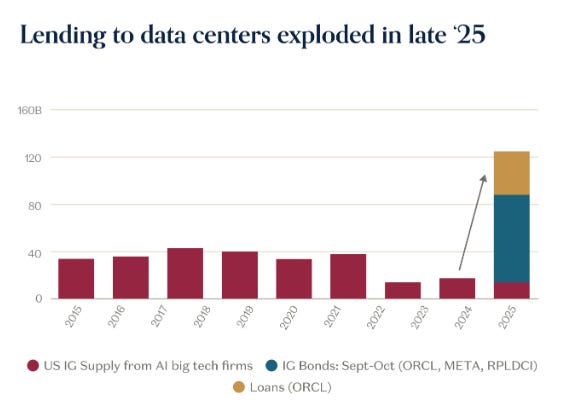
Despite bubble narratives, we don’t expect a major market correction in 2026: demand remains strong and major players stay committed. But power delays, interconnection bottlenecks, and rising reliance on private credit structures are increasing execution and leverage risk beneath the surface. The system holds in 2026, but 2027–2028 is where strained timelines and capital structures could trigger a correction.
3) Overhyped AI Sectors Start to See Zeros 🧨🤖
2026 is when we start to see a meaningful number of AI companies fail as foundation models rapidly absorb capabilities that many startups built on. Enterprise buyers are also becoming less forgiving as ROI scrutiny rises and budgets tighten. Winners will have real moats (proprietary data, deep workflow integration, and durable distribution) while vertical AI can still win where it delivers outcomes horizontal models can’t replicate.
4) More Geopolitical and Trade Crises 🌍📉
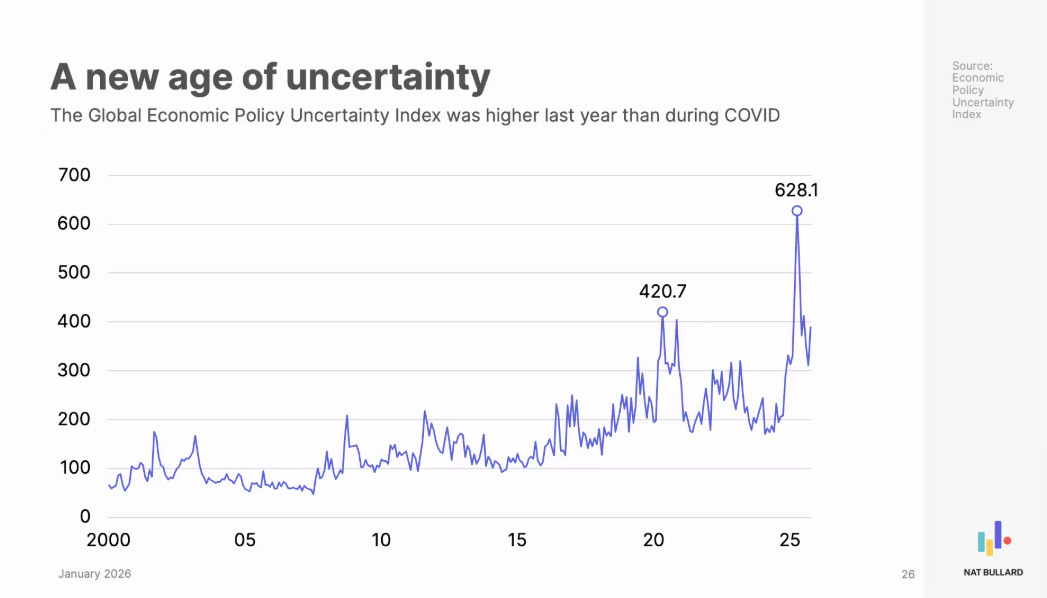
Global uncertainty will remain elevated in 2026, with new geopolitical and trade crises emerging unpredictably. Tariffs and supply chain instability will keep pressure on cost structures and planning cycles across industries. Resilience, especially geographic redundancy across suppliers and end markets, becomes a core competitive moat.
5) Robotics Leave Pilot Mode 🤖📦
Robotics will move from pilots to scaled deployments across logistics, warehouses, and industrial workflows, driven by labor constraints and proven ROI. As deployments scale, more intelligence shifts to the edge, enabling real-time performance without constant cloud round-trips. This wave augments workers and improves throughput and safety. Expect to see major deployments of robotics beyond first movers like Amazon in 2026 and beyond. Also expect to see edge computing as a major theme ahead.
6) A Major AI Security Incident Rattles Enterprise Customers 🔐🧠🚨
AI expands the attack surface, and we expect a major incident to shift buyer behavior in 2026. This could come from a foundation model breach, a rogue agent leaking sensitive information, or prompt injection attacks that manipulate AI systems in production. After a high-profile event, security becomes a gating function for adoption, driving demand for sovereign AI, auditability, and enterprise-grade controls.
7) Grid Software Steps in to Solve Speed-to-Power Challenges ⚡🖥️
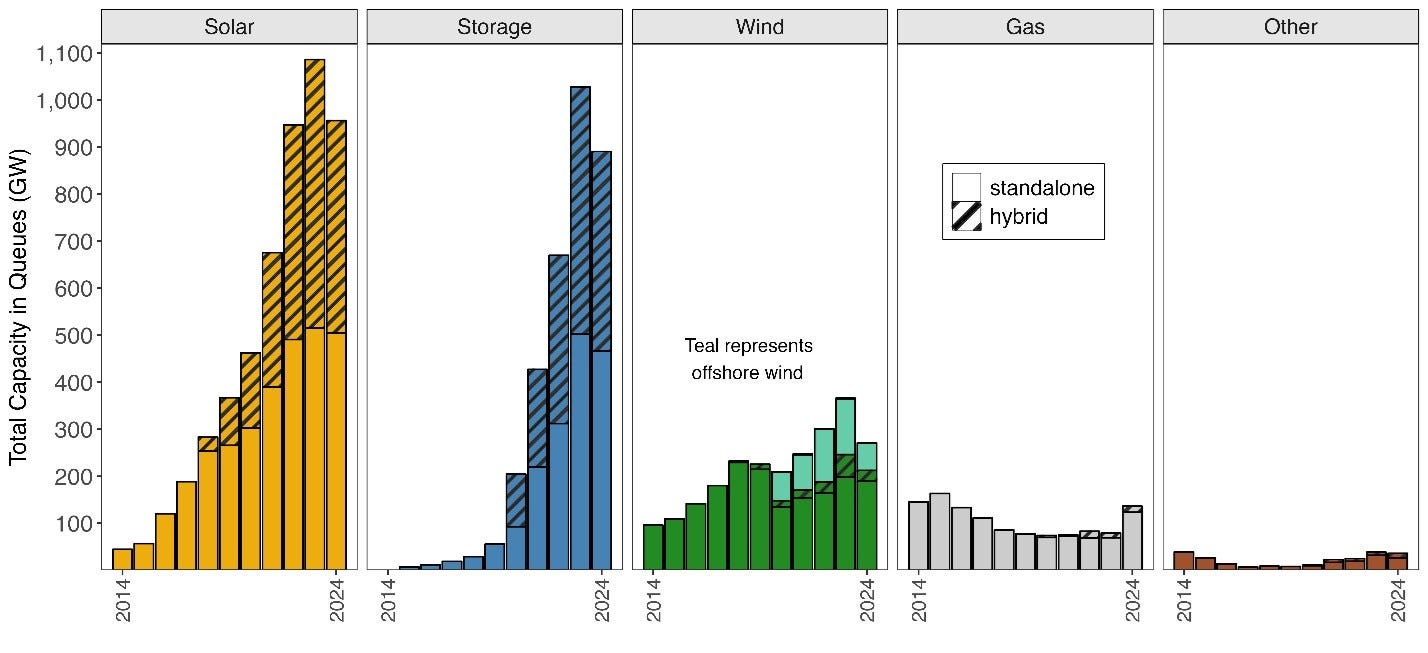
The grid is under pressure from rising outages, massive interconnection backlogs, and surging congestion costs. While transmission investment is growing, physical infrastructure takes years to build. In the meantime, utilities and ISOs will increasingly deploy grid software (i.e. dynamic line ratings, flexible interconnection, congestion optimization, etc) to maximize existing capacity and buy time for upgrades.
8) Investors Called for Liquidity and Markets Answer 📈🔄
If geopolitics don’t derail the party, 2026 should bring improved liquidity across IPOs, M&A, SPACs, and secondaries. Corporate M&A will remain a major engine, especially as large players acquire vertically integrated AI and energy-adjacent platforms. Later-stage capital will concentrate into companies with durable fundamentals, creating a clearer path to outcomes even if IPO windows remain selective.
9) Cities at the Forefront of Climate Risk and Innovation 🏛️🌡️
Cities will be on the front lines of climate risk as disasters hit property tax bases and budgets, especially amid federal pullbacks in disaster response funding. At the same time, the ROI of mitigation is becoming more visible and measurable in practice. This accelerates demand for practical climate solutions (i.e. heat mitigation, flood management, water resilience, and climate analytics, etc) driven by procurement necessity rather than narrative.
Do you agree, disagree? Let us know!
Since you heard from us last week, that’s it from us! Thanks for following along.
No posts
Comments
Nothing yet. Say the first thing.
Sign in to join the conversation.