
Investing in the Intelligence Layer for the Physical World
When we launched Buoyant Ventures in 2020, the world looked very different. Climate tech optimism was high, capital was abundant, and there was a strong belief that policy, technology, and markets were aligned to accelerate change. Six years later—after 17 investments, multiple market cycles, and a dramatically different geopolitical and macro environment—our mission hasn’t changed. But the way we think about the opportunity has evolved meaningfully.
Today, we’re investing in a world shaped less by optimism and more by constraint. AI is driving unprecedented demand for compute and energy, infrastructure systems are under strain, and resilience has moved from a “nice to have” to a core economic priority. By 2040, over $100 trillion will be deployed across energy, grid, data centers, and industrial infrastructure. But the defining question isn’t just how much gets built, it’s how effectively it operates.
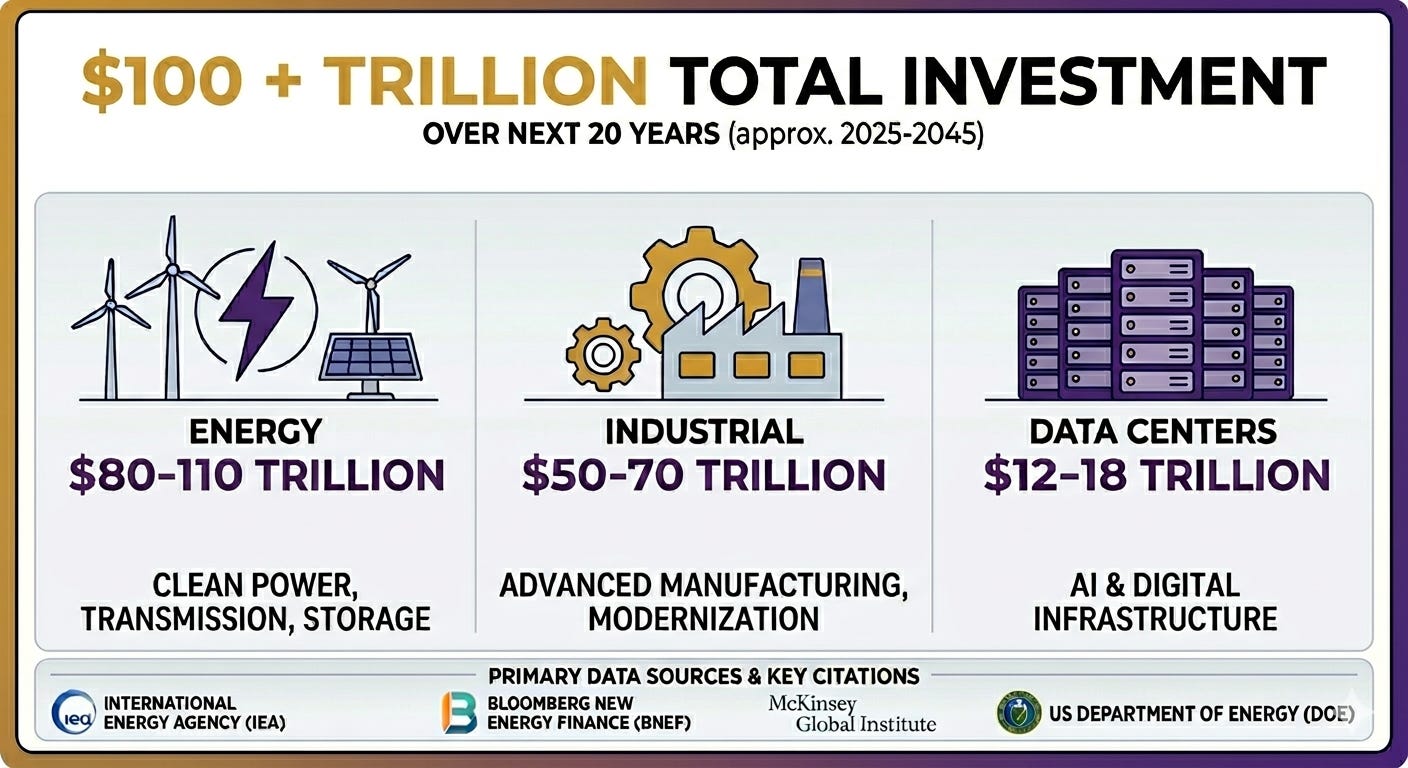
That’s why we believe the greatest opportunity lies in the intelligence layer: software and AI that optimize, decarbonize, and unlock capacity across this massive physical buildout. As infrastructure scales, intelligence will determine performance. Even modest gains in efficiency translate into trillions of dollars in value creation, and we believe this is where the next generation of enduring, category-defining companies will emerge.
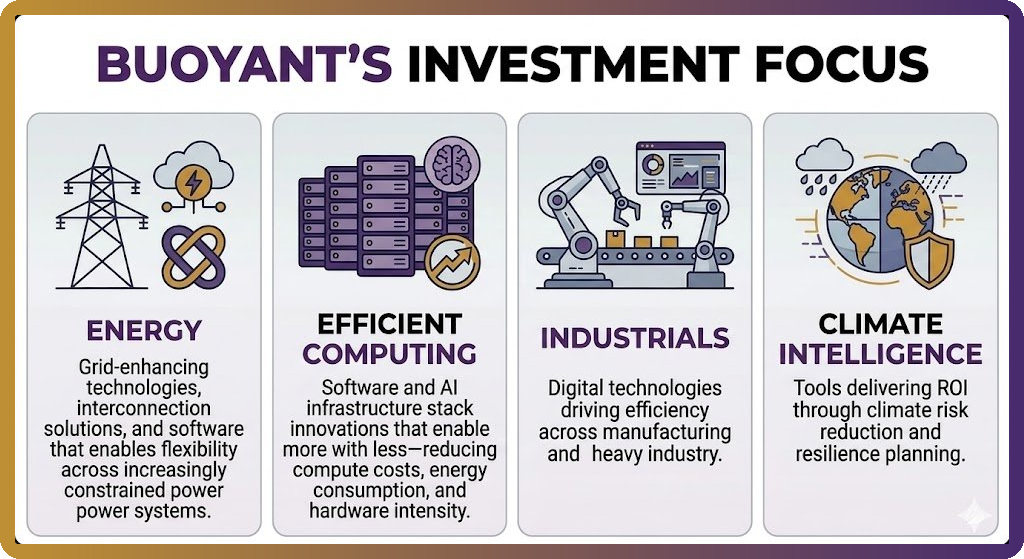
In our latest post, we walk through how the world changed, and how we responded. From shifts in the political environment and capital markets, to the step-function impact of generative AI and the realities of infrastructure bottlenecks, these forces have sharpened our focus. We’ve narrowed in on four key areas: energy, efficient computing, industrials, and climate intelligence—all united by a single insight: the future belongs to companies that make critical systems more efficient, resilient, and economically viable.
If you’re building at the intersection of AI and the physical world, or are thinking about where the next decade of value creation will come from, we’d love for you to read it.
Portfolio Company Highlights:
HData announced a new investment from MassMutual Ventures, the multistage venture capital arm of Fortune 500 firm MassMutual, through its Climate Technology Fund. The funding will help HData scale its AI-powered regulatory intelligence platform, which serves utilities, regulators, energy developers, and financial institutions navigating the complexity of federal and state energy regulation. (HData)
Raptor Maps hosted RaptorCon 2026 (Feb. 25–26), a solar industry conference featuring 100+ leaders discussing automation, robotics, and data-driven O&M, alongside the release of its 2026 Global Solar Report — finding that equipment-driven power loss at solar assets has more than doubled since 2021. (PV Tech)
Ocient announced three new strategic partnerships in a single week (March 10–13) with Minsait Brazil, Accrete AI, and TekSynap, expanding its footprint in telecom analytics, national security AI, and U.S. government data infrastructure. (Ocient Press Releases)
Gravity earned market-leading scores in two back-to-back Verdantix reports in March — first in Enterprise Carbon Management Software (ranking highest among 21 providers), then in ESG & Sustainability Reporting Software for Investors (highest overall functionality among 15 providers). (PR Newswire)
Sunairio launched Asset-Level Generation Potential Forecasts, providing hourly energy production predictions for 1,400+ wind farms and 7,500+ solar farms across U.S. power markets, starting with ERCOT. (PR Web)
The US Data Center Boom is Hitting a Transformer Crunch, Bloomberg
Why the economics of orbital AI are so brutal, TechCrunch
2026 Global Solar Report, Raptor Maps
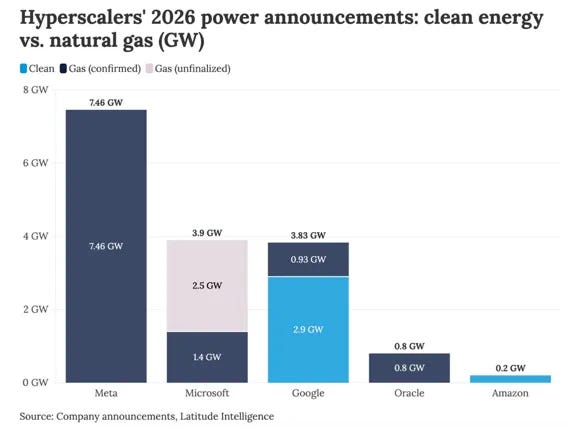
New Natural Gas vs. Clean Energy in Hyperscaler Data Center Buildouts (Latitude Media)
No posts
Comments
Nothing yet. Say the first thing.
Sign in to join the conversation.