
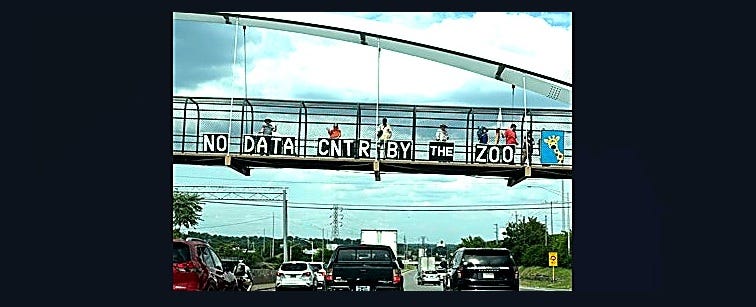
Protected Species Do Not Know Where Property Lines Begin and End
What Does Nashville Owe the Animals Next Door?
THE BOTTOM LINE: A QUICK ASSESSMENT
The Threat: A massive industrial data center is proposed immediately adjacent to the Nashville Zoo’s endangered species habitats.
The Flaw: The city appears to be measuring the project’s environmental impacts using a “human ruler.” Highly sensitive species such as Clouded Leopards process environmental stress differently than humans. A facility that satisfies standards written for people may still create biological impacts for wildlife.
The Legal Reality: Metro Codes already possesses the authority and the mandate to halt this permit. Under local zoning provisions and federal Endangered Species Act (ESA) liability statutes, the Zoning Administrator has a statutory duty to demand rigorous environmental impact certifications before any approval advances.
The Demand: Before any permits advance, an independent assessment by qualified wildlife specialists should determine whether protected species can thrive under the proposed conditions.
“Your scientists were so preoccupied with whether or not they could, they didn’t stop to think if they should.”
It is one of the most memorable lines from Jurassic Park. Not because it was about dinosaurs. Because it was about hubris.
My readers know how I approach complex problems. Find the big rock. Focus there. Leave the rest for later.
The big rock here is not artificial intelligence.
It is not data centers.
It is not about the best highlight reel.
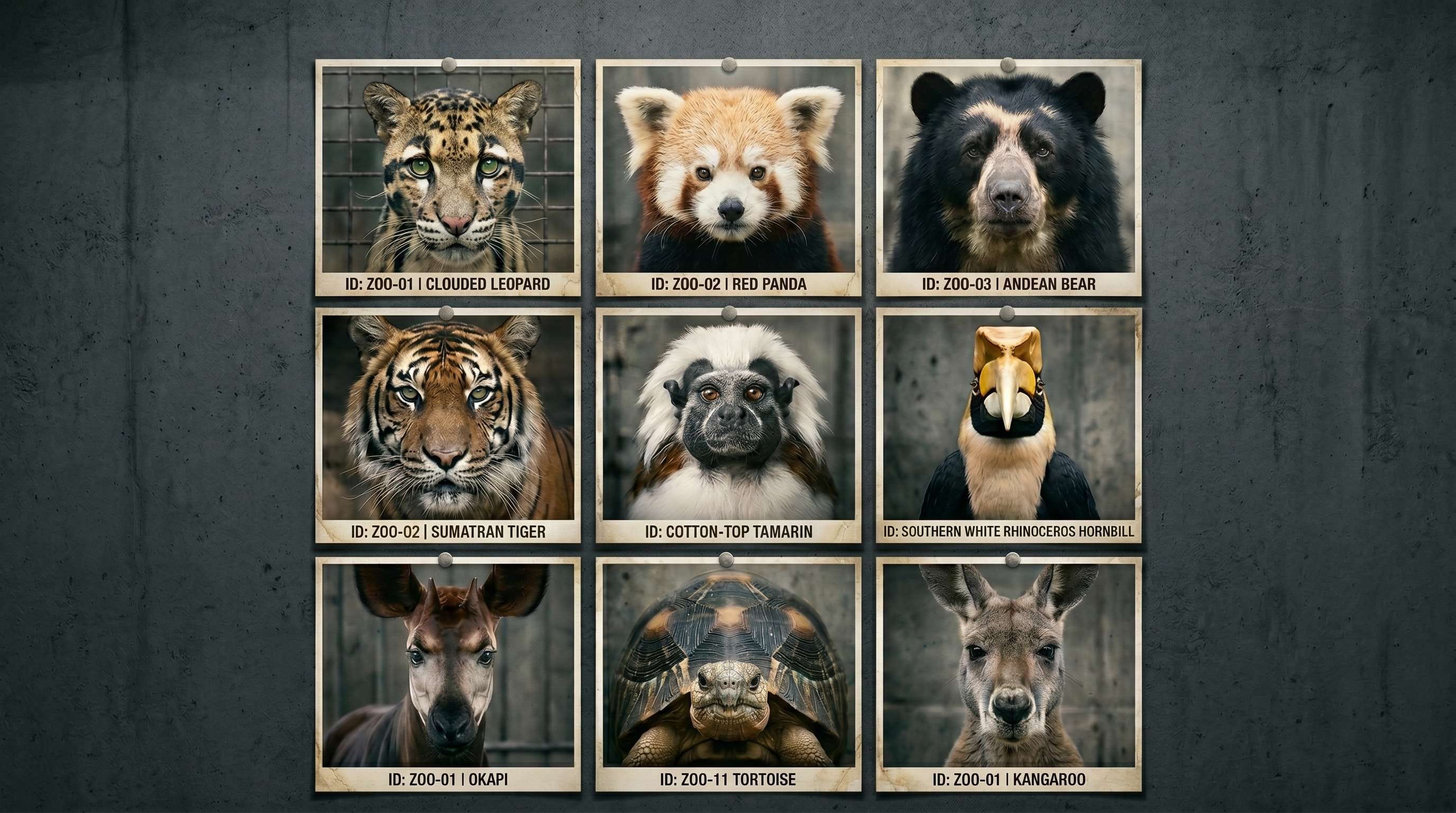
It is about the zoo animals, and it may, in part, be the zoning classification itself.
When an approximately 70,000-square-foot facility is designed with the intent to grow well beyond 300,000 square feet, employs fewer than a dozen people, and requires extraordinary electrical, mechanical, backup power, cooling, lighting, and communications infrastructure, is it truly an office building? Or is that classification allowing the project to avoid the level of environmental performance and impact review that would otherwise be expected?
That question deserves an answer.
But even that is not the biggest rock.
The residents next door are the animals.
Toss the human ruler.
Find the protected-species ruler.
Decode the City - Stay Informed
Are We Measuring the Impacts on the Right Population?
The central question is whether Nashville is asking the right environmental questions before permitting a major industrial use immediately adjacent to the Nashville Zoo at Grassmere, home to world-class conservation, breeding, and protected-species habitat programs.
For decades, our zoning, building, and environmental review systems have relied upon what I will call a “human ruler.”
We evaluate noise.
We evaluate light.
We evaluate vibration.
We evaluate emissions.
We evaluate stormwater.
We evaluate nuisance conditions.
We evaluate the health, safety, and welfare of the people who may be affected on-site and nearby.
That makes perfect sense. Until the neighbors include more than people.
The Nashville Zoo houses endangered, protected, and conservation-managed species from around the world. Those species experience sound, vibration, lighting, and environmental disruption differently from humans.
Yet nearly all of the public discussion surrounding the proposed development and the proposed zoning text changes appears focused on standards written primarily for human impacts.
Based on the public materials available to me regarding the permit requirements, I do not see Environmental Performance Standards and Impacts on the check list. I could not determine whether this biological reality has been comprehensively evaluated. Has the question been asked? Have the applicable standards been identified? Has anyone determined what constitutes harm, disruption, stress, or habitat interference for the species involved?
Those are not rhetorical questions.
They are foundational questions.
Below is the current online permit tracker. Unless buried behind a zoning subcategory, this property is zoned IWD, which inherently requires verification that the appropriate environmental standards are prescribed and met. This form shows no such activity.
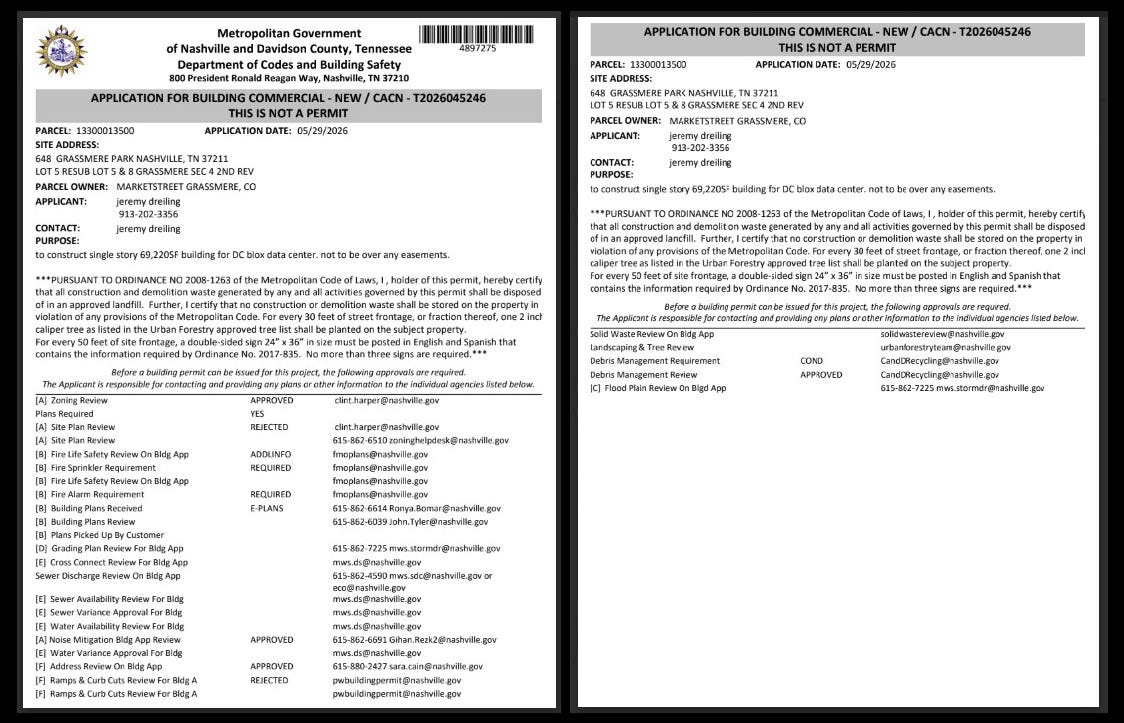
It is difficult to imagine that regulations written primarily around human impacts alone are sufficient to address them.
After overseeing permit applications and the above documents for decades, I anticipate the following occurred.
The “General Office” Sleight-of-Hand
As I asked earlier, is this truly an office building? The hubris of that classification is at the heart of this problem.
Given my years of preparing applications and anticipating zoning officials' reviews, the problem is obvious: because the contractor applied for this permit under the classification of “General Office,” the project supposedly avoids industrial environmental performance standards entirely.
That is complete nonsense.
After four decades of navigating Metro zoning and permitting, I can tell you exactly what this is: a seasoned applicant “played” the zoning officials. I presume the zoning staff - perhaps lacking experience with this specific asset class, or simply trusting the applicant’s contractor or design professionals, as they generally should be able to - did not call out the obvious misdirection.
They failed to recognize that the handful of human beings employed to monitor the equipment within represents a mere accessory use. The primary, overwhelming use of the site is heavy data infrastructure. A permit review must be based upon the actual infrastructure and equipment put in place, regardless of what “use” nouns one chooses to apply. When a massive facility is designed to house critical server arrays requiring continuous industrial cooling and backup power infrastructure, you cannot shield those industrial-scale emissions from scrutiny simply by slapping an “office” label on the paperwork.
More importantly, the underlying zoning makes this excuse legally irrelevant. The property at 648 Grassmere Park is officially zoned IWD (Industrial Warehousing/Distribution). Under Metro Code Chapter 17.28, all developments within an IWD zoning district are strictly subject to environmental and operational performance standards regarding noise, vibration, and air pollution - regardless of the semantic title the applicant chooses.
It is unacceptable to pretend that regulations written primarily around human impacts alone are sufficient to answer these foundational questions. In the true spirit of the law, it is the obligation of all participants to honor these environmental protections. Whether a seasoned applicant can trick the administrative process or not, manipulating a paperwork loophole to avoid scrutiny is not a clever business tactic—it is bad faith and a profound failure of stewardship.
Before Nashville becomes consumed by arguments over artificial intelligence, data centers, zoning text amendments, politics, competing agendas, and social media theater, there is a more fundamental question that deserves an answer: Has anyone demonstrated that the animals can thrive under the proposed future conditions?
That is the big rock.
Everything else comes later.
The Chain of Command and the “Strict Scrutiny” Directive
The Chain of Command and the “Strict Scrutiny” Directive
Developers often claim that applying for a permit grants them vested rights under the laws in effect at the time of submission. But applying for a permit does not automatically confer vested rights if the application fails to meet existing legal requirements.
To understand this issue, we must look to the top of the administrative chain of command. While the Zoning Administrator is tasked with interpreting and applying the zoning code, the Director of the Department of Codes Administration holds broader authority regarding public health, safety, and welfare.
Under Metro law, the Director has the authority to intervene, pause, deny, or revoke permits when conditions pose hazards to public health, safety, or welfare. To ground that authority, we can look to several legal frameworks:
The Tennessee Vested Property Rights Act ties vested rights to compliance with laws in effect at the time of application.
Metro Code Chapter 17.28 regulates noise, vibration, glare, and other impacts that cross property lines.
Tennessee Common Law Nuisance has long recognized protections against unreasonable environmental spillover affecting neighboring properties.
The administrative authority to halt this process is already on the books.
Under the broad discretionary authority granted by Metro Code Section 17.40.010, the Zoning Administrator has the statutory power to demand stringent engineering certifications for absolutely any use, including a “General Office,” and pursuant to the “other use” provision of Section 17.40.530(F). The semantic classification of the data center is ultimately irrelevant to the enforcement of performance standards. Administrative officials are compelled by Section 17.28.104 to regulate the physical reality of the proposed systems and equipment for a data center or any other use.
And that physical reality presents a massive federal problem. Unmitigated low-frequency vibration and noise possess a high potential to disrupt the reproductive cycles of neighboring endangered species.
This is where local zoning meets federal law. The U.S. Fish and Wildlife Service defines “harm” and “harassment” under the Endangered Species Act (ESA) to include acts that significantly impair essential behavioral patterns, including breeding, feeding, or sheltering. Because the Zoning Administrator is strictly bound by Section 17.40.010(H) to construe and enforce the zoning code in a manner consistent with federal law, the Codes Department has an active duty to prevent municipal complicity in a federal violation.
In fact, pursuant to Section 9(g) of the ESA, local governments can be exposed to vicarious liability for authorizing third-party permits that result in an illegal “take” (harm) of a protected species. Therefore, the Administrator has an indisputable legal basis to withhold permit approval until the applicant provides a stamped report from certified specialists demonstrating compliance with the Chapter 17.28 thresholds and all state and federal protected species regulations.
Whether and how those authorities apply in this situation is precisely why the question deserves rigorous review. I will send this opinion to Council Member Johnston in support of her call for strict scrutiny, and to encourage review by both the Zoning Administrator and the Director of Codes Administration.
The purpose is simple: Determine whether the existing process adequately protects the zoo’s animal population.
Based upon the published permit checklist, IT DOES NOT.
The Codes Department should require the developer to work with their neighbor, the Nashville Zoo, and to publicly identify the proper actions that are or will be taken.
Coaching note to officials, design professionals, consultants, contractors, owners, and tenants: Should you advance work without addressing these very important issues, you are demonstrating poor stewardship of the communities, entities, and investors you are responsible for serving. It is not the job of the Codes Department to buffer you from regulations - local, state, or federal. Proceed at your own risk.
Will we find Metro officials have filled the shoes of Terry Cobb, Sonny West, and Bill Herbert?
Job One: The Procedure
If these protected species lived on the development site itself, regulators would demand proof that they would not be harmed. The fact that they live immediately next door does not eliminate the possibility of impact. The spillover is real.
The legal debate should not distract from the Metro Codes Administration's underlying responsibility to do the right thing and enforce the “do no harm” level of care. Here is the process Nashville should consider demanding:
Administrative Hold or Permit Embargo: No grading or building permits should advance until the environmental questions affecting protected species are fully evaluated.
Public Confirmation from Codes: The Codes Department should ensure the proposed project works with the neighbor, the Nashville Zoo, and publicly identify the standards, studies, and criteria that will be used to evaluate impacts on the zoo’s animal populations.
Independent Qualified Assessment: The determination of “no harm” and ESA compliance should not be made solely by planners, politicians, developers, or activists. It should be made by qualified biological and wildlife specialists. The assessment should consider standards and guidance associated with wildlife protection frameworks, including the Endangered Species Act, CITES, AZA conservation programs, Species Survival Plans, and other relevant scientific universities, zoological accreditations, and related authorities.
Comprehensive Study and Source-Level Engineering: The burden of proof should remain with the applicant. If impacts exist, proven mitigation should occur at the source through engineering, design, operational controls, and performance standards rather than relying upon distance or a property line as protection.
That is the Big Rock.
That is Job One.
Let us put away the human ruler and get this right.
A Final Thought
I am not arguing against technology.
I am not arguing against economic development.
I am not arguing against data centers.
In fact, Nashville should continue the ongoing discussion regarding data center regulations, zoning classifications, performance standards, environmental protections, and permitting procedures. Those conversations will benefit from industry expertise, environmental science, neighborhood feedback, elected officials, and public participation.
But those future discussions are separate from the immediate question before us. Today’s question is simpler. Protected species do not know where property lines begin and end.
Before permits advance, before grading begins, and before a single shovel enters the ground, Nashville should answer one question: Have we measured the impacts on the right population?
The residents next door are the animals. That is the Big Rock. Everything else comes later.
A Call to Take Action
A citizen petition concerning this issue is currently circulating and has reportedly attracted substantial public support.
If you believe the Nashville Zoo’s protected species deserve a complete, independent environmental review before permits advance, I encourage you to review the petition, examine the facts for yourself, and decide whether participation is appropriate.
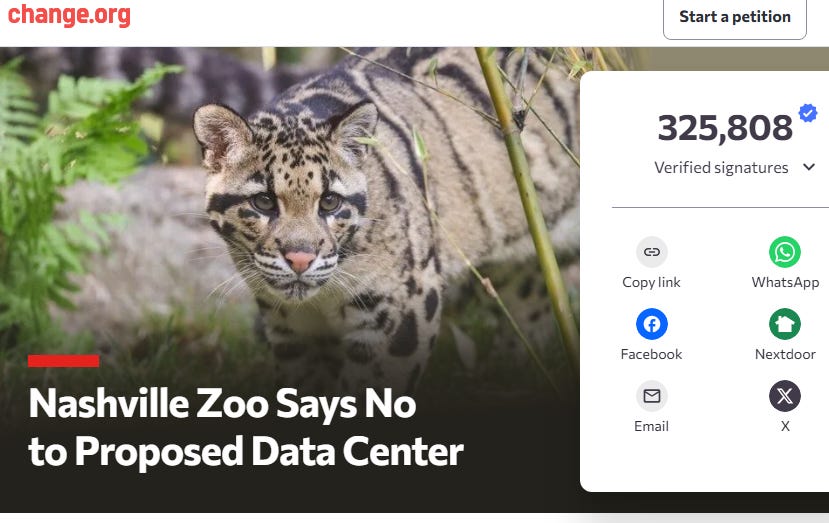
[Click Here to View and Sign the Citizen Petition]
This Substack is reader-supported. To receive new posts and support my work, consider becoming a free or paid subscriber.
A mock preliminary environmental study to support the identification of the need for expert environmental advice and study for the proper environmental performance criteria.
Author’s Note: Attached is a research mockup illustrating why highly specialized biological expertise may be necessary to evaluate potential impacts on protected species. It is provided as an example of the scope and complexity of the questions involved, not as a substitute for a professional wildlife assessment or a representation of creature expertise - 6.8.2026.
Continuing below is likely more than many will wish to read, while essential to understand the need for specialists and the intended message, unless you are a policy maker, your job is done.
Biocentric Environmental Performance Standards for Zoological Adjacency: Mitigating Data Center Impacts on Captive Wildlife
1. Introduction: The Intersection of Hyperscale Infrastructure and Ex Situ Conservation
The rapid proliferation of digital infrastructure, particularly hyperscale data centers, has precipitated a novel crisis in urban land-use planning: the encroachment of continuous industrial emissions upon critical ex situ wildlife conservation facilities. Historically, municipal zoning ordinances have relied upon anthropocentric, somewhat arbitrary buffer distances and human-calibrated environmental metrics to regulate industrial adjacencies. However, recent conflicts—most notably the friction surrounding a proposed 69,220-square-foot data center directly adjacent to the Nashville Zoo at 648 Grassmere Park—have exposed the profound inadequacy of these conventional standards.1 Zoological parks are no longer mere menageries; they are highly specialized, scientifically managed sanctuaries facilitating global Species Survival Plans (SSPs) for some of the planet’s most endangered taxa.4 The biological success of these delicate breeding programs is inextricably linked to the preservation of pristine sensory environments.
Data centers represent a unique environmental hazard. Unlike traditional distribution warehouses or commercial offices, data centers operate highly energy-dense, mission-critical infrastructure that functions continuously.6 The necessity to remove massive thermal loads from server arrays requires extensive deployments of chiller condenser fans, air handling units (AHUs), and cooling towers, alongside the continuous operation of transformers and the periodic testing of massive diesel backup generators.8 This infrastructure generates a distinct ecological footprint characterized by continuous low-frequency noise (LFN), ground-borne seismic vibration, particulate matter (PM) emissions, and high-intensity security lighting.10 The sheer scale of these operations, which often span dozens of acres and consume resources equivalent to small cities, ensures that their environmental emissions radiate far beyond standard property lines.3
To protect captive wildlife—specifically exquisitely sensitive species such as the Clouded Leopard (Neofelis nebulosa), the Cheetah (Acinonyx jubatus), the Okapi (Okapia johnstoni), the Banded Palm Civet (Hemigalus derbyanus), the Eastern Hellbender Salamander (Cryptobranchus alleganiensis), and the Panamanian Golden Frog (Atelopus zeteki)—environmental performance requirements must undergo a permanent paradigm shift. Regulatory bodies must abandon human-centric metrics, primarily A-weighted decibels (dBA) and structural damage vibration thresholds, in favor of biologically relevant scientific limits utilizing Z-weighted/C-weighted acoustic limits (dZ/dBC), micro-seismic Peak Particle Velocity (PPV) limits, and specific photometric lux and atmospheric emission caps.11 The Nashville Zoo, which houses over 3,000 animals including a signature clouded leopard breeding program that recently celebrated its 50th birth, serves as a critical focal point for this regulatory evolution.1 The prospect of artificial lighting, mechanical drone, and vibratory trespass disrupting the photo periods and life cycles of genetically invaluable populations has galvanized massive public and scientific opposition, generating over 180,000 petition signatures.1
This report provides an exhaustive, evidence-based framework detailing the physiological mechanisms by which data center emissions disrupt captive wildlife. By systematically deconstructing the sensory ecology and biological profiles of apex predators, elusive ungulates, nocturnal viverrids, and highly specialized amphibians, this analysis establishes the precise environmental performance limits required to sustain their welfare, prevent chronic stress, and ensure their reproductive viability in captivity.
2. The Fallacy of Anthropocentric Metrics in Environmental Assessments
The foundational flaw in standard environmental impact assessments (EIAs) for data centers adjacent to sensitive ecological receptors is the reliance on metrics designed exclusively for human comfort and human structural integrity. The acoustic, vibratory, and photometric environments perceived by wildlife differ exponentially from human sensory processing.19 Animals possess evolutionary adaptations that allow them to detect atmospheric and substrate variations that remain entirely imperceptible to humans, rendering standard municipal zoning ordinances biologically obsolete.
2.1. The Inadequacy of A-Weighted Decibels (dBA)
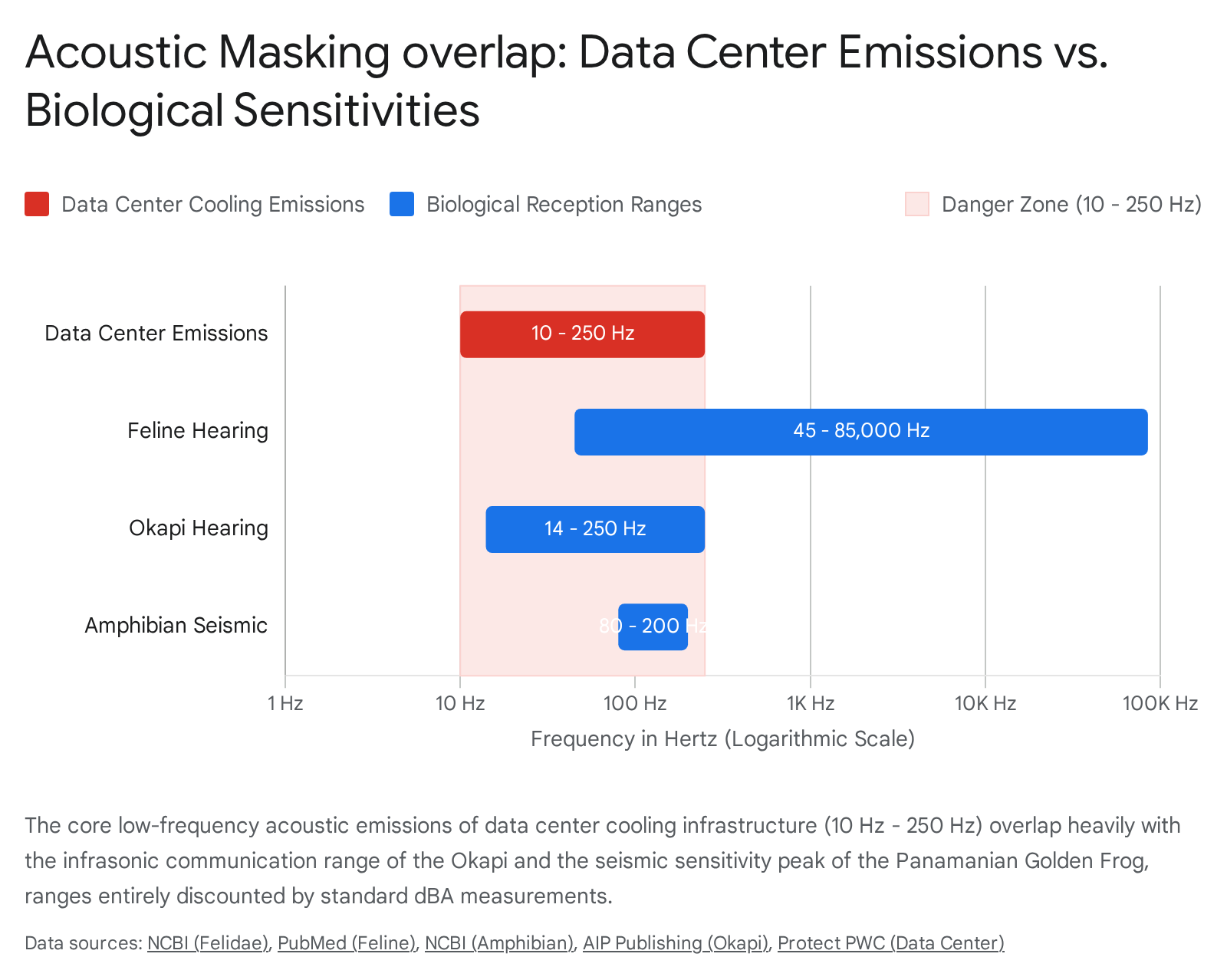
Municipal noise ordinances universally rely on the A-weighted decibel scale (dBA) to enforce property line limits. A-weighting is a mathematical filter applied to sound level meters to mimic the unequal sensitivity of the human ear, which is evolutionarily tuned to the frequencies of human speech (roughly 500 Hz to 4,000 Hz).10 Consequently, the A-weighting scale heavily discounts sound energy at lower frequencies. However, data center noise is predominantly low-frequency and tonal, characterized by the persistent “hum” or “drone” of large chiller units, exhaust vents, and transformers operating in the 10 Hz to 250 Hz range.10
Because low-frequency sound waves have exceptionally long wavelengths—a 63 Hz tone has a wavelength of approximately 18 feet, while a 6,300 Hz tone is the length of a battery—they easily diffract over standard acoustic noise walls, penetrate solid structural enclosures, and travel vast distances with minimal atmospheric attenuation.11 When measured in dBA, the immense acoustic energy of a data center’s cooling array is mathematically suppressed, often yielding a reading that legally complies with a 50 or 55 dBA municipal limit.24 Yet, the actual acoustic energy bombarding the environment remains vast, inducing significant physiological stress in animals capable of perceiving it.
To accurately measure the noise impacting biological receptors that possess acute low-frequency or infrasonic hearing, acoustic monitoring must utilize C-weighting (dBC) or Z-weighting (dZ).11 C-weighting provides a much flatter response curve across low frequencies, while Z-weighting applies zero weighting, representing the true, unweighted acoustic energy present in the environment.26 In environmental acoustics, a diagnostic indicator of problematic low-frequency noise is a divergence of 20 decibels or more between dBC and dBA readings (dBC - dBA ≥ 20).27 This differential confirms an unbalanced, heavily low-frequency noise spectrum that, while perhaps legally compliant under archaic dBA statutes, constitutes a severe masking agent and stressor for wildlife.11 Guidelines such as ANSI S12.9 Part 4 recommend evaluating sounds with strong low-frequency content using C-weighted targets, often aiming for 65 to 68 dBC to minimize low-frequency impacts, a standard that must be strictly adopted for zoological adjacencies.24
2.2. The Misapplication of Structural Vibration Thresholds
Similarly, ground-borne vibration assessments typically utilize Peak Particle Velocity (PPV) measured in inches per second (in/sec) or millimeters per second (mm/s), or expressed logarithmically as VdB.17 PPV is defined as the maximum instantaneous positive or negative peak amplitude of the vibration velocity.30 Municipal limits are frequently set to prevent cosmetic or structural damage to buildings. For example, the Caltrans groundborne vibration threshold criterion relies on a limit of 0.2 to 0.25 PPV (in/sec) for older structures, or utilizes 0.12 PPV as a regulatory halt limit for construction.30 Furthermore, humans can tolerate continuous vibrations an order of magnitude higher (up to 12.5 mm/s) as mere “nuisance” effects before taking action.32
These thresholds are catastrophic when applied to biology. Micro-seismic vibrations generated by heavy construction equipment—such as vibratory rollers generating 0.21 in/sec PPV or pile drivers generating 0.64 in/sec PPV at 25 feet—and the continuous operation of large industrial chillers travel efficiently through ground substrates and water.29 For sensitive laboratory animals, captive amphibians, and delicate vivarium environments, chronic exposure to vibrations must be maintained below 0.025g (Root Mean Square) or approximately 0.1 mm/s PPV to prevent severe physiological disruption.15 Relying on structural damage thresholds or human annoyance metrics exposes biological organisms to vibration levels that are literally hundreds to thousands of times higher than their evolutionary tolerance permits.
3. Ungulate Sensory Ecology, Infrasound, and Flight Responses
The zoological collection at facilities like the Nashville Zoo contains deeply specialized, genetically valuable taxa whose survival relies on precise environmental management.2 Assessing their vulnerability requires a highly granular examination of their sensory ecology, particularly regarding taxa that utilize sound waves invisible to standard human acoustic monitoring.
3.1. The Okapi: Helmholtz Resonance and Infrasonic Communication
The Okapi (Okapia johnstoni), an endangered paleotragine giraffid endemic to the dense, tropical canopy of the Congo basin, provides a perfect case study for the absolute necessity of dZ/dBC monitoring.2 For centuries, biologists operated under the assumption that giraffids were essentially mute, silent sentinels of the forest.36 It is now understood, following rigorous bioacoustic analysis, that both giraffes and okapis rely heavily on infrasound—vocalizations produced at frequencies far below the 20 Hz threshold of human hearing.36
The okapi’s dolichocephalic skull and specialized respiratory apparatus utilize a physical phenomenon known as Helmholtz resonance to generate these covert, infrasonic vocalizations.37 Studies reveal that okapis emit and perceive low-frequency sounds with dominant frequencies oscillating between 20 Hz and 40 Hz, while possessing a broader auditory range spanning from 14 Hz up to 250 Hz.37 In their natural, densely forested habitat, high-frequency sounds are rapidly absorbed and scattered by foliage. Conversely, low-frequency sound suffers minimal attenuation from environmental scattering, allowing okapis to communicate across vast, overlapping home ranges.34 This evolutionary adaptation is critical for survival; it permits a secret network of communication that remains undetectable to sympatric apex predators, such as leopards, which possess higher-frequency hearing acuity and hunt adult okapis.34
Vocal communication is paramount in okapi social interactions, particularly mother-offspring bonding. Maternal okapis hide their altricial calves in secluded nests for the first few weeks of life to evade predation.34 Calves rely on specific low-frequency “bleats,” “chuffs,” and “moans” to maintain contact or signal distress to their foraging mothers.38 Data center cooling systems, pump arrays, and electrical transformers produce a continuous acoustic signature that heavily dominates the 10 Hz to 250 Hz spectrum.13 The introduction of a hyperscale data center emitting 60 to 70 dBC of low-frequency hum directly adjacent to an okapi habitat creates an impenetrable wall of acoustic masking.13
This localized masking effectively renders the okapis “blind” to their own communication network. Unable to hear the subtle, low-frequency contact calls from hidden calves over the industrial drone, maternal okapis are likely to experience severe distress and hyper-vigilance. Calves, unable to elicit maternal responses, will escalate to stress-bleating.38 The prevention of this sensory isolation requires strict adherence to low-frequency noise limits, keeping ambient levels securely below 65 dBC at the enclosure boundary to ensure the acoustic channel remains open.24
3.2. Startle Effects and Ungulate Flight Responses
Beyond the chronic stress of acoustic masking, data centers present acute acoustic threats in the form of sudden, high-intensity noise events, primarily originating from the testing and operation of diesel backup generators.6 To maintain their mission-critical 100% uptime guarantees, data centers must routinely test their massive diesel turbines, often resulting in sudden spikes in both airborne noise and particulate emissions.9
Ungulates, including okapis and other delicate herd species, have evolved highly reactive central nervous systems optimized for rapid predator evasion. When subjected to sudden, unpredicted acoustic events—measured as C-weighted peak sound levels (LCpk) 32—these animals exhibit profound startle responses. The acoustic stimulus bypasses higher cortical processing, triggering an immediate, massive release of catecholamines (adrenaline and noradrenaline) from the adrenal medulla. This physiological “flight response” compels the animal to flee blindly from the perceived threat.
In the wild, this rapid acceleration saves lives; in the confined space of a zoological enclosure, it is frequently fatal. Ungulates startled by the sudden spooling of an industrial generator or adjacent construction blasting may collide violently with perimeter fencing, containment walls, or even conspecifics, leading to catastrophic trauma, cervical fractures, and capture myopathy—a complex physiological cascade resulting from extreme exertion and stress that causes muscle necrosis and renal failure. The evaluation of noise impacts on these species must therefore transcend continuous equivalent levels (Leq) and rigorously limit sudden LCpk events that trigger startle reflexes.32
Biological Receptor Category
Representative Species
Critical Auditory / Sensorial Range
Primary Industrial Masking Threat
Physiological Consequence of Unmitigated Exposure
Infrasonic Ungulates
Okapi (Okapia johnstoni)
14 Hz – 250 Hz (Infrasound)
Data center HVAC / Transformer drone (10-250 Hz)
Masking of maternal-calf contact calls; chronic hyper-vigilance.
High-Acuity Apex Predators
Clouded Leopard, Cheetah
45 Hz – 85,000 Hz (Ultrasonic)
High-frequency aerodynamic whine; broad-spectrum LFN
HPA-axis activation; behavioral pathologies (fur-plucking, pacing); reproductive failure.
Seismic Amphibians
Panamanian Golden Frog
80 Hz – 200 Hz (Substrate Vibration)
Ground-borne vibration from chillers / construction
Disruption of opercular seismic communication; suppression of courtship hormones.
Aquatic Benthic Amphibians
Eastern Hellbender
Low-frequency hydrodynamic pressure
Aquatic transmission of seismic industrial vibration
Overstimulation of lateral line neuromasts; inability to detect prey or protect nests.
Nocturnal Viverrids
Banded Palm Civet
< 0.5 Lux (Absolute dark-sky)
24/7 high-intensity security lighting (ALAN)
Circadian disruption; cessation of nocturnal foraging; estrous cycle suppression.
4. High-Acuity Predators: Auditory Processing and Adrenal Pathologies in Felines
Apex predators present an entirely different, yet equally critical, acoustic vulnerability. As ambush and cursorial hunters, feline sensory systems are highly derived to detect the faintest acoustic signatures across vast territories. Their auditory capabilities are among the most acute in the mammalian kingdom, far surpassing human limitations.
4.1. Feline Audiograms: The Clouded Leopard and Cheetah
While human hearing degrades sharply above 15,000 Hz and struggles to perceive low frequencies beneath 40 Hz, feline audiograms indicate profound sensitivity extending across a massive spectrum, well into the ultrasonic range. Research into feline auditory processing demonstrates a functional hearing range spanning from 45 Hz up to 64,000 Hz, and in some domestic and wild models, extending as high as 79,000 to 85,000 Hz.42 This extraordinary upper limit is facilitated by the specialized anatomy of the feline cochlea and the organ of Corti, which contains rows of specialized inner and outer hair cells mapped meticulously along the basilar membrane.42 This evolutionary adaptation allows cats to detect the high-frequency, ultrasonic rustling and vocalizations of small rodent prey, while their large, highly mobile pinnae—controlled by up to 32 independent muscles—allow for pinpoint sound localization.43
The Clouded Leopard (Neofelis nebulosa), the signature conservation species of the Nashville Zoo 1, is an exquisitely sensitive, partially arboreal apex predator. Maintaining self-sustaining, genetically diverse populations in captivity is notoriously difficult.46 In the North American Species Survival Plan (SSP), breeding success is frequently derailed by profound behavioral pathologies induced by environmental stress.46 These stress-induced behaviors include excessive pacing, continuous hiding, tail-chewing, fur-plucking, and devastating instances of intersexual aggression that frequently result in mate killing during pairing attempts.46
Similarly, the Cheetah (Acinonyx jubatus) operates as a high-acuity cursorial predator reliant on vast spatial perception. Like the clouded leopard, cheetahs are highly susceptible to environmental disturbances in captive settings. Their physiology is fine-tuned for short, massive bursts of energy followed by long periods of rest and environmental scanning. Chronic exposure to unnatural acoustic stimuli disrupts their ability to achieve baseline physiological recovery, severely suppressing their reproductive viability and contributing to the genetic bottlenecks currently threatening global captive populations.
4.2. The Endocrinology of Acoustic Stress: HPA Axis Activation
Physiological evaluations utilizing fecal glucocorticoid metabolite (FGM) assays—which non-invasive measure the output of the hypothalamic-pituitary-adrenal (HPA) axis—demonstrate that clouded leopards and other sensitive felines suffer chronic adrenal activation when subjected to uncontrollable environmental stimuli.46 Studies involving Adrenocorticotropic hormone (ACTH) challenges in clouded leopards established that their adrenal systems are highly reactive, with fecal corticoid concentrations increasing 14-fold above baseline within 24 hours of a stressor.46 These elevated corticoid levels are negatively correlated with available enclosure height and positively correlated with unnatural environmental exposure, indicating that uncontrollable stimuli drive chronic stress.46
A hyperscale data center adjacent to a feline breeding facility introduces two distinct, highly destructive acoustic stressors. First, the continuous, monotonic low-frequency drone (hum) of the cooling infrastructure operates as a persistent, uncontrollable environmental stressor. Unlike wild environments where loud noises are transient (e.g., a thunderstorm or passing herd), an industrial chiller operates 24 hours a day, 365 days a year.6 Because felines process sound localization primarily through the primary auditory cortex—which directly innervates the amygdala and medial prefrontal cortex, the neural centers governing emotion, learning, and fear responses 45—a persistent, unidentifiable mechanical drone induces a perpetual state of hypervigilance. The brain continuously signals a potential, unseen threat.
Second, data centers emit high-frequency and ultrasonic noise from electrical switching components, inverters, and specialized aerodynamic cooling fins.8 While completely inaudible to human zoning officials (and thus ignored by standard dBA compliance models), these ultrasonic whines are intensely loud to a clouded leopard or cheetah. Functionally, this ultrasonic pollution acts as a piercing acoustic irritant that prevents baseline adrenal recovery. The resulting chronic elevation of cortisol directly suppresses the hypothalamic-pituitary-gonadal (HPG) axis, halting the production of sex hormones required for estrus and spermatogenesis, and triggering the destructive, self-mutilating behaviors that prove fatal to SSP conservation goals.46
5. Amphibian Seismic Sensitivities and Substrate-Borne Vibration
Beyond airborne acoustics, the massive mechanical operations of a data center—particularly during the construction phase (which involves site grading, vibratory compaction, and potentially pile driving) and the subsequent operations of massive HVAC chillers and backup diesel turbines—transmit significant kinetic energy directly into the earth.29 This ground-borne vibration is traditionally monitored via Peak Particle Velocity (PPV). While the physical structures of zoological enclosures may easily withstand these vibrations without cosmetic damage, the biological occupants cannot.
5.1. The Panamanian Golden Frog: The Opercular System
The Panamanian Golden Frog (Atelopus zeteki), a brilliantly colored bufonid native to the central Cordilleran rainforests, represents one of the most tragic and critical conservation challenges of the modern era.52 The species is officially considered extinct in the wild, having been systematically decimated by the Batrachochytrium dendrobatidis (chytrid) fungus that swept through Central America.35 The last confirmed observation of a wild Panamanian Golden Frog occurred in 2009.35 Consequently, the entire global population of this species exists solely in captive assurance colonies, making their zoological breeding environments arguably the most critical terrestrial habitats on the planet.54
In their native Panamanian cloud forests, these toads lived and bred alongside deafening, fast-moving streams.53 To overcome the severe airborne acoustic masking generated by the waterfalls, they evolved a unique visual semaphoring behavior—a semaphore-like limb-waving to attract mates.53 However, they simultaneously retained highly specialized vibratory and acoustic communication mechanisms.53 Most critically, ranid and bufonid anurans possess a highly specialized inner ear structure to detect substrate vibration. The opercular system consists of the opercularis muscle, which connects the suprascapular cartilage of the pectoral girdle directly to the operculum situated in the middle ear.57 This anatomical bridge allows the frog to detect substrate-borne seismic vibrations directly through its forelimbs, transmitting the kinetic energy into the inner ear’s sacculus.57
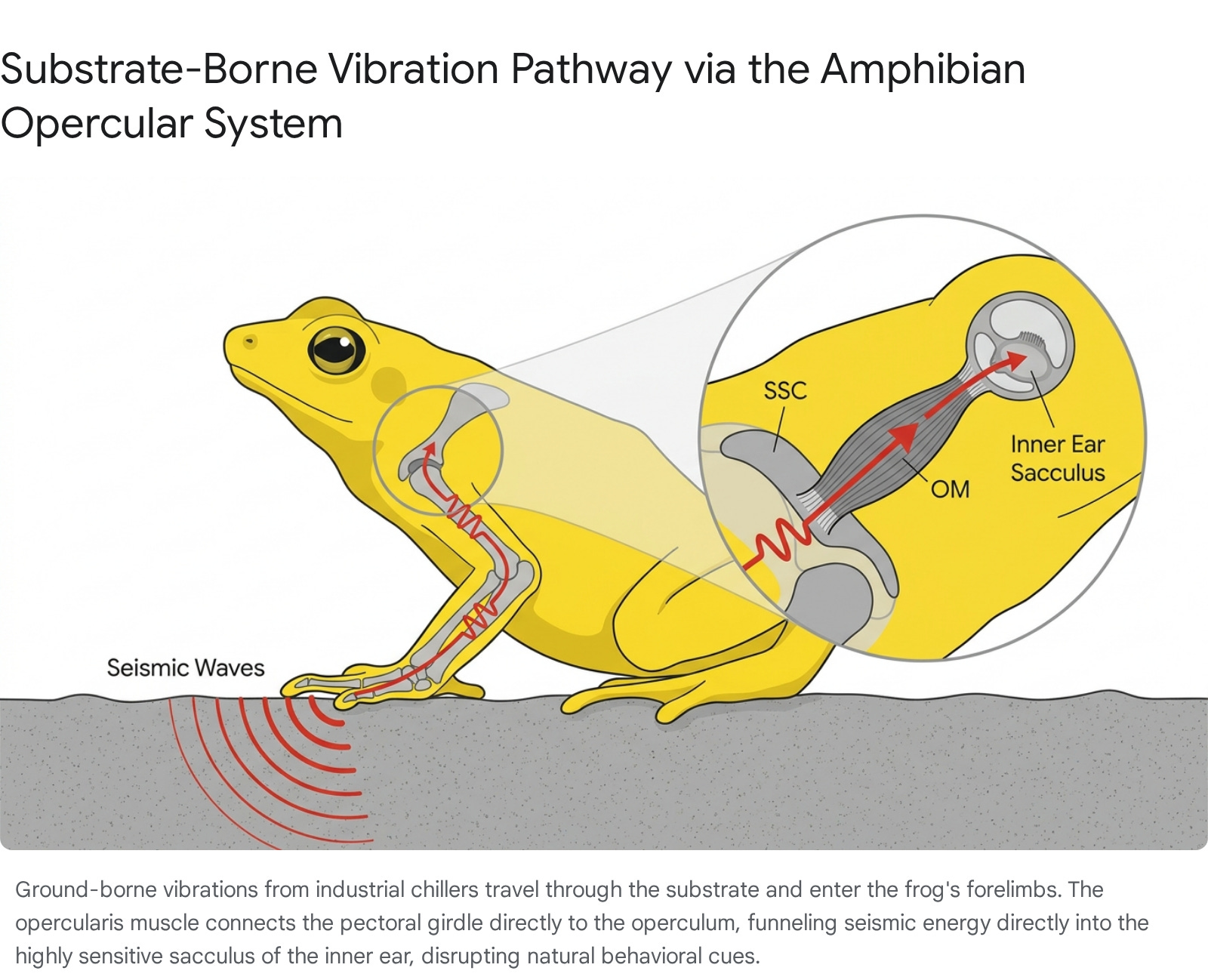
Neurophysiological mapping of single saccular fibers in the eighth cranial nerve of amphibians demonstrates that their intraspecific vibration sensitivity curves are heavily tuned to achieve peak sensitivity between 80 Hz and 200 Hz.58 Intraspecific vibration sensitivity curves decline rapidly at frequencies above 250 Hz.60 A data center operating large chillers, backup generators, or conducting adjacent excavation induces continuous substrate vibrations precisely within this 80-200 Hz peak detection window.
The biological consequence of this vibratory trespass is disastrous. Male Panamanian Golden Frogs are considerably vocal, utilizing advertisement calls to stimulate hormone production; hearing these calls increases male testosterone levels and female estradiol levels, directly triggering phonotaxis and copulatory behavior.56 If a female frog is continuously bombarded by seismic noise masking the substrate, or airborne LFN masking the call, the delicate endocrine cascade required for reproduction is halted. Because amphibians are exquisitely sensitive to vibration—often ceasing all calling behavior at the mere footfalls of approaching researchers or demonstrating startle responses to vibrations as low as 1 mm/s 62—continuous industrial vibration must be strictly controlled. To prevent an absolute biological block to golden frog reproduction, environmental limits must adhere to laboratory vivarium standards, restricting vibration to 0.025g (RMS) or approximately 0.1 mm/s PPV.15
5.2. The Eastern Hellbender: Cutaneous Respiration and Lateral Line Detection
The Eastern Hellbender (Cryptobranchus alleganiensis alleganiensis) is North America’s largest amphibian, a fully aquatic salamander that resides in the benthic zones of fast-moving streams.64 Hellbenders are uniquely adapted to their environment; they largely forego the use of lungs, instead respiring entirely cutaneously by absorbing dissolved oxygen directly through their highly folded, permeable skin.64 As nocturnal hunters, hellbenders rely heavily on their senses of touch, smell, and the detection of aquatic vibrations to navigate their murky environments and locate crayfish and invertebrate prey.64
Water is a highly efficient, incompressible medium for the transmission of acoustic pressure waves and kinetic vibration.19 When ground-borne vibrations from adjacent data center operations intersect with aquatic enclosures or naturalistic stream exhibits, the kinetic energy is transferred efficiently into the water column. Aquatic salamanders possess a lateral line system—a sophisticated network of mechanoreceptive neuromasts capable of detecting minute pressure gradients and low-frequency vibrations in the water.19
Continuous low-frequency vibrations introduced into a hellbender habitat will chronically overstimulate this lateral line system. This artificial stimulation masks the subtle hydrodynamic cues generated by prey movement and conspecifics. Furthermore, it completely disrupts the highly sensitive benthic environment required by male hellbenders, who are tasked with the delicate process of constructing nests beneath riverbed rocks, fertilizing eggs, and protecting the clutches until they hatch.64 Chronic exposure to vibration and noise induces profound stress in aquatic species, often resulting in the abandonment of nests or the cessation of feeding.62 As such, vibration limits for aquatic amphibian vivariums must adhere strictly to the highest laboratory standards, remaining below 0.1 mm/s PPV to ensure the survival of these ancient, fully aquatic species.33
6. Nocturnal Sensitivities and the Photometric Environment
While noise and vibration are the primary exports of data center operations, the facility’s localized impact on atmospheric and photobiological environments poses an equally severe threat to captive wildlife homeostasis.2 The expansion of industrial facilities necessitates extensive perimeter security and operational infrastructure, fundamentally altering the local photoperiod.
6.1. The Banded Palm Civet and Circadian Homeostasis
The Banded Palm Civet (Hemigalus derbyanus) is a small, solitary, and partially arboreal carnivore endemic to the tropical rainforests of the Oriental biogeographic region, including Thailand, Malaysia, and Indonesia.67 As a strictly nocturnal species, their biological rhythms are entirely inverse to standard human activity. They spend their days sleeping in ground holes or tree hollows and emerge at night to forage primarily on the ground for insects, small vertebrates, and fruits, utilizing their long tapered snouts to extract prey.67
In captive settings, viverrids are notoriously reclusive and exhibit low reproductive success, making breeding them exceptionally difficult.67 Females give birth to altricial young—born blind, deaf, and entirely dependent on maternal care.68 They exhibit extreme physiological sensitivity to environmental disturbances. Non-invasive assessments of adrenal activity in captive palm civets demonstrate massive spikes in fecal glucocorticoid metabolites (FGM) during periods of forced relocation, environmental disruption, and estrus.71
Data centers represent a unique threat to nocturnal taxa because their operations do not experience a “nighttime drop-off” typical of urban traffic or standard commercial activity.6 Cooling demands often persist or even increase during the night depending on global server loads. For a nocturnal civet attempting to forage, scent-mark its territory with vestigial anal glands, and engage in reclusive courtship behaviors, a continuous 24-hour industrial hum obliterates the quiet acoustic backdrop required for their natural ethogram.67 Chronic stress in such solitary, secretive species invariably leads to reproductive failure, as the elevated cortisol suppresses the gonadal axes required for successful estrus and mating.67
6.2. Artificial Light at Night (ALAN) and Photoperiod Disruption
Compounding the acoustic threat is the pervasive issue of light pollution. Hyperscale data centers require extensive perimeter security, resulting in high-intensity exterior illumination operating continuously from dusk until dawn.12 Artificial light at night (ALAN) fundamentally disrupts the photoperiodic cues upon which virtually all flora and fauna rely to synchronize their circadian and circannual rhythms.65
The biological thresholds for light tolerance in wildlife are vastly lower than human aesthetic or nuisance glare thresholds. For instance, many anuran species undergo severe behavioral modification under negligible illumination. Studies demonstrate that at illumination levels above merely 10^-3 lux, specific frogs will cease feeding entirely and remain immobilized to avoid visually oriented predators.75 In mammals, ALAN disrupts the pineal gland’s production of melatonin, a vital hormone governing sleep cycles, immune response, and the onset of reproductive seasons.76
For the nocturnal Banded Palm Civet, the intrusion of ambient security lighting alters their space use; studies on similar nocturnal mammals demonstrate that under artificial illumination, they move less frequently, travel shorter distances, and make fewer stops for foraging, engaging in an overarching retreat into darkened refuge.76 This suppression of natural exploratory and foraging behavior severely impacts their physical condition and psychological welfare. To protect zoological breeding programs, artificial light spillage at the enclosure boundary must be ruthlessly mitigated. Facilities must ensure absolute dark-sky compliance, with ambient luminance failing to exceed 0.5 lux (the absolute lower limit of most advanced lighting design software calculations) to protect the delicate photoperiods of the collection.77
7. Inhalation Toxicology: Diesel Exhaust and Particulate Matter
To ensure uninterruptible power for mission-critical server arrays, data centers deploy massive networks of diesel backup generators. These units must be routinely tested and maintained to ensure operational readiness, and during grid capacity shortages or electrical faults, they may be engaged for prolonged durations.9 The combustion of diesel fuel releases substantial volumes of volatile organic compounds, nitrogen oxides (NOx), and fine particulate matter (PM2.5) directly into the local atmosphere.79
PM2.5 is an ultrafine aerosol, measuring less than 2.5 microns in diameter, which allows it to easily bypass upper respiratory defenses.80 Upon inhalation, these microscopic particles lodge deeply within the pulmonary alveoli and can pass directly into the bloodstream.80 In mammalian models, inhalation of diesel exhaust particles (DEP) induces severe oxidative stress. The toxicological mechanism involves the activation of matrix-metalloproteinase-1 and triggers the NADP(H) oxidase/NOX4 redox-dependent mechanisms in lung epithelial cells, exacerbating asthma-like respiratory distress and chronic inflammation.82
Furthermore, chronic exposure to airborne toxins and severe environmental stress (such as persistent industrial noise) during pregnancy has demonstrated devastating teratogenic effects in laboratory mammals. Studies indicate that sustained exposure can result in higher rates of stillbirths, an increase in malformed young, and diminished overall embryo size.21 Given the precarious genetic bottleneck and immense conservation value of species like the clouded leopard and cheetah, the introduction of a massive stationary source of PM2.5 mere yards from outdoor enclosures presents an unacceptable toxicological risk to their respiratory health and reproductive success.18
8. Engineering Mitigations for Zoological Adjacencies
The standard mitigation proposed by data center developers—typically a 500-foot buffer distance or standard vegetative screening—is scientifically indefensible against low-frequency sound propagation and seismic trespass.14 Shrubs, trees, and standard concrete highway noise walls are utterly transparent to 63 Hz sound waves.11 Therefore, the protection of adjacent zoological assets necessitates the deployment of heavy, advanced acoustic and vibration engineering directly at the source.
Addressing LFN requires specific, highly engineered interventions. Chiller condenser fans and air handling units (AHUs) must be retrofitted or designed with aerodynamic flow modifications to prevent the generation of tonal drone at the source without compromising thermodynamic efficiency.8 Because traditional dissipative silencers (fiberglass baffles) are ineffective at low frequencies unless they are immensely long (e.g., a minimum 4-meter silencer is required to capture an 80 Hz tone) 8, data centers must employ tuned reactive silencers or Helmholtz resonators designed to trap specific disruptive frequencies.84
Furthermore, Active Noise Cancellation (ANC) systems should be integrated into mechanical enclosures. ANC utilizes precise microphones to measure the specific tonal frequencies generated by the equipment and broadcasts an inverted, antiphase sound wave, thereby actively canceling the low-frequency drone before it escapes the property boundary.83 All exterior diesel generators and high-capacity pumps must be housed within High Transmission Loss (HTL) acoustic enclosures.85 These are not simple metal sheds, but heavily engineered modular panels featuring perforated interior liners, specialized acoustic media fills, and internal stiffeners specifically designed to attenuate low-frequency resonance close to the source.86
To prevent the transmission of structural vibration into the earth, all heavy rotating machinery must be mounted on advanced vibration isolators, such as air springs or massive inertia bases. During any construction phase involving rock drilling or site grading, developers must utilize non-impact techniques, strictly avoiding vibratory pile driving and utilizing drilled piles, adhering stringently to the laboratory vivarium limit of 0.1 mm/s PPV at the zoo boundary to protect seismic amphibians.17
9. Synthesis and Recommended Performance Standards
The continued survival of the world’s most endangered species heavily depends upon the success of ex situ assurance colonies and captive breeding programs. Treating zoological parks as standard commercial entities adjacent to heavy industrial infrastructure like hyperscale data centers guarantees biological failure.
To resolve the profound conflict between digital infrastructure expansion and wildlife conservation, planning commissions and environmental authorities must mandate that data center developers adhere to strict, biologically driven performance requirements.
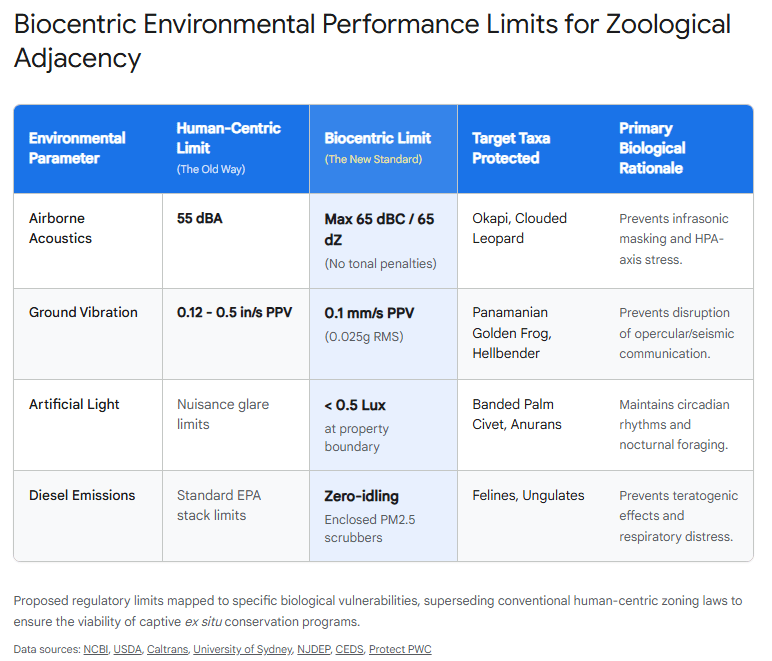
The following core tenets must form the foundation of this new regulatory paradigm:
Acoustic Profiling in dZ/dBC: Municipalities must abandon their exclusive reliance on dBA. Baseline and operational noise modeling must be mandated in C-weighted and Z-weighted (unweighted) decibels, strictly enforcing limits that prevent low-frequency (10-250 Hz) masking. An ambient cap of 65 dBC at the enclosure boundary must be maintained to protect the infrasonic communication of the okapi and prevent the ultrasonic-induced adrenal burnout of the clouded leopard and cheetah.13
Vivarium-Grade Vibration Limits: Authorities must apply laboratory-grade vibration limits to all construction and continuous operational phases. Peak Particle Velocity (PPV) must not exceed 0.1 mm/s (or 0.025g RMS) at the boundary of sensitive habitats to protect the delicate opercular and lateral line communication networks of the Panamanian Golden Frog and Eastern Hellbender.15
Absolute Light Mitigation: Facilities must enforce dark-sky compliance, restricting artificial light trespass to below 0.5 lux to preserve photoperiods, circadian rhythms, and foraging behaviors for nocturnal species like the Banded Palm Civet.77
Zero-Tolerance Emission Zones: Environmental protocols must mandate advanced PM2.5 and NOx scrubbing for all backup diesel generators and enforce severe restrictions on routine testing hours to prevent teratogenic and respiratory impacts on the mammalian collection.79
The implementation of these rigorous, biologically driven parameters will require significant financial investment in advanced active noise cancellation, high-transmission-loss enclosures, and vibration isolation technologies by data center operators.83 However, this is the uncompromising biological cost of establishing infrastructure adjacent to the most genetically valuable, environmentally sensitive animal collections on Earth. Utilizing human-centric zoning limits to regulate animal welfare is an act of profound ecological negligence; replacing those arbitrary buffers with hard, biocentric science is the only sustainable path forward to secure the future of these delicate breeding programs.
10. COMPREHENSIVE LEGISLATIVE REPORT: DATA CENTER REGULATION IN METRO NASHVILLE
10.1 Executive Summary & Legislative Context
In response to the proposed 69,220-square-foot DC BLOX data center adjacent to the Nashville Zoo and a subsequent public petition garnering over 160,000 signatures 3, Metro Council introduced Bill BL2026-1391. This legislation represents Nashville’s first zoning framework aimed specifically at data center resource allocation and environmental impacts. While the bill introduces necessary constraints—such as banning hyperscale campuses outright, mandating closed-loop water systems, and requiring 10% renewable grid offsets—its environmental protections regarding noise, vibration, and lighting remain strictly tethered to human-centric comfort metrics. Consequently, the legislation fails to adequately protect the highly specialized zoo animals at the center of the conflict.
10.2 Evaluating Siting and Setbacks
Bill BL2026-1391 mandates a 500-foot linear setback for medium (20,000–99,000 sq. ft.) and large data centers from any zoo or residential property. While a 500-foot buffer effectively dissipates high-frequency human noise and limits localized visual blight, it is virtually transparent to the low-frequency noise (LFN) generated by data center cooling arrays and diesel turbines. Because low-frequency sound waves (e.g., 63 Hz tones) have exceptionally long wavelengths, they diffract effortlessly over standard structural barriers and can travel massive distances with minimal atmospheric attenuation, rendering the 500-foot boundary functionally irrelevant for biological acoustics.
10.3 Acoustic Controls: The dBA Loophole vs. Biological Reality
The most critical biological failure of the proposed legislation is its reliance on A-weighted decibels for compliance monitoring. The bill establishes an operational acoustic cap of 65 dBA during daytime (7:01 a.m. to 9:59 p.m.) and 55 dBA at night.
The Threat to the Okapi: A 55 dBA limit heavily filters out low-frequency and infrasonic acoustic energy. A data center operating at a legally compliant 55 dBA could simultaneously be emitting 70 to 80 dBC of low-frequency hum. The Okapi (Okapia johnstoni) relies on infrasonic vocalizations—with an auditory range spanning from 14 Hz up to 250 Hz—to communicate with calves and maintain herd cohesion without alerting predators.37 A compliant 55 dBA data center will obliterate this infrasonic communication channel, potentially inducing chronic hyper-vigilance.38
The Threat to the Clouded Leopard: The Nashville Zoo’s clouded leopard conservation program is highly susceptible to environmental stress. Felines possess extraordinary hearing acuity, detecting frequencies up to 85,000 Hz.44 The unweighted, broad-spectrum noise and ultrasonic whining from electrical components—which are often ignored by a 55 dBA metric focused on human speech frequencies—act as continuous stressors. Research confirms that uncontrollable environmental stimuli and loud noises directly correlate with spikes in fecal glucocorticoid metabolites (chronic stress hormones) in captive clouded leopards.46 This stress activation frequently results in the self-mutilation and reproductive failures the zoo’s SSP is trying to avoid.46
10.4 Vibration and the Amphibian Blindspot
The proposed legislation notes that physical vibrations will be indirectly regulated through sound-attenuation enclosures and decibel ceilings. However, it completely omits quantitative limits for continuous, ground-borne structural vibration (such as Peak Particle Velocity, or PPV).
The Threat to the Panamanian Golden Frog and Eastern Hellbender: Amphibians like the critically endangered Panamanian Golden Frog (Atelopus zeteki) and Eastern Hellbender process seismic substrate vibrations natively.58 Golden frogs, for example, possess an opercularis muscle that funnels ground-borne kinetic energy directly from their forelimbs into their inner ear’s sacculus.58 Without a strict, vivarium-grade vibration limit (e.g., 0.1 mm/s PPV) encoded into the law, the continuous ground-borne vibration from adjacent HVAC chillers and construction phases will chronically overstimulate the highly tuned seismic receptors of these amphibians.
10.5 Summary and Conclusion
Bill BL2026-1391 represents a commendable effort in municipal planning and utility conservation. However, its application of human-centric noise limits (dBA) and arbitrary setback distances (500 feet) provides a false sense of security regarding animal welfare. To effectively protect the Nashville Zoo’s delicate ex situ conservation breeding programs, the Metro Council must amend the legislation to include C-weighted or Z-weighted decibel caps (dBC/dZ) at the property line and enforce strict Peak Particle Velocity (PPV) ground vibration thresholds. Without these biologically calibrated amendments, the proposed data center—even if fully compliant with the current draft of the law—will likely inflict severe sensory masking and chronic endocrine stress upon the zoo’s most sensitive and genetically valuable species.
Works cited
Nashville Zoo fights proposed data center next door, accessed June 7, 2026,
Proposed AI data center next to Nashville Zoo causes a stir - YouTube, accessed June 7, 2026,
150,000 people sign petition opposing proposed data center next to Nashville Zoo, accessed June 7, 2026,
THE ACCREDITATION STANDARDS & RELATED POLICIES - Regulations.gov, accessed June 7, 2026, https://downloads.regulations.gov/FWS-R4-ES-2019-0106-0548/attachment_3.pdf
CARING FOR WILDLIFE - WAZA, accessed June 7, 2026, https://www.waza.org/wp-content/uploads/2019/03/WAZA-Animal-Welfare-Strategy-2015_Landscape.pdf
Minimizing noise at our datacenter operations - Microsoft Local, accessed June 7, 2026, https://local.microsoft.com/wp-content/uploads/2022/10/Noise-fact-sheet.pdf
Noise and Vibration Considerations for Data Centers and IT Facilities | Acentech, accessed June 7, 2026, https://www.acentech.com/wp-content/uploads/2021/08/Noise-and-Vibration-Considerations-for-Data-Centers-and-IT-Facilities.pdf
Low-cost high efficiency data center noise reduction, accessed June 7, 2026, https://invc.com/noise-control/data-center-noise-attenuation/
Data Centre Noise Control - AWS, accessed June 7, 2026, https://invc-media.s3.amazonaws.com/invc_website/media/documents/Data_Centre_Noise_Control.pdf
Data Center Noise Monitoring - Larson Davis, accessed June 7, 2026, https://www.larsondavis.com/applications/environmental-noise-monitoring/data-center-noise-monitoring
The Complete Industrial Noise Control Handbook: Standards & Solutions, accessed June 7, 2026, https://environmental-noise-control.com/noise-control-handbook/
Thousands back zoo’s petition to block AI data center—”Irreversible damage” - Newsweek, accessed June 7, 2026, https://www.newsweek.com/nashville-zoo-petition-ai-data-center-tennessee-12034107
Data Center Noise Study for Prince William, Fauquier, and King George Counties and the Town of Warrenton, accessed June 7, 2026, https://protectpwc.org/wp-content/uploads/2023/02/Lyver-Data-Center-Noise-Study-123122.pdf
Data Center Factsheet - Sierra Club, accessed June 7, 2026, https://www.sierraclub.org/sites/default/files/2025-07/data-center-factsheet-4.pdf
Noise and Vibration in the Vivarium: Recommendations for Developing a Measurement Plan, accessed June 7, 2026, https://pmc.ncbi.nlm.nih.gov/articles/PMC7604687/
April 11, 2021 Maine Legislative Joint DMR and DIFW Committees Re. Rules LD114 and LD89 Dear Committee Members: My name is Eil - Maine Legislature, accessed June 7, 2026, https://legislature.maine.gov/testimony/resources/IFW20210412Peterson132626743025291423.pdf
Chapter 13 Noise (RMM) (00302869).DOCX - Elk Grove, accessed June 7, 2026, https://elkgrove.gov/sites/default/files/city-files/archive/departments/cross-departmental-projects/zoo/environmental-review/draft-eir/archive-3-11-noise.pdf
After facing local resident protests, one of the data centre projects in US now has a ‘problem’ with leopards and zoo, accessed June 7, 2026, https://timesofindia.indiatimes.com/technology/tech-news/after-facing-local-resident-protests-one-of-the-data-centre-projects-in-us-now-has-a-problem-with-leopards-and-zoo/articleshow/131564476.cms
Stakeholder Perspectives on Zoo Sound Environments and Associated Impacts on Captive Animal Behaviour, Management and Welfare - MDPI, accessed June 7, 2026, https://www.mdpi.com/2673-5636/6/3/47
From Soundwave to Soundscape: A Guide to Acoustic Research in Captive Animal Environments - PMC, accessed June 7, 2026, https://pmc.ncbi.nlm.nih.gov/articles/PMC9244380/
Mouse laboratory housing rooms: a focus on noise - TransCure bioServices, accessed June 7, 2026, https://www.transcurebioservices.com/mouse-laboratory-housing-rooms-a-focus-on-noise/
Noise Vibration Zoning Ordinances Data Centers Zoning Issues - KnowYourH2O, accessed June 7, 2026, https://shop.knowyourh2o.com/blogs/news/noise-vibration-zoning-ordinances-data-centers-zoning-issues
GOOD NOISE NEIGHBOR - Lab @ Acentech, accessed June 7, 2026, https://lab.acentech.com/2025/11/06/good-noise-neighbor/
SOUND STUDY - USDA Rural Development, accessed June 7, 2026, https://www.rd.usda.gov/media/file/download/usda-rd-attachment-14-sound-study-09082025.pdf
How to Protect Your Home from Data Center Impacts, accessed June 7, 2026, https://ceds.org/datacenter/
Effects of noise from oil and gas development on ungulates and small mammals—A science synthesis to inform National Environmental Policy Act analyses - USGS Publications Warehouse, accessed June 7, 2026, https://pubs.usgs.gov/publication/sir20235114/full
Evaluation of Low-Frequency Noise, Infrasound, and Health Symptoms at an Administrative Building and Men’s Shelter: A Case Study - PMC, accessed June 7, 2026, https://pmc.ncbi.nlm.nih.gov/articles/PMC10562056/
Chapter: 3 Metrics for Assessing Environmental Noise - Read “Technology for a Quieter America” at NAP.edu, accessed June 7, 2026, https://www.nationalacademies.org/read/12928/chapter/5
Managing the Impacts of Blast-Induced Vibration and Overpressure on Fish and Fish Habitat - Federal Highway Administration, accessed June 7, 2026, https://www.fhwa.dot.gov/clas/pdfs/fhwa-flh-td_19001.pdf
Draft Environmental Assessment - dco.uscg.mil, accessed June 7, 2026, https://www.dco.uscg.mil/Portals/9/USCG_Draft_EA_PofS_Bridge_Replacement_Rail_Improvements.pdf
MEMORANDUM - City Clerk - City of Los Angeles, accessed June 7, 2026, https://cityclerk.lacity.org/onlinedocs/2024/24-0342-s3_misc_4_7-31-24.pdf
Information Request 11.1 SCI RESPONSE - Canada.ca, accessed June 7, 2026, https://iaac-aeic.gc.ca/050/documents_staticpost/54755/90488/consolidated11.pdf
Susan Wakil Health Building - The University of Sydney, accessed June 7, 2026, https://www.sydney.edu.au/content/dam/corporate/documents/about-us/campuses/monitoring-results-noise-and-vibration.pdf
Okapi - Los Angeles Zoo and Botanical Gardens, accessed June 7, 2026, https://lazoo.org/explore-your-zoo/our-animals/mammals/okapi/
Species Conservation Planning Workshop Summary - Panamanian Golden Frog (Atelopus zeteki, A. varius), accessed June 7, 2026, https://www.cpsg.org/documents/workshop-summary-panamanian-golden-frog
Tall Blondes | Silent Sentinels? | Nature - PBS, accessed June 7, 2026, https://www.pbs.org/wnet/nature/tall-blondes-silent-sentinels/2256/
Proceedings of Meetings on Acoustics - AIP Publishing, accessed June 7, 2026, https://pubs.aip.org/asa/poma/article-pdf/doi/10.1121/1.4800658/18241742/pma.v19.i1.010012_1.online.pdf
Okapi (Okapia johnstoni) - FaunaFocus, accessed June 7, 2026, https://faunafocus.com/portfolio/okapi/
Okapi | San Diego Zoo Animals & Plants, accessed June 7, 2026, https://animals.sandiegozoo.org/animals/okapi
Is it a Horse? Is it a Zebra? It’s an Okapi! | Columbus Zoo and Aquarium, accessed June 7, 2026, https://www.columbuszoo.org/blog/it-horse-it-zebra-its-okapi
Unconstrained Demand, accessed June 7, 2026, https://img.vasierra.club/UnconstrainedDemand_SinglePage.pdf
Hearing disorders in cats: Classification, pathology and diagnosis - PMC, accessed June 7, 2026, https://pmc.ncbi.nlm.nih.gov/articles/PMC11119533/
Cats and their hearing - Hidden Hearing, accessed June 7, 2026, https://www.hiddenhearing.co.uk/hearing-blog/case-studies/cats-and-their-hearing
Hearing range of the domestic cat - PubMed - NIH, accessed June 7, 2026, https://pubmed.ncbi.nlm.nih.gov/4066516/
Feline vocal communication - PMC - NIH, accessed June 7, 2026, https://pmc.ncbi.nlm.nih.gov/articles/PMC7000907/
Noninvasive assessment of adrenal activity associated with husbandry and behavioral factors in the North American Clouded leopard population | Request PDF - ResearchGate, accessed June 7, 2026, https://www.researchgate.net/publication/229938876_Noninvasive_assessment_of_adrenal_activity_associated_with_husbandry_and_behavioral_factors_in_the_North_American_Clouded_leopard_population
Noninvasive Assessment of Adrenal Activity Associated with Husbandry and Behavioral Factors in the North American Clouded Leopard, accessed June 7, 2026, https://www.federalcircusbill.org/wp-content/uploads/2014/04/Wielebnowski2002.pdf
pairing clouded leopards (neofelis nebulosa) in a captive breeding, accessed June 7, 2026, https://rex.libraries.wsu.edu/view/delivery/01ALLIANCE_WSU/12338022110001842/13338236060001842
Clouded leopards, from crisis to success: Q&A with Janine Brown | Smithsonian Insider, accessed June 7, 2026, https://insider.si.edu/2015/03/clouded-leopards/
Personality matters: exploring the relationship between personality and stress physiology in captive African lions - PMC, accessed June 7, 2026, https://pmc.ncbi.nlm.nih.gov/articles/PMC10127340/
5.5 Noise | AzusaCA.gov, accessed June 7, 2026, https://www.azusaca.gov/DocumentCenter/View/26905/Sec-05-05_Noise
Panamanian golden frog - Wikipedia, accessed June 7, 2026, https://en.wikipedia.org/wiki/Panamanian_golden_frog
Species Spotlight: Will the Panamanian Golden Frog Survive? - The Revelator, accessed June 7, 2026, https://therevelator.org/panamanian-golden-frog/
Panamanian golden frogs return to the wild - The Wildlife Society, accessed June 7, 2026, https://wildlife.org/panamanian-golden-frogs-return-to-the-wild/
Panamanian golden frog - Atelopus zeteki - Toronto Zoo, accessed June 7, 2026, https://www.torontozoo.com/animals/Panamanian%20golden%20frog
Critical calls: Circadian and seasonal periodicity in vocal activity in a breeding colony of Panamanian golden frogs (Atelopus zeteki) | PLOS One, accessed June 7, 2026, https://journals.plos.org/plosone/article?id=10.1371/journal.pone.0286582
Do Male White-Lipped Frogs Use Seismic Signals for Intraspecific Communication?1 - BioOne Complete, accessed June 7, 2026, https://bioone.org/journals/american-zoologist/volume-41/issue-5/0003-1569(2001)041%5B1185%3ADMWLFU%5D2.0.CO%3B2/Do-Male-White-Lipped-Frogs-Use-Seismic-Signals-for-Intraspecific/10.1668/0003-1569(2001)041[1185:DMWLFU]2.0.CO;2.short
Seismic Communication in Anuran Amphibians, accessed June 7, 2026, https://academic.oup.com/bioscience/article-pdf/40/4/268/720155/40-4-268.pdf
How a Frog Hears | Acoustics Today, accessed June 7, 2026, https://acousticstoday.org/wp-content/uploads/2020/12/How-a-Frog-Hears-Andrea-Megela-Simmons-and-Darlene-R.-Ketten.pdf
Seismic sensitivity and bone conduction mechanisms enable ..., accessed June 7, 2026, https://pmc.ncbi.nlm.nih.gov/articles/PMC7774885/
Critical calls: Circadian and seasonal periodicity in vocal activity in a breeding colony of Panamanian golden frogs (Atelopus zeteki) - PMC, accessed June 7, 2026, https://pmc.ncbi.nlm.nih.gov/articles/PMC10434951/
Appendix 7 Noise and vibration impact assessment - NTEPA, accessed June 7, 2026, https://ntepa.nt.gov.au/_resources/documents/eia/ranger-3-deeps-underground-mine/draft-eis/appendices/appendix07_noise_vibration_impact_assessment2.pdf
Advances in Marine Self-Powered Vibration Sensor Based on Triboelectric Nanogenerator, accessed June 7, 2026, https://www.mdpi.com/2077-1312/10/10/1348
Introducing The Hellbender Salamander | Amphibian Education - Save the Frogs, accessed June 7, 2026, https://savethefrogs.com/hellbenders/
Long-Term Effects of Chronic Light Pollution on Seasonal Functions of European Blackbirds (Turdus merula) | PLOS One, accessed June 7, 2026, https://journals.plos.org/plosone/article?id=10.1371/journal.pone.0085069
Noise and Vibration Criteria and Observations for Construction Works within Animal Research and Breeding Facilities - ResearchGate, accessed June 7, 2026, https://www.researchgate.net/publication/365260546_Noise_and_Vibration_Criteria_and_Observations_for_Construction_Works_within_Animal_Research_and_Breeding_Facilities
Hemigalus derbyanus (banded palm civet) | INFORMATION | Animal Diversity Web, accessed June 7, 2026, https://animaldiversity.org/accounts/Hemigalus_derbyanus/
Banded Palm Civet | Encyclopedia MDPI, accessed June 7, 2026, https://encyclopedia.pub/entry/56048
Wildlife of RER: Banded Palm Civet, accessed June 7, 2026, https://www.rekoforest.org/field-stories/wildlife-of-rer-banded-palm-civet/
Banded Palm Civet - Facts, Diet, Habitat & Pictures on Animalia.bio, accessed June 7, 2026, https://animalia.bio/banded-palm-civet
(PDF) Non-invasive assessment of physiological stress in captive common palm civets ( Paradoxurus hermaphroditus ) in Vietnam - ResearchGate, accessed June 7, 2026, https://www.researchgate.net/publication/359893000_Non-invasive_assessment_of_physiological_stress_in_captive_common_palm_civets_Paradoxurus_hermaphroditus_in_Vietnam
Non-invasive assessment of physiological stress in captive common palm civets (Paradoxurus hermaphroditus) in Vietnam - Malque Publishing, accessed June 7, 2026, https://malque.pub/ojs/index.php/jabb/article/view/266
Effects of Noise on Wildlife and Other Animals: Review of Research Since 1971 - epa nepis, accessed June 7, 2026, https://nepis.epa.gov/Exe/ZyPURL.cgi?Dockey=9100ONX4.TXT
A synthesis of two decades of research documenting the effects of noise on wildlife - Angeloni Lab, accessed June 7, 2026, https://angelonilab.colostate.edu/Site/Publications_files/ShannonEtal2016BiolRev.pdf
A review of the effects of artificial light at night in urban areas on the ecosystem level and the remedial measures - PMC, accessed June 7, 2026, https://pmc.ncbi.nlm.nih.gov/articles/PMC9589889/
What evidence exists on the impacts of artificial light on terrestrial non-flying mammals native to Europe? A systematic map and a narrative review - Frontiers, accessed June 7, 2026, https://www.frontiersin.org/journals/ecology-and-evolution/articles/10.3389/fevo.2025.1544308/full
National Light Pollution Guidelines for Wildlife - DCCEEW, accessed June 7, 2026, https://www.dcceew.gov.au/sites/default/files/documents/national-light-pollution-guidelines-wildlife.pdf
Effects of LED Lighting on Terrestrial Wildlife - Caltrans, accessed June 7, 2026, https://dot.ca.gov/-/media/dot-media/programs/research-innovation-system-information/documents/final-reports/ca23-3696-finalreport.pdf
Looser Rules, Dirtier Air: Data Centers and Diesel Pollution in Virginia | Sierra Club, accessed June 7, 2026, https://www.sierraclub.org/virginia/blog/2026/01/looser-rules-dirtier-air-data-centers-and-diesel-pollution-virginia
Fine Particles (PM2.5) - NJDEP, accessed June 7, 2026, https://dep.nj.gov/wp-content/uploads/dsr/trends-pm.pdf
Breathing Easy: Truckers’ Health and the Rise of Zero-Emission Trucks - NRDC, accessed June 7, 2026, https://www.nrdc.org/bio/guillermo-ortiz/breathing-easy-truckers-health-and-rise-zero-emission-trucks
Interaction of matrix metalloproteinases with pulmonary pollutants - ERS Publications, accessed June 7, 2026, https://publications.ersnet.org/content/erj/39/4/1021
Noise Control in Data Centers: Key Design Strategies - Future Bridge Americas, accessed June 7, 2026, https://future-bridge.us/noise-control-in-data-centers-key-design-strategies/
What Are Acoustical Louvers & How Do They Control Noise in Data Centers?, accessed June 7, 2026, https://ketchumandwalton.com/what-are-acoustical-louvers-how-do-they-control-noise-in-data-centers/
Noise Control for Data Centres | Flexshield, accessed June 7, 2026, https://flexshield.com.au/noise-control-for-data-centres/
Acoustic Enclosures and Plenums - VAW Systems Ltd., accessed June 7, 2026, https://vawsystems.com/commercial-products/acoustic-enclosures-and-plenums/
The Science Behind Acoustic Enclosures for Industrial Equipment, accessed June 7, 2026, https://www.decibelinternational.co.uk/blog/the-science-behind-acoustic-enclosures-for-industrial-equipment-38/
Christopher Remke [AIA ret.] brings an unusual combination to real estate analysis: the quantitative rigor of a veteran Design-Build-Development Advisory Professional merged with the cultural awareness of a Context-Sensitive Urbanist. As Principal of Linked, L. L. C., he’s the rare voice who can deconstruct a pro forma, read municipal debt structures, and simultaneously ask whether the project destroys or enhances the neighborhood’s social fabric.
This dual perspective - analytics meets urbanism - allows Chris to expose what architects, planners, builders, and conventional real estate experts miss: how financialization, zoning manipulation, and tax policy don’t just change property values, they fundamentally alter how cities function as communities.
As President of Save Our Nashville Neighborhoods (SONNinc.org), Chris fights extraction-urbanism’s standardized templates and champions genuine neighborhood diversity. Through his writing, he operates in “Decoder Mode,” making complex policy accessible while revealing the truth behind political narratives.
His mission is simple:
Neighborhoods need a voice, Working People need a voice, and the City needs a gut check.Because transparency builds trust. Manipulation destroys it.
Comments
Nothing yet. Say the first thing.
Sign in to join the conversation.