
I felt sick. After a year of cranking on R&D, BlueDot Photonics had hit a brick wall.
Our materials weren’t reaching the requisite performance targets. After testing dozens of variables and making thousands of samples, we were stuck. It was a dark time for the team.
Fortunately, I had kept the investors in the loop at every step. None of my board members and observers were surprised. We created a plan to pivot away from our solar application to other niche applications for our materials.
However, that experience left a lasting impact and taught me an invaluable lesson. We launched too early and should have further de-risked the technology in the academic setting. I was always transparent with investors about the risks and the state of the technology, and I am grateful for their confidence and support. But in hindsight, we got ahead of ourselves.
We fell into what I call the “TRL 3 Trap.”
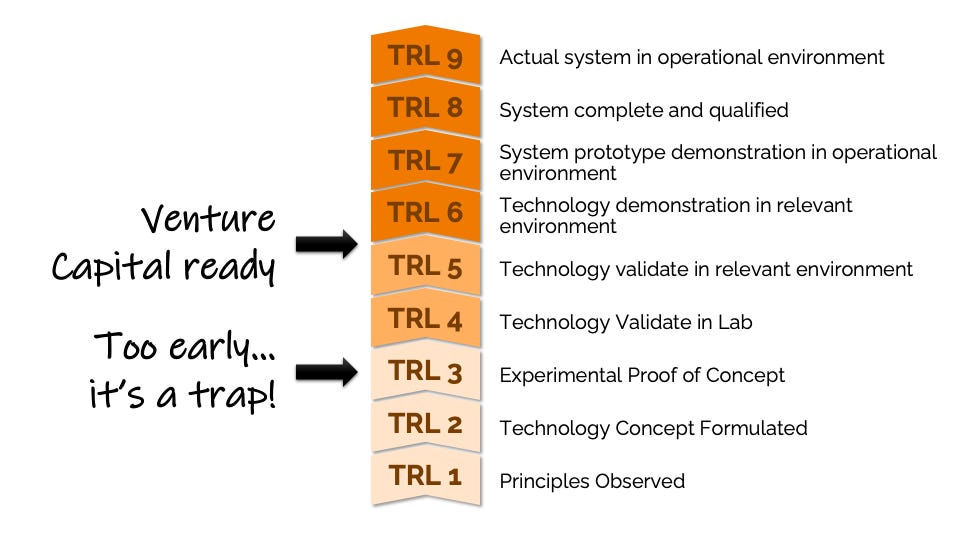
Technology Readiness Level (TRL) is a concept that NASA, DOD, and DOE have defined and adopted to help “in identifying those elements and processes of technology development required to reach proven maturity levels to ensure project success.” Technology development typically proceeds through a series of steps from idea to commercial deployment.
For the DOE, there are three core components of TRL: Scale, System Fidelity, and Environment.
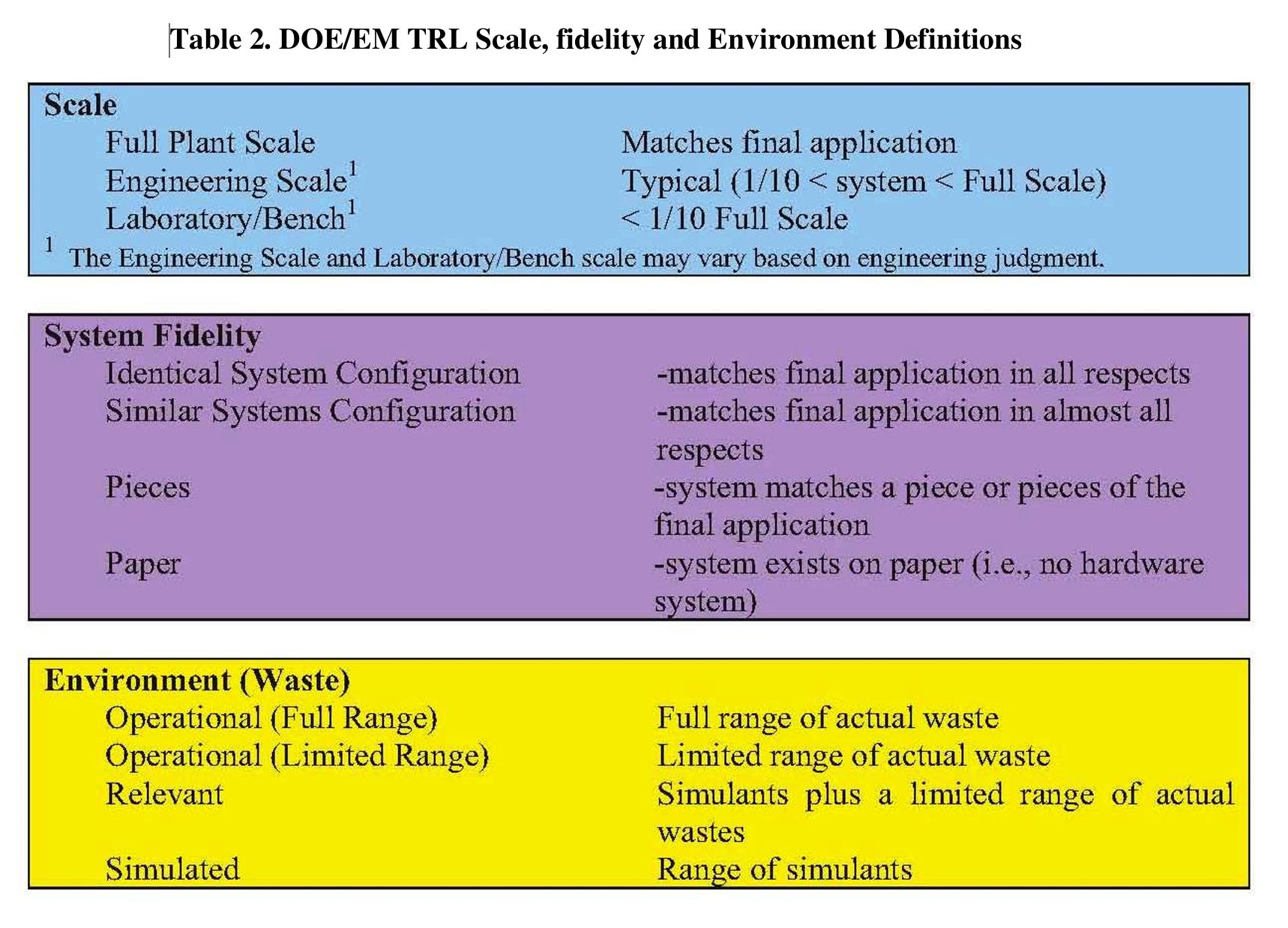
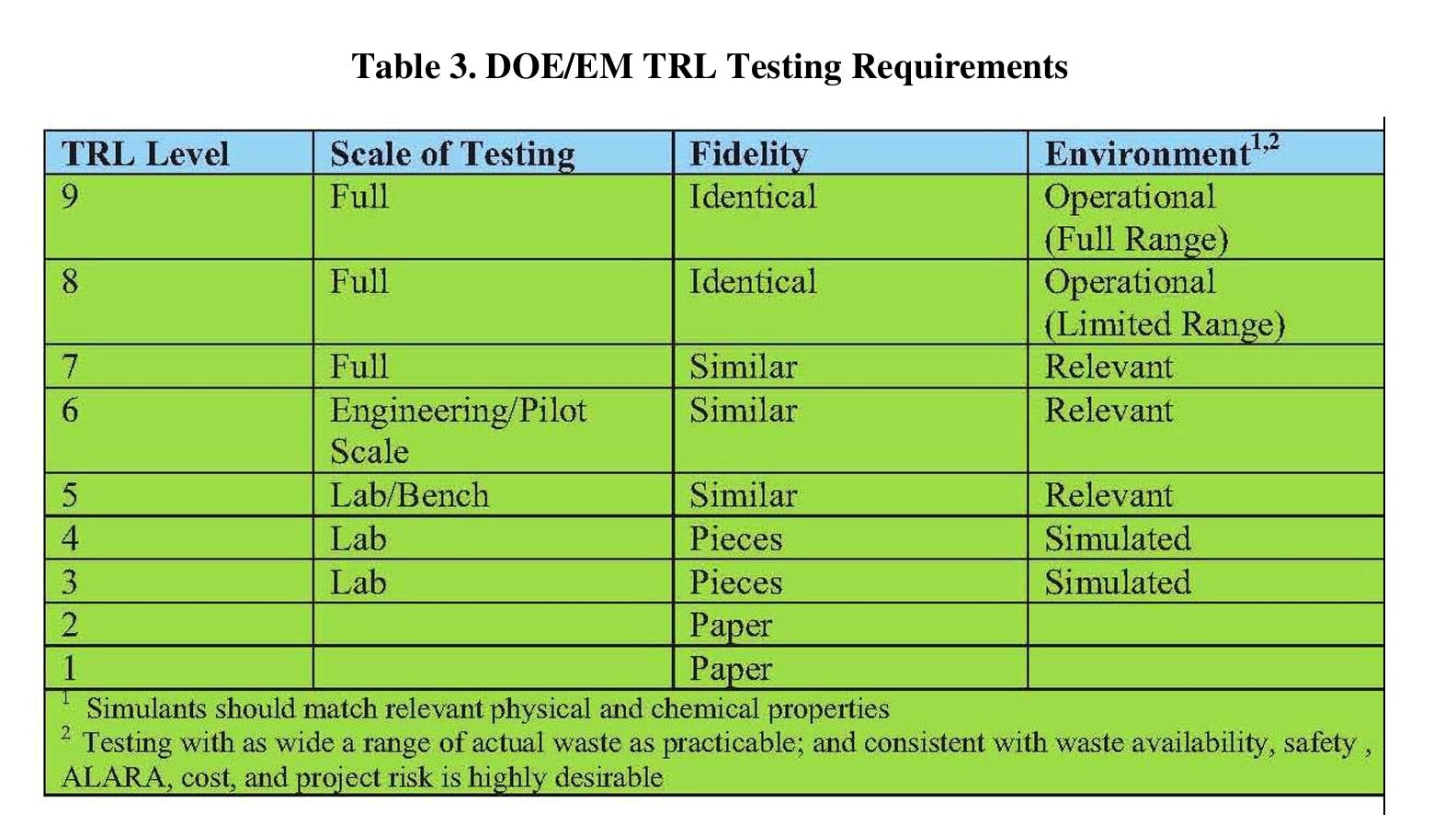
Components progress toward the envisioned commercial deployment through a series of incremental steps across these core pillars before reaching TRL 9.
If you want to found a deep tech startup, you have to understand that venture capital is a tool for scaling proven concepts. It’s not for basic R&D. High levels of technical risk terrify prospective investors for good reason. This type of risk is open-ended, requiring an indefinite amount of money to solve. Investors want to take risks on the business model and scale-up where money has a higher chance of solving the startup’s problems.
In our Investor Fit Red Flag Assessment, we ask a simple question:
Has the company achieved TRL 5 with its core technology?
Why do we pick TRL 5 as the right stage for investors? Let’s look at how the DOE defines TRL 5:
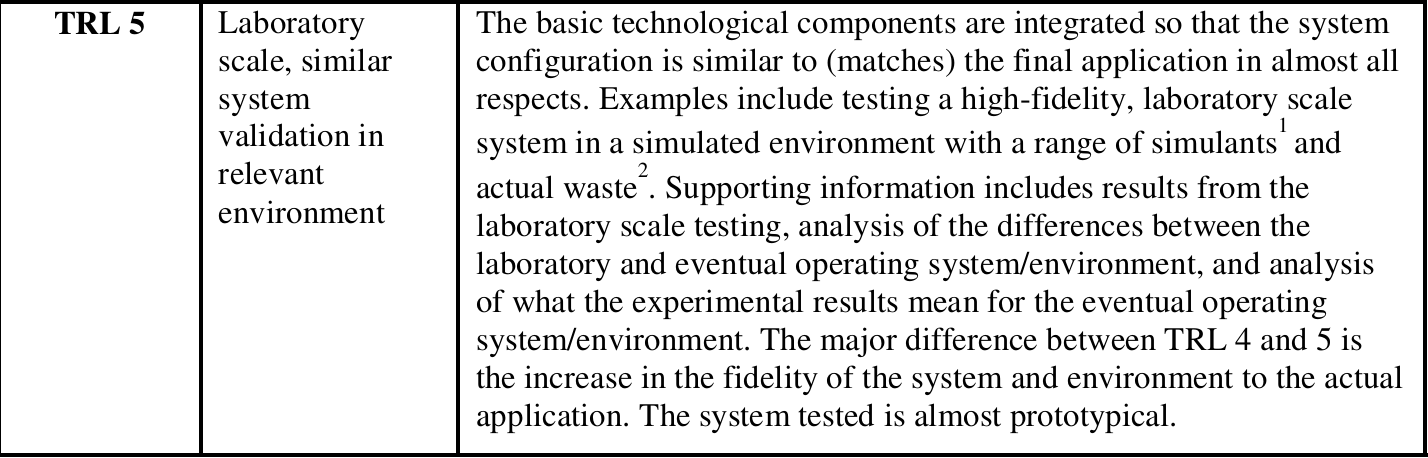
Basically, you have a scaled-down version of the envisioned deployment, tested in real-world conditions with sufficient fidelity to enable comparison with the final product. It answers all foundational technology questions that underpin the unit economics (e.g., efficiency, operating conditions, repeatability, durability). All of the physics, chemistry, and biology is worked out. The only questions that remain are how to scale up the technology and how to operate it in real-world conditions.
TRL 5 can be thought of as the minimum viable product for deep tech.
This is the perfect time for venture capital to get involved. The team needs to scale up to pilot scale, which will require substantial capital. Money solves this problem.
Thanks for reading Building for 2075! Help a deep tech founder you know by sharing this post.
Unfortunately, reaching TRL 5 can be challenging due to how R&D funding works in the US.1
Shortly after World War II, the US established a publicly funded R&D system, inspired by Vannevar Bush and his report, Science: The Endless Frontier. The basic idea is that the government should fund basic research at institutions like universities, and industry should focus on scale-up and commercialization. It can be argued that this has been one of the most successful innovation systems ever created.
Unfortunately, one side effect of this division is that a gap can form between the universities and industry:
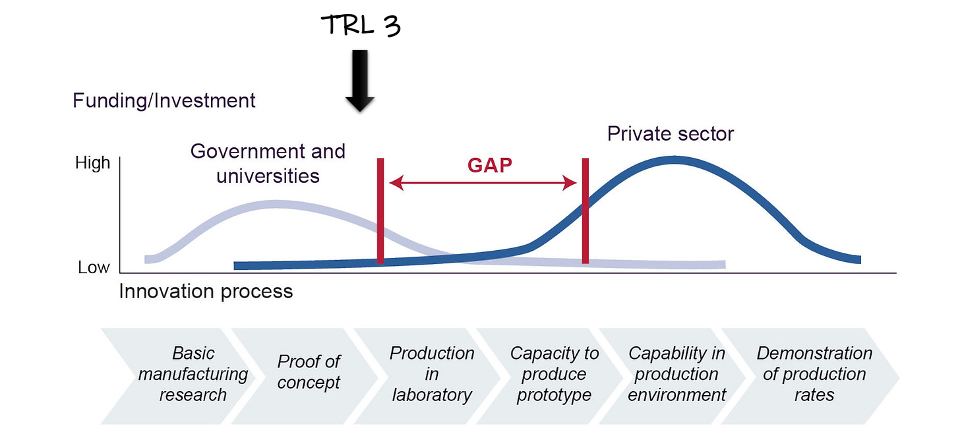
As you can see, government funding begins to decline at the Proof of Concept phase (TRL 3). The basic research is complete, and the funding agencies aren’t interested in supporting the applied research that follows. But industry and private investors are wary of investing in what they see as unproven technology. Hence, the gap forms. This is often referred to as the “Valley of Death.”
At the same time, the technology's commercial potential is beginning to emerge. No longer just an idea, there is enough data to say, “If we can improve performance by another 50%, this can be revolutionary.”
But these are big ifs. And that is the trap. Just because it’s possible to tell a story about game-changing innovation, it doesn’t mean that it’s time to spinout a company and take venture capital. Substantial R&D remains to reach the commercially relevant performance targets. But it is possible to spin out and convince investors of the technology's potential, even while remaining 100% transparent about the risks.
And once the investment funds are wired into the startup’s bank account, the clock starts ticking. The founders are now in a race to solve what might be unsolvable problems.
In most cases, this results in a disappointing outcome.
If you find yourself in the situation where you have developed promising technology, but it’s not at TRL 5, there are a few things you should do:
Secure internal commercialization funding at your research university: Many universities now offer commercialization grants to help bridge the gap. One example is the University of Washington's tech transfer office, CoMotion, which offers an Innovation Gap Fund grant of up to $75,000. These funds help move from a proof of concept to a lab-scale prototype. Find out if you are eligible for this funding ASAP.
Secure SBIR/STTR funding or similar: The US government recognized in the 80s that the TRL 3-5 gap was a problem for innovation. It created the Small Business Innovation Research and Small Business Technology Transfer Research grants to support the transition from proof of concept to prototype.2 Some states offer complementary programs. If you are at TRL 3, apply for this funding now.
Align your technical development with commercial goals for investors. If neither funding option is available, you may need to seek private investor funding. In these situations, it’s essential to be transparent about the current state of the technology and its risks. Then present a credible plan to reduce the technology’s risks, with specific objectives and results that move you closer to customer-defined goals. For example, don’t just say, “Improve material application yield by 10%.” Instead, focus on the commercial target with something like, “Reach a manufacturing yield of 95%, lowering our $/kWh price to below market prices.” Show them how your R&D plan increases the company's value. Do this effectively, and you'll improve your chances of attracting private capital.
I often think about what I could have done differently at BlueDot. We secured additional funding at the University of Washington before spinning out. We secured an SBIR award from the NSF and an applied research agreement with the DOE. I was fully transparent with investors throughout the process.
Most days, I decide we did the best we could with the hand we were dealt. And all I can do now is share my story with founders like you and hope we can build a more effective deep-tech innovation system.
If you have a story about falling into the TRL 3 Trap, I would love to hear from you. Leave a comment and let’s compare notes. Maybe if we all work together, we can find ways to avoid the TRL 3 Trap.
I can only speak about my experience in the US. Other places might have solved these challenges.
At the time of publication, the SBIR/STTR program had not been reauthorized by Congress. However, there were signs that a compromise was underway.
Comments
Nothing yet. Say the first thing.
Sign in to join the conversation.