
One of the biggest challenges I’ve faced since starting my journey to build human-scale communities is what I call the cold start problem. Namely, how do you start to build a new community? History is littered with ideal cities that have no inhabitants and building projects that missed the mark. And the more I dig into it, the more I realize that it’s actually two problems—each making the other more difficult to solve.
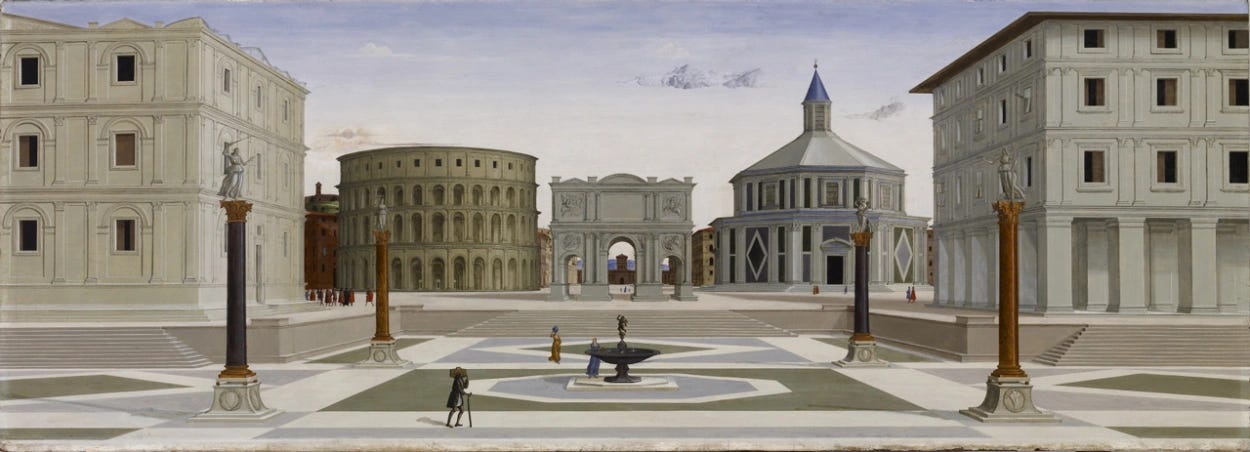
“The ideal city of Urbino” Attributed to Fra Carnevale. c.1480-84. Oil and tempera on panel. 77.4 × 220cm. The Walters Art Museum, Baltimore, MD.
It is difficult—if not impossible—to build a great place in isolation. A neighborhood is not just a collection of buildings; it is an ecosystem of businesses, residents, and public spaces that shape how people interact with one another. In well-designed communities, these interactions feel organic: morning coffee at the corner café, a stop at a bookstore on a walk, a familiar face on the street. But these environments are in modern American neighborhoods.
I’ve often assumed that suburban monoculture—the endless repetition of single-family homes, strip malls, and large apartment complexes—exists because the market demands it. In reality, these environments exist despite the desires of people who live in them, not because of them. My view is that people look for homes that meet their needs, whether that’s for their work, family or community. People need different kinds of housing to meet their needs but when the only choices available to them are single family homes that require a car, it’s clear that the market isn’t providing solutions for everyone.
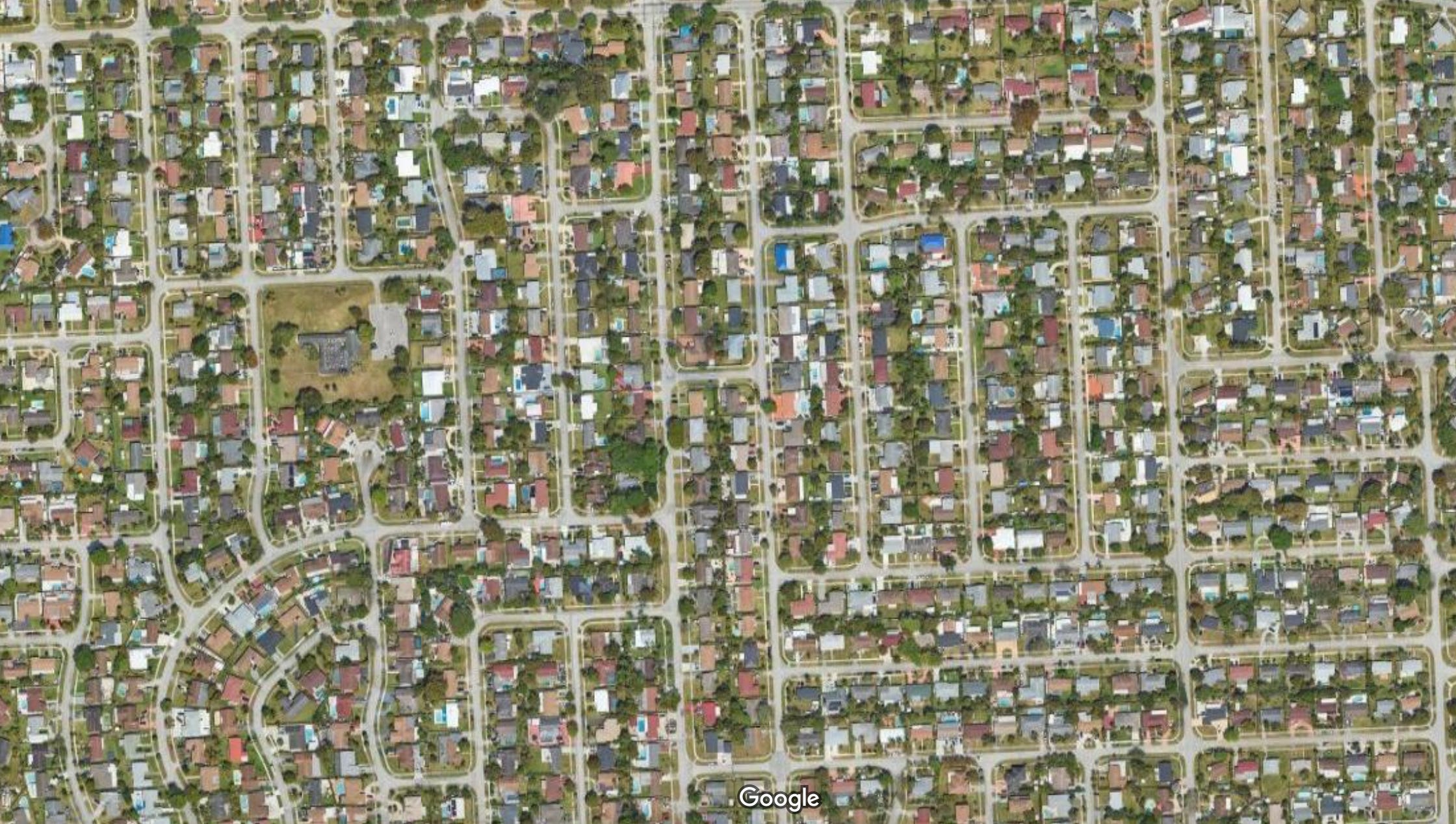
A suburban neighborhood that could easily be found in any state. Hundreds of homes with only a single housing type.
Why do we continue to build this way? From what I’ve learned so far it is a confluence of forces that shape how places are built:
Investors favor projects with predictable unit economics and rapid returns.
Builders seek standardization to lower costs and reduce complexity.
Banks prefer underwriting properties that fit conventional appraisal models.
Local Governments set zoning rules and covenants that restrict building types,
It means the easiest thing to build is not the best thing to build. Walkable, mixed-use neighborhoods are difficult to finance because they don’t fit into standard risk models. The financial system rewards developers who build what has worked in the past, reinforcing a cycle where most new development looks the same as the last.
If the goal is to create better places, the question becomes: Where do we start?
Constructing a human-centric neighborhood in an isolated area will not solve these systemic issues, as it would remain dependent on the car-centric infrastructure that surrounds it. A single apartment building in a car-dependent suburb does not solve this challenge. While it may provide additional housing, it does not fundamentally alter the way people live.
In cities that have human-centric infrastructure, there are few places where entirely new districts can be built from scratch. The key is to identify incremental projects that add density, support walkability, and fit within the existing urban fabric. The solution to this cold start problem must then conform to a built form that aligns with human-scale urbanism, is financially viable, and is small enough to be a feasible first step for a new developer.
The second challenge is the experience gap in real estate development. The barriers to entry are significant: banks, investors, and city officials place a high value on a developer’s track record, making it difficult to secure funding or approvals for projects that do not fit into conventional models. Large-scale developments—such as a fully realized walkable neighborhood—are out of reach for those without prior experience, reinforcing a system where only those who have built before are able to build again.
Like any discipline, real estate development requires iteration. Finding the right partners, product and economic model takes time. The criteria for is identifying the right type of first project is critical— is one that:
Is financially viable without taking on excessive risk, limiting the scale but not the variety of construction
Adds to an existing place rather than attempting to create an ecosystem from scratch.
Demonstrates the potential of human-scale urbanism in a way that can be replicated.
From the perspective of Building Better Places, many of these kinds of buildings are part of a “missing middle”, housing that provides a range of options for people and communities. Cities and towns across America are making changes to improve the zoning permissions for different kinds of housing. What’s left is to find financially viable models to add existing communities.
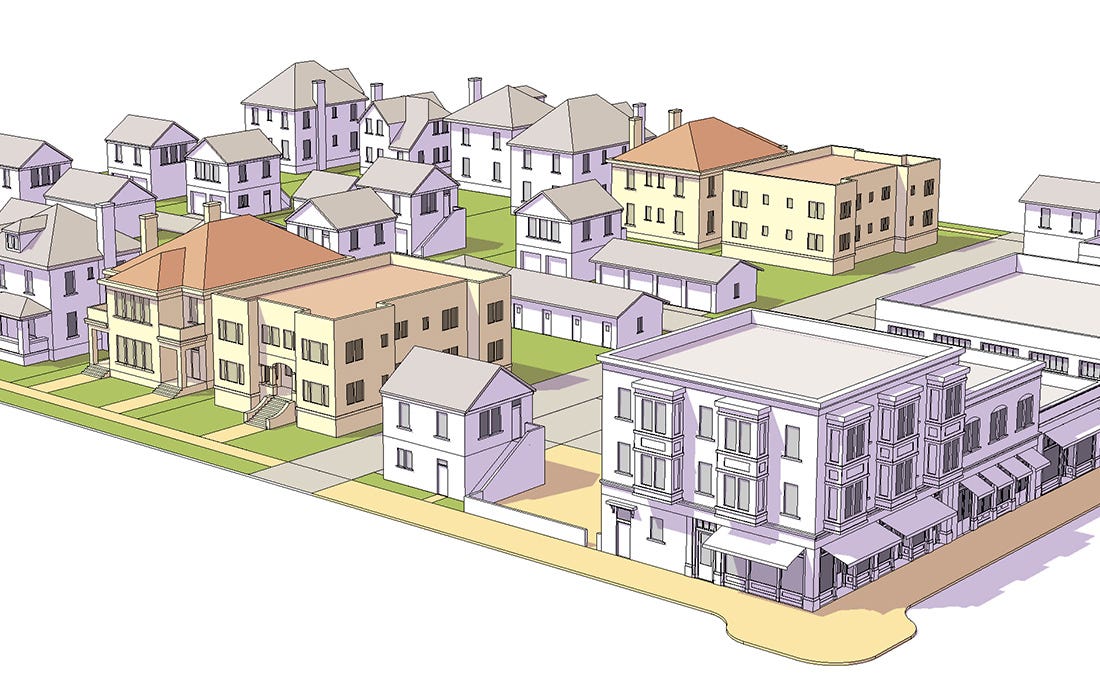
A variety of housing typologies creating variety in design and choices for people looking for a home that meets their needs.
The cold start problem is not a technical problem—it’s a systems problem. It’s about inertia, credibility, and coordination. It’s about knowing that better places are possible, but recognizing that they don’t appear fully formed. They emerge from a series of small, intentional steps.
A single project will not transform a city. But it can demonstrate what’s possible. It can shift what lenders are willing to finance, what planners are willing to approve, and what communities are willing to support. It can create the kind of evidence that helps move a better model from the margins to the mainstream.
This is where I plan to begin—not with an idealized vision of a finished city, but with a pragmatic strategy for building something better, piece by piece. It’s about creating a repeatable, scalable model for small-scale urban development.
The first project matters not because it completes the vision, but because it starts a pattern—one that others can follow, refine, and replicate.
That’s how we solve the cold start problem: Not all at once. Not everywhere. But somewhere.
No posts
Comments
Nothing yet. Say the first thing.
Sign in to join the conversation.