
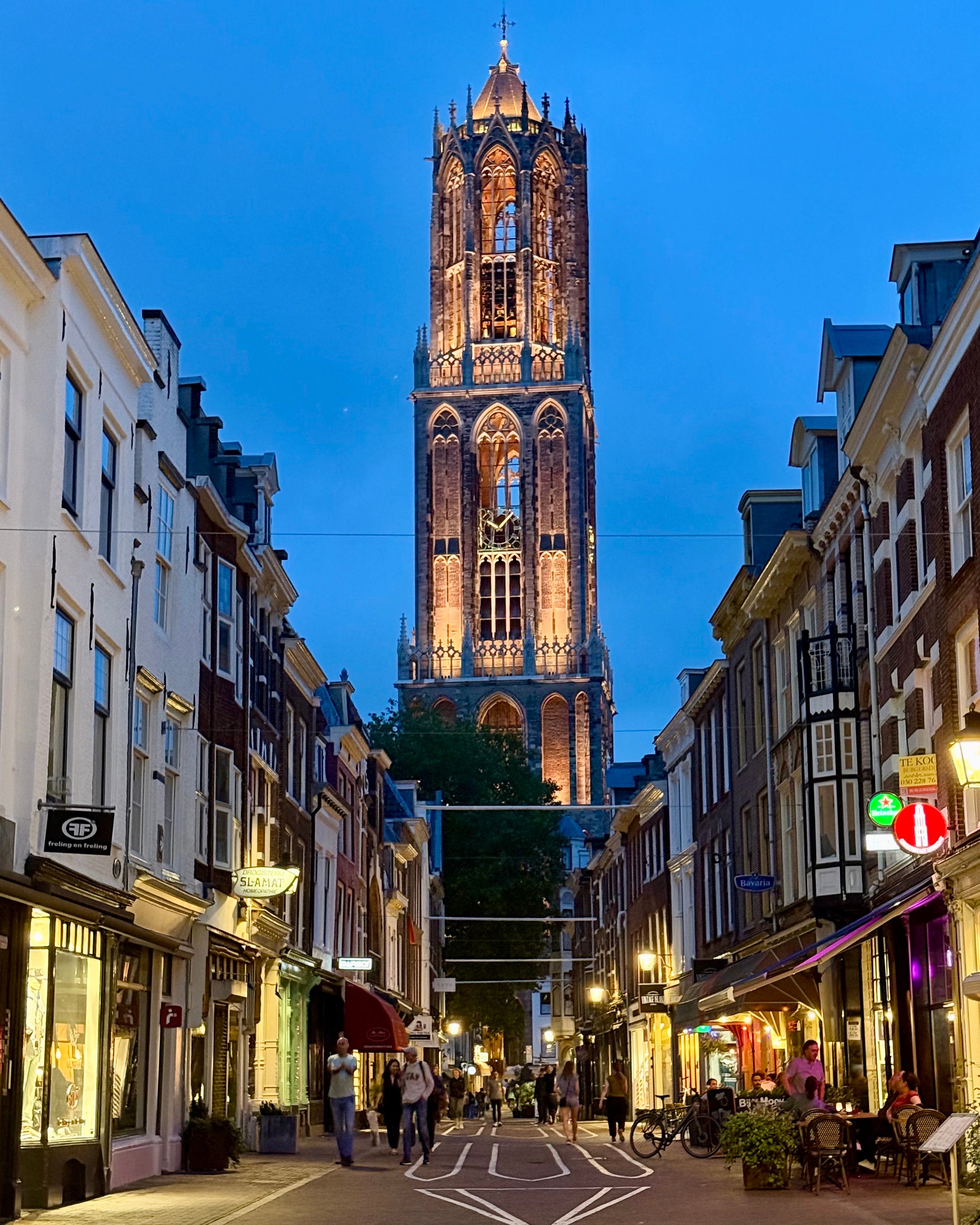
On my journey to build better places, I’ve sought to learn not just what makes a place functional for people young and old, but also what makes a place beautiful. It’s easy to think that simply by building walkable, mixed-use communities we can make places worth being in, but what about beauty?
Several studies suggest that beauty has a measurable impact on our well-being. People are healthier, happier, and more connected when they live in environments that are harmonious and thoughtfully designed. Since I was young, I’ve been drawn to architecture that feels timeless. In my effort to build better places, I’ve discovered a movement that is reviving beautiful architecture by returning to enduring principles of design.
Every summer, the International Network for Traditional Building, Architecture and Urbanism (INTBAU) works with local organizers across Europe, North America, and Australia to host summer schools dedicated to traditional architecture, building crafts, and urbanism. These programs are part of a growing movement of students, professionals, and aspiring developers like me who want to rediscover the techniques and principles that make buildings and streets truly beautiful.
Many people already intuitively know what beauty looks like: a scenic European town square or a historic American main street like Santa Fe or Charleston. But beyond intuition, we have hard evidence that people value beautiful places over time. Dutch real estate research has shown that homes in designated historic neighborhoods are worth 13 to 15 percent more than comparable properties outside those areas. Beauty holds its value.
What does it take to build beautiful places? This past summer, I spent three weeks in Utrecht learning the principles of classical architecture alongside 25 students from around the world who share the dream of building a more beautiful future. What follows are my reflections on how those principles can help shape the architecture of tomorrow.
YouTube is an incredible place to find people and ideas that can change the course of your life. Years ago, I stumbled upon a Ted Talk by Howard James Kunstler on how bad architecture wrecked cities. His emphatic, emotional dissection of “places not worth caring about” resonated deeply with my own experience growing up in a suburban garden city that bordered an industrial zone. Over time, I found more and more content on urbanism from channels like Not Just Bikes, City Nerd and Adam Something. They helped me think more critically about design, movement, and the structure of community life.
Then, late last year, I discovered The Aesthetic City, a channel by Dutch creator Reuben Hanssen. At first, his tone surprised me. He argued for an almost radical rejection of modernist architecture, using examples from Europe and the United States to show how soulless and ugly many of our buildings have become. Yet what drew me in was that he wasn’t just simply critiquing “modern” architecture. He offered a constructive vision that is rooted in beauty, proportion, and timeless design.
When Reuben announced the Let’s Build a Beautiful City summer school in the Netherlands, it felt like the opportunity I had been waiting for: three weeks of lectures, drawing practice, and group work centered on the principles of classical architecture and urbanism. As someone outside the world of architecture, I hesitated to apply, but I believed that understanding beauty was essential to building better places. When I received my acceptance letter, I was overjoyed.
The summer school took place in a restored seventeenth-century building in the historic center of Utrecht, a city that itself feels like a living classroom. With its brick paved roads, winding canals, walkable streets, and centuries of careful continuity, Utrecht shows what happens when urban form is treated as a craft, not a commodity. For three weeks, our group of students, architects, and enthusiasts explored the principles of classical architecture through lectures, sketching, and field study.
We learned from architects and planners who had come from across Europe to teach us about their work as well as several passionate practitioners including Ruben who is one of the organizers of the class. What I learned can be distilled into three interlocking ideas: Nature, Tradition, and Language; the Vitruvian Triad of Durability, Utility, and Beauty; and the idea of Architectural Language, which helps us understand how buildings “speak” to us.
The first concept we explored was how classical architecture emerges from nature. Buildings are, at their core, extensions of human life and the environment that sustains it. Ancient builders observed how trees carried weight, how stones stacked, and how openings let in light and air. The early hut, temple, and courtyard were direct responses to climate and material, shaped by the same forces that shape landscapes.
Nature provided not only raw materials but also proportion. The symmetry of the human body, the rhythm of a tree’s branches, and the balance of light and shadow all became models for architectural order. When we say a building feels “right,” it is often because it aligns with these natural harmonies.
From those early instincts grew Tradition, the transmission of building knowledge across generations. Each generation refined what worked, adjusting it to new contexts. A column’s base or a roof’s pitch might change with local materials and weather conditions, but the underlying principles of protecting from the elements remained constant. Tradition was not imitation; it was a form of memory. It allowed builders to learn collectively and to create continuity between past and present.
Over time, these lessons formed a Language of architecture. Like spoken language, it developed rules of composition and meaning. A doorway framed by columns signals welcome. A pediment suggests importance. A window’s placement gives a facade its rhythm. A city’s architecture becomes a shared conversation between the people who build it and those who inhabit it.
All civilizations have developed a characteristic architectural expression shaped by their climate, materials, and culture. What began as a practical response to survival became codified through tradition and eventually elevated into art. Walking through Utrecht, I began to see this conversation everywhere. Every gable, cornice, and canal bridge expressed a culture that had learned to speak fluently in the language of its own place.
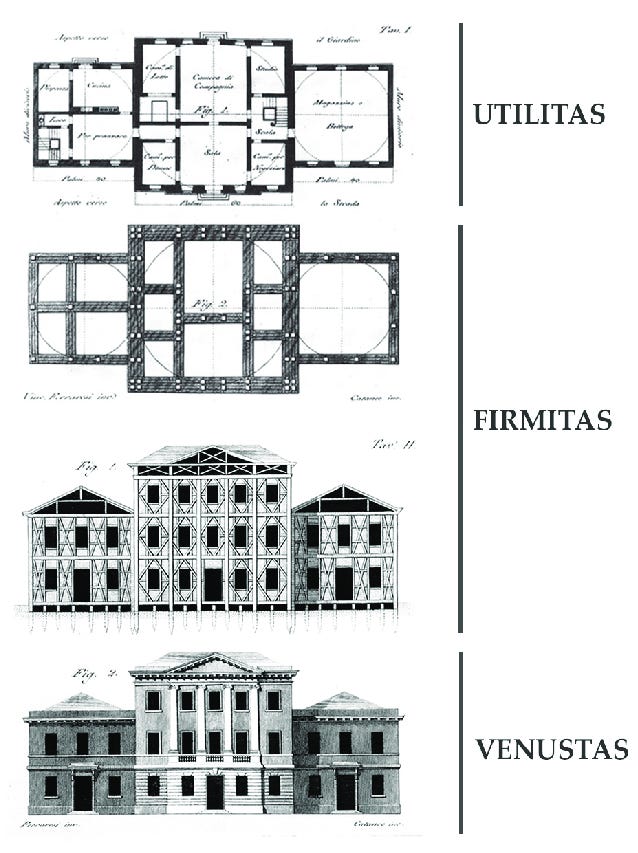
Once we understood architecture as something shaped by nature and refined through tradition, we turned to the question of what makes a building good. Our instructors introduced us to Vitruvius, the Roman architect who defined three essential qualities of architecture: firmitas (durability), utilitas (utility), and venustas (beauty).
Durability means that a building should endure. It is firstly a matter of structural integrity, in that the building must communicate stability and safety. There is also an element of moral responsibility in building with materials and care so that future generations can inherit what we create. A durable building gives a city its memory. Connor Lynch of ADAM Architecture reminded us that “the most sustainable building is the one that already exists.” The longer something lasts, the lower its true cost.
Utility means a building must serve its purpose well. Classical design begins with how people live, move, and gather. A well-designed building clarifies those relationships. Because classical architecture is adaptable to changing needs it constantly finds a use. It organizes space so that it supports daily life instead of complicating it. When you walk through an old city and feel naturally guided through courtyards and squares, you are experiencing utility made graceful.
Beauty is the most elusive of the three, completes the triad. It is not luxury or excess, but harmony, which is the proper relationship of parts to whole. Beauty lifts the spirit because it reflects order, proportion, and care. As we studied examples from the Netherlands, Italy and Ireland, and we saw that beauty endures precisely because it is tied to truth and structure.
Taken together, Durability, Utility, and Beauty form a foundation for design. They remind us that good architecture is never just technical. It is civic, because it shapes how people live together. To build beautifully is to build responsibly.
One of the most striking insights from the program was that we don’t design buildings, we compose them. One of our instructors, Hugh Kavanaugh said, “Design is a formal process for logically solving difficult problems [but] composition is creative in a different way, composition uses existing solutions and language, rather than blank slate”. Classical architecture functions like a language with vocabulary, grammar, and syntax. Understanding it allows us to create new buildings that feel timeless without simply copying the past.
In the language of building, the vocabulary consists of the physical elements of the building. The nouns might be columns, arches, windows and doorways. While ornamentation are the adjectives, such as moldings and column capitals accentuate the structural elements. Each element has a role and a meaning. A column supports weight and it’s capital defines the kind of building it is. The amount of ornamentation depends on the message that the building wants to convey. Our instructors quoted W.C. Westfall who said : “Ornament elevates a simple building to architecture by making clear and vivid the facts of construction.”
Grammar defines how these elements relate to one another. For the vocabulary to make sense it needs to be arranged in a systematic way, and the parts need to be of appropriate dimensions and proportions. For example, respecting how gravity works means buildings should be bottom heavy and top light to convey a sense of firmitas. When the grammar of buildings is respected, buildings make intuitive sense. They feel balanced, legible, and human-scaled. When it is ignored, our surroundings become incoherent, a jumble of disconnected gestures.
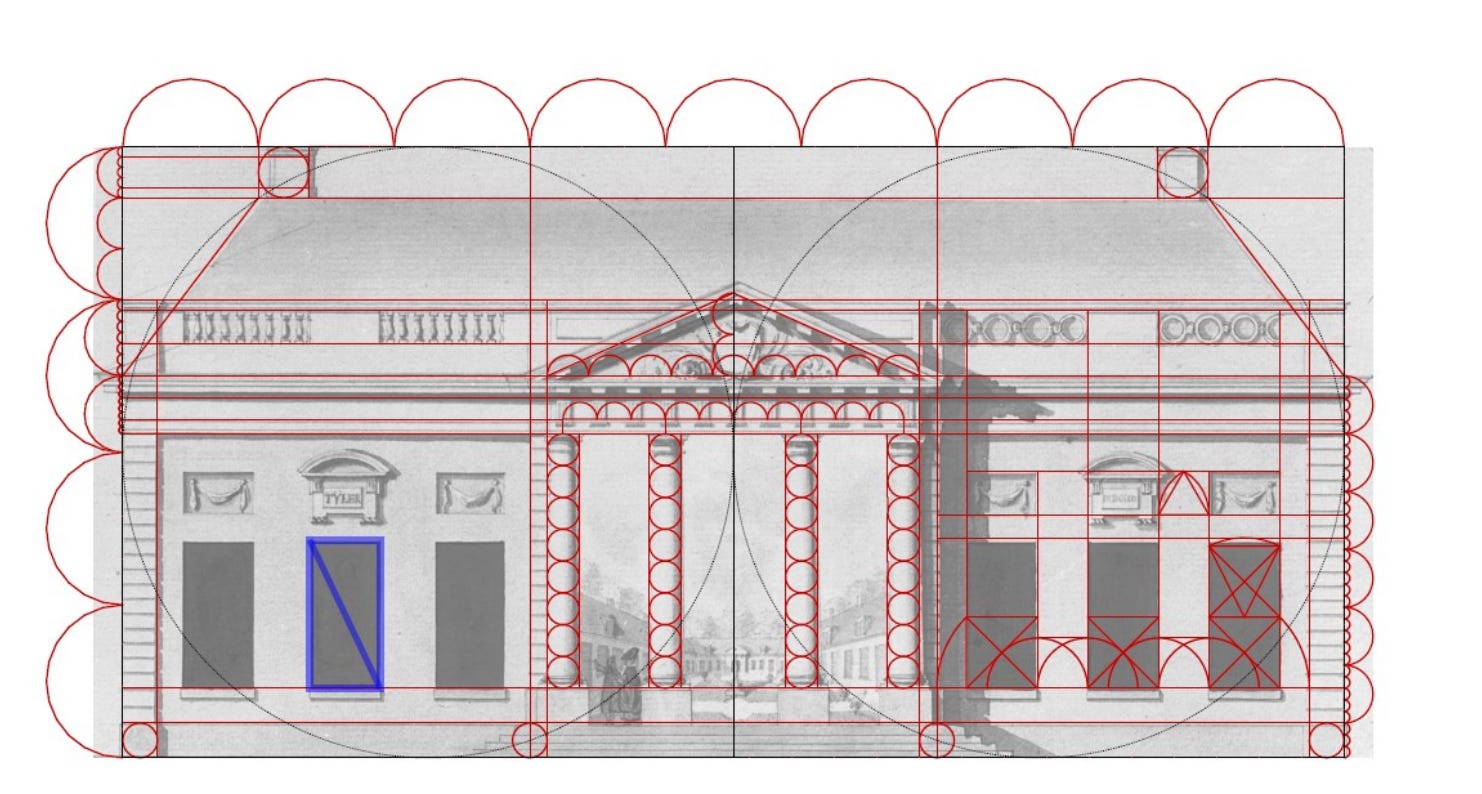
Putting the vocabulary and grammar together allows us to get to composition, the act of arranging these parts into a harmonious whole. Just as a poet arranges words into verse, an architect works with rhythm, emphasis, and variation. Ornament serves as the adjectives and metaphors of this language, clarifying rather than concealing structure.
Like the languages of the world, buildings adapt to context and culture. A building in Utrecht may share the same syntax as one in Charleston or Oaxaca but express it through local materials and needs. The vocabulary and grammar gives coherence, and the local dialect gives life.
This way of thinking reframes architecture as a continuum, not a break. Modernism often treats each building as a statement detached from what came before. The classical approach sees every building as part of a shared conversation that links builder, citizen, and city through time. To build beautifully is to speak respectfully in that language, adding one more thoughtful sentence to a story that has been unfolding for centuries.
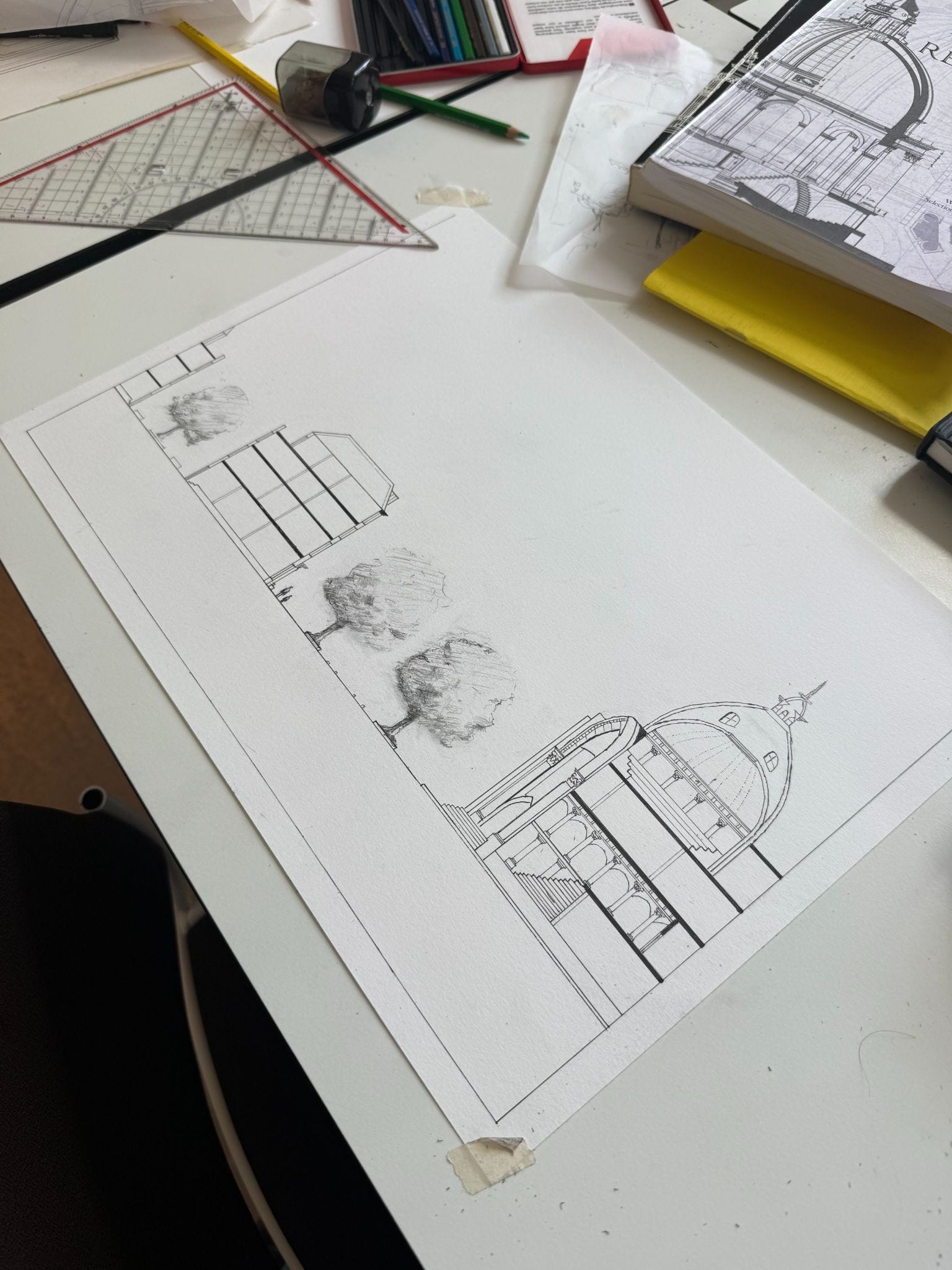
Each day after several hours of lectures and discussions, we turned to practice. We took our sketchbooks into the streets of Utrecht to draw details from life: facades, doorways, bridges, and cornices. The goal was not to produce perfect drawings, but to learn to see.
At first, I struggled. I hadn’t drawn seriously since high school, and standing on a busy corner trying to capture the proportions of a centuries-old building felt daunting. But as I worked, something shifted. Drawing slowed me down. It forced me to notice relationships that had once been invisible like the width of a window compared to its height, the way a line of shadow defined the edge of a molding, how repetition creates rhythm along a street.
Sketching became a way of listening to the architectural grammar we had been studying. Each line was like a syllable; each shape, a word. Over time, I began to understand why certain buildings felt calm or confident while others felt uncomfortable. The rules of proportion, balance, and emphasis weren’t abstract anymore. They were visible in front of me, waiting to be understood through the act of looking carefully.
Our instructor Vincent Veneman reminded us that the hand trains the eye. By observing and recording what we saw, we were internalizing centuries of collective knowledge. The students around me, many with strong art backgrounds, were producing beautiful renderings in pencil and watercolor. My own drawings were modest (at best), but they marked a real change in how I experienced the city. I no longer looked at a building as a static object. I saw it as a composition, an expression of structure, purpose, and care.
By the end of the course, sketching had become a form of reflection. Walking through Utrecht’s narrow streets, I noticed how everything fit together: the height of the buildings relative to the width of the street, the color of brick and mortar, the way each facade contributed to the whole. These details were no longer separate. They were sentences in a shared civic language, a language that I was just beginning to understand.
In our final week, we were asked to propose a new design for Utrecht’s Uithof campus, a large university district marked by disjointed architectural styles and buildings scaled far beyond human proportion. It was an ironic setting for a place filled with students and cyclists.
Working in small groups, we explored how the campus could become more humane without erasing what already existed. Could we add new facades to unify the streetscape? Where could people live? How might we address the tall, isolated buildings that dominate the skyline? And how could we create spaces that invite community, the plazas, courtyards, or shaded paths that encourage gathering rather than movement alone?
Each group developed its own response, applying the principles we had studied in creative ways. Some added layers of housing between larger buildings; others reimagined the ground floors as active, walkable edges. The goal was not to recreate the past but to apply the lessons of scale, rhythm, and hierarchy to a place that had lost its sense of continuity.
In our final presentation, we shared our designs before a panel of architects who offered generous but pointed critiques, revealing how far we still have to go in our learning. Yet it was inspiring to see how much progress had been made in only three weeks. Each team found a way to express the same underlying idea: that even the most fragmented environment can become coherent again when design begins with people, not objects.
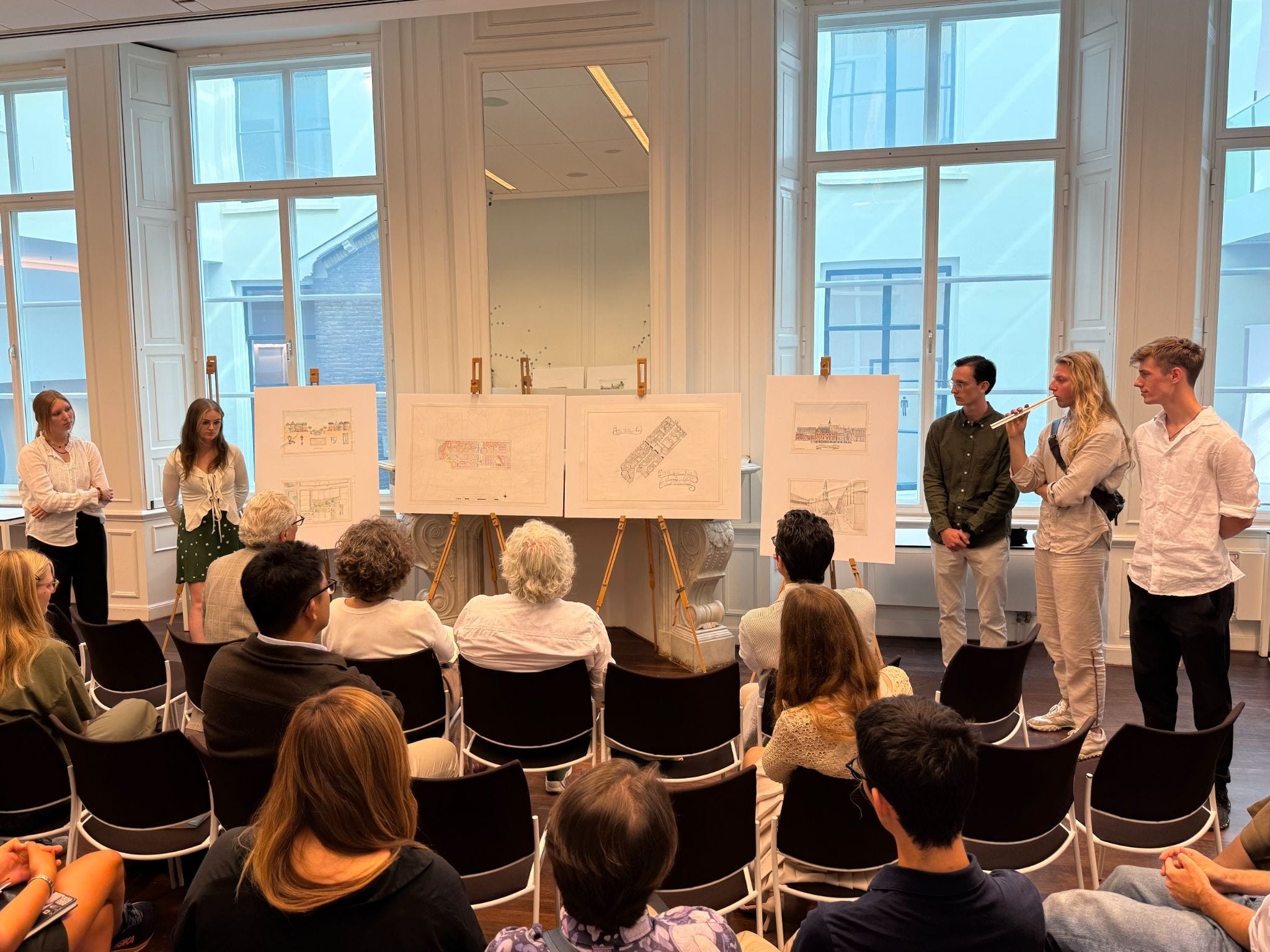
When I think about the buildings I hope to create in the years ahead, I plan to work with architects who understand the value of classical principles. My goal isn’t to build condominiums with columns, but to think carefully about structure, harmony, rhythm, and proportion. The quiet qualities that make a building feel right are universal. I want to apply ornamentation in contemporary ways and create a distinct, timeless aesthetic rooted in the vernacular of the places where I build, whether that’s in Durham, North Carolina or Denver, Colorado.
As Vincent Veneman, one of our instructors, reminded us, good design moves “from generals to particulars.” You begin with the structure of the city, then the form of a street, to the form of a building and finally the details. Each level must reinforce the other. This way of thinking ensures that beauty is not a surface treatment, but something built into the bones of a place.
I believe it’s possible to make places that are both beautiful and practical. Beauty does not have to mean luxury. A well-proportioned building can be cost-effective, environmentally responsible, and contribute to a stronger community. As Reuben Hanssen often said during the course, “A well-proportioned building costs the same as a badly proportioned one, yet is worth so much more.” When a place is built with care, people take care of it in return. This reciprocity is what turns development into stewardship.
There are centuries of learning and writing about classical architecture. From the writings of Vitruvius to architects and urbanists such as Léon Krier, whose Architecture of Community was foundational for me in learning about the space. The readings recommended in the summer school explore this tradition, from classical theory to contemporary practice, and are an excellent starting point for anyone interested in learning more.
For those curious about the ideas in this piece, I can’t recommend the Let’s Build a Beautiful City Summer School enough. It’s a unique opportunity to study architecture not as a professional credential, but as a shared human craft. Whether you’re a designer, developer, or simply someone who loves cities, the experience offers a new way to see the built world and the tools imagine how we might build it better.
No posts
Comments
Nothing yet. Say the first thing.
Sign in to join the conversation.