
The most enduring places we recognize as successful have something in common. They organize themselves around centers. Places where activities overlap, where people gather for different reasons, and where movement slows enough for public life to emerge. These centers may be obvious, like a town square or a main street, or subtle, like a street corner that naturally invites people to pause. What matters is not their scale, but their ability to concentrate use and meaning.
As an aspiring developer, I often struggle to accept the idea that one building does not make a community. I have to accept that my experience and access to capital are not yet at the level where I can build out a master plan. But what if there were a way to make better places one building at a time?
The way a single building relates to its surroundings matters as much as the building itself in creating better places. Orientation, frontage, and proximity to shared places can either strengthen a place or dilute it. When buildings contribute to public space intentionally, amenities are no longer an afterthought, they participate in the structure of everyday life.
Daily life is not neatly separated into zones. Buying groceries, meeting a friend, walking to school, stopping for coffee, visiting a doctor, attending a service. These activities reinforce one another when they happen in proximity. A flower shop benefits from foot traffic headed to a pharmacy. A café thrives near a park. Housing gains value when it sits close to places people already need or want to be. Creating buildings that reinforce these patterns improves our communities and creates value in the long run.
In Christopher Alexander’s work in A New Theory of Urban Design he proposes that good urban environments are made up of “centers.” A center is any place that draws life toward it. It is a point of focus, orientation, or shared meaning within a larger whole. Centers do not have to be monumental or formally designated. In fact, their power often comes from how ordinary they are. Each new building, space, or intervention should strengthen an existing center or help create a new one.
What matters for creating good places is not the specific type of center, but the role the center plays. Each one gathers energy from its surroundings and redistributes it outward. Streets lead toward them and buildings orient themselves around them. Each incremental project or development strengthens a center or creates a new one.
At the smallest scale, a center might be a street corner with a bench that catches afternoon light, a café doorway that spills onto the sidewalk, or a tree at an intersection where people naturally pause. These micro-centers shape how a place feels moment to moment. They invite stopping, noticing, and informal interaction. At a slightly larger scale, centers take the form of courtyards, playgrounds, neighborhood parks, or short commercial streets. These are places where multiple purposes overlap. Children play while adults sit nearby. People run quick errands or stop for lunch. Movement slows just enough for social life to surface. At the civic scale, centers include squares, churches, schools, markets, transit stations, and cultural institutions. These places unify people around shared identity, ritual, or collective use. They anchor neighborhoods and give structure to daily patterns of movement and memory.
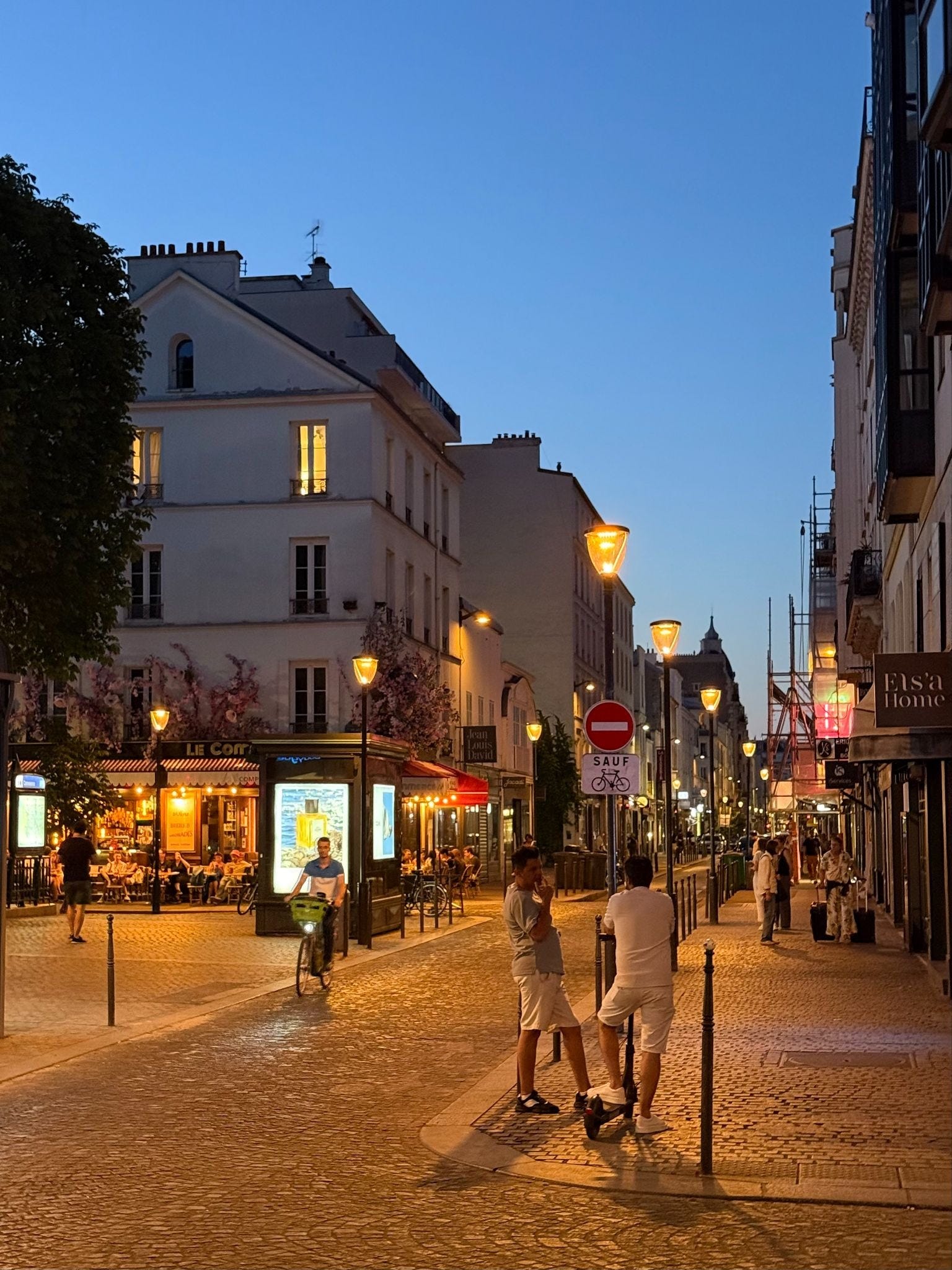
I believe that centers are fractal. Small centers live within larger ones, which in turn belong to even broader structures. A welcoming stoop strengthens a street. A strong street strengthens a neighborhood. A network of neighborhoods gives coherence to a small town or a big city. When this hierarchy is intact, places feel legible and alive. When it is broken, environments feel flat and disorienting. Building good places doesn’t mean creating a single dominant center and having everything radiate from it. People need many centers, each appropriate to its scale and function, each reinforcing the others. Strength at one level depends on strength at the levels above and below it.
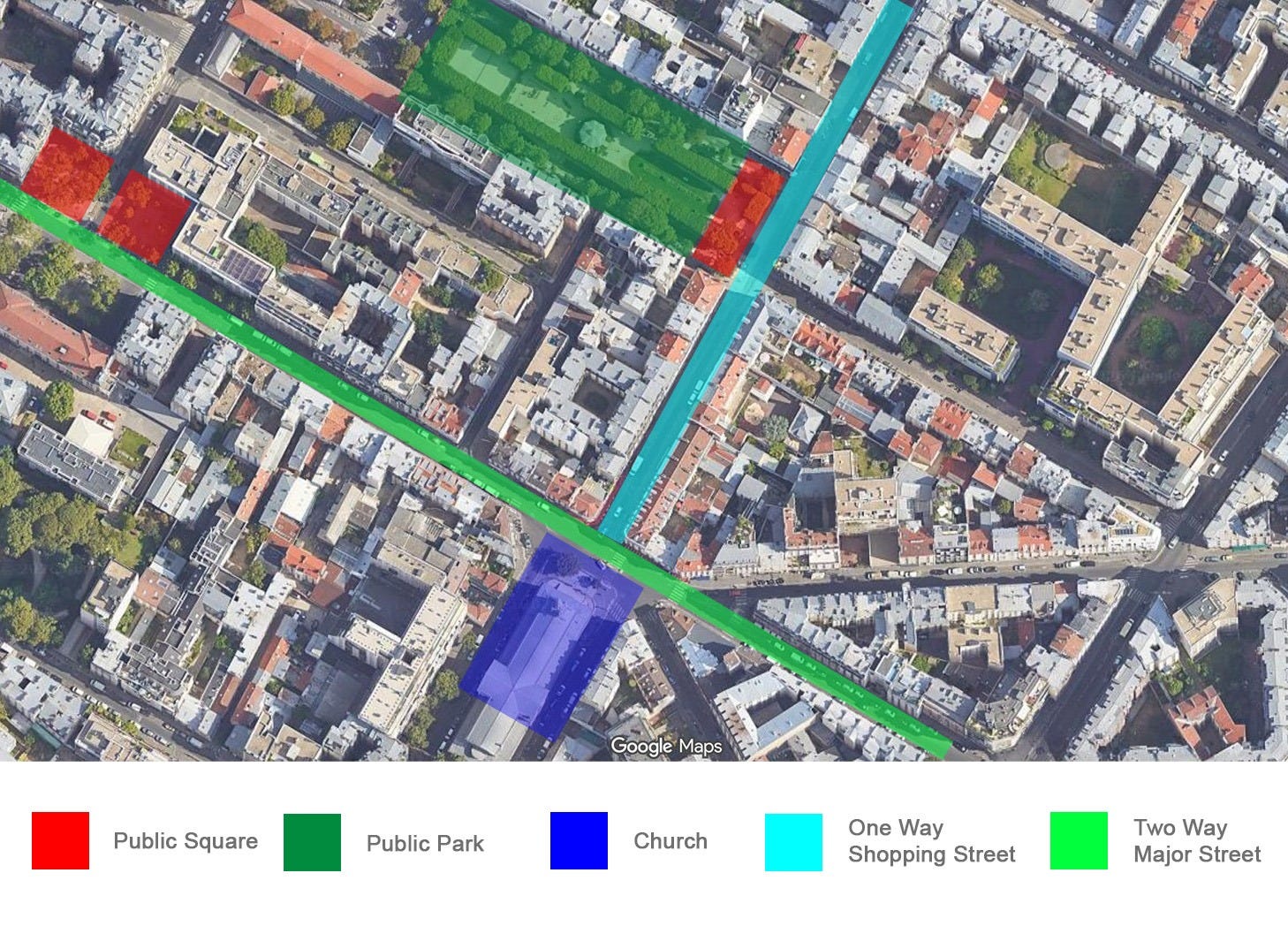
This is why simply adding amenities does not produce good places. A park without surrounding neighbourhoods is weak. A commercial street without nearby housing struggles. A civic building isolated by parking cannot perform as a true center. Centers only work when they are embedded in a context that supports walking, proximity, and shared use. When development succeeds in creating or strengthening centers, it does more than add square footage, it adds to the structure of public life. The result of this approach gives people reasons to move through space in human ways, to linger, to return, and to recognize a place as meaningful.
This cumulative effect is what turns buildings into places.
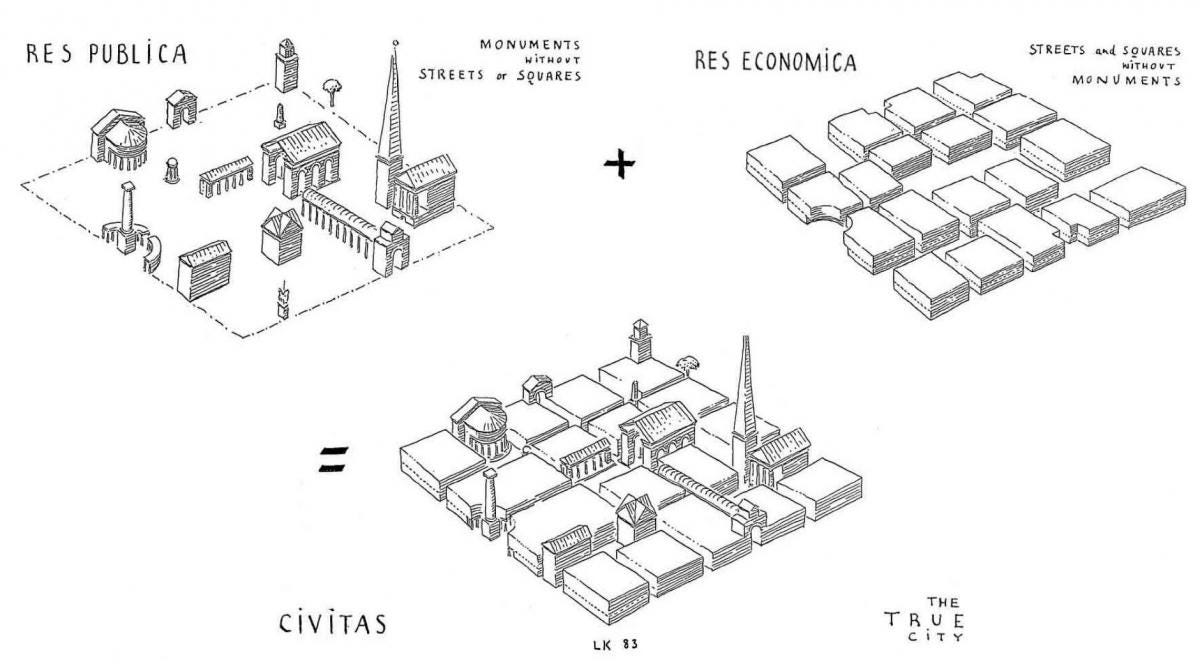
This idea of centers overlaps with Leon Krier’s distinction between res economica, res publica creating the “civitas”, the city. At its heart is the idea that meaningful places require hierarchy. Not hierarchy in the sense of exclusion, but in the sense of purpose. Some spaces must matter more than others for a place to function as a coherent whole. Creating meaning inherently involves creating shared purpose and overlapping purposes.
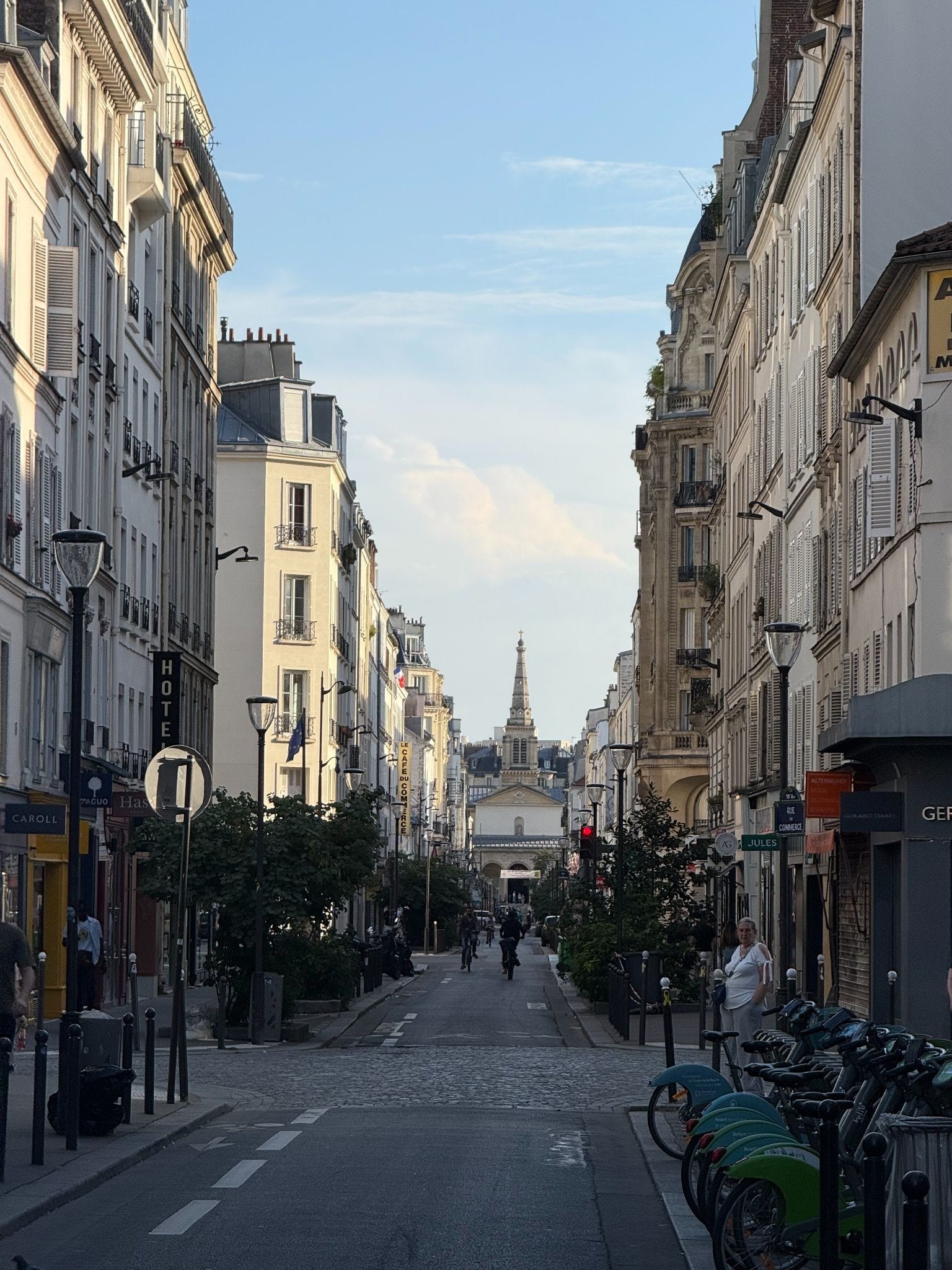
In traditionally designed cities, the square in front of a church becomes a civic place for people to gather for worship and signals its importance through monumental architecture. Oftentimes the church square is surrounded by cafes and shops, hoping to benefit from the concentration of people created by the church.
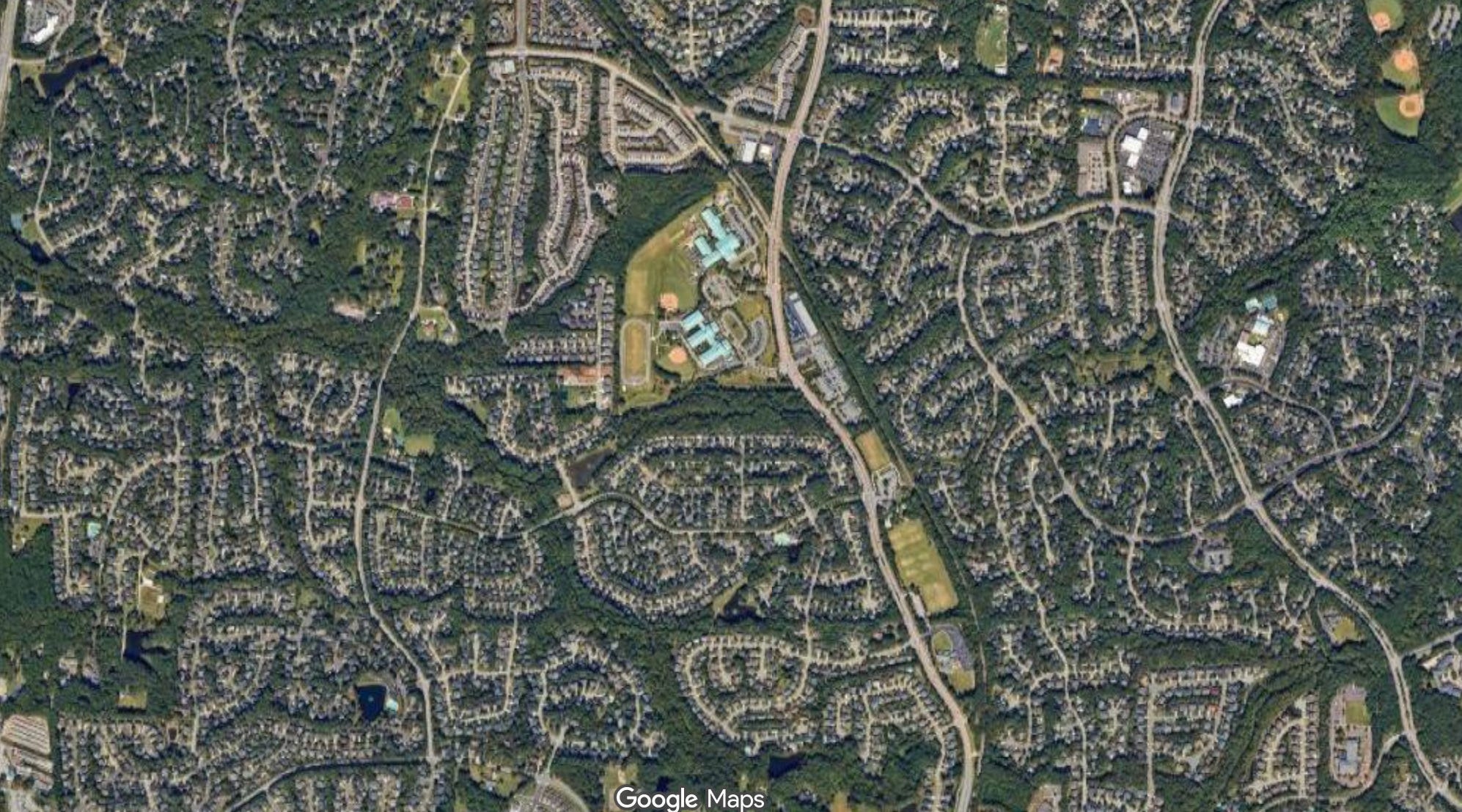
In the single use context of suburban environments and office parks, this hierarchy and blending of purpose disappears. There is no clear center. No shared place that carries higher civic or social importance than the rest. In the suburban context this looks like an endless series of cul-du-sacs and arterial roads, there is minimal consideration for connectivity because there isn’t anywhere particularly more important than anywhere else.
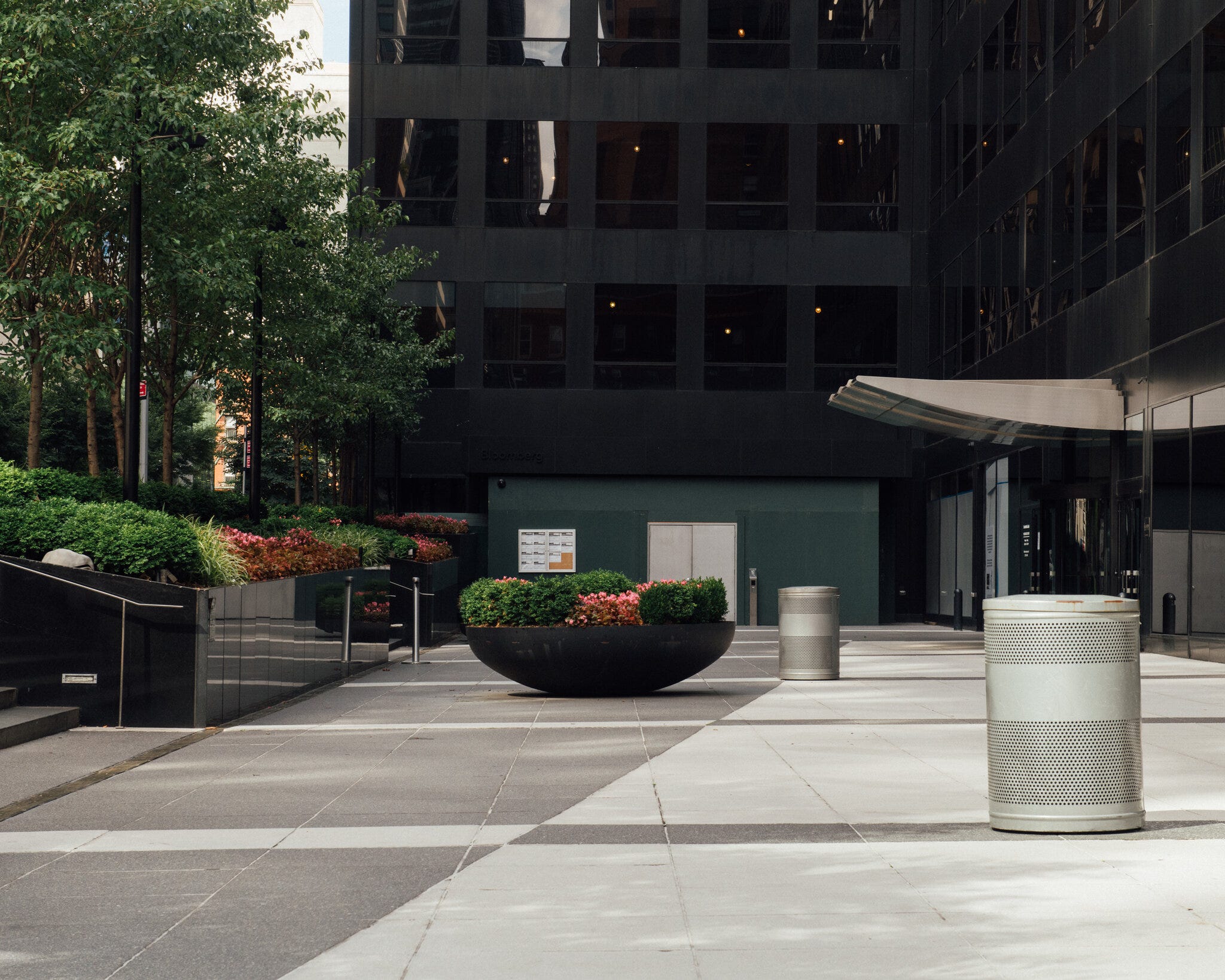
Many cities recognize this problem and enforce the creation of a park or some sort of Privately Owned Public Spaces (POPS) as part of new developments, but often times the people building these spaces don’t consider them as the “center” of their project but rather an amenity that meets legal requirements or looks good on a marketing brochure. The orientation of the buildings and streets, or in the case of POPS the design of the space doesn’t create a center, it creates yet another “destination” disjointed from its environment.
Ironically, these environments often attempt to borrow the language of importance: “Town center,” “business center,” “lifestyle center.” But naming alone does not create meaning. Without overlapping use, without shared purpose, these places cannot function as true centers. They remain collections of isolated functions connected primarily by roads and parking.
Authentic centers emerge when different kinds of activity are allowed, and encouraged, to coexist. Shared use is not a side effect but the underlying mechanism that creates public life.
For developers looking to build better places these ideas shift the order of operations on a project. Whether you’re building a single house or a master planned community, the notion of thinking about centers can help make every project more valuable. Instead of starting with unit counts, setbacks, or parking ratios, the first question becomes: what are the shared places here, and how does this project make them stronger? That answer should guide decisions about massing, frontage, access, and even housing type.
The goal is not only to design a building that works in isolation, but to understand what becomes the focal point nearby and why. Is it a park, a square, a small commercial street, or a civic space? What kind of shared life is it meant to support? Projects gain long-term value when they contribute to centers rather than merely sit near them. Walkable proximity is not an amenity, it is an economic and social multiplier. Buildings that relate well to a meaningful center benefit from it, and they help sustain it in return.
While the old adage of real estate “Location, Location, Location” always matters, just as important is how buildings physically relate to their centers. To build good places proximity matters, but orientation matters more. Buildings can strengthen a center by framing it, feeding into it, and making it feel continuous with daily movement. They can also weaken it by turning away, setting back unnecessarily, or prioritizing vehicular access over pedestrian experience.
The perceived value of development is deeply tied to this relationship. A building located minutes away from a meaningful center on foot is fundamentally different from one that is technically nearby but functionally disconnected by car dependency. Walking is not a lifestyle preference but a condition that allows a center to function as part of everyday life.
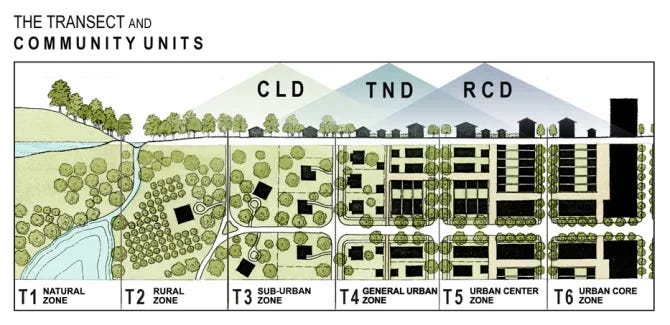
This approach also reframes tradeoffs around density, making it contextual rather than ideological. Building form needs to follow the function and intensity of the center it serves. This is where Andrés Duany’s transect framework becomes useful. Different levels of urban intensity call for different building types, from more urban conditions to more rural ones. The issue is not whether single family homes or taller buildings should exist, but whether the scale of development is proportional to the center it supports. Even regulatory constraints can be interpreted more productively when the goal is to support public life instead of merely satisfying minimums.
Developers are uniquely positioned to shape this outcome because each project is an opportunity to either reinforce a center or weaken one. Over time, those decisions compound. Neighborhoods become more coherent or more fragmented based on how consistently that responsibility is taken seriously. When development starts from centers rather than parcels, many design and policy questions become clearer. Instead of abstract debates about density or style, the focus shifts to shared places, walking distance, and proportional form.
That shift, more than any single rule or model, is foundational to building better places.
Building better places does not require inventing new building types or new financing models. It requires clarity about purpose. If we agree that shared public places are essential infrastructure rather than optional features, this principle provides clarity for developers to produce places that people recognize as meaningful, valuable, and worth caring for.
No posts
Comments
Nothing yet. Say the first thing.
Sign in to join the conversation.