
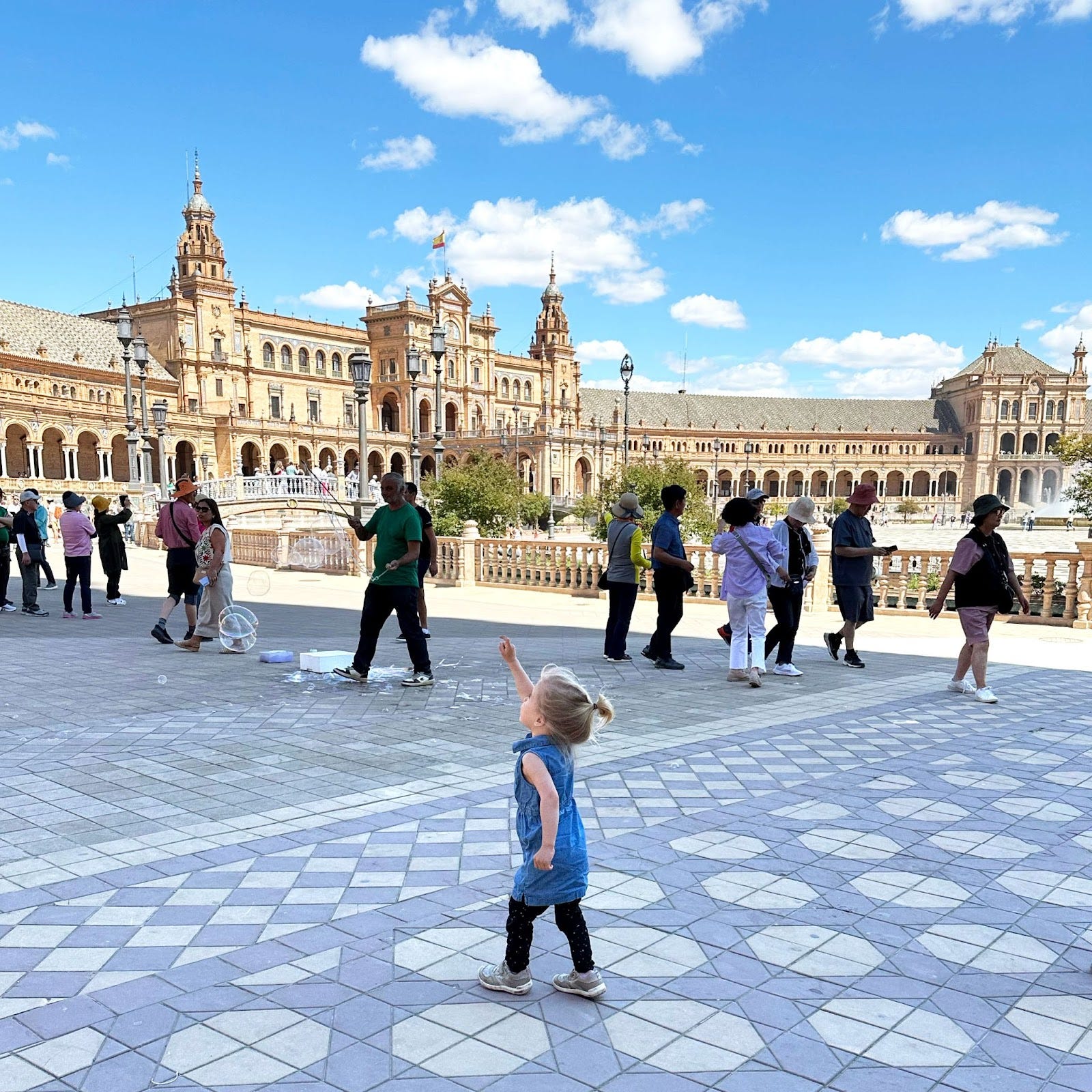
I have a wild theory: families go to Disneyland not just for the rides and characters but because of a deep, unmet yearning for the magic of a walkable, welcoming public space. It’s a place where kids can roam (within reason), every detail is scaled to their world, and wonder unfolds at eye level. For a moment, the built environment feels like it was made for them.
That realization hit me a few months ago during a late-night conversation with my wife. As often happens, we began by talking about our two young children and quickly drifted into a conversation about cities. Parenting forces us to think about how the world shapes our children. We work so hard to teach good habits, resolve challenges, and cultivate resilience but it’s the everyday experiences: the casual walk to the park, the errands run on foot, the small hellos from neighbors that truly form their sense of place and belonging. When those interactions are scarce or mediated entirely through the car window, something vital is lost. Each outing is an opportunity to teach children about their world and the differences and similarities that exist between people. Good places aren’t a special event. They’re part of raising whole people.
I wanted to explore the idea of better places for kids: how we design them, who they serve, and why they matter. In exploring this, I started finding wisdom from thinkers like Jane Jacobs, Christopher Alexander, and Raffi Cavoukian. This simple question is: what would it look like to build our communities around the needs of children first? From sidewalks to zoning laws, from playgrounds to transit maps, our choices reveal what and who we value. If we want healthier families, stronger communities, and a more humane world, we have to start by honoring our children in the places they live.
In my family we often listen to songs by Raffi Cavoukian, the children's singer behind such classics as “Baby Beluga” and “The More We Get Together”. In addition to creating wonderful songs, he has distilled his wisdom of decades of working with Children into a movement called Child Honouring. Child honouring recognizes the “primacy of early years,” asserting that how we regard and treat young children is foundational to the health of communities and the planet. It calls for society to be reorganized around the priority needs of children, viewing them as whole, creative, and intelligent beings deserving of respect and nurturing.
Raffi’s vision is encapsulated in the Covenant for Honouring Children, which outlines several guiding principles:
Respectful love which sees children as persons in their own right
Celebration of diversity of human dreams, intelligences and cultures and the biodiversity of the earth.
Caring communities composed of child-friendly shopkeepers, family resource centres, green schoolyards, bike lanes and pesticide-free parks.
Emotional intelligence, developed through cooperation, play and creativity to teach the skills of empathy.
Safe environments: protection from domestic neglect, corporate mind manipulation and poisonous chemicals.
Sustainability so that the lives of future generations are not compromised.
Ethical commerce to enable a restorative economy devoted to the well-being of the very young.
I’ve started using the term “Dignity of Children” to encapsulate the right of children to experience places on their terms. One compelling idea is to view urban design through the literal lens of a child: what do they see at eye level? Where can they walk alone or with a parent? What’s accessible to them without a vehicle?
Rather than designing top-down for adults and squeezing children in, we could “put on parent goggles” and design from the child’s perspective. Places with schools integrated into neighborhoods and pedestrian zones with playful details send a clear message: this place is for everyone, including kids. That shift doesn’t require massive infrastructure but a mindset change toward inclusivity and dignity.
As I thought more about the tie in between families and urbanism, I realized that other important works of urbanism inherently speak to the role of children in a vibrant community. Jane Jacobs in her important work The Death and Life of Great American Cities argued that successful cities thrive when they are designed around the needs and experiences of their residents, especially the “foot people”. She believed that the health of a city depends on the richness of daily life, the diversity of its inhabitants, and the vibrancy of its streets: sidewalks are where children learn the "first fundamental of successful city life: People must take a modicum of public responsibility for each other even if they have no ties to each other.” Christopher Alexander’s A Pattern Language adds a layer of architectural insight to this vision, moving from the observations of Jacobs to a series of “patterns” of human behavior that when built, create these vibrant places.
Jane Jacobs believed that the health of a city depends on its capacity to support everyday life in all its richness. In The Death and Life of Great American Cities, she proposed that good urban design must begin with “foot people”, those who experience their neighborhoods on the ground, in motion, and with curiosity. Sidewalks, stoops, local parks, and corner stores were, for her, the essential scaffolding of a community. Cities work when they are built for informal interaction, for neighborly vigilance, and for daily rituals that bring people together in public. For children these are the countless small moments that help shape their identity and understanding of the world. A few other principles stand out when it comes to making better places for children:
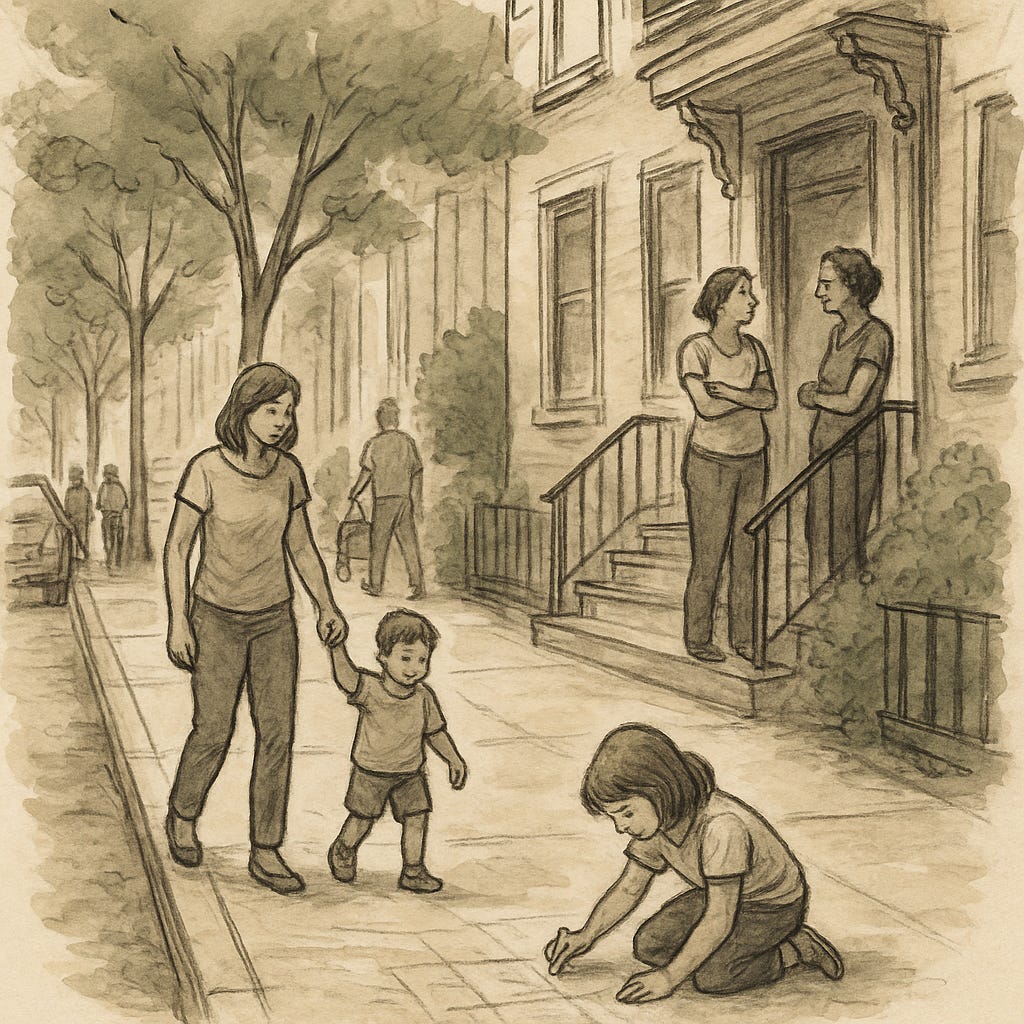
Community, Safety, and the “Eyes on the Street”
Jacobs introduces the concept of “eyes on the street,” the idea that public safety and community wellbeing are best maintained not by heavy policing, but by the natural surveillance and care of residents who use and watch over their neighborhoods. In the context of “Dignity of Children”, this translates to creating communities where children are seen, heard, and valued, where their presence is not just tolerated, but actively welcomed and protected by the collective attention of adults and peers.
Diversity and Mixed-Use Environments
Jacobs championed mixed-use neighborhoods, where people of different ages, backgrounds, and occupations live, work, and play together. She believed that such diversity fosters creativity, resilience, and a sense of belonging. This diversity gives children exposure to people of different ages and roles: bakers, barbers, mail carriers, elders. In that sense, a child’s neighborhood becomes a living classroom. Her call for cities that respect the social, emotional, and developmental needs of children not as future citizens, but as present ones.
Empowering Residents and Including Children
Jacobs advocated for the involvement of residents in shaping their own environments, arguing against top-down planning that ignored the voices of those most affected by change62. Child Honouring extends this principle by insisting that children’s voices and needs must also be considered in decisions that affect them. This means designing policies, spaces, and systems that are responsive to children’s perspectives and that foster their participation in community life.
From Jane Jacobs’ observations we can look to Christopher Alexander’s A Pattern Language to derive the specific kinds of elements that are important to making a place welcoming for children. His book outlines 253 design “patterns” that support human-scale, life-giving environments. I’ve borrowed a few examples from his book to give this idea more context:
Pattern 57: Children in the City: calls for wild and varied places: creeks, ruins, courtyards where children can explore on their own terms, alongside safe, interconnected pathways for independence.
Pattern 66: Common Land: suggests communities to provide shared green spaces at the heart of neighborhoods, fostering the social glue that comes from gathering, gardening, or playing near one’s doorstep.
Pattern 61: Small Public Squares, and Pattern 111, Half-Hidden Garden, imagine spaces that are simultaneously communal and personal—inviting reflection, curiosity, and social play. Children are not tucked away behind fences; they are part of the shared civic landscape.
Pattern 68: Connected Play: suggests play areas integrated into daily life outside homes, near cafés, along walkable streets so that children are embedded in public rhythms, not quarantined from them.
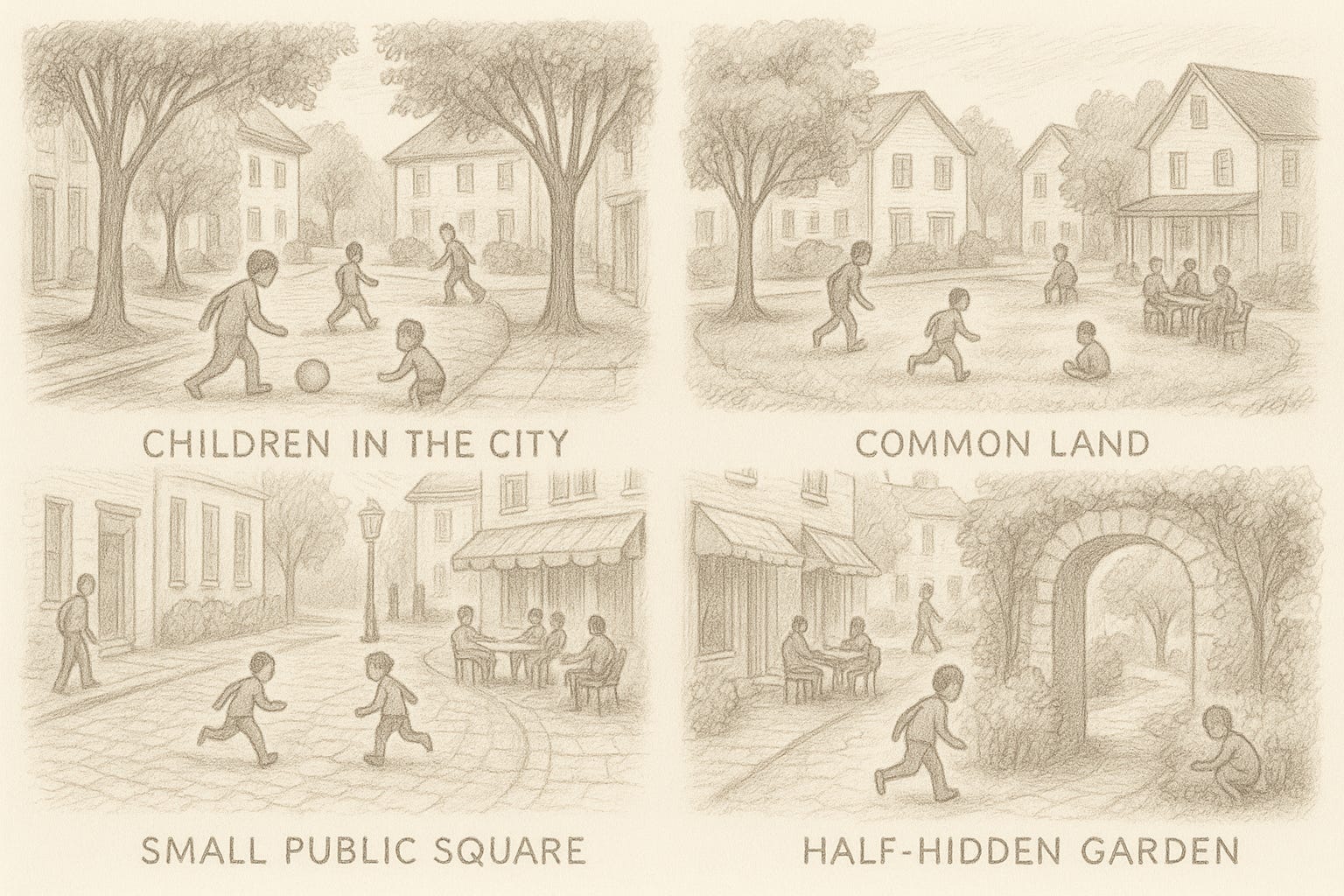
Together, Jacobs and Alexander provide a blueprint for the “safe environments”, “caring communities”, and “emotional intelligence” built into the fabric of place. Their shared message is clear: we don’t need to invent some new city for children, we need only to build the kinds of neighborhoods where children can live with dignity, agency, and joy. Designing for children is not a sentimental add-on to city planning. It’s a serious design principle. And it asks us to reimagine every sidewalk, square, and zoning hearing with children not in the backseat but at the center.
As parents, we can’t always control where we live. What we can shape is what we pay attention to, advocate for, and model. We make hundreds of small decisions for our families that either reinforce the status quo or inch it toward something better. Before my children were born, I chose to live in a neighborhood where we could walk to nature, to groceries, and to a nearby park. Not every parent has that choice. But every parent can recognize that the physical and policy environments surrounding their child matter and that their voices, when raised, can push governments, developers, and school boards to build with families in mind.
Urban planning isn’t just about streets and buildings, it's also about policies and public services. Childcare, school calendars, healthcare access, and transit all shape whether families can thrive in a place. A walkable city means little if childcare is unaffordable or school schedules are incompatible with working parents. Cities like Cambridge, MA, offer physical urbanism but struggle with sky-high childcare costs. In contrast, some European cities treat parenting as a public good with integrated daycare, summer school options, and child-first design baked into policy. American cities could do more to link physical design with supportive family policies.
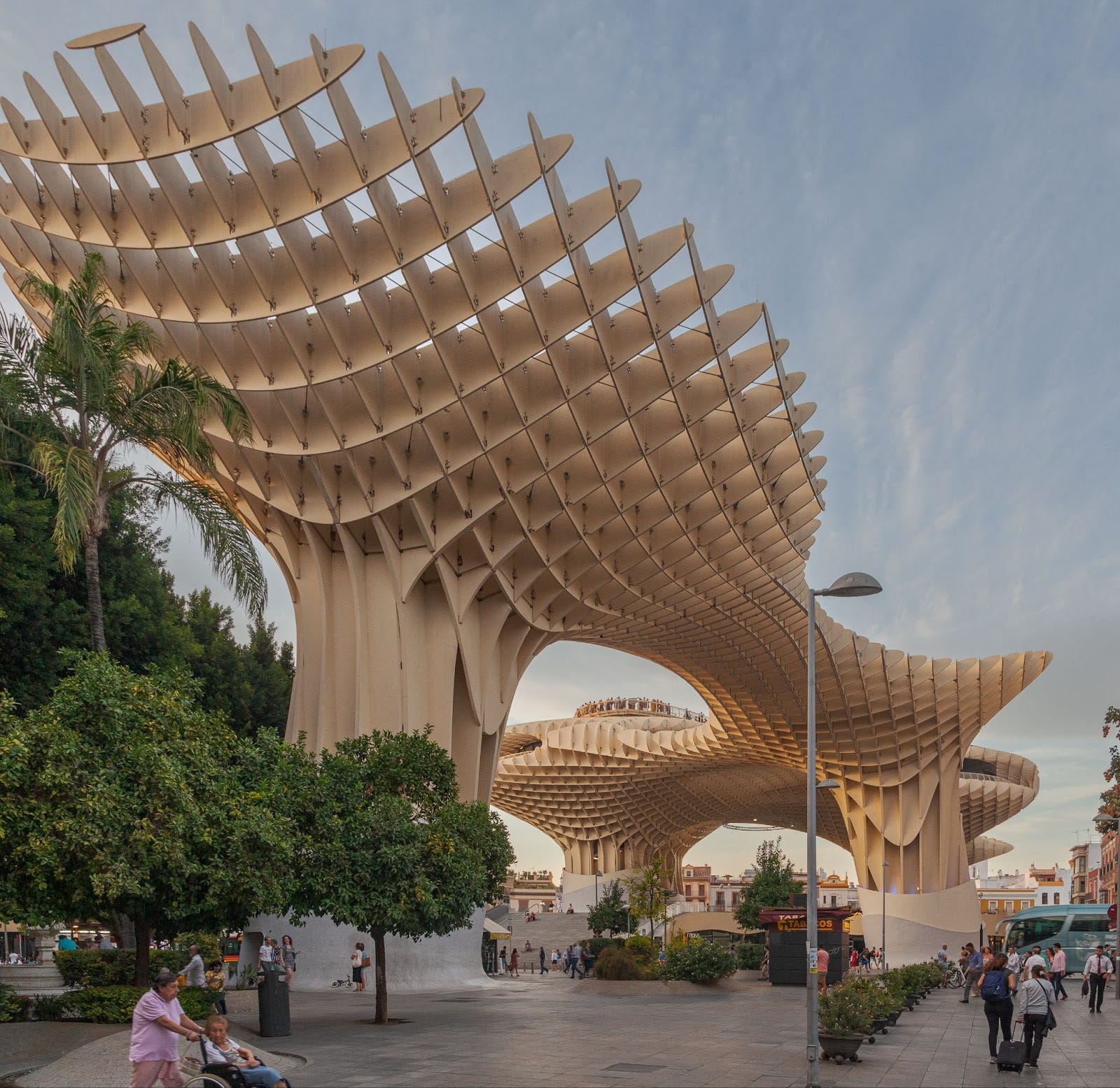
Urbanism isn’t defined by density or transit maps; it's about creating places that are “worth being in”. These are environments where people of all kinds: shopkeepers, retirees, teenagers, and toddlers can find purpose and delight. Great urban spaces have economic vitality, social connection, beauty, and function (like the Setas in Seville, Spain). A plaza with shops, playgrounds, history, and cafés isn’t just aesthetic, it embodies urbanism’s highest goals. It supports commerce, curiosity, rest, play, and cultural memory. A child chasing pigeons in the square in Setas is as much a participant in urban life as a business owner renting space in its shadow.
Urban planning has long been dominated by men, but urbanism is inherently feminist when viewed through the lens of caregiving. Jane Jacobs saw this decades ago: cities succeed when they support the daily rhythms of life. Modern feminism must include advocacy for public spaces, transit, and zoning policies that support families, not just individual careers. Women, especially mothers, play a central role in shaping the future through how they advocate, vote, and choose where to live. Urbanism is a lever of empowerment: a tool for women to build the world they want their children to inherit.
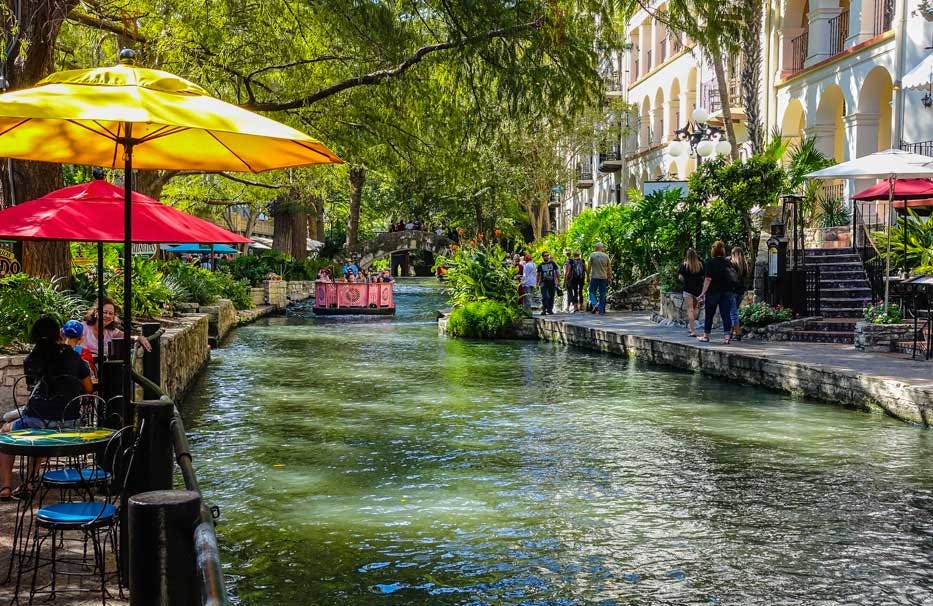
We won’t remake American places overnight. But we can start with the next block, the next town planning meeting, the next school siting decision. Cities like San Antonio (with its Riverwalk) or neighborhoods in Portland and Minneapolis have shown it’s possible. We can build not just for mobility, but for meaning: for the chance encounters, safe independence, and quiet joys that make childhood rich. We can re-center our places around those who experience them most intimately: children on foot, in strollers, on scooters, asking questions about everything. If every new project makes places slightly better for children, we can gradually rebuild our cities and towns into places families are proud to call home.
No posts
Comments
Nothing yet. Say the first thing.
Sign in to join the conversation.