
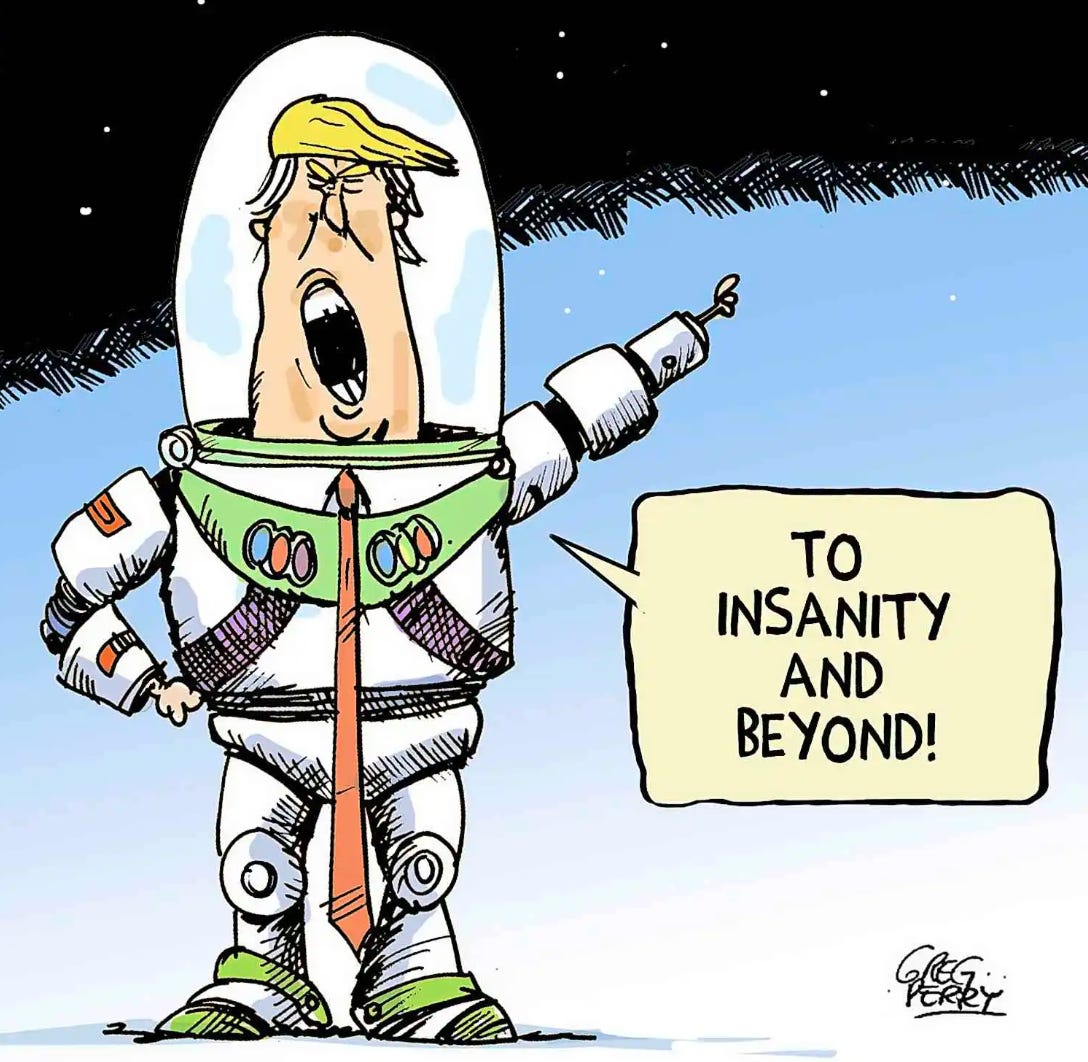
Donald Trump has spent much of his political life behaving as though the ordinary laws of democratic politics do not apply to him. Scandals that would have destroyed earlier candidates became fuel for his movement. Norms that once constrained presidents were dismissed as weaknesses. Electoral defeats, criminal proceedings, impeachments, administrative disorder, and public disapproval were folded into a single narrative in which Trump was always triumphant, always persecuted, and never responsible.
That history helps explain why he may regard his present political difficulties as temporary noise. It does not mean that they are.
Modern scientific presidential polling began with George Gallup’s work in 1936, although informal American straw polls date to 1824. Since Harry Truman’s presidency, approval surveys have provided a reasonably consistent measure of the public’s judgment of the person occupying the White House. They are imperfect instruments, but their accumulated record reveals a basic principle: presidents cannot indefinitely govern against a durable majority without imposing electoral costs on themselves and their parties. Historical accounts place the first modern Gallup presidential poll in 1936.
Trump’s second-term numbers now place him in exceptionally dangerous territory. A Pew Research Center survey conducted in April 2026 measured his approval at 34 percent, the lowest point of his second term to that date. More recent polling shows him sinking even further. Earlier Gallup polling put him at 36 percent with 60 percent disapproving. The exact number varies by poll and methodology, but the direction is unmistakable: substantially more Americans disapprove of Trump’s performance than approve of it. His standing is approaching the territory occupied by Richard Nixon during the final days of the collapse of his presidency, although Nixon’s final ratings—recorded amid Watergate and shortly before his resignation fell still lower. Pew’s April survey and Gallup’s historical presidential data provide the proper context.
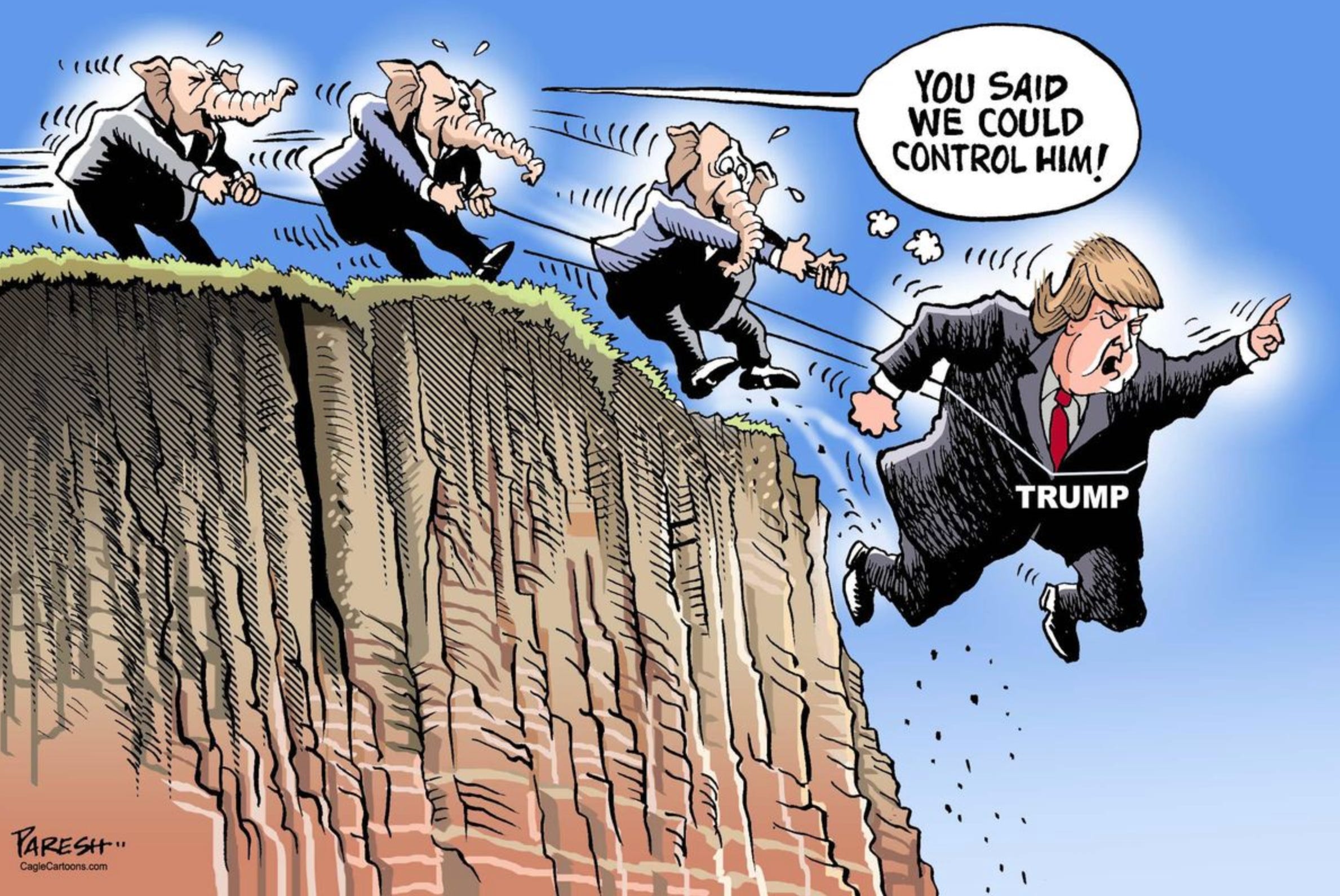
The danger is not simply that Trump is unpopular. It is that he appears temperamentally and politically incapable of responding to unpopularity through reflection, compromise, or correction. Rather than slowing as he approaches the electoral cliff, he seems determined to press the accelerator.
Political gravity is the accumulated force of public experience. It includes the price of groceries, the affordability of housing and childcare, access to health care, confidence in public institutions, perceptions of national stability, and the belief that government is acting for the country rather than for one faction or one individual.
A president can resist this force for a time. Partisanship supplies a loyal floor of support. A fragmented media environment permits different groups to inhabit conflicting versions of reality. Gerrymandering can protect legislators from national swings. The Electoral College and the Senate can reward geographically efficient coalitions rather than national majorities. Wealthy donors, friendly media outlets, and disciplined political organizations can further insulate an administration from public dissatisfaction.
But insulation is not immunity.
Trump’s political career has encouraged the belief that he can violate every rule and still survive. He won the presidency in 2016 despite losing the popular vote. He maintained intense Republican loyalty through two impeachments. He regained the presidency after losing it in 2020. Each escape strengthened the mythology of invulnerability.
Yet survival is not the same as popularity, and a personal political comeback does not repeal the structural pressures of democratic government. Trump’s first administration ended with a Gallup average approval rating of approximately 41 percent, the lowest presidential average in Gallup’s historical series at that time. His second term has not enlarged his coalition enough to give him a broad governing mandate. Instead, the evidence suggests that the coalition is contracting at its edges.
Political gravity seldom announces itself with one dramatic event. It works through accumulated disappointment until voters who once tolerated disorder decide that the disorder has become the government’s defining condition.
The comparison with Nixon is powerful, but it must be used carefully.
Nixon’s presidency disintegrated under the weight of Watergate, a constitutional crisis, collapsing congressional support, and the near certainty of impeachment and removal. His approval reached approximately 24 percent shortly before he resigned in August 1974. Trump’s present ratings are not quite that low, and the surrounding circumstances are not identical. It would therefore be imprecise to call Trump’s approval the lowest ever recorded for a second-term president.
The more defensible, and still extraordinary, claim is that Trump’s standing is among the weakest recorded for a second-term president, with Nixon’s final months providing the principal modern precedent for anything worse.
That distinction strengthens rather than weakens the argument. Responsible criticism does not require exaggeration. A president sitting in the mid-30s while disapproval approaches or exceeds 60 percent is already in profound political trouble. The Nixon comparison matters because it illustrates how a presidency can become sealed within its own explanations. Nixon increasingly saw criticism as conspiracy, accountability as persecution, and institutional resistance as disloyalty. The narrower his circle became, the more thoroughly grievance displaced judgment.
Trump exhibits a comparable tendency to interpret unfavorable information not as feedback but as sabotage. Polls showing him ahead are celebrated; polls showing him behind are dismissed. Officials who affirm his preferences are loyal; those who contradict him are suspect. Under such conditions, polling cannot perform its normal corrective function because the leader rejects the legitimacy of the correction.
Trump’s resistance to political gravity is inseparable from his conception of leadership. Conventional presidents generally attempt—sometimes sincerely and sometimes rhetorically—to expand their support after an election. They speak of governing for those who opposed them as well as those who voted for them. They seek, at minimum, the appearance of national stewardship.
Trump’s political method is different. It depends on maintaining the emotional intensity of a loyal base. Conflict is not an unfortunate byproduct of this method; it is its organizing principle. Political opponents become enemies. Independent institutions become obstacles. Compromise becomes surrender. Public criticism confirms the movement’s sense of persecution.
This strategy can preserve remarkable loyalty inside the Republican Party even as national support declines. That is one reason low approval does not automatically produce a change of course. Trump’s political incentives are filtered through Republican primaries, conservative media, personal loyalty, and the immediate approval of supporters most likely to attend rallies or punish dissenting officeholders.
The result is a government that may hear the base much more loudly than it hears the country.
Pew found in January 2026 that only 27 percent of Americans supported all or most of Trump’s plans and policies, down from 35 percent a year earlier. Fifty-two percent supported only a few or none. Significantly, the decline came from within Republican ranks: the share of Republicans supporting all or most of his agenda fell from 67 percent to 56 percent. Pew’s findings document both the national opposition and erosion within Trump’s coalition.
These numbers describe more than routine polarization. They suggest an administration pursuing an expansive agenda without expansive public consent.
Presidents are often judged through abstractions—leadership, strength, ideology, patriotism—but voters experience government through ordinary life. They know what food costs. They know whether rent is manageable, whether a medical bill can be paid, whether a job feels secure, and whether their children appear likely to enjoy a better future.
This is where Trump’s political position is especially vulnerable.
A July 2026 AP-NORC poll found that only 32 percent of adults approved of his handling of the economy, down from 40 percent at the beginning of his second term. Approximately seven in ten described the economy as poor. Even one Republican supporter interviewed for the survey complained that grocery shopping felt as though it required a bank loan. The AP-NORC findings show the depth of public economic unease.
Tariffs present the same problem. Trump portrays them as demonstrations of national strength, but consumers experience them through prices, uncertainty, and economic disruption. In a January 2026 Pew survey, 60 percent disapproved of the administration’s tariff increases, while 37 percent approved. Fifty-two percent expected the tariffs to have mostly negative effects on themselves and their families. Pew’s tariff survey found durable majority opposition.
An administration can insist that pain is temporary, statistics are misleading, and critics are dishonest. It cannot indefinitely persuade families that their household budgets are imaginary. Political gravity becomes strongest when presidential rhetoric collides with lived experience.
The deeper issue is not any single approval number. It is the degradation of the idea that public office carries an obligation to the public as a whole.
The common good does not require Americans to agree on every policy. It requires leaders to recognize that political opponents remain citizens, that public authority is held in trust, that governmental power should be constrained by law, and that facts do not become illegitimate merely because they are inconvenient.
A presidency centered on personal vindication weakens those commitments. Every institution is evaluated according to whether it advances or restrains the president. Every policy is marketed as evidence of personal strength. Every setback invites the search for an internal enemy. The public interest becomes difficult to distinguish from the leader’s interest.
Polling again captures the deterioration. In April 2026, Pew reported that 56 percent of Americans believed ethics and honesty in the federal government had declined during Trump’s term. Only 34 percent said “honest” described him at least fairly well, while just 26 percent considered him a good role model. Confidence in his judgment had also weakened across immigration, foreign policy, and the use of military force. Pew’s broader assessment records declining confidence in both Trump’s conduct and decision-making.
These judgments matter because democratic legitimacy cannot be sustained by legal authority alone. A president may possess the formal power to act and still exhaust the public trust necessary for effective government.
Most politicians treat declining approval as a practical problem. They replace advisers, modify unpopular policies, adjust their language, seek bipartisan achievements, or reconnect with disaffected voters.
Trump’s political identity makes such adaptation unusually difficult.
First, changing course would require acknowledging error, something fundamentally at odds with his cultivated image of infallibility. Second, moderation might disappoint the most committed supporters whose enthusiasm supplies his leverage over the Republican Party. Third, his information environment appears structured to reward affirmation and punish contradiction. Finally, permanent confrontation keeps followers mobilized by converting political failure into evidence of persecution.
The strategy therefore becomes self-reinforcing. The administration takes actions that satisfy its core supporters but alienate a larger public. Falling approval is blamed on hostile media, dishonest pollsters, disloyal Republicans, judges, bureaucrats, or political enemies. That explanation justifies still more confrontation, which produces still more alienation.
The cycle can continue until an external event breaks it. In a democracy, the most important such event is an election.
On November 3, 2026, voters will elect all 435 members of the House and roughly one-third of the Senate. These elections will not place Trump himself on the ballot, but his presidency will dominate them.
Historically, midterms are dangerous for the president’s party. Supporters of the party outside the White House are often more motivated, while dissatisfied voters use congressional elections to impose restraint. The House of Representatives has changed majorities during midterms a little more than one-third of the time since the emergence of the modern party system, and more than three-quarters of all House majority changes have occurred in midterm years. The House historian documents the recurring role of midterms in transferring power.
Low presidential approval intensifies this danger, but it does not guarantee a particular result. Congressional districts are not a national popular vote. Candidate quality matters. State-level conditions differ. Redistricting affects competitiveness. Senate contests depend heavily on which seats happen to be up in a given cycle. Turnout can overturn expectations, and polling error remains possible.
The “electoral cliff” should therefore be understood as a risk, not a prophecy. Republicans could outperform the president’s approval rating. They could preserve one chamber even while losing ground nationally. Events between now and Election Day could alter the political environment.
But none of these qualifications makes Trump’s trajectory less reckless. A president with approval in the mid-30s, widespread economic dissatisfaction, declining confidence among independents, and visible erosion even among Republican-leaning voters is placing his congressional allies in grave danger. If he responds by intensifying the very behavior that produced the backlash, he is not escaping political gravity. He is increasing the speed of his descent.
Trump’s opponents should resist the temptation to mistake his weakness for their strength.
An unpopular president can survive politically when the opposition appears disorganized, remote, or unable to offer a credible alternative. Disapproval does not automatically become turnout. Anger does not organize itself. A voter dissatisfied with Trump might support a Democrat, vote for a third party, leave part of the ballot blank, or remain home.
The Democratic Party must therefore offer more than denunciation. It needs a concrete account of how it would lower costs, protect health care, defend constitutional government, improve public services, secure the country without cruelty, and restore competence to federal administration. It must recruit candidates capable of speaking to their districts rather than merely reproducing national slogans. Above all, it must persuade citizens that opposition to Trump is connected to improvements in their daily lives.
There is also a duty beyond party. Civic organizations must protect access to voting. Journalists must distinguish evidence from spectacle. Courts and public officials must defend lawful election administration. Citizens must learn the rules governing registration, early voting, absentee ballots, and identification in their states. Poll workers and election observers must be recruited in sufficient numbers.
Polls can measure a public mood. They cannot cast a ballot or defend an institution.
Donald Trump may continue to believe that he is exempt from the normal consequences of democratic leadership. His history gives him reasons for that confidence. He has survived events that would have ended almost any other political career. He has repeatedly discovered that outrage fades, institutions hesitate, allies submit, and opponents divide.
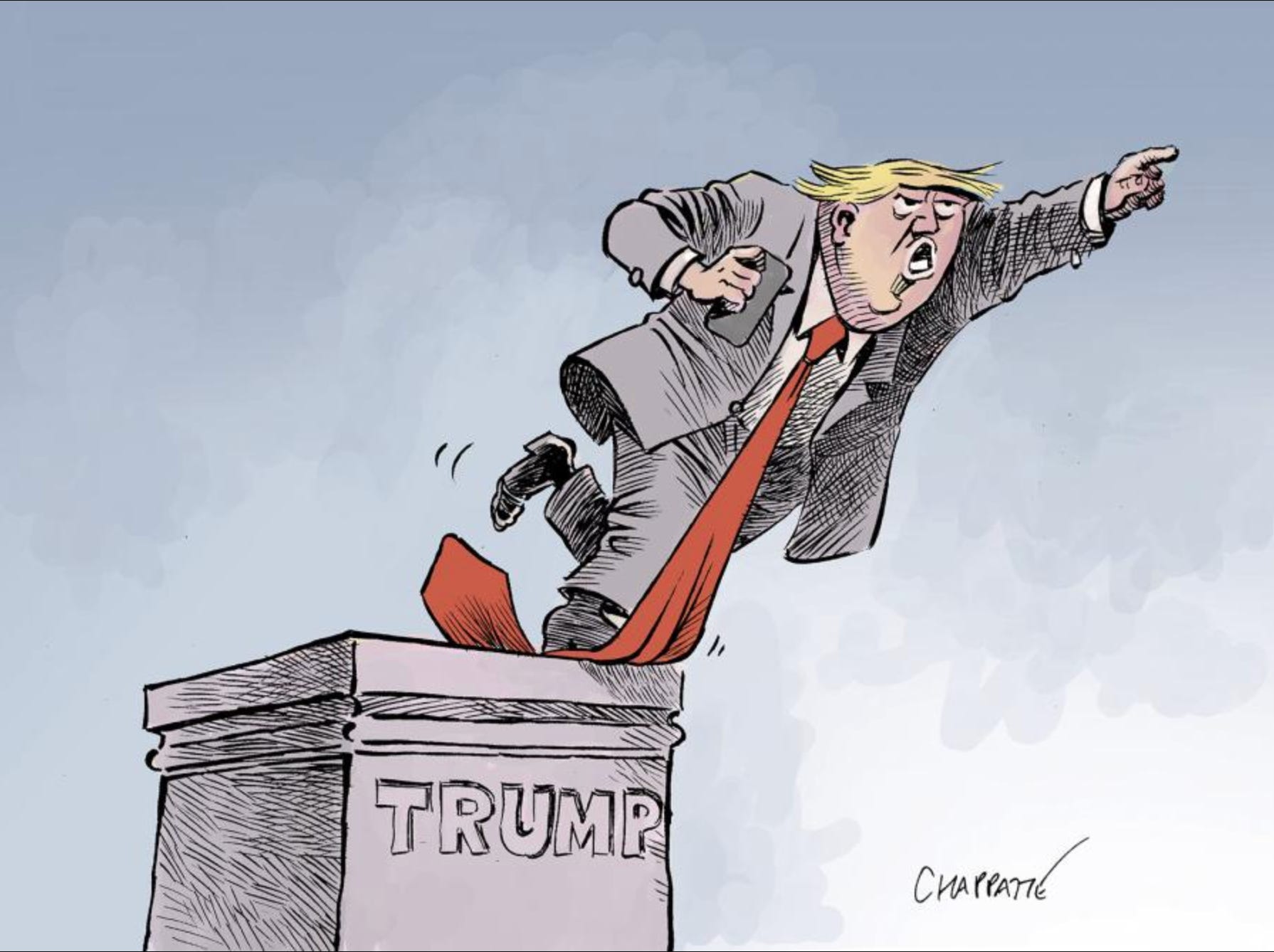
But no president is permanently exempt from political gravity.
The evidence now shows an administration governing from a position of extraordinary weakness: approval in the mid-30s, broad discontent over the economy, majority opposition to major policies, declining confidence in presidential judgment, and growing concern about ethics and honesty in government. These conditions create the possibility of a decisive midterm rebuke. They do not guarantee one.
That distinction defines the responsibility of citizenship. Democracy is not self-enforcing, and history does not vote. Those who believe the government has abandoned the common good must do more than watch approval ratings fall. They must register, verify their voting status, learn the candidates, support trustworthy local journalism, volunteer as poll workers, organize their communities, challenge misinformation, contact elected representatives, and vote in every relevant contest—not only the most prominent one.
November 3, 2026, is not an approaching spectacle to be observed from a safe distance. It is an appointment citizens must keep. Political gravity becomes politically decisive only when the public acts. The call to action is therefore simple: do not assume the cliff will stop this presidency by itself. Organize, participate, defend the lawful electoral process, and vote.
Thanks for reading Thinking Deeply. Subscribe for free to receive new posts via email and access the Thinking Deeply archive. If you find our discussions meaningful, please recommend Thinking Deeply to others. Remember, all subscriptions are free. Encouragement for civic responsibility should never be behind a paywall.
Comments
Nothing yet. Say the first thing.
Sign in to join the conversation.