
A Civics Lesson for the Republican Senators Who Voted to Hold Dr. Anthony Fauci in Contempt of Congress
Constitutional Rights Matter Most When They Are Inconvenient
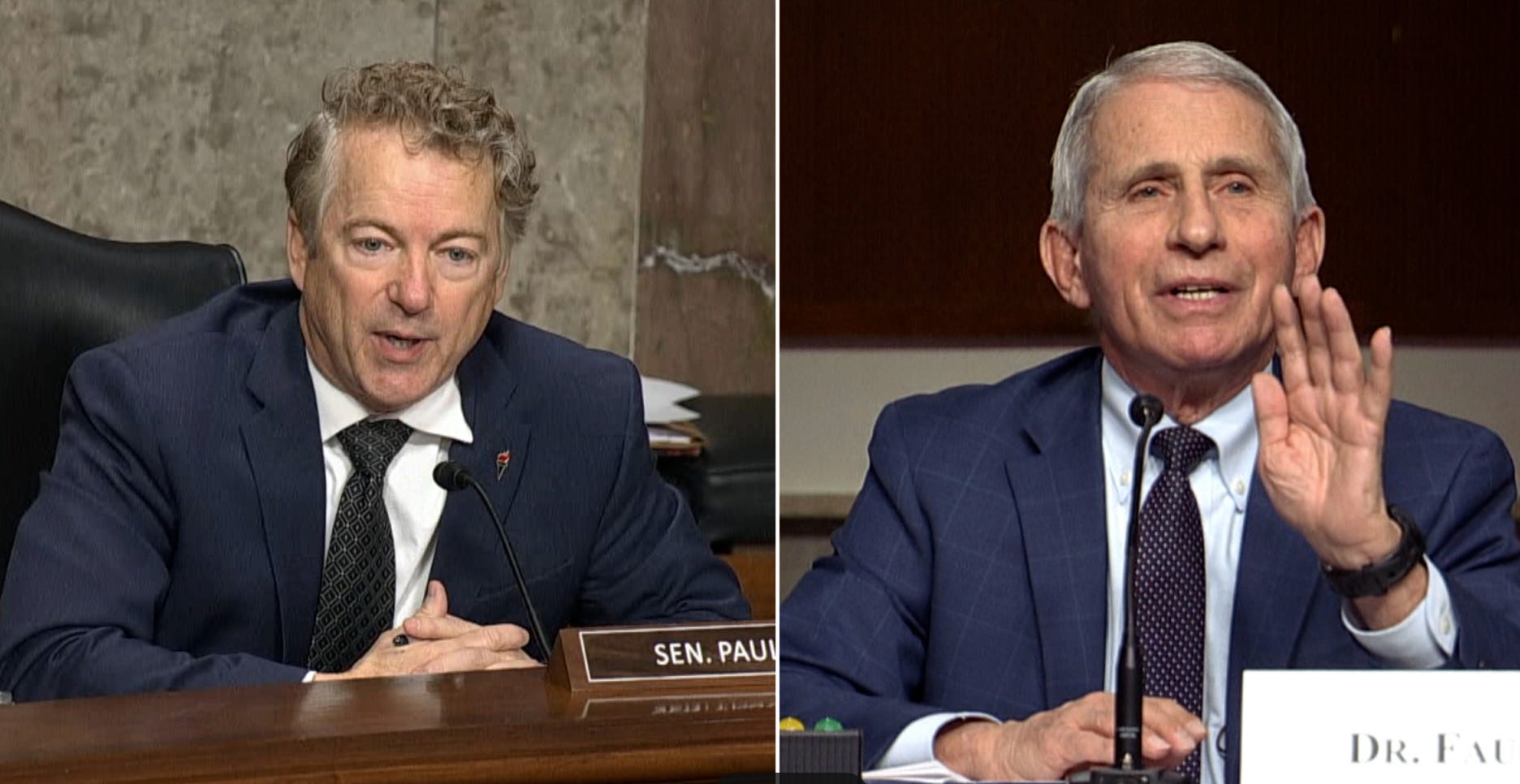
On July 29, 2026, Dr. Anthony Fauci appeared under subpoena before the Senate Committee on Homeland Security and Governmental Affairs. Acting on the advice of his attorneys, he repeatedly invoked the Fifth Amendment privilege against self-incrimination and declined to answer questions about the federal government’s response to the COVID-19 pandemic. On August 6, the committee’s Republican majority voted along party lines to hold him in contempt and refer the matter to the Department of Justice for possible prosecution. The committee identifies the proceeding as the “Testimony of Anthony Fauci” hearing, while the Associated Press reported the subsequent contempt vote and the dispute over Fauci’s pardon.
That vote presents a civics lesson reaching far beyond Dr. Fauci, the pandemic, or the partisan controversies surrounding public-health policy. The central question is whether constitutional rights protect an unpopular witness facing hostile lawmakers, or only those witnesses whose silence a congressional majority is willing to tolerate.
The Constitution supplies the answer. Rights are not favors granted by Congress. They are limitations imposed upon government, including Congress.
Yet fidelity to the Constitution also requires precision. Congress possesses authority to compel testimony relevant to a legitimate legislative inquiry. A witness cannot defeat that authority merely by uttering the words “Fifth Amendment,” and advice of counsel is not an independent defense when no valid privilege exists. The constitutional objection arises when Congress seeks to punish a witness for a valid assertion of the privilege, fails to evaluate the assertion question by question, or uses contempt primarily to retaliate against protected silence.
The issue is therefore not whether Congress may ever compel answers. It may. The issue is whether Congress may compel incriminating answers without eliminating the criminal danger against which the Fifth Amendment protects.
Congressional Oversight Is Broad but Constitutionally Limited
Congressional oversight is essential to representative government. Legislators cannot enact sound laws, appropriate public funds responsibly, or correct executive-branch failures without investigating how federal programs have operated.
In McGrain v. Daugherty (1927), the Supreme Court recognized that the power to investigate and compel testimony is an implied and necessary part of Congress’s legislative authority. In Sinclair v. United States (1929), the Court similarly upheld Congress’s ability to require answers pertinent to a legitimate inquiry, even when related litigation was pending. The Sinclair decision describes congressional inquiry as an essential auxiliary to legislation.
Those decisions prevent an argument that congressional witnesses are always free to choose whether to answer. They are not. Congress may compel attendance, demand nonprivileged evidence, and require answers to pertinent questions serving a legitimate legislative purpose.
But those same precedents reject unlimited investigative authority. Sinclair emphasized that neither chamber possesses a general power to inquire into private affairs. Congress may investigate only in aid of its constitutional functions, and it must respect the rights of witnesses.
The Supreme Court made that boundary even clearer in Watkins v. United States (1957). It explained that congressional investigations are part of the lawmaking process and are therefore restrained by the Bill of Rights. It also warned against investigations conducted for exposure alone rather than for a legitimate legislative purpose. Watkins recognizes both the necessity of congressional inquiry and the danger that investigative power may invade protected liberties.
In Hutcheson v. United States (1962), the Court reiterated that an investigation conducted solely to punish the person investigated, whether through publicity or prosecution, exceeds the proper congressional function. Congress may uncover facts for legislation. It may not turn a hearing into a substitute criminal tribunal.
The senators therefore had authority to investigate pandemic policies, research funding, laboratory safety, government communications, and the accuracy of prior testimony. But that authority remained subject to the Fifth Amendment.
The Fifth Amendment Applies in Congressional Hearings
The Fifth Amendment provides that no person “shall be compelled in any criminal case to be a witness against himself.” Although its text refers to a criminal case, the Supreme Court has consistently applied the privilege wherever the government compels testimonial communications that may later be used in a criminal proceeding.
Congressional hearings are included.
In Watkins, the Court stated that the privilege had long been recognized as a legal limitation on a committee’s authority to require answers. In Quinn v. United States (1955), it reversed a contempt conviction involving a witness before the House Un-American Activities Committee and held that no ritualistic formula is necessary to invoke the privilege. Language reasonably putting the committee on notice of the claim is sufficient. Quinn also admonished government bodies to be especially scrupulous when the privilege is attacked as merely a shield for guilty people.
Dr. Fauci’s repeated statements that he was declining to answer under the Fifth Amendment plainly placed the committee on notice. The dispute is not whether he invoked the privilege. It is whether the privilege validly applied to the particular questions.
The Standard Is Reasonable Danger, Not Certain Prosecution
A witness does not have to demonstrate that prosecution is certain. Under Hoffman v. United States (1951), the privilege applies when an answer could support a conviction or supply a link in the chain of evidence needed to prosecute. Courts must consider the implications of the question within the circumstances in which it is asked. The privilege should receive a liberal construction, but an imaginary or insubstantial danger is not enough. Hoffman establishes the governing “reasonable cause to apprehend danger” standard.
This standard is particularly relevant when lawmakers questioning the witness have publicly demanded his prosecution. Political hostility does not automatically establish a valid privilege, but it is part of the setting in which the danger must be assessed. A witness called before a chairperson who has repeatedly advocated putting him behind bars has a stronger argument that the proceeding carries genuine prosecutorial risk than a witness facing a neutral fact-finding inquiry.
Nor does a claim of innocence defeat the privilege. In Ohio v. Reiner (2001), the Supreme Court unanimously held that the Fifth Amendment protects innocent as well as guilty witnesses. Even truthful answers from an innocent person may provide incriminating evidence or ensnare that person in ambiguous circumstances. Reiner rejects the notion that a witness must concede wrongdoing before invoking the Fifth Amendment.
Senators therefore may not properly infer guilt from Dr. Fauci’s silence. The legal question is whether his answers presented a reasonable criminal danger, not whether the senators believed an innocent person should have been eager to respond.
The Pardon Presents a Serious Legal Question
The strongest legal argument advanced by the committee majority concerns President Biden’s 2025 pardon of Dr. Fauci. The pardon reportedly covered federal offenses connected to his government service during a specified period ending in January 2025.
Supreme Court precedent supports the general proposition that a witness cannot invoke the Fifth Amendment when prosecution for the relevant offense has become legally impossible. In Brown v. Walker (1896), the Court explained that the privilege ordinarily disappears when the witness has received an effective pardon, the statute of limitations has expired, or another legal barrier has eliminated the danger of prosecution. A pardoned witness stands, with respect to the covered offense, as if that offense could no longer be punished. Brown remains an important precedent on the relationship between immunity, pardon, and compelled testimony.
That precedent means the Republican senators’ legal contention cannot simply be dismissed as hostility to the Fifth Amendment. If the pardon was valid, accepted, and broad enough to eliminate every realistic criminal consequence arising from a particular truthful answer, the privilege might not apply to that answer.
But Brown does not permit Congress to treat the word “pardon” as ending all analysis. The scope of the pardon must be compared with each question. A presidential pardon reaches federal offenses, not offenses prosecutable by a state. It may also be limited by time, subject matter, or the relationship between the conduct and the witness’s official duties.
In Murphy v. Waterfront Commission (1964), the Supreme Court held that a witness cannot be forced to give testimony that could be used by another sovereign to prosecute him. A federal witness may therefore invoke the privilege based on a realistic danger of state prosecution unless adequate immunity also protects against that use. Murphy recognizes the privilege’s cross-sovereign dimension.
Consequently, a federal pardon would not automatically defeat a claim based on realistic state criminal exposure. Nor would it necessarily cover conduct outside its subject-matter or temporal limits. These possibilities cannot validate a blanket refusal to answer every conceivable question, but they prevent a blanket conclusion that the pardon extinguished the privilege altogether.
The relevant inquiry must be question-specific: What truthful information did the question seek? What criminal exposure could that information create? Was the exposure federal or state? Was the conduct within the pardon? Was the danger realistic rather than speculative?
Those are legal questions, not matters to be settled by partisan confidence.
Acceptance of a Pardon and Burdick v. United States
Another relevant precedent is Burdick v. United States (1915). There, a newspaper editor invoked the Fifth Amendment before a federal grand jury. President Woodrow Wilson attempted to pardon him so that he could be compelled to testify, but Burdick refused to accept the pardon. The Supreme Court held that he could reject it and retain his privilege. The Court’s decision treated acceptance as necessary to make that particular pardon effective.
Burdick does not establish that every accepted pardon automatically removes every Fifth Amendment protection. It does show, however, that an effective pardon can materially alter the privilege analysis. If Dr. Fauci accepted or relied upon the pardon, a court would have to determine its legal effect and scope.
The committee could not responsibly resolve that issue merely by declaring the privilege “unsupported.” It needed a careful record identifying the questions, the pardon’s coverage, any plausible state exposure, and any remaining criminal hazards.
Fauci’s Opening Statement May Raise Waiver Questions
The Fifth Amendment privilege can be waived. Under Rogers v. United States (1951), a witness who voluntarily discloses incriminating facts may lose the ability to invoke the privilege to conceal closely related details when those details create no additional danger. Rogers requires a question-specific examination of the witness’s earlier voluntary disclosures.
That does not mean any opening statement waives the privilege as to the entire hearing. Waiver is not infinitely expansive. A witness who states that he acted lawfully, denies misconduct, or criticizes the motivation for a hearing does not necessarily open every aspect of his life and government service to compelled examination.
Indeed, Reiner makes clear that an assertion of innocence does not itself destroy the privilege. The committee would have to identify what facts Dr. Fauci voluntarily disclosed and explain why a particular unanswered question sought only details of that same disclosure without presenting additional incriminating danger.
A broad allegation of waiver is no substitute for that analysis.
Advice of Counsel Does Not Independently Resolve the Matter
Dr. Fauci’s reliance on legal advice is understandable, but judicial precedent requires another qualification. Advice of counsel is not, by itself, a constitutional privilege.
In Sinclair, the Supreme Court rejected the argument that a witness could avoid a contempt conviction merely because he refused to answer in good faith on the advice of competent counsel. If a question is pertinent, the committee has authority to ask it, and no valid privilege applies, a mistaken legal opinion from counsel does not necessarily excuse the refusal.
Accordingly, the constitutional defense cannot rest simply on the phrase “on advice of counsel.” It must rest on the validity of the Fifth Amendment claim itself.
At the same time, reliance on counsel helps demonstrate that the refusal was a formal invocation of a claimed constitutional right rather than disorderly conduct, evasion, or casual defiance. It also reinforces the need for the committee to rule clearly on the objection and give the witness a precise opportunity to comply.
Contempt Requires a Clear Ruling and Direction to Answer
The procedural holding of Quinn may be especially important.
The Supreme Court held that before a witness may be prosecuted for contempt after invoking a constitutional objection, the committee must clearly dispose of the objection and make the obligation to answer unmistakable. A specific direction to answer informs the witness that the committee has overruled the claim and creates the deliberate refusal required by the contempt statute.
A prosecution cannot rest merely on the fact that the senators disliked the invocation. Under Quinn, the government must establish beyond a reasonable doubt that the committee clearly rejected the objection, directed an answer, and that the witness deliberately refused.
The questions must also be pertinent to a clearly defined congressional inquiry. In Watkins and Deutch v. United States (1961), the Supreme Court emphasized that pertinency is an element of criminal contempt and that, when challenged, the relationship between the question and the authorized investigation must be made clear to the witness. Deutch explains the distinct constitutional and evidentiary requirements of pertinency.
Congressional committees must also follow their own governing rules. In Yellin v. United States (1963), the Supreme Court reversed a contempt conviction because the committee failed to observe a rule intended to protect witnesses from unjust reputational injury. Yellin cautions that a committee preparing the ground for prosecution must be equally meticulous about its own procedures.
Any prosecution of Dr. Fauci would therefore require far more than pointing to the number of times he invoked the Fifth Amendment. Prosecutors would need to examine each charged question, the committee’s authority, pertinency, the scope of the privilege, the effect of the pardon, possible waiver, the clarity of the committee’s ruling, and compliance with committee and Senate procedures.
Congress Had an Established Alternative: Immunity
If the committee genuinely regarded Dr. Fauci’s answers as indispensable, Congress had a constitutionally recognized alternative: seek an immunity order.
Under 18 U.S.C. § 6005, an authorized congressional committee may request a federal court order requiring testimony after a witness invokes the privilege. In exchange, the witness receives statutory protection against the direct or derivative use of that testimony in a criminal prosecution. The congressional immunity procedure appears in the current United States Code.
In Kastigar v. United States (1972), the Supreme Court held that use-and-derivative-use immunity is coextensive with the Fifth Amendment privilege and therefore constitutionally sufficient to compel testimony. The prosecution then bears the burden of proving that any evidence later used against the witness came from sources wholly independent of the compelled testimony. Kastigar explains how immunity reconciles the public need for evidence with the constitutional right against self-incrimination.
This procedure forces Congress to make an honest choice. If its primary objective is legislative information, it can protect the witness and obtain that information. If it refuses immunity because it wants the testimony available for prosecution, it confirms the reality of the criminal danger motivating the witness’s silence.
Congress cannot fairly preserve the prosecutorial utility of testimony while condemning the witness for recognizing that utility.
A Justice Department Referral Is Not Automatically Unconstitutional
Legal precision is crucial here. A referral to the Department of Justice is not, standing alone, a constitutional violation. Congress may refer suspected crimes to the executive branch, and the Department may investigate whether a privilege claim was valid. Courts, not congressional rhetoric, ultimately determine whether a contempt prosecution can succeed.
But purpose and foundation matter. A referral designed to punish a valid invocation, to burden a political opponent with investigation, or to bypass constitutional protections would be an abuse of congressional authority. It would be especially troubling if the committee failed to make question-specific rulings, disregarded plausible criminal exposure outside the pardon, or neglected the procedural safeguards required by Quinn, Watkins, Deutch, and Yellin.
The proper proposition is therefore narrower and stronger than the categorical claim that every referral following a Fifth Amendment invocation is unconstitutional:
Congress may refer a witness for contempt when the witness deliberately refuses to answer a pertinent question after a valid privilege has been clearly rejected. It may not constitutionally punish a witness for refusing to provide testimony that remains protected by the Fifth Amendment.
Pandemic Accountability and Constitutional Accountability
Defending the privilege does not require declaring Dr. Fauci infallible. Congress should investigate the origins of COVID-19, federal research funding, biosafety practices, agency communications, the evidentiary basis for public-health recommendations, and the consequences of pandemic policies.
But serious oversight requires evidence, competing expertise, procedural fairness, and a genuine legislative purpose. It is weakened when a hearing appears designed to generate accusations, partisan footage, or a prosecutorial trap.
Lawmakers who possess independent evidence of criminal conduct may submit it to law-enforcement authorities. What they should not do is use compelled testimony to make the witness construct the case against himself and then punish him for declining to do so.
Conclusion and Call to Action: Apply the Constitution Consistently
The judicial precedents do not give either side an effortless victory.
They establish that Congress may compel nonprivileged testimony. They also establish that the Fifth Amendment applies fully to congressional hearings; that the privilege protects innocent people; that reasonable state or federal criminal exposure can justify silence; that a pardon or adequate immunity may eliminate the privilege within its scope; and that contempt requires exacting procedural regularity.
The Department of Justice should therefore conduct an independent, question-by-question review rather than treating the committee vote as proof of criminal contempt. It should decline prosecution unless it can establish that the pardon or another legal protection eliminated every realistic criminal danger associated with the charged answers, that no valid privilege or unwaived portion of the privilege remained, and that the committee complied with all constitutional and procedural prerequisites.
The Senate should release the complete legal analysis supporting the contempt finding. If the committee principally wants information, it should consider the immunity procedure approved in Kastigar. If it principally wants prosecution, it should acknowledge that objective and stop pretending that the danger perceived by the witness is imaginary.
Citizens should contact their senators and demand the same rules for every witness, regardless of party or popularity. They should insist that contempt referrals receive careful legal review, that constitutional objections be decided question by question, and that congressional investigations remain directed toward legislation rather than political punishment.
One need not agree with Dr. Fauci to defend his rights. Nor must one ignore the legal effect of his pardon to criticize an abusive referral. The true civics lesson lies in holding both ideas at once: Congress possesses substantial investigative power, and that power ends where a valid constitutional privilege begins.
The Fifth Amendment belongs to every person. Senators who swear to defend the Constitution must protect it even when doing so denies them the answers they want.
Thanks for reading Thinking Deeply. Subscribe for free to receive new posts via email and access the Thinking Deeply archive. If you find our discussions meaningful, please recommend Thinking Deeply to others. Remember, all subscriptions are free. Encouragement for civic responsibility should never be behind a paywall.
Comments
Nothing yet. Say the first thing.
Sign in to join the conversation.