
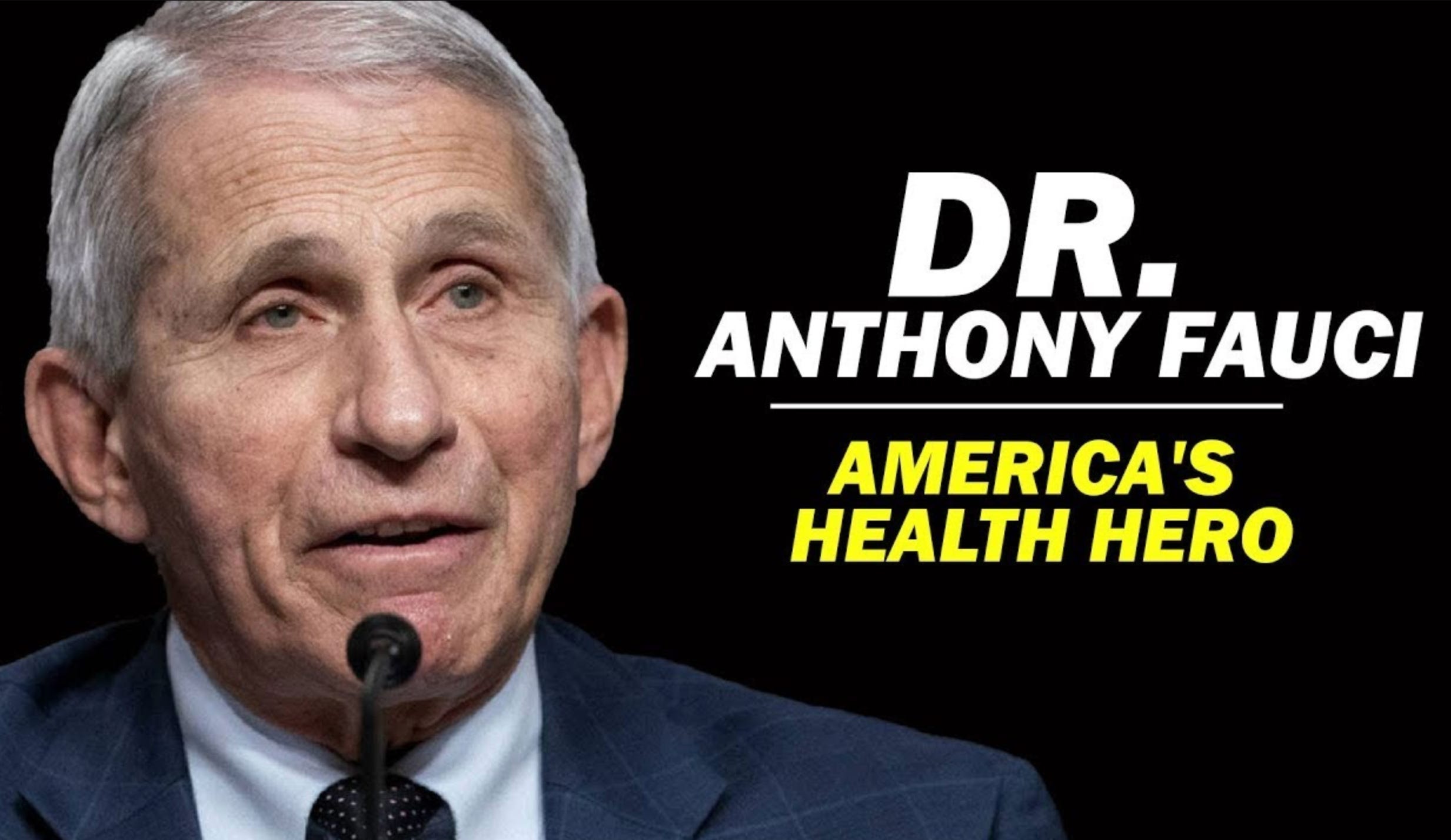
Congress has both the authority and the responsibility to investigate the government’s response to the COVID-19 pandemic. Decisions that affected millions of lives, disrupted schools and businesses, and involved billions of dollars in public spending deserve serious examination. Public officials, including scientists, must answer reasonable questions about what they knew, what they recommended, and what lessons should be learned.
But legitimate oversight is not what some Republican politicians have directed at Dr. Anthony Fauci.
Instead, they have turned an 85-year-old physician and scientist into a political villain. They have repeatedly accused him of dishonesty and corruption, demanded his prosecution, threatened him with imprisonment, and subjected him to hearings whose tone frequently resembles a trial with a predetermined verdict. These attacks have continued even though a lengthy Republican-led House investigation did not establish that Fauci committed a crime or connect him personally to wrongdoing.
Fauci’s real offense appears to be that he defended scientific judgment in an intensely partisan environment, and that, under questioning, he often proved more knowledgeable, disciplined, and credible than the politicians attacking him. His command of the facts exposes the weakness of theatrical accusations. That may embarrass his interrogators, but embarrassment is not evidence of criminality.
The persecution of Fauci is wrong because it distorts the purpose of congressional oversight, endangers public servants, weakens public trust, discourages future scientists from serving their country, and substitutes political spectacle for the difficult work of preparing for the next pandemic.
Anthony Fauci did not enter public service during COVID-19. He joined the National Institutes of Health in 1968 and served as director of the National Institute of Allergy and Infectious Diseases from 1984 until 2022. Across more than five decades, he advised presidents of both parties and helped guide the nation through HIV/AIDS, anthrax attacks, influenza outbreaks, Ebola, Zika, and COVID-19. His official NIAID biography documents a career extending far beyond the controversy surrounding one pandemic.
In 2008, Republican President George W. Bush awarded Fauci the Presidential Medal of Freedom. Bush praised him as a leader in the struggle against HIV/AIDS and as an architect and champion of the President’s Emergency Plan for AIDS Relief (PEPFAR).PEPFAR is estimated to have saved the lives of more than 25 million people in countries worldwide. In presenting the medal, Bush honored Fauci’s “determined and aggressive efforts to help others live longer and healthier lives.” The president’s remarks remain part of the historical record.
That honor does not make Fauci infallible. No scientist is infallible, and no public official should be placed beyond criticism. But his record matters. It demonstrates that Fauci was not a partisan operative who suddenly appeared to undermine a Republican president. He was a career physician-scientist whose work had been respected by Republican and Democratic administrations alike.
The attempt to erase that record is intellectually dishonest. A nation cannot celebrate a scientist when his expertise is politically convenient and then recast him as a criminal when the same expertise becomes inconvenient.
The COVID-19 pandemic unfolded amid uncertainty. Early information was incomplete; the virus evolved; evidence accumulated; and recommendations changed. That process was frustrating and sometimes poorly communicated. Some policies imposed serious social, educational, economic, and psychological costs. Those decisions should be studied candidly.
But changing guidance is not proof of fraud. It is often what responsible science looks like when researchers confront a new disease.
Science is not a collection of eternal pronouncements delivered by experts who never revise their conclusions. It is a method for making the best judgment possible from available evidence, and correcting that judgment when better evidence appears. During a rapidly developing emergency, uncertainty is unavoidable. The proper question is not whether every recommendation was perfect. It is whether officials acted reasonably on the evidence available at the time and whether they corrected course as knowledge improved.
Critics are entitled to argue that particular recommendations were mistaken, overly cautious, inadequately supported, or poorly explained. They are not entitled to leap from disagreement to accusations of criminal conduct without evidence.
That distinction is essential. A policy error can be investigated. A scientific disagreement can be debated. A communication failure can be corrected. A criminal allegation, however, demands proof, not suspicion, innuendo, or a viral video of an angry congressional exchange.
The Republican-led House Select Subcommittee on the Coronavirus Pandemic conducted a two-year investigation, reviewed more than one million pages of documents, held numerous hearings, and published a 520-page final report. The committee sharply criticized pandemic policies, research oversight, government recordkeeping, and public-health communication. Its official summary presents many conclusions favorable to Republican arguments.
Those findings deserve examination on their merits. Yet after that enormous investigation, the committee did not establish that Fauci had committed a crime. Reporting on the proceedings likewise noted that the Republican-led inquiry found no evidence personally linking him to wrongdoing. That fact should matter more than the volume or intensity of accusations.
The persecution nevertheless continued. On July 29, 2026, the Senate Homeland Security and Governmental Affairs Committee held another hearing devoted to Fauci’s testimony, as confirmed by the committee’s official hearing record. Senator Rand Paul, who has publicly argued for Fauci’s prosecution, subpoenaed him to appear. Fauci invoked his Fifth Amendment rights after explaining that he believed the hearing was designed to create a new basis for prosecuting him.
Invoking the Fifth Amendment is not an admission of guilt. It is a constitutional protection available precisely when testimony may be manipulated into a criminal accusation. When lawmakers have already announced that a witness belongs “behind bars,” the danger of a perjury trap is not imaginary. According to the Associated Press account of the hearing, some Republicans had suggested that Fauci might be prosecuted for statements made during the proceeding itself.
An honest investigation begins with questions and follows the evidence toward a conclusion. A show trial begins with the conclusion and searches for a statement that can be used to justify it. The campaign against Fauci increasingly resembles the latter.
Fauci has spent a professional lifetime explaining complicated medical subjects to presidents, legislators, journalists, patients, and the public. He understands the difference between a hypothesis, a possibility, a probability, and an established fact. Many of his congressional antagonists blur those categories.
That difference produces revealing confrontations. A politician may frame a question to demand a simple yes or no, while the scientifically honest answer requires qualifications. Fauci’s refusal to accept a false premise can be portrayed as evasiveness, even when it is actually precision. When he corrects a misleading claim or explains the limits of a legislator’s interpretation, he can make the accusation look poorly informed.
This is the sense in which Fauci has made fools of those attempting to persecute him: not because he mocks them, but because factual knowledge exposes theatrical questioning. The contrast is between expertise and performance. Fauci generally speaks in the vocabulary of evidence, uncertainty, and institutional responsibility. His most aggressive critics often speak in the vocabulary of villains, cover-ups, imprisonment, and betrayal.
The louder the accusation becomes, the more conspicuous the missing evidence appears.
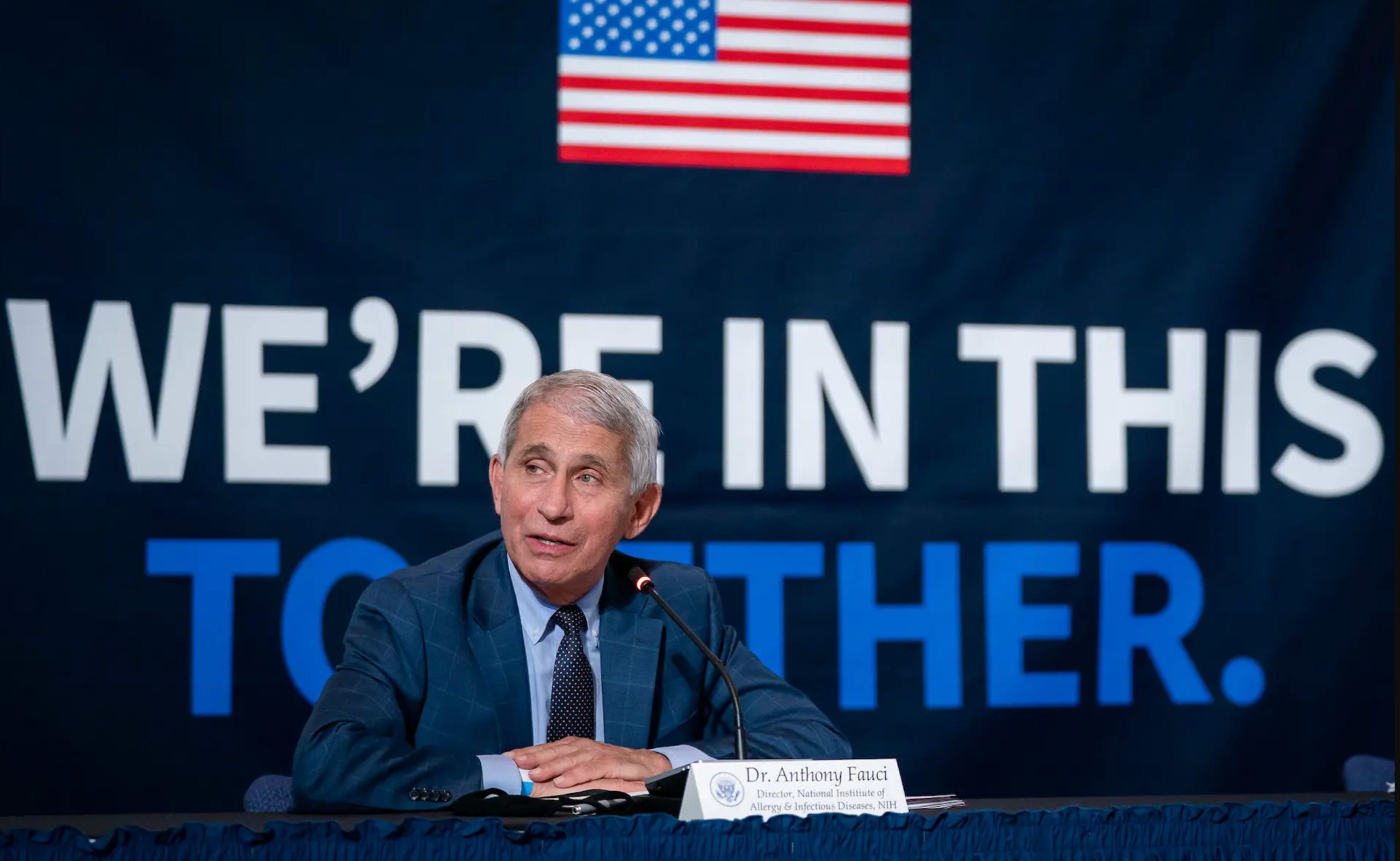
Political rhetoric does not remain confined to a hearing room. Fauci has received death threats, and his family has endured harassment. During his 2024 House testimony, he became emotional while describing threats directed at his wife and daughters. The Associated Press reported that the threats and harassment were continuing.
In January 2025, President Donald Trump ended Fauci’s federal security protection despite the history of domestic threats against him. Fauci subsequently hired private security. The Associated Press account reported that his protection had previously been renewed because of those threats.
Lawmakers cannot control every disturbed person who hears their words. They can control whether they portray a public servant as an enemy who deliberately caused mass death, committed “crimes against humanity,” or deserves imprisonment. When politicians use such language without proof, they help create an atmosphere in which intimidation and violence become more likely.
This is not accountability. It is dehumanization.
An 85-year-old doctor should not need private protection because elected officials have transformed him into a symbol of everything their political base has been encouraged to hate. One need not agree with every recommendation Fauci ever made to recognize that this treatment is indecent.
The damage extends beyond one man.
Imagine a young epidemiologist, immunologist, or physician considering government service. That person sees what has happened to Fauci: decades of work reduced to partisan caricature, family members threatened, legal expenses accumulated, security withdrawn, and retirement interrupted by repeated demands for prosecution.
What lesson does that scientist learn?
The lesson is that serving the public during a crisis may make one a permanent political target. The lesson is that carefully qualified scientific statements can later be taken out of context. The lesson is that politicians may summon experts not to learn from them, but to humiliate or entrap them. The lesson is that expertise offers no protection when a party needs an enemy.
That is a dangerous message for the United States to send. The next disease outbreak or pandemic will not wait for political divisions to heal. When it arrives, the country will need talented people willing to accept public responsibility under conditions of uncertainty. Driving those people away from government does not punish Fauci; it weakens America.
Public-health agencies made mistakes during COVID-19. Officials sometimes communicated uncertainty poorly. Guidance occasionally appeared inconsistent. Government institutions were not always sufficiently transparent. Some policies remained in place after their benefits had become debatable. These matters deserve rigorous, bipartisan review.
But accountability must run in both directions.
Politicians who minimized the virus, circulated misinformation, promoted unsupported treatments, resisted elementary precautions, or turned public health into a culture-war weapon should also face scrutiny. Lawmakers who use hearings to generate social-media clips rather than workable reforms should answer for that failure. Members of Congress who make incendiary allegations without producing evidence should be held responsible for degrading both public debate and congressional oversight.
If accountability means only punishing scientists whose recommendations became unpopular, it is not accountability. It is scapegoating.
The country needs an after-action review that asks practical questions: How can early-warning systems improve? How should risky research be supervised? How can agencies communicate uncertainty more honestly? How do we protect children’s education while controlling disease? How can vaccine and treatment trials move quickly without compromising safety? How do we preserve civil liberties while responding to a genuine emergency?
Those questions could save lives. Another round of televised denunciations will not.
The most troubling aspect of the campaign against Fauci is the idea that prosecution should be treated as a political objective. Under the rule of law, investigators first establish evidence of a specific offense. Prosecutors then assess that evidence under defined legal standards. Guilt is determined through due process.
The order cannot be reversed. Politicians must not decide that a disliked official belongs in prison and then use government power to search indefinitely for a charge.
That principle should transcend party loyalty. Conservatives should oppose such tactics because limited government requires restraints on the use of state power. Liberals should oppose them because political prosecution threatens civil liberties. Every American should oppose them because the same machinery can eventually be turned against anyone.
Defending Fauci’s rights does not require declaring him perfect. It requires insisting that criticism remain proportional, factual, and lawful.
Dr. Anthony Fauci’s “crime” was not that he possessed perfect knowledge during an unprecedented pandemic. No one did. His supposed crime was that he treated public health as a scientific responsibility when powerful political figures wanted it treated as a loyalty test. He remained informed, resilient, and difficult to intimidate. In doing so, he exposed how little evidence lay beneath some of the loudest accusations against him.
Republicans and Democrats alike have every right to question Fauci’s decisions. They have no right to substitute persecution for proof. They should examine policies, correct institutional failures, strengthen research oversight, and prepare for future emergencies. They should not use an elderly public servant as a prop in an endless spectacle of grievance and revenge.
Americans should demand better. Contact members of Congress and insist that pandemic oversight focus on verifiable evidence and concrete reforms. Reject candidates who casually threaten public servants with imprisonment. Challenge misinformation even when it comes from one’s preferred party. Defend the constitutional rights of witnesses regardless of political affiliation. Support scientists, physicians, and civil servants who accept the difficult responsibility of protecting the public.
The nation cannot prevent every future outbreak. It can decide whether it will confront the next one with knowledge and shared purpose—or with intimidation, scapegoating, and political theater. Defending Dr. Fauci from baseless persecution is therefore about more than honoring one distinguished physician. It is about defending science, due process, public service, and America’s capacity to protect itself.
Thanks for reading Thinking Deeply. Subscribe for free to receive new posts via email and access the Thinking Deeply archive. If you find our discussions meaningful, please recommend Thinking Deeply to others. Remember, all subscriptions are free. Encouragement for civic responsibility should never be behind a paywall.
Comments
Nothing yet. Say the first thing.
Sign in to join the conversation.