
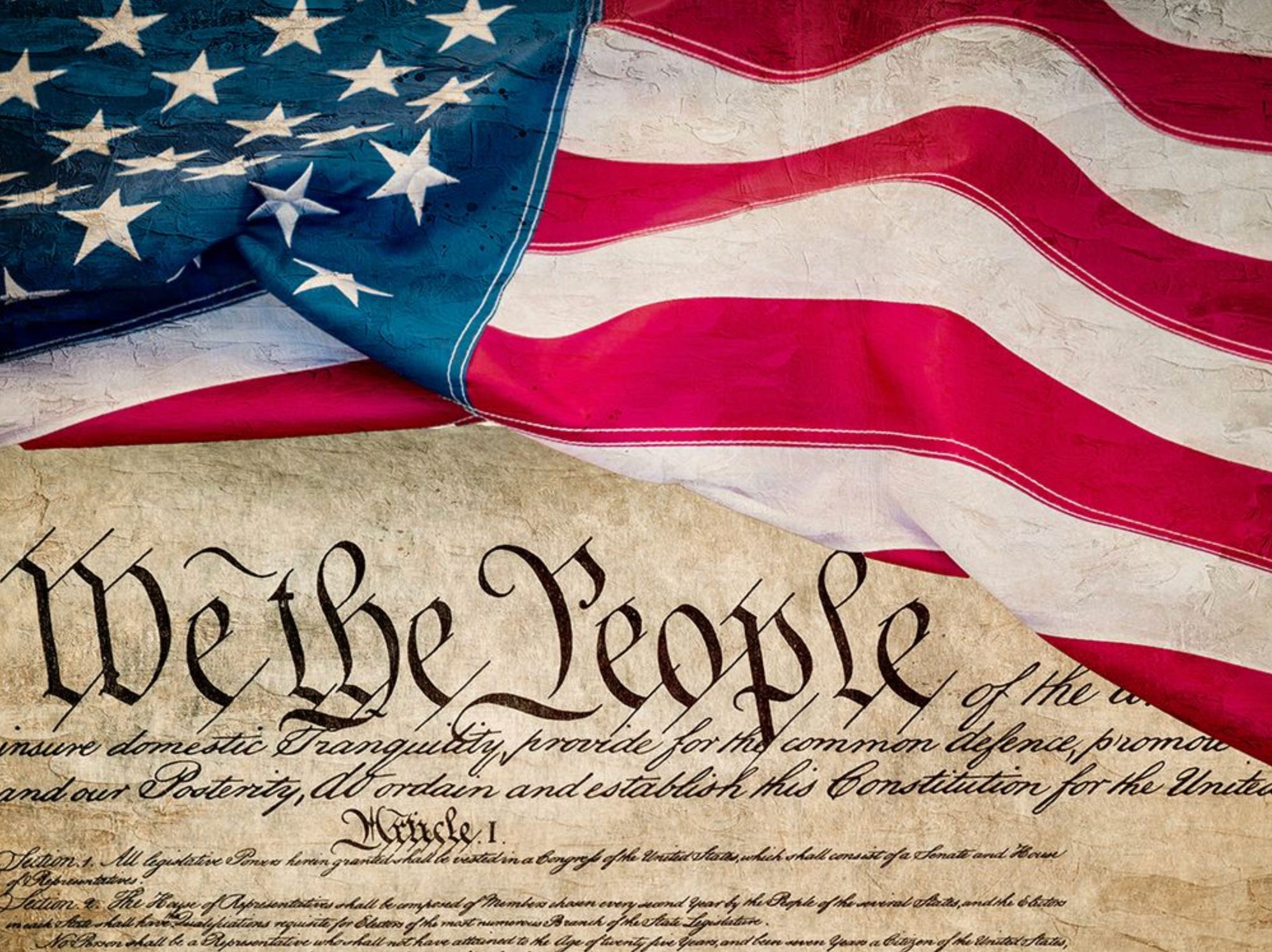
My grandmother let the question linger from our last conversation for us to think about before opening the Constitution: “How do free people create a government strong enough to protect liberty without becoming strong enough to endanger it?”
She never hurried past important questions.
Instead, she wanted me to live with them long enough that I began asking them for myself.
Only after a few days of thinking did we prepare to open another document together. “This,” she said quietly, “is the Constitution of the United States.” She didn’t ask me to begin reading immediately. Instead, she asked another question.
“How do you suppose the people who gathered in Philadelphia were chosen?”
I had never thought about that.
Like many people, I imagined the founders as a single group of remarkable men who somehow appeared together in one room and wrote the Constitution. History, of course, was much more interesting than that.
The delegates who assembled in Philadelphia during the spring of 1787 did not represent a single people with identical interests. They represented independent states that had emerged from a long and costly war. The Convention included representatives from twelve of the thirteen states; Rhode Island refused to send delegates.
Some states were large. Others were smaller. Some depended heavily upon commerce. Others depended upon agriculture. Their economies differed. Their regional interests differed. Their populations differed. Even their histories of settlement and immigration differed.
They were already a remarkably diverse collection of communities trying to discover whether, and how, they could truly become one nation.
The delegates themselves were appointed by their respective states, generally through their state legislatures. They came to Philadelphia carrying the confidence, and often the competing priorities, of the states they represented. Some were lawyers. Others were merchants, farmers, physicians, soldiers, educators, and experienced public servants. Some had already become nationally known. Others would become better known because of the work they accomplished there.
My grandmother smiled. “So,” she asked, “what do you suppose was on their minds when they first gathered together?”
I looked back at the Articles of Confederation lying beside us on the table. “They knew something wasn’t working.”
She nodded. “Yes. They had already discovered that preserving liberty required more than declaring it. The new nation needed a government capable of acting together.”
Originally, the delegates had not been asked to write an entirely new Constitution. Their instructions were much more modest. They had come to revise the Articles of Confederation. But it did not take them long to recognize that repairing the existing framework would not be enough. The problems ran deeper than a few missing provisions.
My grandmother asked another question.
“Do you suppose they came to Philadelphia with empty minds?”
Before I could answer, she smiled.
“Of course they didn’t. Notice something. None of these men believed they were the first people to think deeply about freedom. They were humble enough to study those who came before them, wise enough to learn from both their successes and their failures, and courageous enough to try something new when history taught them that something better was needed.”
The delegates were educated and experienced men. They brought their knowledge of history, political philosophy, colonial government, war, diplomacy, commerce, and public service into the Convention. They were not trying to invent perfection. They were trying to learn from history.
The nation required a different foundation from the one provided by the Articles of Confederation. That realization changed everything. The delegates soon began considering competing frameworks, including the Virginia and New Jersey Plans. Over the months that followed, debate, disagreement, compromise, frustration, and careful thought gradually shaped and completed the framework we now call the Constitution.
The representatives gathered in Philadelphia were learned men. They had their own experiences and history to guide them. My grandmother offered, “They were not trying to invent perfection. They were trying to learn from history.”
The nation required a different foundation than the one provided by their first attempt with the Articles of Confederation. That realization changed everything. For the next several months, the delegates debated some of the most difficult questions any free people can ask.
How should citizens be represented?
How much authority should belong to the national government?
How much should remain with the states?
How could government be made energetic enough to act, yet limited enough to preserve liberty?
How could ambition be restrained without preventing effective leadership?
How could disagreements be resolved peacefully rather than by force?
My grandmother paused. “Notice something,” she said. “They weren’t arguing because they loved conflict. They were arguing because they loved the Republic enough to get it right. They wished to form a more perfect Republic, perhaps not perfect, but better, more perfect than what they had first tried under the Articles of Confederation.”
That thought has stayed with me ever since. I have long thought about the idea that our two-hundred-and-fifty-year-old Republic has never been perfect. But we have never stopped trying to make it better, to better address the common good. That is what strong democracies are supposed to do.
We have the obligation as citizens to keep trying to make it better. Time moves forward and the world changes. That requires evolution and adaptation to address those changes. As we learn from our experience and history, we have the responsibility to make changes necessary to make our democracy more relevant and stronger, to adapt to those changes, and to make our nation stronger, kinder, healthier, and better able to support the common good.
Democracy has never depended upon the absence of disagreement. It has depended upon the willingness of free people to work through disagreement without abandoning one another.
They assembled representatives began debating competing frameworks early in the Convention, including the Virginia and New Jersey Plans. The months of debate refined, compromised, and completed the framework. Only after months of debate, compromise, frustration, and careful thought did the Convention begin to produce the final framework we now call the Constitution.
When their discussions were nearly complete, someone still had to answer one final question.
“How should this remarkable document begin?”
The words that open the Constitution were written by Gouverneur Morris, who served on the Committee of Style. Yet those fifty-two words reflected far more than the work of one gifted writer. They distilled the hopes, arguments, disagreements, and aspirations of an entire Convention into a single sentence.
My grandmother placed her finger beneath the opening words. “Before we read any farther,” she said, “let’s read the first sentence slowly.”
Then she looked at me.
“Every word was chosen for a reason. And I wonder … why do you suppose they began with the words ‘We the People’?” She stopped there, asking me to think about that question before we read any further. That was her way of never hurrying to answer a question, and instead always asking me to give the question careful thought before trying to answer it
Thanks for reading Thinking Deeply. Subscribe for free to receive new posts via email and access the Thinking Deeply archive. If you find our discussions meaningful, please recommend Thinking Deeply to others. Remember, all subscriptions are free. Encouragement for civic responsibility should never be behind a paywall.
Comments
Nothing yet. Say the first thing.
Sign in to join the conversation.