
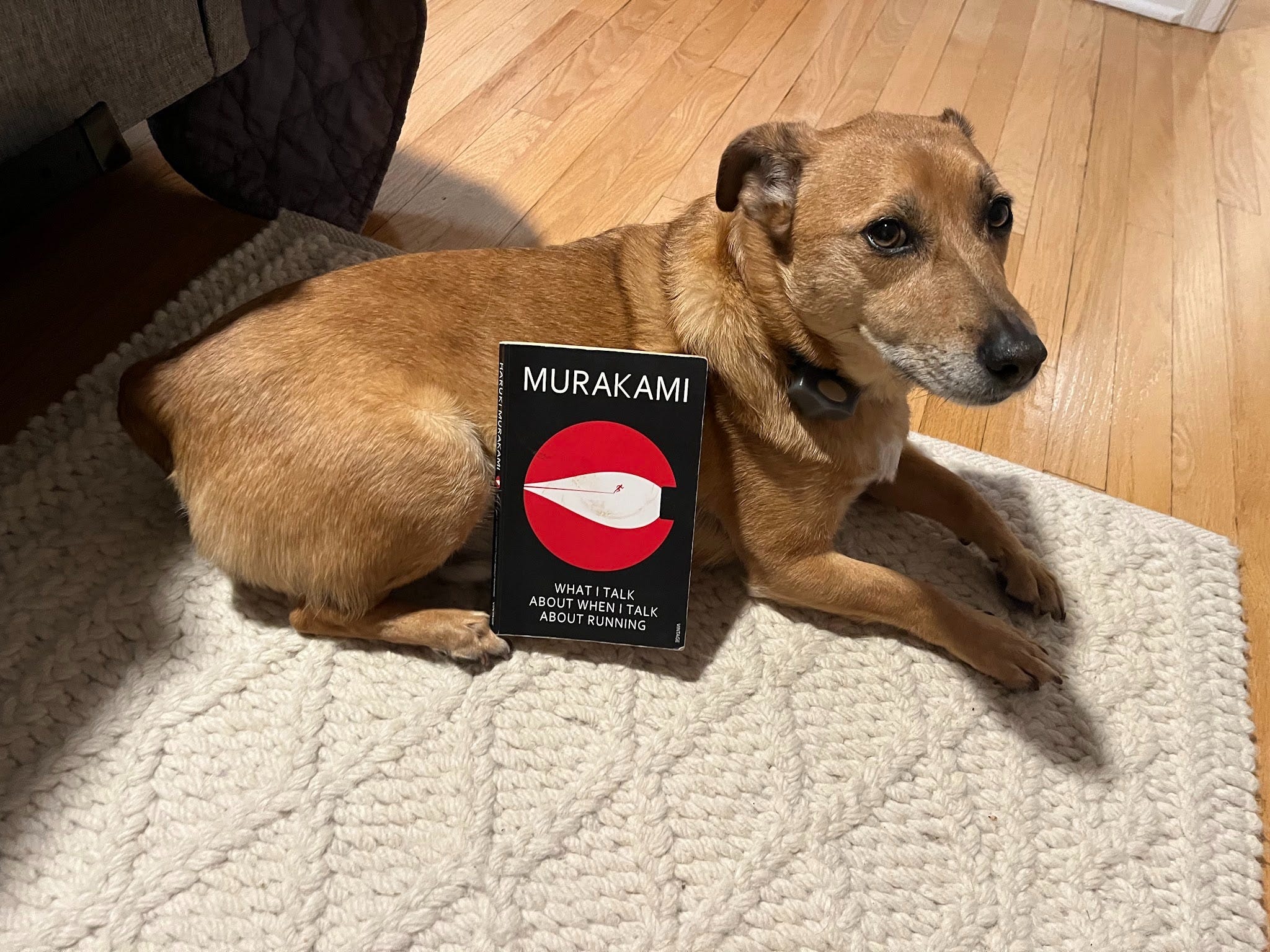
Haruki Murakami - What I Talk About When I Talk About Running. 2008. Penguin. 180 Pages.
Read May 2026 in Pittsburgh, PA.
Book #8 of 2026
Nonfiction
Memoir
There are so many books on running and most of them are forgettable.
I’ve read many of them. Some of them can be read in the bookstore. They contain a good introductory chapter and then a mind-numbing set of charts and illustrations. Or a good introductory chapter and then some desultory chapters before completely trailing off.
Many of these have been written by very good/famous runners. Or at least they were supposedly written by them. I suspect many were ghost written.
Murakami’s book is completely different. It is so different that sometimes you ask yourself, Is this book about running or about life? And maybe all the best books are about something else.
Murakami certainly talks about running throughout the book and he talks about writing. He is brutally honest about running and about himself.

I’m not sure if this kind of honest introspection is part of being an author or Japanese culture. But it’s bracing. Take his assessment of his popularity as a best-selling author:
“I’m not a very social person... People don’t, I assume, like authors. Or at least they don’t have friendly feelings toward them.”
Throughout the book Murakami will drop a beautiful image or metaphor, seemingly out of nowhere. He just leaves it there and then returns to the point he was making.
“Once Halloween is over, winter, like some capable tax collector, sets in, concisely and silently.”
It reminds me of the beautiful scenes you might miss in an animation in Studio Ghibli
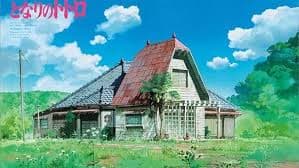
Film Title: My Neighbor Totoro (1988)
Director: Hayao Miyazaki
Studio: Studio Ghibli
There are other places in the book where his writing reflects distinctly Japanese Zen philosophical themes such as in Chapter 5 where he repeatedly touches on Impermanence.
’The surface of the water changes from day to day: the color, the shape of the waves, the speed of the current. Each season brings distinct changes to the plants and the animals that surround the river.”
And later…
“…I’m struck by an obvious thought: One generation takes over from the next. This is how things are handed over in this world, so I don’t feel so bad if they pass me.”
Humility and Muga (No-Self)
A central concept in Zen is that our concept of “self” is a core illusion. You will repeatedly come across the metaphor of the “empty mirror” and the question, “Who knows the knower?” Murakami does not directly address Muga, but consider how he describes the end of a marathon race:
”The end of the race is just a temporary marker without much significance. It’s the same with our lives. Just because there’s an end doesn’t mean existence has meaning. An end point is simply set up as a temporary marker, or perhaps as an indirect metaphor for the fleeting nature of existence.”
And perhaps even more poignantly…
“I’m just a replaceable natural phenomenon, like the water in the river that flows under the bridge toward the sea.”
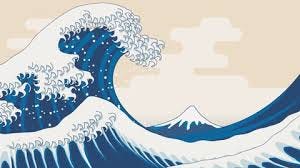
Inspired by Katsushika Hokusai’s The Great Wave off Kanagawa (c. 1831).
Murakami’s book, What I Talk About When I Talk About Running did not make me want to run like Murakami. I’m not sure it even made me want to run more. But in some way, it made me want to live better.
No posts
Comments
Nothing yet. Say the first thing.
Sign in to join the conversation.