

Ah, Metrics. We love them and hate them. Are they chimera? They hold the promise of a better self and a better life but then become a cruel master who is chiding and mocking us when we fail to meet their demands. Eventually we turn on them. We rip them up. Cross them out. We shred them. We push <delete> and confine them to the eternal netherworld of digital purgatory.
Why do I do this to myself? I hope they will make me more mindful. By setting a target, I hope to become more aware of that target. And by setting a target I hope to increase the chance that I will reach it. I also hope that my measurements, the diaries I keep become a kind of testament. A way for me to remember my life. I always find that looking back on old records helps me to remember episodes and epochs in my life that would otherwise be lost. And finally, it helps me to appreciate myself. Especially at times when it seems that time has passed and nothing has changed, I can look at my metrics and see just how much I’ve done. Maybe it’s not everything, but it’s more than I often give myself credit for, especially when I’m feeling particularly uncharitable towards myself.
At times I can see that the data I’ve meticulously gathered was not helpful for one reason or another. It was a waste of time and effort. Memento Mori. Time is finite. Sometimes it was worse than a waste of time because it actively set me off on the wrong course. But that’s not the main reason. The main reason is that measurement almost instantly turns the action into a self-conscious action. It’s hard to get into the flow of things when your focus is on yourself instead of outside yourself. Closely related, It can make my actions performative. I’m no longer doing an action because I love it or because I want to, but instead my motivation is to “check the box.”


Should you measure leading or lagging indicators? Let me illustrate this with one of my own metrics, weight. Weight per se is measured as the average of morning weight taken on Friday, Saturday and Sunday. It is a lagging indicator. In other words, it is an outcome or a result that happens once the work is done. I have two leading indicators for weight as well. The first is no junk food. This is in my control and should predict weight loss. The second is Oryōki or 応量器 which is a Zen term for “that which holds just enough.” This is a traditional Zen practice to stop eating when you feel 80% full.
I think you want a mixture of both indicators and here is why. Some indicators predict change and they are in your control. I can control whether I stop eating at 80% full. I can avoid eating junk food. But, as many will attest, there are just some weeks when I can do all the right things and I still gain weight. You can put other outcomes in as well. You can’t control outcomes ranging from acceptance into a specific school to living to a specific age. You can control many of the actions that will make these outcomes more likely. You can, for example, avoid smoking, drinking, and driving without a seat belt. But there is a problem with only focusing on these kinds of variables.
You risk becoming focused on pseudo-productivity. For example, one of my metrics is to publish an essay as a blog on one of my platforms twice a week. I could have selected writing for 45 minutes, or research for the same amount of time. It’s easy to focus on and check the box on those targets but that is not the same thing as focusing on a finished product going out the door.
One way to destroy the usefulness of any measurement scheme is through measurement bloat or Overoptimization. Measurement Bloat refers to the process of selecting so many metrics that you no longer can track them or make sense of the information you collect. I’ve done that. You’ve done that. We’ve all done that. I feel the way about Metrics the way Winston Churchill felt about alcohol:
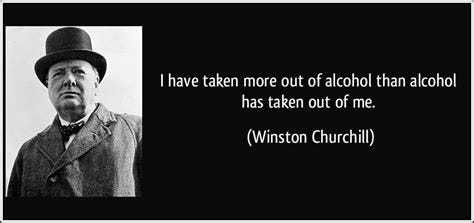
There have been times when I’ve collected data on more than 20 metrics. It was easy to do. Some came from automatic sources like my Apple Watch. Some came from my Substack Feed. Others reflected my work, finance, reading, family, and even my dog.
I measured everything.
Why? Computer scientist and author Cal Newport suggests this has to do with confusing the possibility of changing a metric (and my life) with reflecting on its importance. If you create a metric for everything that is important, then you create a lot of metrics. You don’t want to leave anything out. If you only create metrics for what you reasonably believe you have the time and energy to actually work on and change then I tend to create only a few more metrics than I really should.
Cal Newport and Brad Stulberg recently had a discussion on Overoptimization and they discussed how important it was to select the right number and type of metrics. They conclude that when you begin to collect data for its own sake rather than in the service of living well, then you are Overoptimizing and you are denigrating instead of augmenting your life.
Newport and Stulberg also discussed how to set thresholds for success. In a previous blog, “In Praise of Mediocrity: If You’re Not Sucking, You’re Not Trying,” Link To If You’re Not Sucking… I talked about Hal Elrod’s book “The Miracle Morning. In that book Elrod suggests that
“Even achievers, who are highly successful in one area, such as business, tend to settle for mediocrity in another area, such as their health or relationships.” (Page 2)
And then,
“You can become one of the few people that actually achieve extraordinary success in EVERY area of your life, simultaneously. Happiness. Health. Money. Freedom. Success. Love. You really can have it all.” (Page 3)
Elrod suggests that you can have 10/10 scores in every area of your life. Newport, Stulberg and I would beg to disagree.
Stulberg specifically said that focusing on any area of your life and trying to maximize it to a 10/10 is going to break other parts of the system. And that is demoralizing.
A much more human goal, and one that ultimately is going to drive higher performance is to focus on goals that can be reached 70% of the time but consistently. Of course there are exceptions. Drive while sober 100% of the time. Don’t hit my wife 100% of the time. Take my insulin 100% of the time. But in my “Code” I have built in the 70% rule where I strive to meet my goal 70% of the time or more.
Tracking should take less than 5 minutes per day
You should track 1-5 domains. (I track 5)
These domains should sample different life domains such as health, family, education, spirit.
One final thought. Build time into your system to review your metrics. Like fish and fashion, it has a limited shelf life. Sooner or later, you will want to drop or add or tweak a metric. If you are not changing your life and your decisions based on your metrics, they probably aren’t of much use anyway.
What are your personal metrics and what has your process been to build your code? Please feel free to leave your comments below!
As always thanks for reading and please consider commenting or subscribing. It’s free! And it’s the only way that I actually know that people are reading and care about what I write. That means a lot to me!
No posts
Comments
Nothing yet. Say the first thing.
Sign in to join the conversation.