
Everyone is looking for reasons why book sales are down. It’s a topic of constant conversation among my publishing colleagues, my meetings with my distributor, and also my friends who read. And, there’s not one answer. It’s the economy. It’s our dwindling attention spans. It’s the steady stream of content we’re consuming from other sources that are not books.
This general angst over declining sales is the backdrop for everything in the industry right now, so it’s not surprising that these conversations are bubbling to the surface at this year’s American Library Association’s annual conference (ALA) conference.
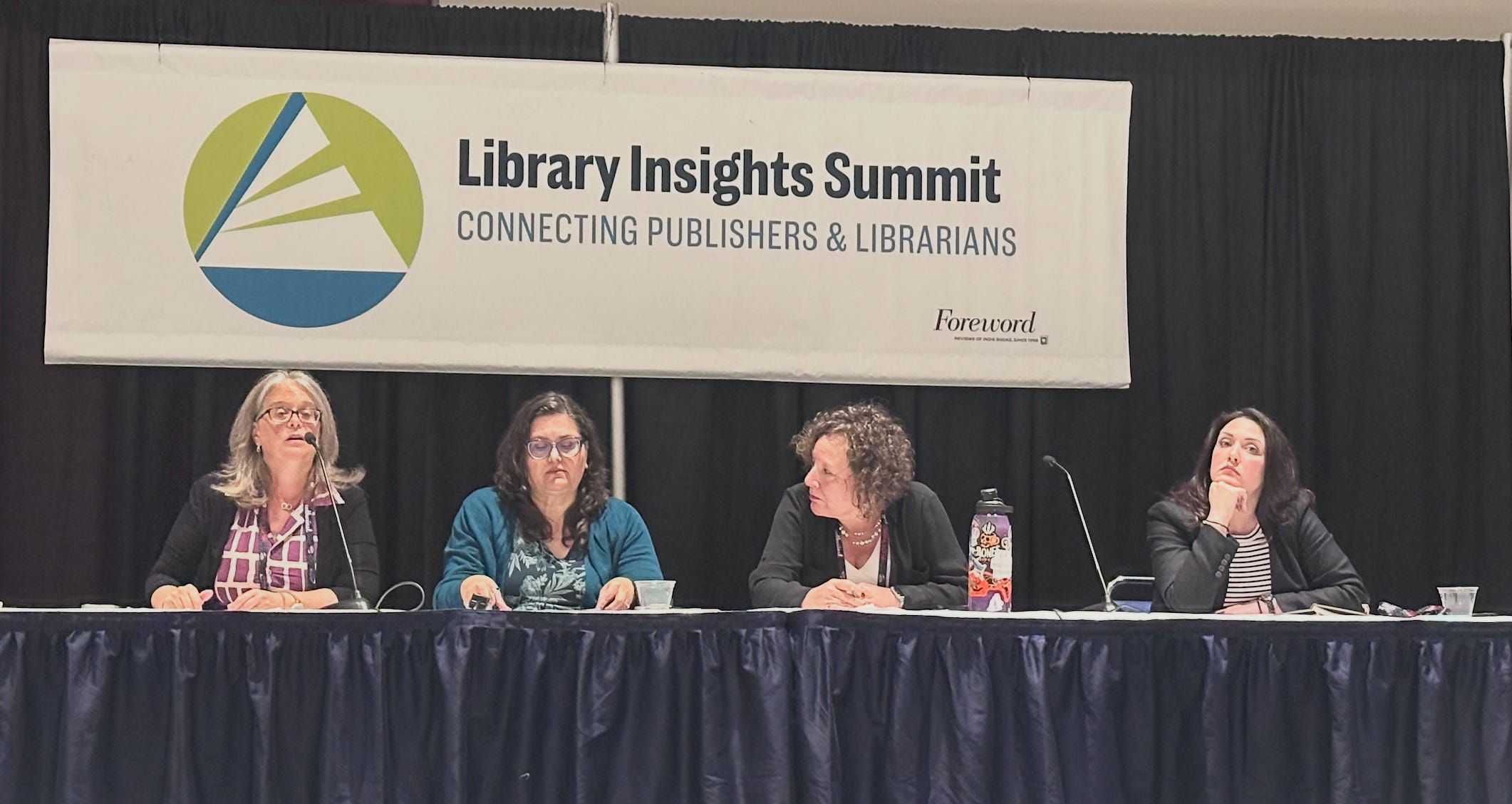
On Thursday here in Chicago (where I’ll be hanging out through tomorrow with a panel today and one tomorrow for anyone who’s here!), I had the privilege of attending the Library Insights Summit, hosted by Foreword. A topic of great interest (and ire, I might add) among librarians across the panels I attended was a recent study by The Authors Guild called “New Authors Guild Study: Only 25 Percent of Readers Paid for a New Copy of a Print Book or Ebook Read in the Previous Month.” It first came out on June 9, then was updated on June 12 (editing out some of the more finger-pointing language, I might add). It captured my attention enough that we are featuring its findings as the book trend on the Memoir Nation podcast this coming week (airs Monday).
Its findings are . . . not great. Among its points: 1) only 25% of books (print and eBook) read in the last month were bought new, and that 29% of those units were sourced through public library borrowing; 2) for digital audiobooks, 37% were sourced through digital library borrowing; 3) the most active library borrowers are women who have graduate degrees, work fulltime, and make more than $75K (in other words, the biggest consumer demographic). There’s more, but I’ll spare you the stats and you can download the full report here.
The perception among many is that this study blames libraries for declining author incomes. Jane Friedman has a good rebuttal piece, “I Wouldn’t Blame Libraries for Declining Author Income,” where she brings up some excellent points: 1) This study has no historical baseline; it can’t claim book buying is down. 2) It’s not fair to lump library borrowing in with piracy, secondhand purchases, and sharing among friends. And 3) A borrowed book is not necessarily a lost sale.
Mary Rasenberger, CEO of the Authors Guild and Authors Guild Foundation, commented on Jane’s post: “The Authors Guild in no way blames libraries for declines in authors’ incomes.” Its purpose, she wrote, is so that anyone in the industry can understand where readers get their books.
I don’t disagree with the exchange of information, of course, and I am a huge supporter of The Authors Guild (and recommend that every single one of my authors become members, always). And, I see why librarians feel blamed by this study. Ann Ford, Hoopla’s VP of Sales and Customer Support, one of the moderators at Library Insights, was among the librarians dismayed by the AG study, and her video dispatch is worth the five-minute watch. She’s angry, and rightfully so, because the publishing industry doesn’t do a great job supporting the actors that sustain the very culture we profit from. We see this when indie bookstores don’t support indie publishers and authors, or when the Big Five publishers are prioritized in all kinds of ways when it comes to reviews and contests, or when the blockbuster mentality squeezes out those writers who make literary culture rich and varied.
Michael Cader at Publishers Marketplace wrote in another rebuttal:
“We should be celebrating the broad interest in books and reading, and the many ways in which readers can and do get their fix. The enemy is obscurity or irrelevance . . . Any dispute over authors’ earnings should be focused on publisher and vendor splits, not stigmatizing eager and regular readers.”
I don’t have the space in today’s newsletter to take on publisher and vendor splits, so I’ll do so in a future post, but I do want to thread the needle on these separate but related ideas, which is the potential consequence to authors of free or discounted books, and that they equal lost sales or income. Because it’s just not true.
Here’s the deal—people are not buying books for all sorts of reasons: high cost, especially $30 hardcovers; space issues for people who don’t keep home libraries or have small homes; not wanting to necessarily commit, for readers who might want to see how something reads first, especially if the book is part of a series; convenience, especially when it comes to apps like Libby or Hoopla that deliver your borrowed books right to your e-reader of choice.
A good friend of mine who’s an avid reader let me know just this week that she’d put a hold on Yesteryear at her local library. There were 512 holds for 26 hardcovers and 1579 holds on 175 eBook copies. When I asked her if she was going to buy the book, she said she hadn’t decided yet. This friend is a prolific reader. She may or may not purchase Yesteryear, and if she doesn’t, it won’t be a lost sale for Caro Claire Burke because my friend will be choosing not to purchase it. We should instead see her ability to get this title at her local library as a reader gained for Burke.
For authors, readers who love your book end up being evangelists for it—potential reviewers, recommenders, and even buyers, since people who like a book enough will want to own it. We should think of libraries as discovery sites, and onramps for potential praise, recommendations, and purchases.
EBook pricing is a somewhat fraught issue. Personally, I think the push to sell eBooks at very low price points ($0.99-$4.99) is an outgrowth of Amazon having trained us all to expect extraordinarily low prices for eBooks. That said, many of my authors want to keep their eBook prices permanently low. Genre writers in particular are squeezed into low eBook pricing because of the competition, or because of the perception that they should.
I advocate for the lowering of eBook prices only if and when authors have a campaign associated with the effort. I don’t believe in setting a permanent low eBook price, though I don’t get in my authors’ way if they choose to do this.
I remember a time a few years ago when an author did a $0.99 campaign. The sale was meant to last a week, but her data never got changed and it stayed at $0.99 for something like six months. The author was upset when she saw her (good) sales over those six months, making the argument that those should have been full-price sales. The problem is, consumerism doesn’t work this way, and it’s impossible to measure who would have bought the book at full price. Which is why, again, I’m an advocate for lowering eBooks sometimes, and only in conjunction with a visibility campaign.
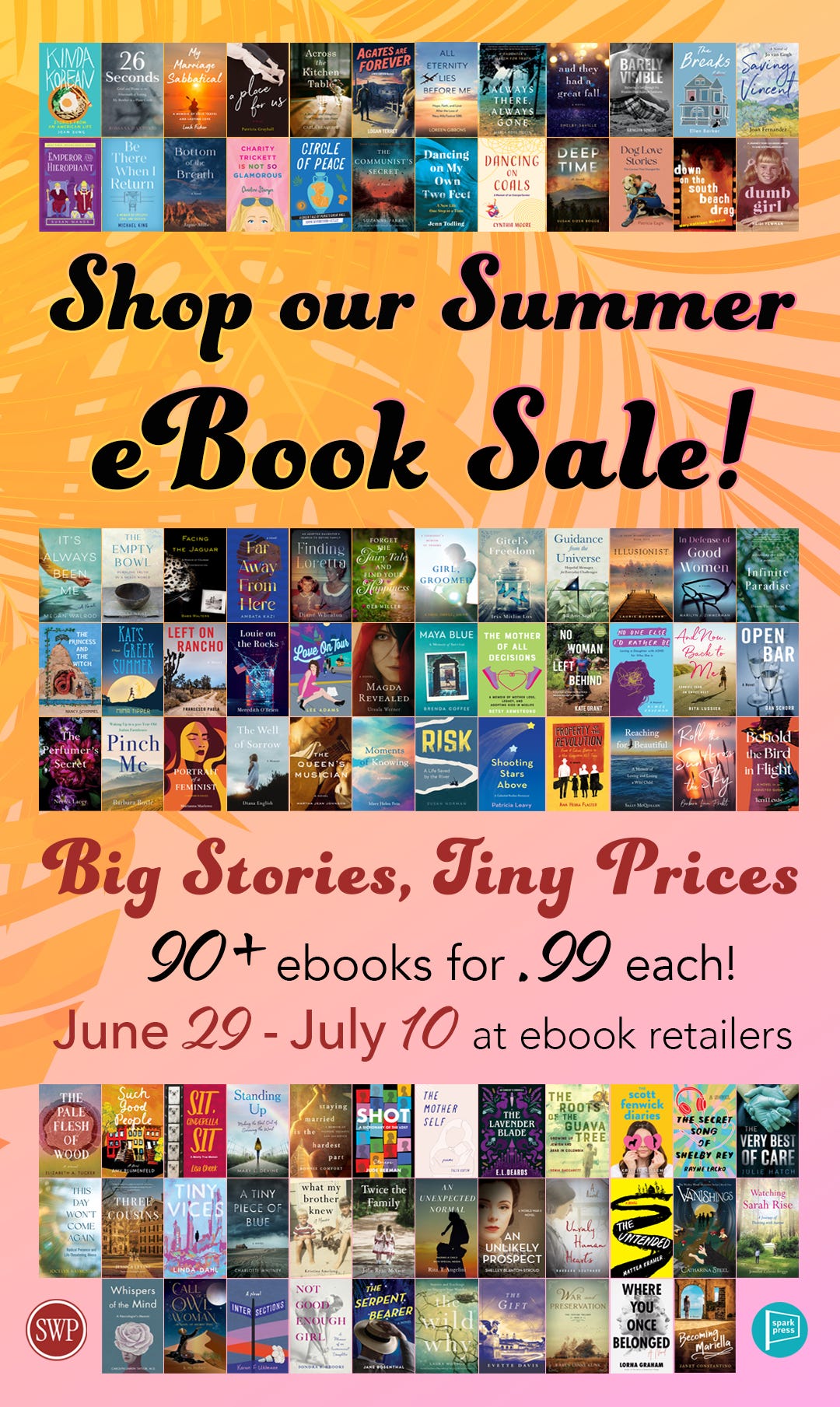
She Writes Press is about to launch our Summer eBook sale starting Monday, June 29, and running through July 10 (so please check out all our amazing titles in the meme below). For us, a visibility campaign means that we’ve created memes for each of the participating authors and we’re encouraging them to post about the sale and push out to their networks. The idea here is to promote their books to people who know about the book but haven’t yet bought it, or to new readers. EBook sales like these, if they work, result in new reviews, recommendations, and even purchases of the print book. I’ve been that duo-format buyer more times than I can count.
The book business is tricky. Authors want sales, and they want to make money (of course), but they also want their books to be widely available and widely read. ALA has been eye-opening because I’m learning from librarians all the ways they do not feel supported by this industry, not to mention the ways in which they are actively being threatened by this administration. I’ll end today by reiterating Michael Cader’s important message that the enemy is obscurity or irrelevance. We all want to be read, and the focus of every publisher and every author should be finding ways to make that happen, and bolstering the many players who support our books.
Thanks for sharing with an author or writer in your life . . . ⤵
No posts
Comments
Nothing yet. Say the first thing.
Sign in to join the conversation.