
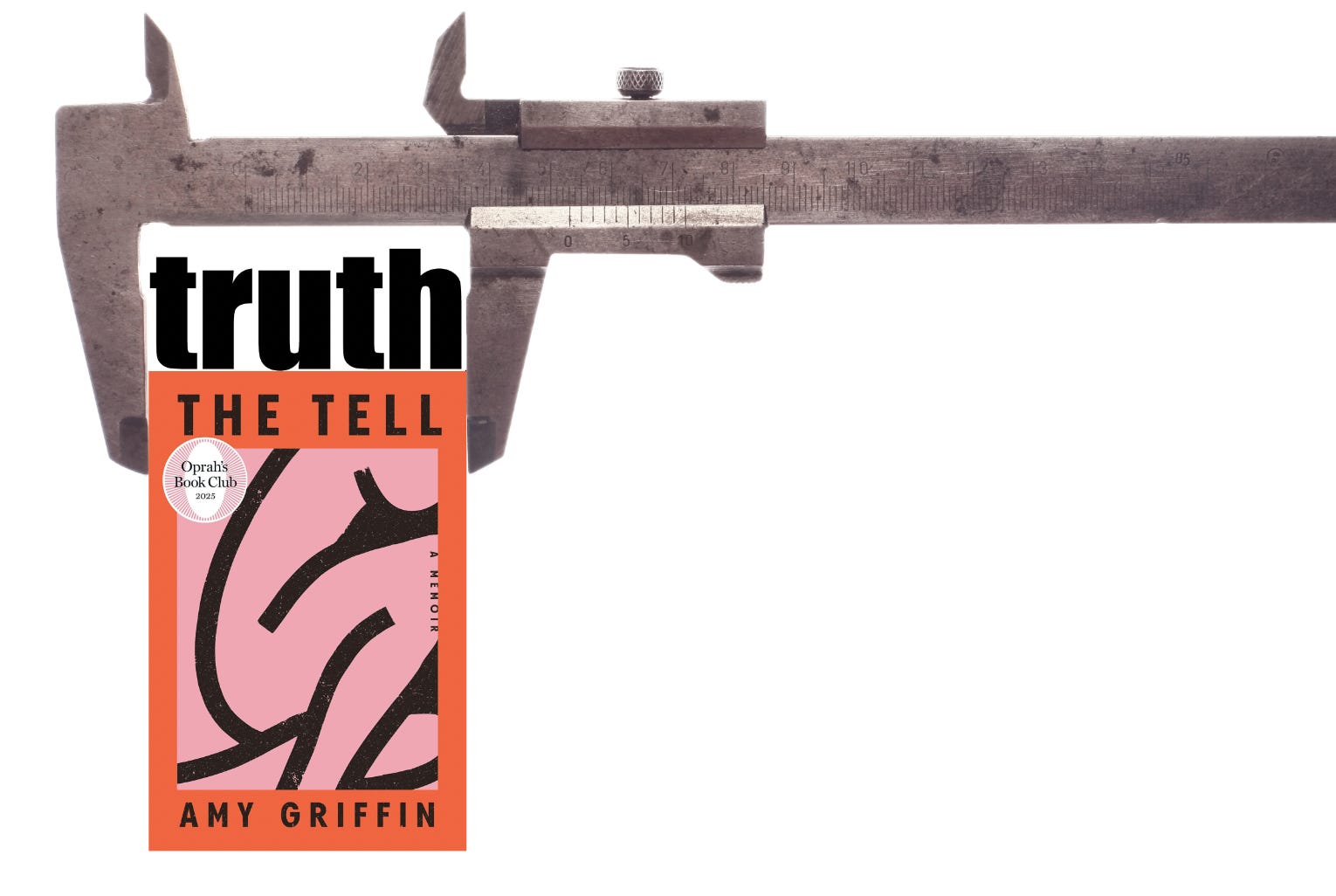
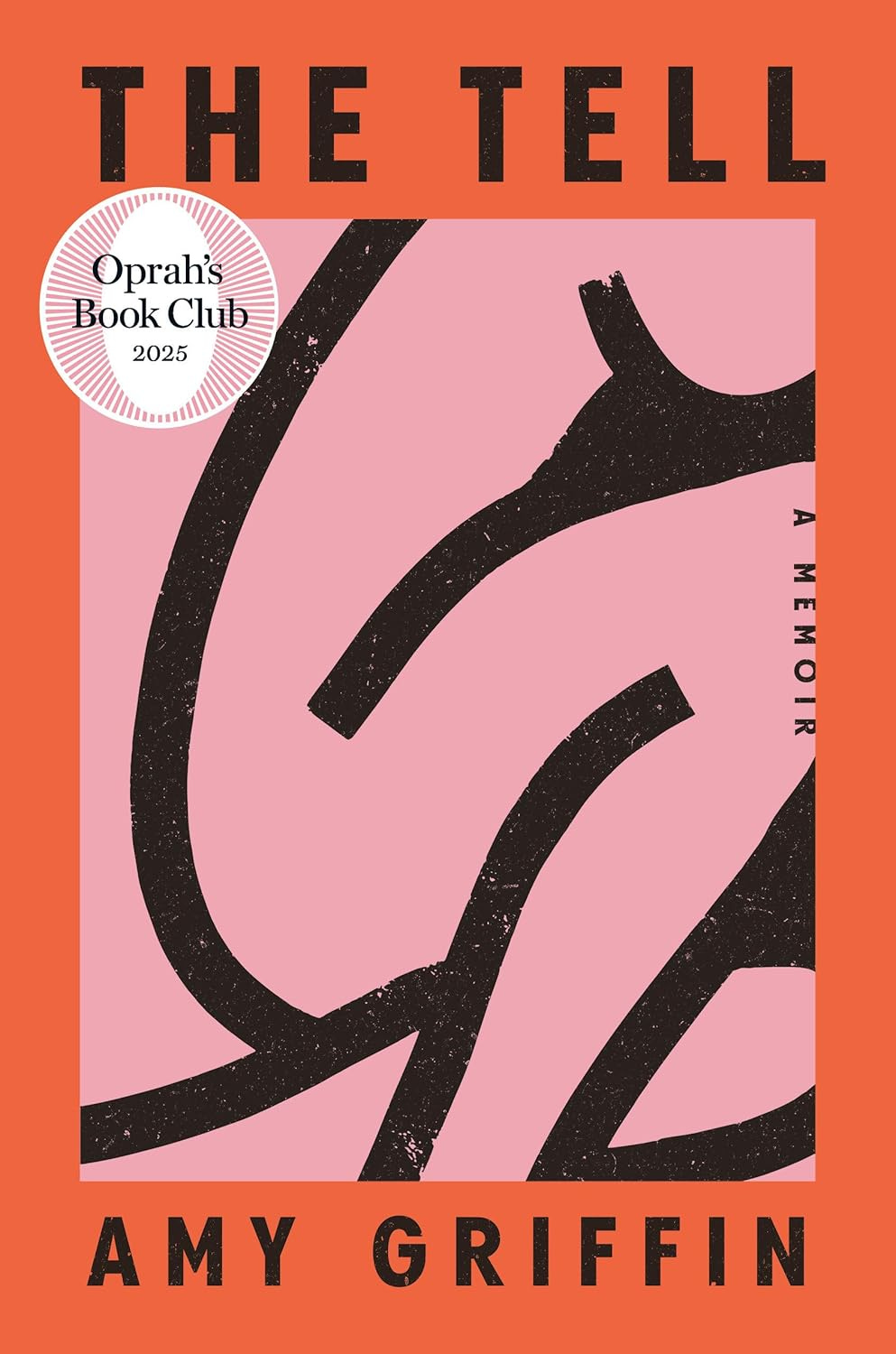
The Tell and the controversy over whether its author, Amy Griffin, stole another woman’s story is the biggest memoir scandal since James Frey was called out as a liar by Oprah for fabricating parts of A Million Little Pieces. James Frey slunk into obscurity for twenty years following his fallout; Amy Griffin is too connected and too wealthy to go down without a fight.
I (along with many others) wrote about the lawsuit filed by Jane Doe on March 4, 2026, in which an anonymous plaintiff (Jane Doe) sued Griffin, Griffin’s ghostwriter, and the book’s publisher, Dial Press, on grounds of invasion of privacy, intentional infliction of emotional distress, and negligence, among other charges. Jane Doe’s allegations, simply put, are that Griffin stole her story (of severe sexual abuse at the hands of a middle school teacher). Jane Doe alleges that the character “Claudia” in The Tell is recognizably her, and that Griffin passes off some of Claudia’s memories and experiences as her own in The Tell.
One of the most damning parts of Jane Doe’s lawsuit was the naming of a Dominique Price, who Doe said contacted her under the pretenses of being a “talent agent.” He allegedly extracted parts of her story, which later made their way into The Tell.
For months, we’ve heard nothing from Amy Griffin. Silence is a power move in cases like these. Anything you say in the aftermath of such bombshell accusations will only result in pile-ons. You don’t need to look any further than Griffin’s Instagram account, with its 94,000 followers, to uncover the furor this story has unleashed.
I’ve been following this case, as have a lot of people interested in memoir, because it’s consequential to the genre. In fact, since my March Substack post, I’ve been contacted by The Daily Beast, Airmail, and The Wall Street Journal for commentary. This story strikes a nerve because if what Jane Doe alleges is true, you have a very privileged woman capitalizing on the trauma of a former schoolmate who grew up poor, supposedly in a “children’s home.” The story pits powerful against powerless during a moment when the powerful seem to be getting away with everything and anything. Also, at its core, it pressure-tests the underlying flaws behind the #MeToo mantra that we should “believe women,” no matter what.
For my readers as interested as I am in this unfolding story, here’s where we’re at:
Last week, on June 15, Amy Griffin filed a lawsuit and a motion against Jane Doe, outing her as Joleene Altum.
It’s a defamation lawsuit, filed in Nevada, that’s basically a 29-page timeline, articulating how and why Altum is not just mistaken, but lying. The lawsuit reads, in part: “Ms. Altum has insisted on maintaining her lies, continuing the enormous reputational harm she has already dealt Mrs. Griffin. This lawsuit’s purpose is to set the record straight. It ends when Ms. Altum tells the truth publicly and plainly.”
Griffin’s lawyers also filed ANTI-SLAPP motion, which is designed to allow defendants (in this case Griffin as defendant to the original March lawsuit against her) to dismiss lawsuits being used to punish or silence them for exercising free speech on a matter of public concern.
Importantly, filing an ANTI-SLAPP motion triggers an automatic stay of discovery, meaning that Altum’s lawyers won’t be able to start subpoenaing documents, deposing Griffin, or digging into things like Griffin’s original book proposal, communications with Dominique Price, or early manuscript drafts until the motion is resolved. This feels like a very high bar for Altum to be able to clear, and could potentially get Altum’s (Jane Doe’s) original case thrown out, thereby vindicating Griffin in the process.
A lot of people are upset by this part of the lawsuit, understandably so. This is becoming a “she said, she said” story, with one of the shes being rich and influential, and the other being neither.
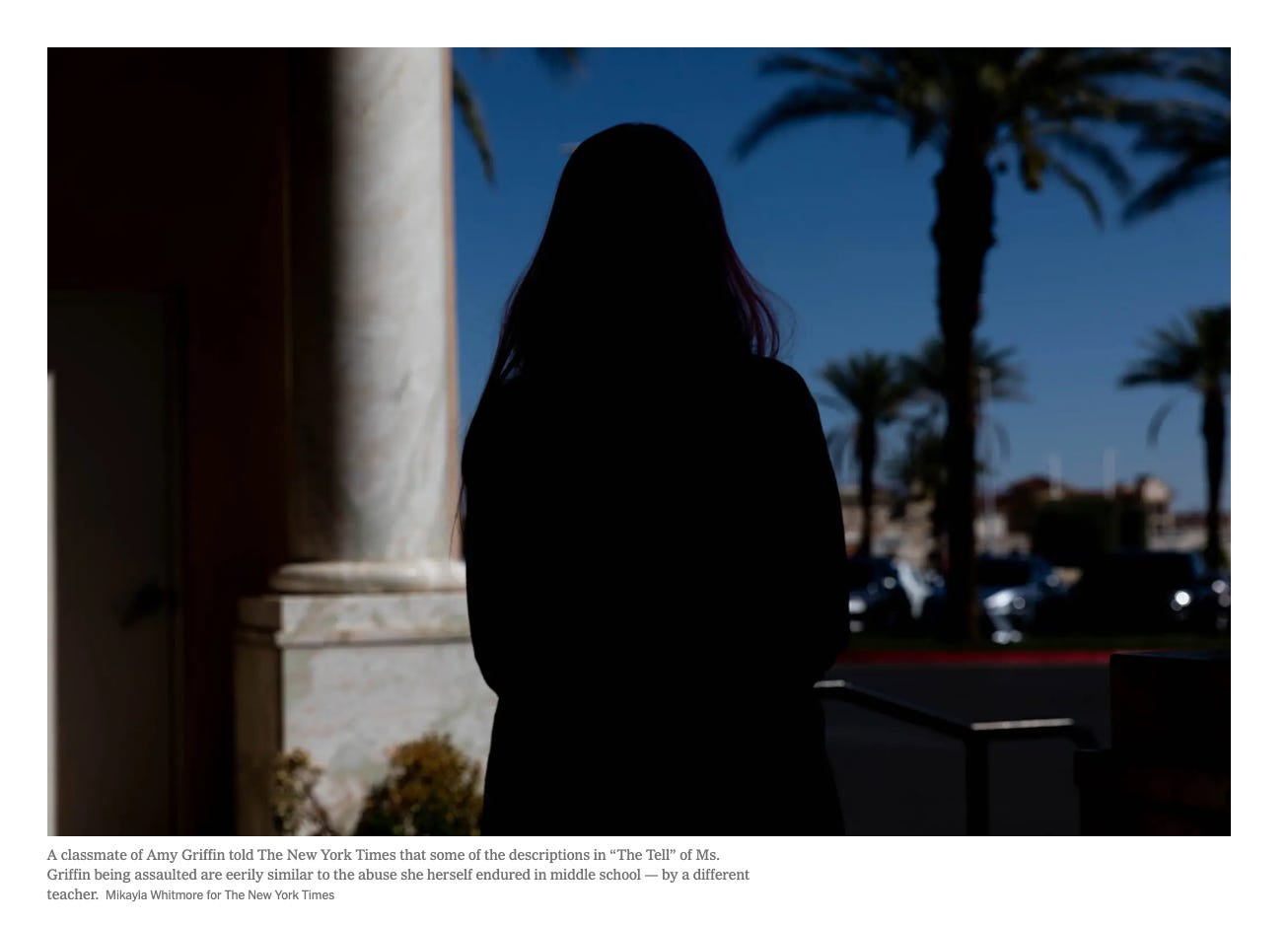
When the lawyers name Ms. Altum in the suit, the language is certainly tsk-tsking: “She even posed for a photograph that was included in the [Times] article.”
Later, it reads: “Ms. Altum initially sought to proceed anonymously, despite having identified herself by name to the Times, having posed for a silhouette photograph with the Times, and having claimed that she had been ‘identified’ as ‘Claudia’ by ‘people in her community.’ Ms. Altum has not moved to proceed anonymously, as California law requires of a party seeking to proceed anonymously. Ms. Altum’s attorneys have since produced her name in unsealed discovery with no protective order, making her identity a matter of public record.”
The September 2025 NYT article that set this entire thing in motion gave significant space to the original book proposal, back when the book was called “Believe me.”
It was a 38-page document, the Times reported, “accompanied by a list of people who might help to promote the book upon publication.”
Among the more than 90 names were celebrities (Amy Schumer, Laura Dern, Naomi Watts), media big shots (Anna Wintour, Savannah Guthrie, Katie Couric) and women whose companies Ms. Griffin has invested in (Becky Kennedy, Whitney Wolfe Herd, Sara Blakley).
Griffin’s lawsuit attempts to discredit Altum’s timeline by evoking the book proposal’s very existence, saying that the book proposal existed before Altum (falsely) alleges that Dominique Price contacted her. Confounding argument to make here—it never happened but even if it did, it couldn’t have because of the timing.
Having worked on many memoirs over the years, many acquired on book proposal, I can tell you that book proposals do not contain the whole story. Writers can shop a book proposal on an outline, with summaries of the chapters they intend to include.
My original understanding of Jane Doe’s claims were that she was contacted (allegedly by Dominique Price) because Sam Lansky (ghostwriter who would have been hired after Griffin was under contract with Dial Press) would have needed more details—for specificity and for nuance. Setting aside whether Price extracted details for The Tell from Altum, the book proposal alone will not exculpate Griffin unless those explicit details were in the proposal—and I will be shocked if they are.
This needs to stay front and center in the conversation because it speaks to Griffin’s potential motivation to fabricate a story of recovered memories. I read The Tell this week, in preparation to write this Substack today, and this whole angle plays poorly knowing what we know.
In the book, Griffin’s husband basically becomes a better, more vulnerable version of himself for doing MDMA therapy. The end of the book reads like an advertisement for MDMA. She writes: “‘This medicine is going to help so many people,’ I said, It was funny now to think that I had been so judgmental about.”
From here she goes on to wax poetic about MDMA for three pages—how it was never meant to be taken recreationally, and how when it was first discovered in the ’70s, people “thought of it as a tool for healing and transformation.” But then it became an elicit and illegal drug, and it was reputationally harmed.
In the next scene, her therapist reminds her: “not to give too much credit to the MDMA—that I was the one who had ultimately done the work, even if I’d had a lot of help.”
The whole section feels forced. I know people who’ve done MDMA therapy, but I’ve never heard anyone “give credit” to the MDMA for unlocking memories. For support in moving through the trauma, okay, I can get there, but I don’t think I’ve ever talked to a survivor who spoke so reverently of any given therapy, except maybe EMDR.
Meanwhile, as written about on the Ecstatic Integration Substack in October 2025, Griffin and her husband are shareholders in Resilient, the for-profit corporate spin-off of MAPS (the Multidisciplinary Association for Psychedelic Studies, the nonprofit leading MDMA therapeutic research). They donated $1 million to MAPS and subsequently became investors in Resilient, MAPS’ MDMA corporate spin-off.
Again, it’s just not a good look.
One of the reasons I’ve waded so deep into this story is because of my long history of working on survivor memoirs. I’ve read countless of them over twenty-plus years. I’m also working on my own memoir that involves stories of recovered memories, my ex’s, not my own. So, I have firsthand experience as the partner of someone who recovered memories of childhood sexual abuse.
What I’ll say about The Tell is that Amy’s husband was far more supportive of the journey of unraveling than I was able to be for my ex-wife. He never makes a misstep, is never anything less than a supportive pillar even though recovered memories mostly lead to a diagnosis of PTSD, if not Complex PTSD, and the experience throws the family system into complete turmoil.
The Tell is mostly a journey about how Griffin longs for two things:
1. To get justice by suing her former teacher, named as Mr. Mason in the book, and to stop him from ever being able to hurt another girl again; and
2. To be believed.
On Point #1, she’s thwarted because the statute of limitations ran out on her. Also, she never finds anyone, not even “Claudia,” who can corroborate the abuse. She gets an anonymous postcard at the very end of the book that reads “I didn’t have it in me to tell you the truth.” The character “Claudia” later insists it wasn’t her who sent it.
Griffin was 12 and 13 years old when the abuse happened. It was 1988-1989. Mr. Mason’s age is not specified by he must have been in his thirties. Griffin’s recovered memories come thirty years later, so Mr. Mason is in his sixties now, if not older.
Never once does Griffin speculate about the girls he must have harmed in those intervening years other than her attempts to find them to corroborate her own story so that she can be believed. She does, however, insist that bringing him to justice would stop him from harming girls in the future. This struck me over and over again because when my ex revealed to me who her abuser was, all I could think about was how many girls must he have hurt over the many years that had passed. I agonized over the harm he’d done to her and to others. And while I’m not suggesting that a sixty-plus-year-old can’t continue to perpetrate abuse, it struck me that the worst of the damage had already been done. Not so for Griffin, whose singular pursuit seems to be one of a warrior who will clear the path for future victims.
On Point #2, being believed is an obsession throughout the book, so I imagine this outcome, where people are scrutinizing and doubting her story, is excruciating.
There’s plenty of speculation that both Griffin and Altum were abused, possibly by the same teacher. Now Griffin is throwing a new wrinkle in the story by asserting in her lawsuit that “Claudia” is not Altum, but another friend altogether. So now we have three potential victims from the same middle school.
Running out the statute of limitations on a criminal charge like rape wouldn’t shield someone from being compelled to testify in a separate civil case, such as a defamation lawsuit. So, Mr. Mason could be subpoenaed to testify. If he’s guilty of abusing three separate girls, he’s unlikely to be cooperative or helpful. He could plead the Fifth. But what if the three women—Griffin, Altum, and whoever Claudia is—were to collaborate rather than fight? Just a thought.
When I look at this case I consider who has the most to lose and what the motivations of each party would be. For Altum, it seems to be about not letting someone with more power and money get away with something; for Griffin, it’s about her reputation and her lifelong quest to be seen and believed.
At this point Griffin’s suit introduces enough doubt that I am no longer so strident about not believing her as I was in March; however, I can’t imagine Altum would have taken this on without serious evidence.
Griffin’s own lawsuit reads: “Altum’s lawyer, Zach Rosenblatt, appeared as a guest on Hot Mics with Billy Bush, stating that he and Ms. Altum ‘wouldn’t have filed complaint if we were not prepared to prove the allegations in court.’”
I do hope we’ll actually get to see that day in court.
Thanks for sharing with an author or writer in your life . . . ⤵
No posts
Comments
Nothing yet. Say the first thing.
Sign in to join the conversation.