
Hi Friends,
I’m fresh back from Montreal, where I got to talk nerdy pedagogy questions with some lovely folks at the ACCUTE conference and spend time with beloved old friends, including at the boat spa (where I impressed everyone with my cold water tolerance), over long patio dinners (where we only had one rat run over our feet one time (and got a free rhubarb tart in compensation)), on long walks, and sitting up in bed (with many cups of Nespresso and the lampshade removed from the lamp between beds so we could talk properly).
Over time, I’ve come to realize that problems aren’t an impediment to writing. Problems are the substance of writing: we set problems for ourselves and we work them out. In this feature, I ask writers to dig into a specific writing problem and how they resolved it.

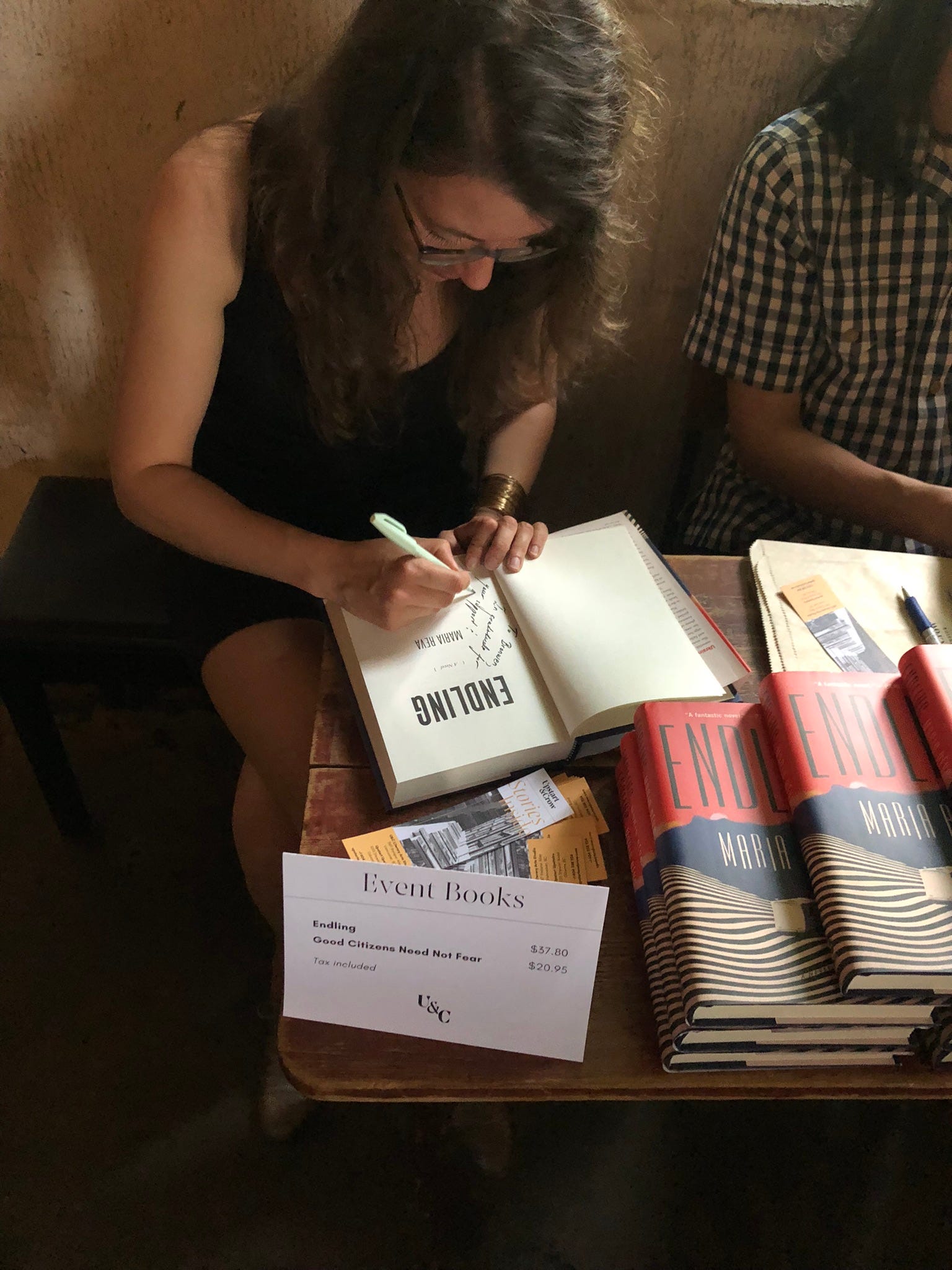
I’ve had the pleasure of getting to know Maria Reva through Vancouver writing community. Maria is a brilliant writer—seriously, this book was longlisted for the Booker Prize AND she had my thirteen-year-old reciting tragicomic passages from the reading she gave at a BBQ the whole drive home. It seems like every time I turn around this book has won another prize.
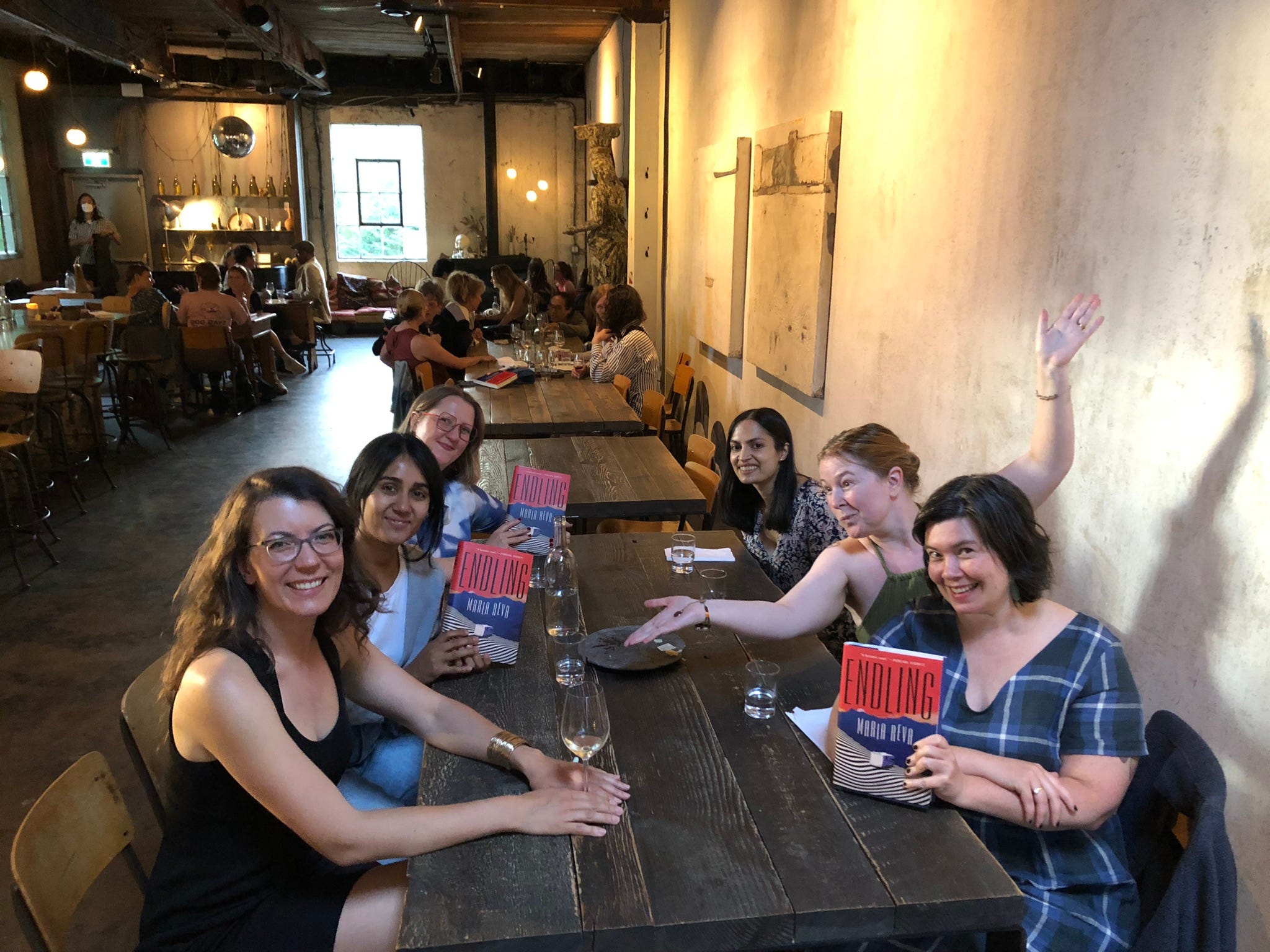
Endling is funny, clever, devastating. It’s a treat (and an honour) to share this conversation with Maria.
The word “endling” means the last surviving member of a species. After that organism dies, a branch of evolution is forever snipped off. My novel Endling is about three seemingly unrelated elements: snail conservation, the outsourcing of romance, and the war in Ukraine. The first two elements fascinated me simultaneously, so I figured out a way to write about both within the same book.
Before Russia’s full-scale invasion of Ukraine, there used to be romance tours that brought men in from all over the world into Ukraine to find the perfect docile bride who was supposedly untainted by feminism and modernity. These were men who were fed up with their local dating pools. Endling features 13 of these men who take part in these tours and have the unfortunate luck of being kidnapped by three “brides” who are actually activists who want to bring the entire romance tour industry down.
As for the snail conservation piece: this was inspired by an article in The Atlantic, Ed Yong’s “The Last of Its Kind.” He wrote about the mass snail extinction in Hawaii and the mental toll this takes on the humans who care for the endlings.1 In my novel, one of the women who dates the would-be grooms uses the proceeds to fund her snail conservation work around Ukraine.
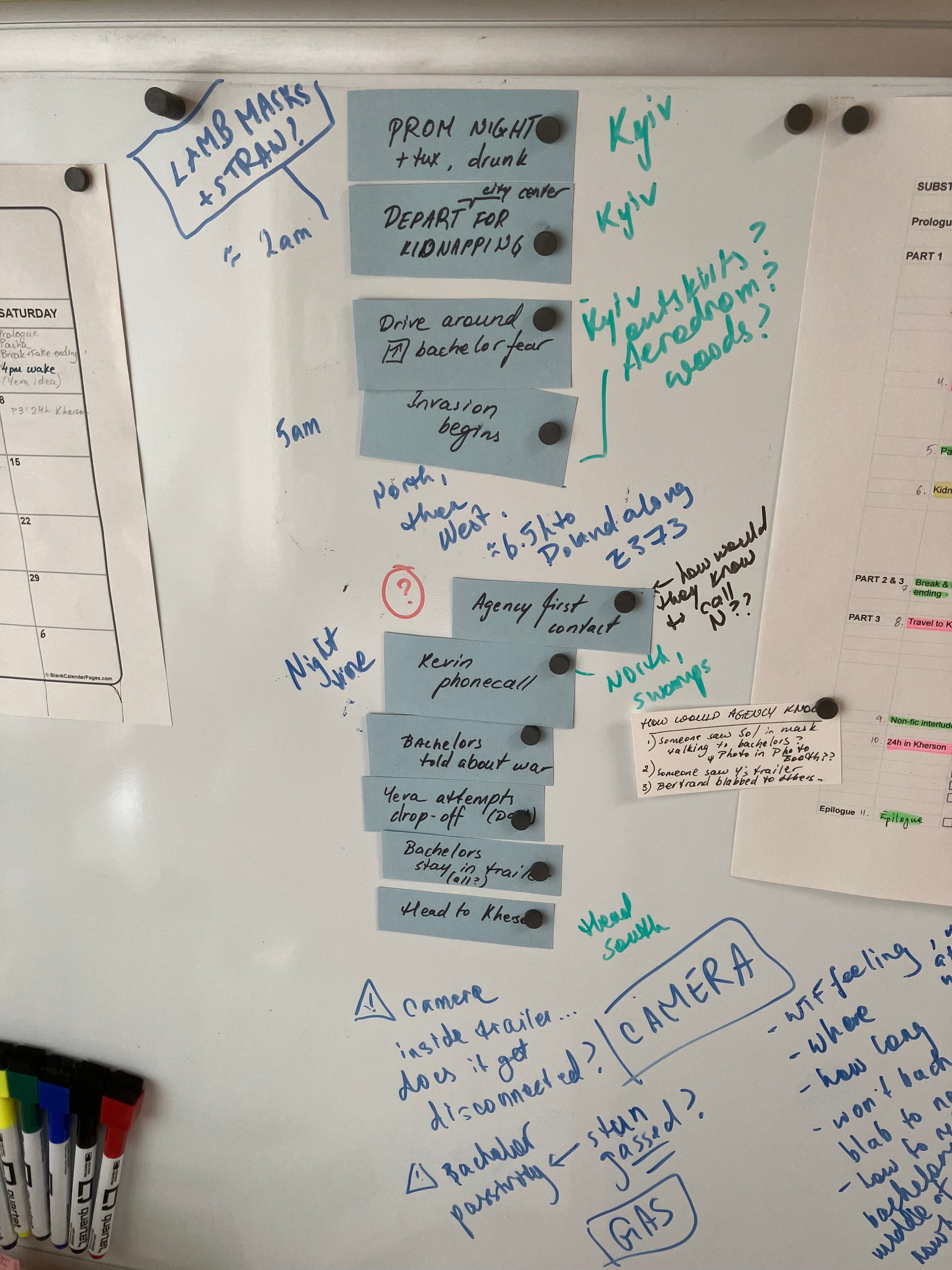
Russia launched its full-scale invasion of Ukraine and the setting of my book burned in real time. My relatives in Ukraine fled their homes. The war derailed the lives of my relatives in Canada here, too, powerless as they (we) watched from abroad.
I gave up on my novel. How to continue with romance tours and snails when there was a war on? Who was I to write about war from my armchair in Vancouver? What was my role as artmaker when the world around me kept shifting? Since these questions obsessed me, and I can only write from obsession, I decided to fold these questions into the fabric of the novel itself. I inserted myself into the narrative as a character. I experimented with structure to expose the queasy feeling of writing fiction at that time, the artifice of it.
The book begins as a standard narrative, and turns into something completely different. Broadly speaking, Endling begins as fiction and ends as non-fiction. I don’t want to give away too much—it’s better if the reader goes into the book cold.
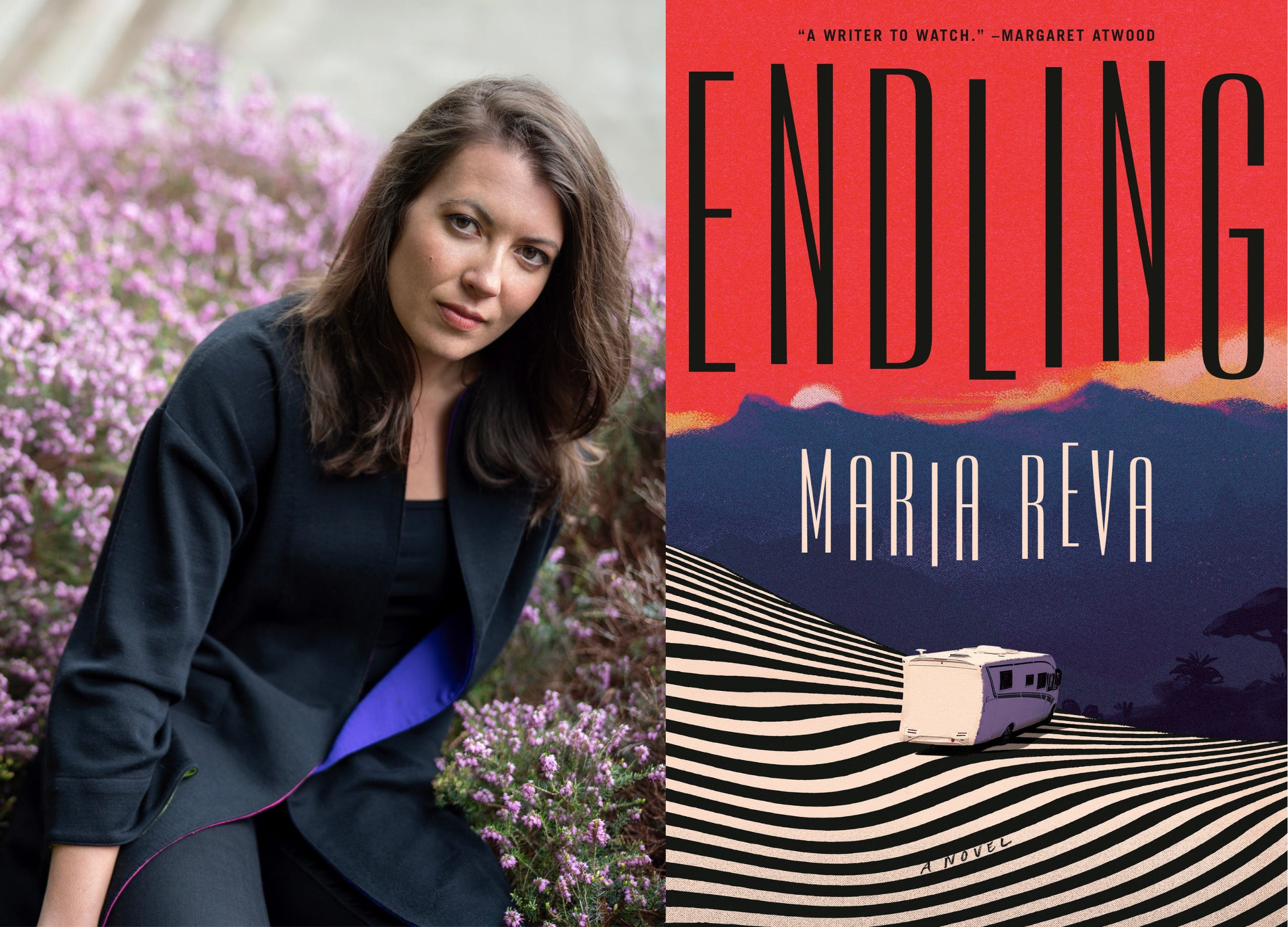
Maria Reva writes fiction and opera libretti. She is the author of the linked story collection Good Citizens Need Not Fear, as well as the novel Endling, longlisted for the Booker Prize. In November 2022, she was included on the Russian Foreign Ministry’s list of sanctioned Canadian citizens who are forbidden from entering Russia. Maria’s writing has appeared in The Atlantic, McSweeney’s, The Wall Street Journal, The Best American Short Stories, and elsewhere. Her libretti have been commissioned by organizations including City Opera Vancouver, Memorial University of Newfoundland’s Opera Roadshow, Ad Astra Music Festival (Russell, Kansas), Musique 3 Femmes, and most recently, Opéra de Montréal (for a French-language children’s opera). Her musical works have been performed at venues such as Théâtre Maisonneuve in Montréal and Berlin’s ufaFabrik.
Maria was born in Ukraine and grew up in New Westminster, BC. She received her MFA in fiction and playwriting from the Michener Center for Writers at the University of Texas.
Don’t be afraid to bring seemingly disparate things together. Maria says that Endling is about “three seemingly unrelated elements: snail conservation, the outsourcing of romance, and the war in Ukraine.” It’s true. Yet these things come together and implicate one another in ways that feel both surprising and profound. Place your “unrelated elements” in play together and see what emerges.
Maria’s story offers an extreme example of something I often talk about with students: how to make the problem part of the project. When Russia invaded, Maria’s life (and her plan for a novel about marriage tourism in Ukraine) was overturned. Here, she faced three choices: to keep writing as if the war wasn’t happening, to put this novel in a drawer and start something else, or to find a way to incorporate her new reality into the project. Her path forward involved a metafictional turn, bringing herself into the novel as a character. Writers can get certainly stuck or blocked by problems less total than the ones Maria faced. How might we pull these problems into the work instead?
If a student is writing about experiences of disordered eating and is concerned with how the project might influence a reader, I might say, “Try writing a poem to that imagined reader, the one you’re afraid might be looking for instructions.”
If a student is writing about experiences with mothering and is worried about coming off as sentimental, I might invite the student to dig in: What cultural forces are in play here? What images or depictions of sentimental motherhood rise up? What would it be like to write about some of these?
I recently read Saeed Teebi’s You Will Not Kill Our Imagination: A Memoir of Writing and Palestine in Dark Times, and added a passage to my Commonplace Book that I later realized offers another great example of bringing the problem into the work. Teebi writes: “I was torn, for example, between the responsibility to show Palestinian trauma, and my desire to not always write from a place that privileges trauma as a defining feature of Palestinian life. I worried about the authenticity of my stories if I burdened myself with a sense of responsibility as opposed to a sense of truth. That both are inextricable clouded my task even more.”
Try freewriting, without self-judgment: What do I feel torn between in my writing? What responsibility do I feel? What desire pulls me? What risk worries me? Some of this writing might become part of your draft. But even if it doesn’t, asking these questions will move you forward.
Warm best,
Bronwen
PS: If you liked this post, please hit the heart to let me know! You can also support this newsletter by subscribing, sharing, or commenting.
Comments
Nothing yet. Say the first thing.
Sign in to join the conversation.