

There’s been confusion about the trade imbalance between the United States and Canada with oil imports and exports. To paint a quick picture, Canada’s Prime Minister Justin Trudeau is playing poker against President Trump without a full hand of cards. While the U.S. does purchase the vast majority of Canada’s oil—97% of its total oil exports, accounting for 81% of Canada’s total production—this trade is far from a necessity for the USA. Instead, it’s an economic convenience, one that the U.S. could afford to change if Canada continues to overplay its leverage. And leave Canada up one of their creek’s without a paddle. O Canada!
There is one reason the U.S. purchases so much Canadian oil, it’s cheap. Canada sells its oil to the U.S. at a discount, so it's more economical for U.S. refiners to purchase and process Canadian crude than to use more costly domestic supply. About three quarters of Canada’s oil production is sour, heavy crude, which is much more difficult to refine. Heavier crude has high concentrations of sulfur and hydrogen sulfide (H₂S), one of the deadliest gases on earth.
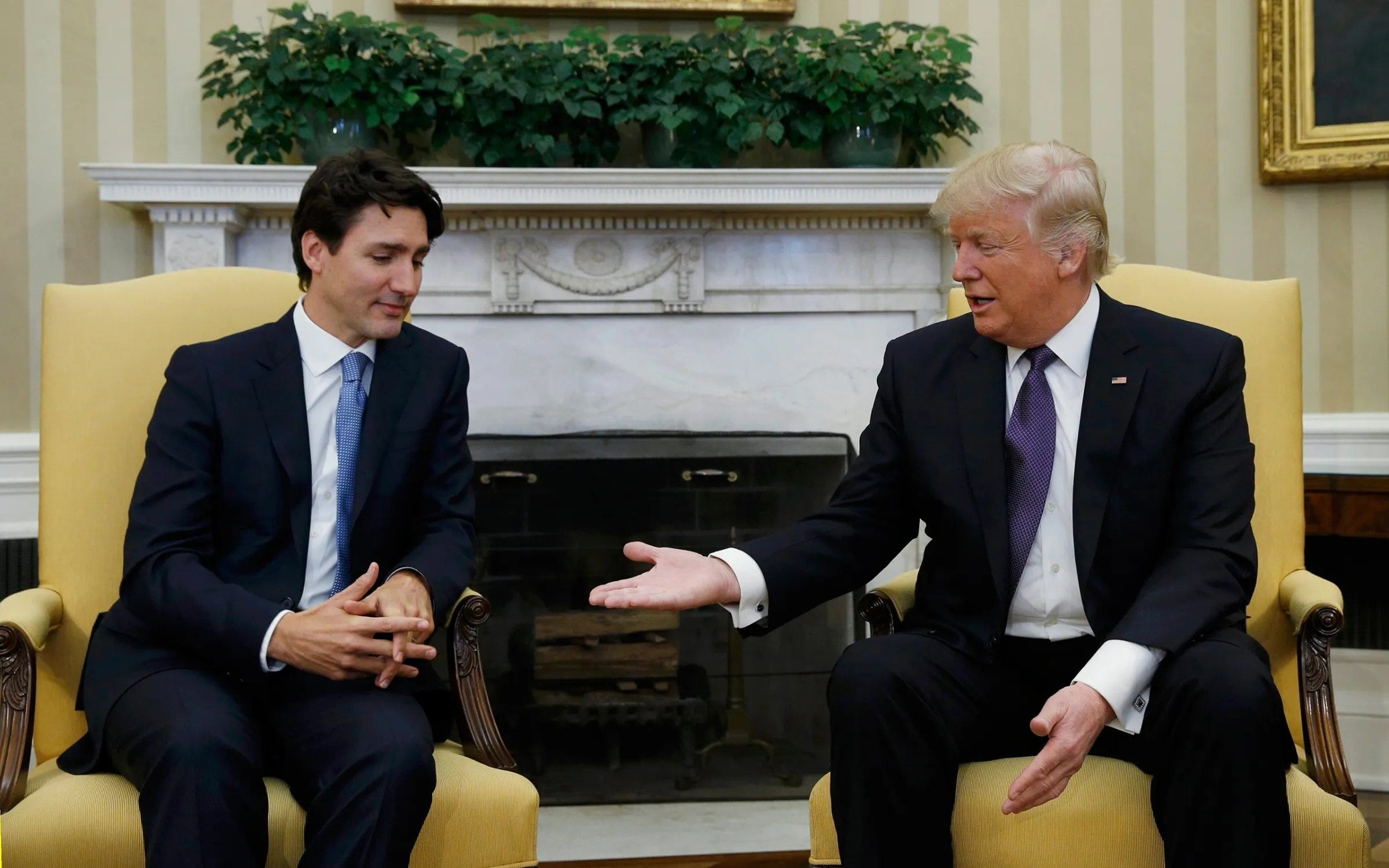
Canada can refine some of its oil, just not at a scale sufficient to make it self-sufficient. Though the country has 17 refineries, with a combined capacity of around 1.93 million barrels per day, they are mostly designed to process light crude, rather than the heavy, sour crude that makes up 65-75% of Canada’s oil production. The imbalance between the capacity of refineries and production of oil means that most of Canada’s heavy crude needs to be exported, and its lowest cost sale is south to the United States.
What’s more, there is no large-scale pipeline infrastructure in Canada to carry Alberta’s oil sands crude to refineries in Eastern Canada, which would make domestic refining even more challenging. Increasing Canada’s refining capacity would involve billions of dollars in investments and development over many years, but companies see it as cheaper to export crude to the U.S. than to refine at home. And both political and environmental opposition make it difficult to build new refineries or pipelines. Consequently, Canada remains reliant on the U.S. for refining its heavy crude, and this dependence is unlikely to change any time soon.
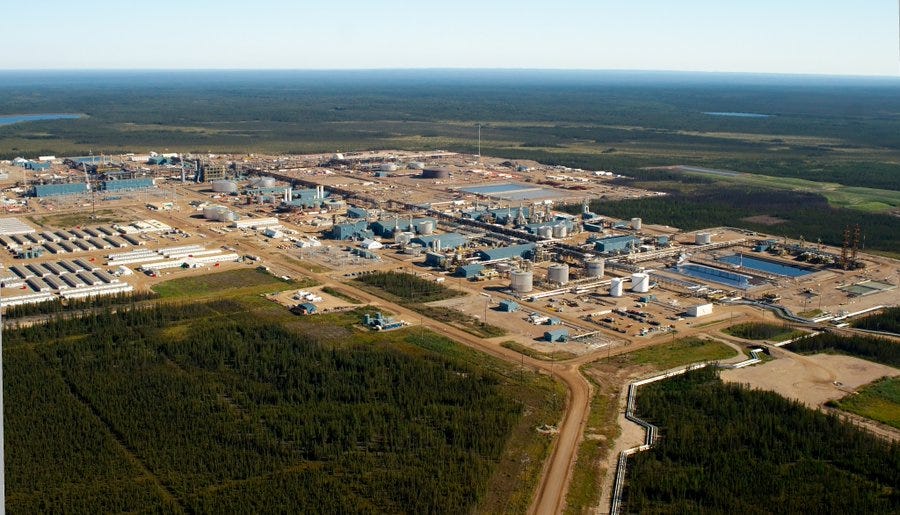
Crude oil accounts for 17.8% of all Canadian GDP, adding about $124 billion a year to the economy. Almost all of this oil heads south through the Keystone pipeline to American refineries. It would send shock waves through the Canadian economy, if the U.S. were to stop purchasing Canadian oil. And the imposing of tariffs will hurt, economically. U.S. tariffs of 25% on Canadian imports would devastate their economy. One forecast suggests a decline of 2.5% in Canada's GDP by early 2026, an inflation rate of 7.2% by mid-2025, and an unemployment rate of 7.9% by the end of 2025 with some 150,000 jobs lost.
The U.S. is not dependent on Canadian oil trade. While the Bakken Shale formation alone accounts for 61% of America’s own oil production, a major source of domestic heavy crude, the U.S. could refine more of its own oil if necessary, though at a higher price. But with energy independence now a priority, the U.S. has options — Canada does not.
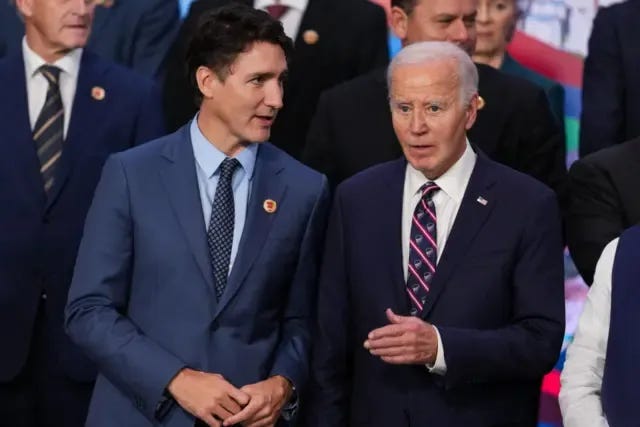
Joe Biden damaged his northern liberal ally by cancelling the Keystone XL Pipeline on day one of his presidency. Barack Obama rejected the permit in 2015 due to environmental concerns. While the one currently putting the screws to Trudeau is the only U.S. President who actually tried to help him in 2017, when he revived the pipeline that would transport their crude oil to refineries on the Gulf Coats. Diversifying their options. Canada’s dependence on the U.S. is great now, but the country is looking to long-term alternatives, such as increased exports to Asia through the Trans Mountain Pipeline. Now is the opportune time for a negotiator-in-chief to press for more balanced terms for the citizens of the nation he serves.
One of the most significant moves by President Trump in his first term reshaped North American trade dynamics was the negotiation and implementation of the United States-Mexico-Canada Agreement (USMCA), which replaced NAFTA. This deal was designed to modernize and rebalance trade across the continent, ensuring better protections for American workers and industries while pressuring Canada to make critical concessions. Trump’s administration secured more favorable terms for U.S. dairy farmers by opening Canada’s tightly controlled dairy market, a long-standing point of contention. Additionally, the agreement imposed stricter rules of origin for automobiles, requiring more parts to be made in North America and ensuring that a significant portion of production used higher-wage labor—moves that directly benefited American workers at the expense of Canadian automakers.
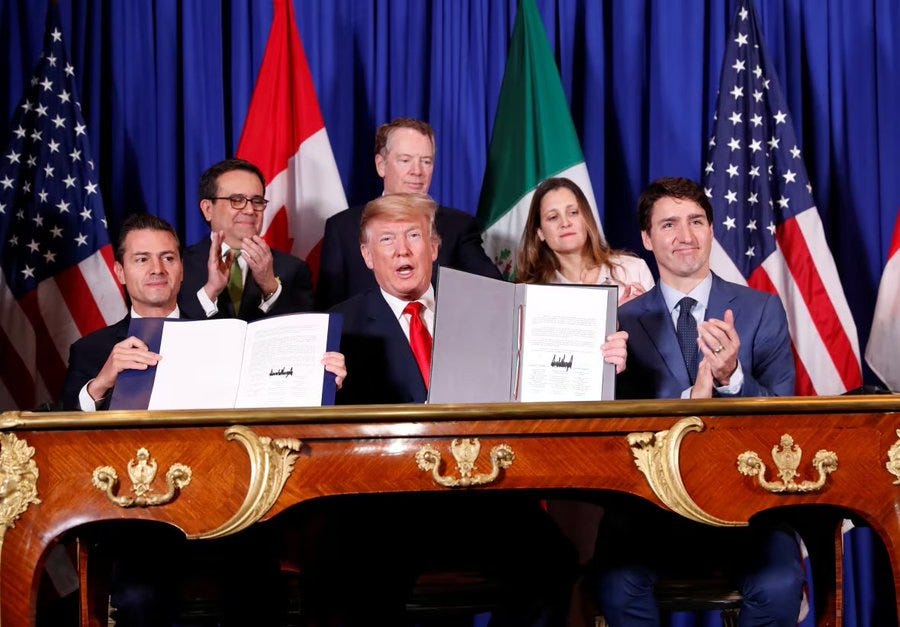
While Canada initially resisted many of Trump’s demands, the reality of its economic dependence on the U.S. forced Trudeau’s government to accept the new terms. USMCA gave the U.S. stronger leverage in future trade negotiations by reinforcing America’s dominant role in North American commerce.
In the energy sector, the agreement reaffirmed the free flow of oil and gas between the three nations but did little to change the U.S.'s ability to pivot away from Canadian crude if necessary. Trump's willingness to renegotiate trade on America's terms, rather than maintaining the status quo, underscores the imbalance of power between the two nations. Canada may attempt to assert leverage, but as USMCA demonstrated, when the U.S. decides to redraw the economic map, Ottawa has little choice but to follow.
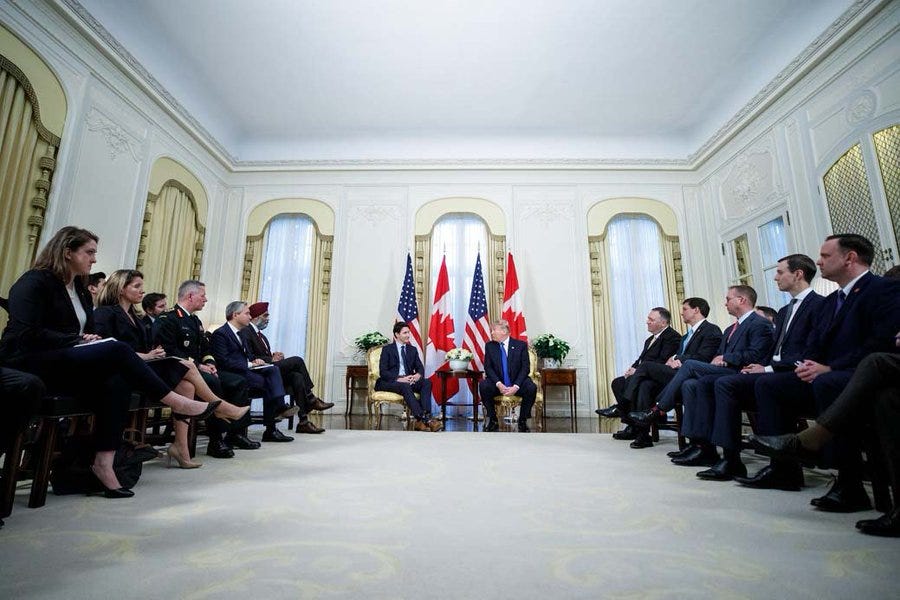
Despite this one-sided dependence, Canada continues to push for retaliation policies against the United States. If Trudeau continues in an effort to strong-arm the U.S., it may soon find itself on the receiving end of worse tariffs or decreased purchases. A 25 % tariff on Canadian crude would cripple what is now an already limping oil export market, leaving Canada little choice but to accept lower margins, or look elsewhere for buyers — an option that isn’t logistically or economically possible in the short term.
Without U.S. importers willing to consider its product, Canada’s oil industry would collapse. But this arrangement is a matter of choice, not of necessity. If the U.S. chose to refine greater quantities of its own oil, or adopt tariffs to correct trade imbalances, the Canadian economy would be far more significantly affected than that of America. The call for enforcement of immigration that has allowed fentanyl to cross U.S. borders resulting in mounting deaths, must be addressed.
The reality is quite obvious, the United States does not need Canadian oil. Losing the United States as a customer isn't an option for Canada. To earn the benefits of low cost trade with the United States, Canada must acquiesce to the demands of President Donald Trump and provide something of economic benefit. Its Canada's economy that stands to lose the most. The populist reformer in Washington, D.C. has placed the stakes as high as can be, Canada as a 51st of the United States.
No posts
Comments
Nothing yet. Say the first thing.
Sign in to join the conversation.