
Everything I have written about in this series of letters has been building toward one word, and today is the letter about that word: RESTRAINT.
It is the most misunderstood word in design. It is treated as the opposite of luxury; as a lack, a subtraction, a kind of aesthetic thinness. When in fact it is the exact condition luxury has always required in order to be recognizable. Luxury without restraint is not luxury. It is display. The distinction is old, and it has been forgotten by many that mistake this particular form of abundance for excellence.
Restraint is the discipline of refinement. It is the decision to pause before the room asks you to stop. It is the willingness to specify one great material rather than four adequate ones. It is what allows a room to breathe, and what allows the eye to rest, and what tells the body — the moment it enters the room — that it is welcome.
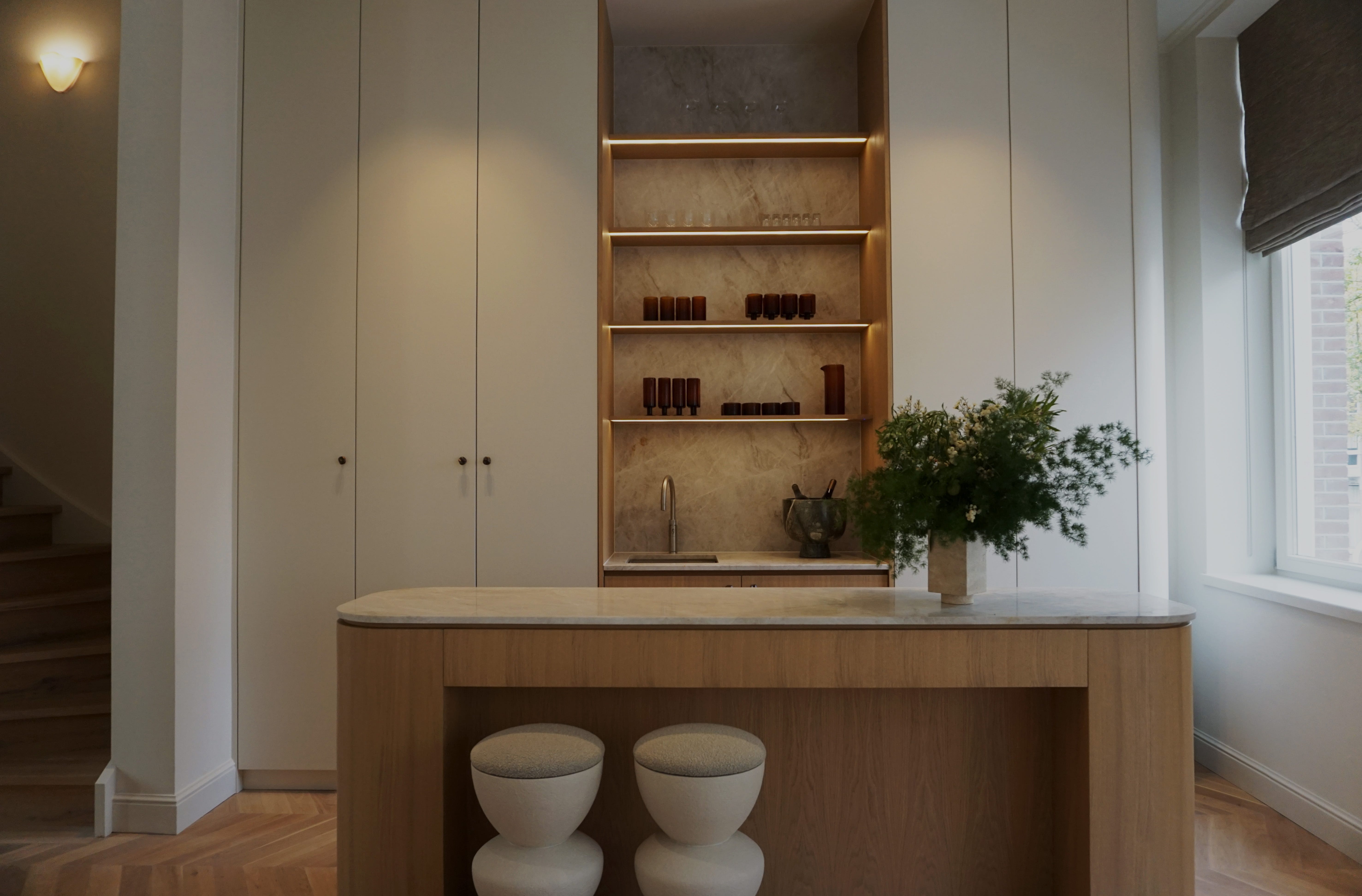
It is also, quietly, one of the most difficult things in this profession to teach.
Most design education, most design media, and most design content on the internet is about addition. What to add to a room. What to buy for a room. What to layer, what to accent, what to install, what to hang. The economic incentive of the industry is oriented entirely toward more. More product, more collection, more launch, more.
Restraint has no economic incentive. Restraint is what you do when you have understood that the room is already almost finished, and the next decision is not to add something but to protect what has already come together cohesively. A designer who understands restraint saves the client money, because they specify less. They also produce rooms that outlast every trend, because a room built on restraint is not built on any of the trends that will pass through it.
This is why restraint is rare. Not because it is hard to see, but because it is against the interests of almost everyone who might teach it.
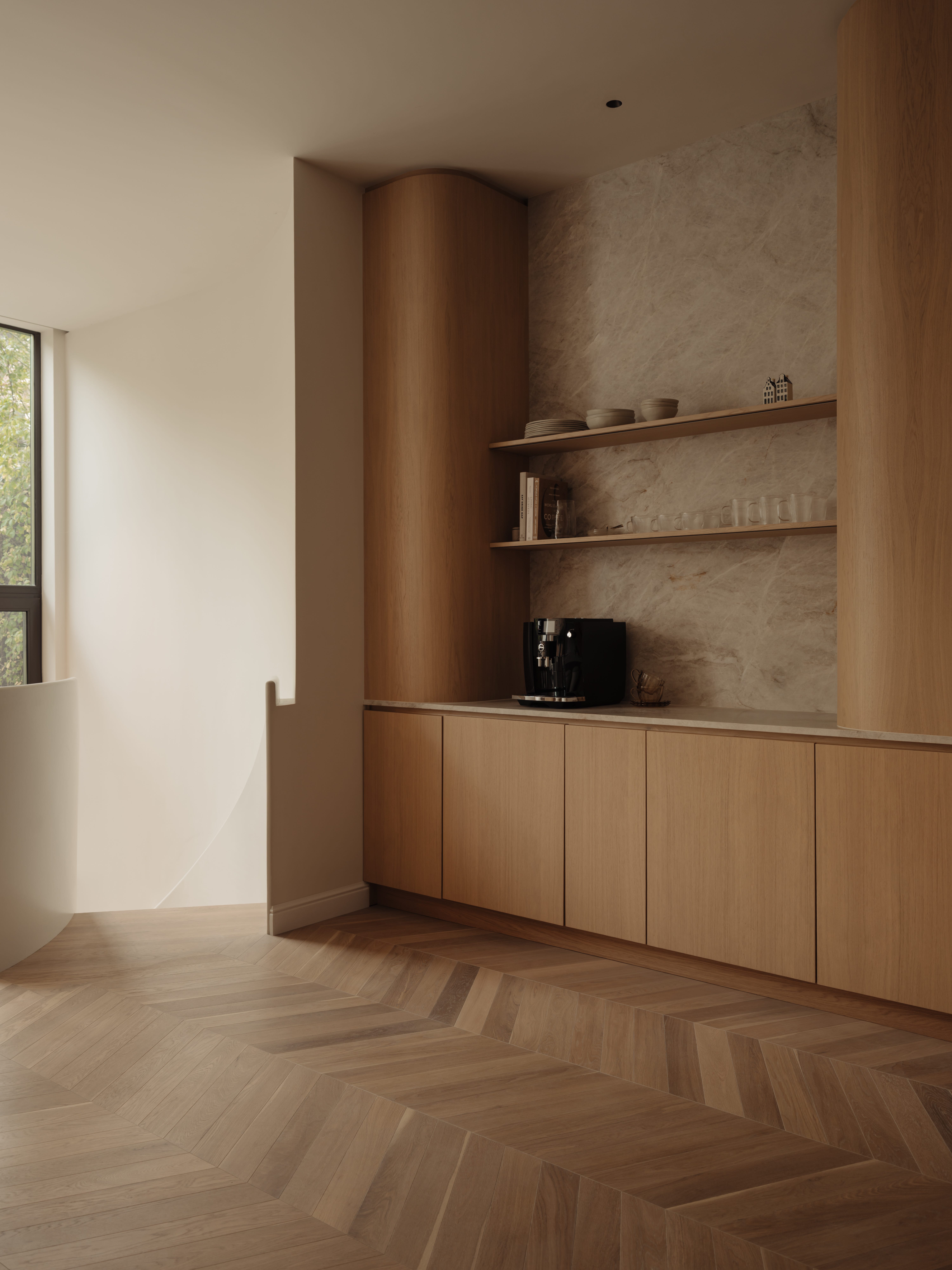
Here is what restraint looks like in a room:
It looks like a focal point of honest plaster instead of random walls of textured paint. It looks like one stone specified with judgment instead of three stones specified because none of them were quite right. It looks like a linen sofa in a natural bone tone that will read correctly in every light for the next decade+ rather than a statement sofa in a color the client will regret within a few years. It looks like one piece of art, hung well, on a wall that has been given the courtesy of proper lighting + empty space around it. It looks like a dining table set with three vessels of different heights instead of a full centerpiece styled to be photographed. It looks like a room where the eye has somewhere to rest.
Restraint also looks like the things a designer does not do. Does not accent. Does not layer for the sake of layering. Does not fill the space above the cabinetry. Does not specify a bold rug because the room needs a moment. Does not add a mirror because the wall feels empty.
An empty wall is not a problem. An empty wall is a design decision. Rooms need places where nothing is happening in the same way that music needs rests.
The clients who come to me at this stage of my career — twenty years into the practice; fourteen years leading my studio, with a body of work behind me and the ability to say no to projects that are not aligned — are the clients who have already lived through the years of addition. They have owned the maximalist house. They have owned the trend-driven house. They have owned the house that photographed well and lived poorly. What they want now is the room that is quiet, that is honest, and that will still be the correct room in ten years.
I have come to believe this is the actual arc of taste. Every great client I have worked with, given enough time, ends up here. The rooms that endure are the restrained ones. The rooms that photograph best five years after install are the restrained ones. The rooms that clients call me from, six years later, to say,
“I still love it — nothing needs to change”
…are the restrained ones. Restraint is what luxury actually looks like. Everything else is decoration.
Letters from BE. has been free since May. Ten weeks, ten letters, delivered without any ask. I wanted this writing to earn your attention on its own terms.
This week I am opening a paid tier subscription.
The Monday letters will remain free: the Considered Letters, the Studio Letters, the Field Notes Letters, the YAP Letters — the four-column rotation you have been reading — will continue to arrive in your inbox Monday Mornings.
What paid subscribers receive is additional to the letters, not a version of them:
ONE PROFESSIONAL DESIGNER SOURCE LIST PER MONTH.
Paid subscribers-only. 5–7 pieces the studio is actively specifying this month, with vendor context, price range, and the judgment behind each selection. This is the level of specificity I have never made available outside the studio before.
ONE ASK BE PER QUARTER.
Paid subscribers-only. I am taking five subscriber questions — real questions about real rooms — and answering them in editorial length. Not just tips, but professional judgment and designer feedback applied to specifics.
EARLY ACCESS TO HOME by BE.
Paid subscribers receive a 48-hour advance window on new collection drops, sales, and everything our marketplace releases publicly.
THE ARCHIVE.
Every letter available as downloadable, printable PDFs.
1:1 CONVERSATIONS WITH BE.
After six months as a paid subscriber, one 20-minute conversation with me, on your space. Professional design advice applied to the room you are actually living in. This unlocks at the six-month mark of continuous paid subscription and is available once per year thereafter.
Paid subscription is $8 per month, or $88 per year. There is also a Founding Member tier at $222 per year, for readers who want to support the publication at a higher level and who receive first access to studio initiatives as they become available.
I have priced this the way I price the studio’s work: at what it costs to be done correctly, without discount and without upsell. If it earns its place in your life, I would be honored to have you as a paid subscriber. The invitation is here whenever you’re ready. Until then, Monday remains ours.
—xobe
No posts
Comments
Nothing yet. Say the first thing.
Sign in to join the conversation.