
There is a small upholstery house in Los Angeles I have been working with since 2013.
They are the first custom furniture manufacturer my design studio ever engaged. BE by Brittaney Elise was a little over a year old. I had only three clients at this point, one assistant, a MacBook, and a lot of ambition. I drove across the city to meet them for meetings in warehouses and production shops, to inquire whether they would build a few custom upholstery pieces for my biggest client at the time who was, then, twenty-one years old and was already one of the most photographed people in the world: Selena Gomez.
These were the first custom pieces my studio ever created. Prior to this I only worked for other designer/architectural studios, and did not take any of those vendor contacts with me onto my own path. Throughout the preceding fourteen, this same workshop has built nearly every custom upholstery piece the studio has specified. Sofas, sectionals, headboards, ottomans, benches, dining chairs, and more – for Selena, for Michael B. Jordan, for Zendaya, for clients you have not heard of, in houses that will never be published, whose sofas are just as carefully built as the ones on the covers of Architectural Digest magazines. The workshop does not distinguish between the two. That is part of why I have never left them – but ultimately is just in the fact that the quality of everything they produce is wholly unmatched.
Today I’m writing about what this relationship has taught me about the honest cost of a piece of furniture — and about what most people are actually paying for when they buy a sofa.
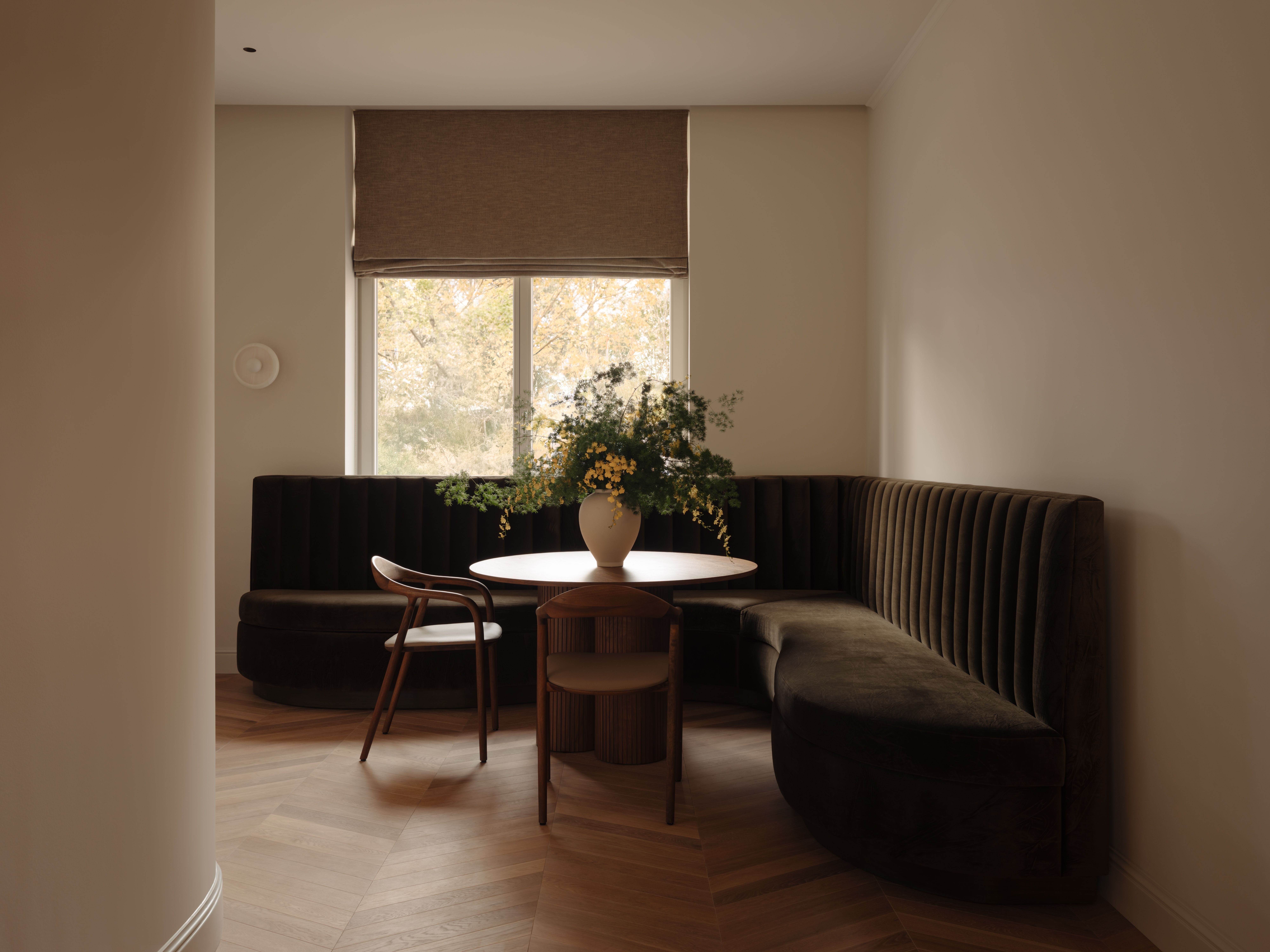
Here is what a custom upholstery piece from this workshop actually involves:
The frame is kiln-dried hardwood, joined with corner blocks and doweled joints, glued and screwed. Not stapled. Not particleboard. A frame that will still be a frame in eighty years.
The eight-way hand-tied springs are exactly that — hand-tied. Eight ways. By a person, sitting at a bench, with a length of twine and a pair of hands that have done this thousands of times. Machine-tied springs exist and are cheaper. They also fail. Hand-tied springs are the reason a good sofa still feels right after twenty years of the same family sitting on it every night.
The down-and-feather cushion inserts are stuffed by hand into ticking that has been cut and sewn on-site. The fabric is upholstered with hospital corners at the arms, welt cords aligned, pattern matched across seams even when the seams are on the underside of the arm and no one will ever see them.
The finished piece leaves the workshop, carefully hand-wrapped, and is delivered to a house where the client sits on it for the first time and, in every case I can remember, says nothing for a moment, then eyes light wide. That silence is the whole product.
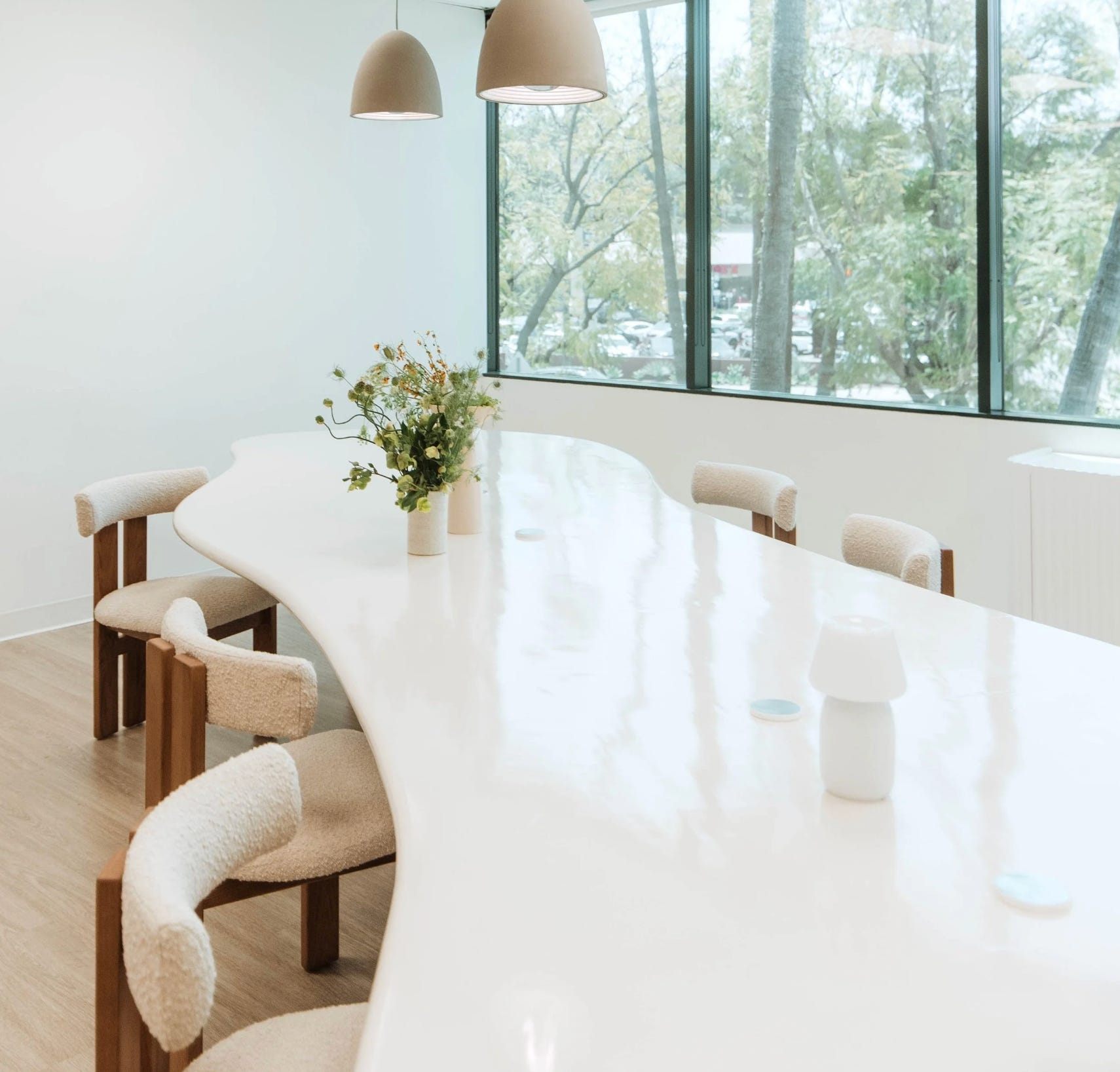
Here is what all of that costs:
More than what you would pay at a design showroom for a piece that looks similar in photographs. Considerably more than what you would pay at a mass retailer for a piece that looks similar in photographs. The math is the same math I have written about before: you are not paying for the piece. You are paying for the decades the piece will be in your home without failing.
The pieces I have specified from this workshop for private clients, and later to the public via HOME by BE., have accumulated one interesting piece of data over fourteen years: I have never — not once — received a complaint about the build. Not from a first-year client. Not from a celebrity. Not from a HOME by BE. customer ordering from a website. Not a wobble, not a sag, not a seam, not a squeak. There is no other vendor in my design studio’s history I can wholly say this about.
That is what honest cost buys you. Not just a piece that lasts, but a piece that does not require you to spend a single hour of your life managing it after it arrives.
The reason I am writing this today is that I have watched, over the last five years or so, the furniture industry compress in a direction I do not love. The design-adjacent retailers have gotten better at photographing pieces that are not quite what they seem. The showroom pieces that used to be built the way I have described above are now, sometimes, built with corners cut in places the customer cannot see. The mass retailers have gotten very good at making a room look correct in a picture for eighteen months, which is roughly how long the pieces last. The honest-cost vendors, meanwhile, have mostly stayed the same. Same workshop. Same benches. Same hands. Same silence when the client sits down for the first time. Is that sofa worth the range of $5K to $15K? Absolutely. You get what you pay for, at the end of the day.
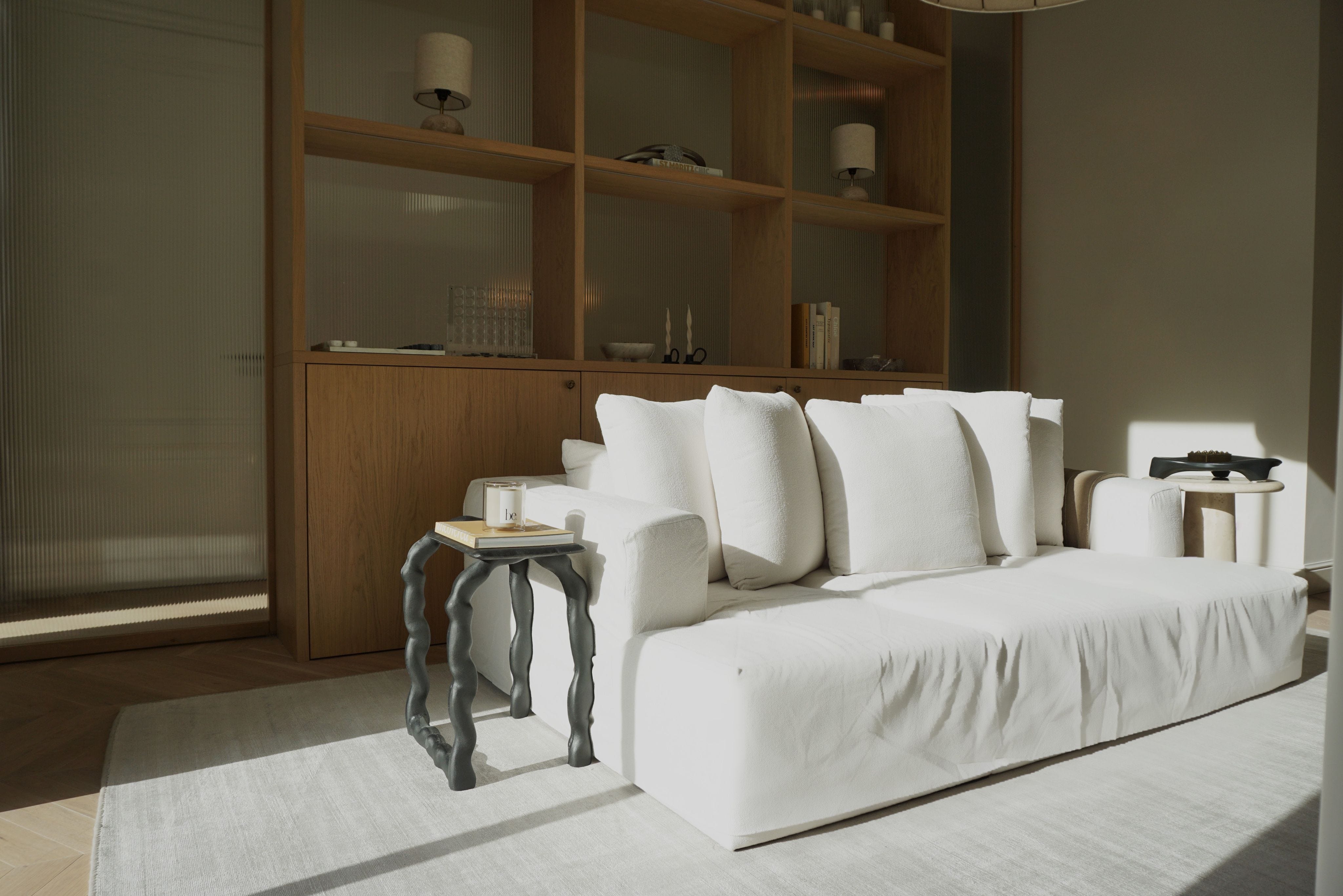
I have organized so many years of business around one such workshop, and I have never had a reason to look elsewhere. Some relationships in this industry are transactional. This one is not. It is the closest thing my work has to a foundation.
Sourcing, done honestly, is mostly this:
finding the people who have not compromised, and then not letting go of them.
—xobe.
No posts
Comments
Nothing yet. Say the first thing.
Sign in to join the conversation.