
Your organisation may have an AI strategy. Far fewer have decided what they will not do with AI. Or how they will correct AI-assisted work that turns out to be wrong.
In Neal Stephenson’s 2015 novel Seveneves, he coined the term Amistics for the study of how societies decide which technologies to adopt and which to reject. The scholarly publishing sector has spent the past two years discovering what happens when those choices are made by default rather than design.
And some of these lessons transfer to any organisation that produces knowledge or relies on evidence to make decisions.
1. What’s your AI-free zone?
Amistics focuses as much on deliberate rejection as on adoption. The academic community never collectively decided that AI training on open-access research was acceptable. It was a decision by default, because Creative Commons licenses allowed it and because machine-reading clauses provided exceptions in many copyright frameworks (Decker, 2025).
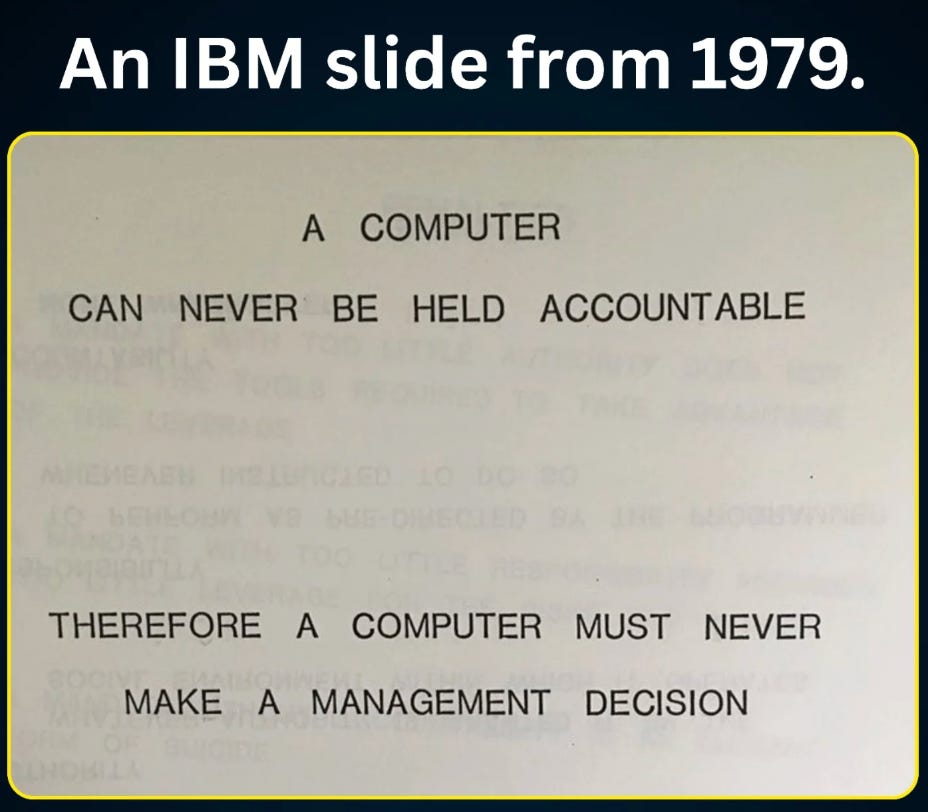
Organisations that defer the question of which processes should remain human-led might find it answered for them – by a vendor or a competitor, most likely. Only by making these decisions explicitly can you ensure that you retain a grasp of the trade-offs.
What decisions or processes will remain human-led in your AI strategy?
2. Who is harvesting your website for data?
The open-access infrastructure in scholarly publishing was designed primarily for human readers and is maintained through government grants (via universities, for example) and charitable payments. Bot traffic from AI crawlers now constitutes a substantial and rapidly growing share of their usage, overwhelming systems designed for a different kind of engagement (O’Connell, 2026).
Organisations sharing information (reports, data, documentation, research) without asking who is ingesting it and for what purpose should assume this will include AI systems being trained on their content.
What are you willing to share, and how will it benefit you?
3. Maintain your in-house knowledge
One of the more commercially interesting responses to AI training in publishing is the move toward “subscribe-to-context” models, where access to content is metered and renewable rather than one-time.
The logic is that a document that can be updated or withdrawn is more valuable than content that is absorbed into a model and never revisited.
Organisations that treat their knowledge production as a one-way publication rather than a maintained asset are giving up significant leverage.
Can the information and data you hold be made accessible through subscription models that allow your organization to retain control over updates and changes?
4. Can you correct the mistakes your AI makes?
When research findings are absorbed into AI model weights, the original source loses its relationship to the extracted knowledge. Corrections and retractions – the integrity mechanisms for scholarly records – no longer reach the output.
Any organisation deploying AI-assisted work faces the same structural problem: if an AI-generated analysis turns out to be wrong, is there a live mechanism to find and fix it, or has the error already propagated? Plan for mistakes; don’t try to fix them later.
When relying on AI tools, how can you ensure transparency of underlying sources and processes?
5. Verification is the new frontier
AI has made content production substantially cheaper and faster – sometimes that's better, but not always.
But the capacity to evaluate, verify, or review that content has remained static.
In academic peer review, the result is a growing backlog: the bottleneck has moved from writing papers to evaluating them. Organisations will experience similar shifts in their knowledge workflows. The constraint has moved from creating outputs to having the human capacity to quality-check them.
Planning for this means investing in an evaluation infrastructure and creating your bespoke “verification stack” (Catalini et al., 2026).
How will you verify at scale, and how can your organization retain the learning from verification processes?
6. AI brings change, fast – reacting can be more costly than planning
The Directory of Open Access Journals spent significant staff time and budget in 2025 blocking AI scrapers to preserve human access to its content (O’Connell, 2026). Every hour on that was an hour not spent on its actual mission.
If your AI governance is reactive and your organization only responds to problems after they materialise, that can cost considerably more in time and capacity than proactive governance.
Which organizational processes are most vulnerable to potential failures when adopting AI?
7. Ask yourself if you are just subsidising extraction?
Open access was designed to distribute the benefits of publicly funded research. In practice, a significant share of the value created by OA content is now being captured by a small number of AI companies that pay nothing for access and return nothing to the ecosystem.
In response, Creative Commons is currently developing Signals, which is intended to reflect the different dimensions of reciprocity that may support the internet as a common good. The underlying problem is that openness, in a world of large-scale AI training, means something very different from what it meant in 2010 or 2000, when open access models were first conceived.
Every organisation that shares data, research or expertise openly faces a version of this question: under what conditions is openness appropriate, and when does it amount to subsidising extraction?
The academic publishing sector did not plan to become a case study in passive technology adoption. It has nonetheless become one. The question for other knowledge-producing organisations is whether to learn from it now or later.
Interested?
Catalini, C., Hui, X., & Wu, J. (2026). Some Simple Economics of AGI (SSRN Scholarly Paper No. 6298838). Social Science Research Network.
Decker, S. (2025, April 15). Guest Post—The Open Access – AI Conundrum: Does Free to Read Mean Free to Train? - The Scholarly Kitchen. Scholarly Kitchen.
O’Connell, B. (2026). Open Access vs. Open excess: DOAJ and AI scraper bots – DOAJ Blog. Directory of Open Access Journals Blog.
Author: Stephanie Decker FAcSS FBAM is Professor of Strategy at Birmingham Business School and Vice Dean of Fellows at BAM. She is known for her work at the intersection of history and management studies and has published on the deployment of AI in digital archives. She is the founder and business editor for Business Research Unpacked.
Comments
Nothing yet. Say the first thing.
Sign in to join the conversation.