
For Pride month I am featuring the stories of Queer writers. I am finding their journeys urgently relevant to me, even (or especially) as a straight man. This post, from Mike Maeshiro,
Follow Mike’s Substack here.
Growing up closeted in a deeply religious home is a gauntlet of shapeshifting. From the time I understood that what I felt was something I needed to hide, my baseline way of existing became a performance. Every room I walked into required a rapid assessment. Who was there? What did they expect? What version of me did they need to see? What interests, behaviors or reactions were going to draw the wrong kind of attention? I became extraordinarily good at reading people because my sense of safety depended on it. I learned to anticipate judgment before it arrived and to manage perception the way other kids learned to ride bikes; through repetition and necessity and the very clear understanding that falling had consequences.
And so did every other gay kid in the same situation.
Under those constraints, your personality doesn’t develop normally but strategically. You build a version of yourself that is acceptable to the people whose love feels predicated on your performance. You get so good at performing it that you start to lose track of who you are. While I wish that was a metaphor, it’s a real psychological process that takes years to undo and some of us are still in the middle of undoing it.
They danced for the sentry eyes of my family and the people at church who knew my name, prayed for me and would have said without hesitation that they loved me. I believe they did love me in the way they understood love, which unfortunately came with significant conditions. The love was real and so were the conditions. Both of those things being true simultaneously is one of the more complicated griefs I’ve had to hold as an adult.
For a lot of queer people, coming out doesn’t feel like liberation right away but an act of violence. You’re not coming out into a neutral space where people are going to receive your truth with curiosity and openness. You’re coming out in an environment that has already categorized your identity as rebellion, deception or sin. Your self-knowledge gets interpreted as self-destruction. Your self-love gets interpreted as selfishness. The most honest thing you’ve ever done in your life gets treated as a betrayal.
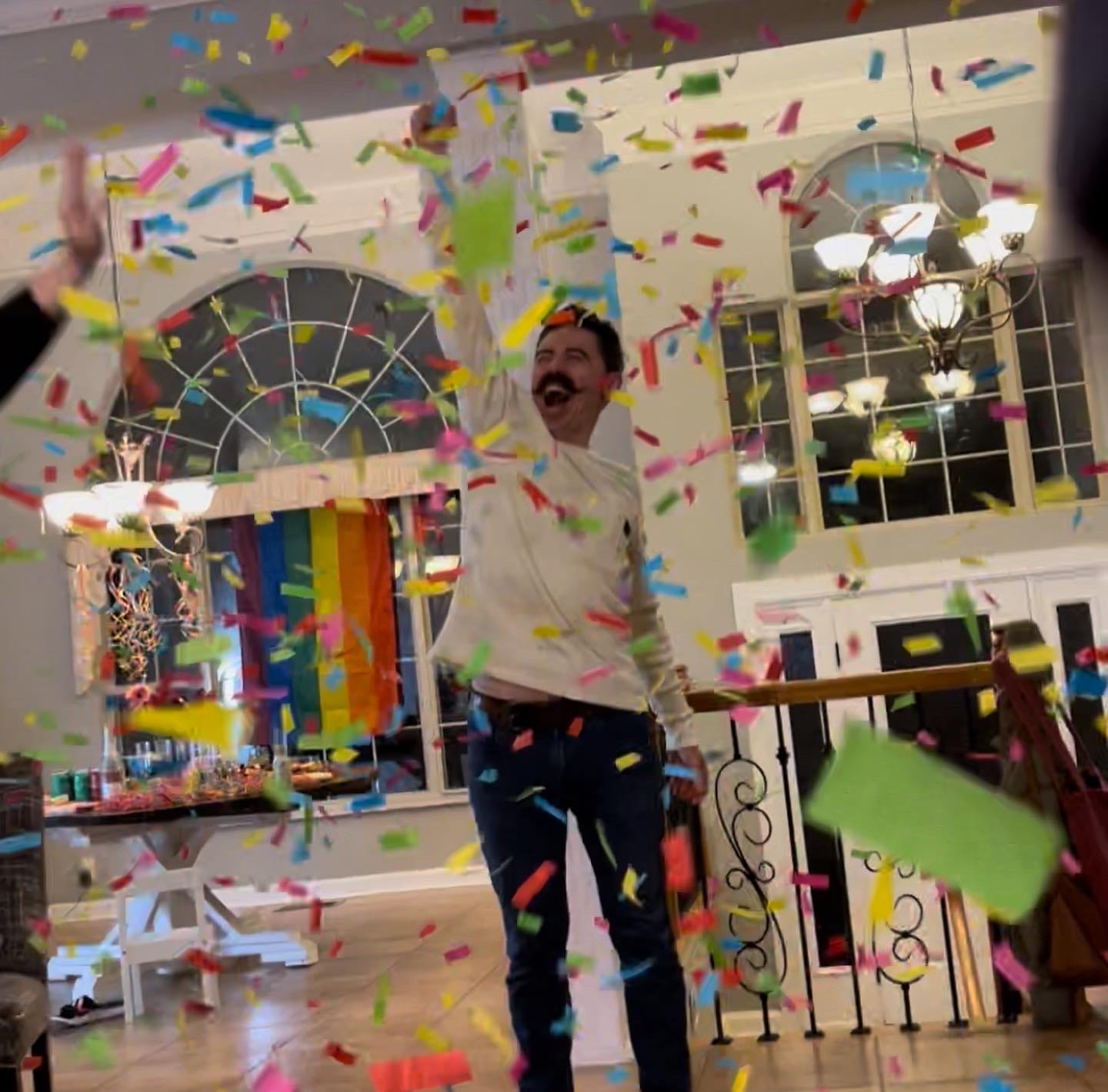
This is why there are plenty of queer people still in the closet right now. They don’t lack courage, they’re doing a risk assessment. They know what they stand to lose. They know which relationships won’t survive the truth. They don’t know who will still be there on the other side or whether the version of their life that’s waiting for them is actually livable. I remember that fear with a specificity that doesn’t fade. Not knowing felt like standing at the edge of a dark pit with no way to see the bottom. Some people have genuinely good reasons to stay where they are for now. Safety is real and their survival matters. I’m not here to tell anyone they’re wrong for protecting themselves.
But I also know what it cost me to keep protecting myself past the point where protection had become its own kind of damage. Underneath all the shapeshifting, performing and careful management of people’s perception, I was organizing my entire life around the avoidance of disappointing people. My operating system said: don’t fail to deliver the version of yourself that everyone has already decided you are. Make yourself smaller, quieter and more manageable and maybe you can hold all of this together without anything breaking.
It’s hard to get mad at the kid version of me who came up with that operating system. He did the best he could with what he knew (which wasn’t a lot.)
While it took longer and cost more than it should have, I had to learn that disappointing people isn’t a catastrophe to be avoided, it’s an inevitability to be navigated. And this isn’t only true for queer people, it’s true for anyone who has ever tried to live authentically inside a world that demanded their compliance in exchange for belonging. At some point the question stops being whether you’re going to disappoint someone and starts being who you’re willing to disappoint and why. Because you’re going to disappoint someone either way. The only choice is whether you disappoint the people who need you to stay small or you disappoint yourself.
I chose wrong for a long time. I disappointed myself, deeply and silently, for years. I told that five-year-old kid who already knew who he was that he had to wait. That kid had to hide, be patient, be relentlessly strategic and make himself acceptable before he could be honest. I made him carry the weight of everyone else’s comfort because I didn’t know yet that he didn’t have to.
Coming out was a promise to that kid. It was me finally saying, “I will disappoint the right people for the rest of our lives.” That’s what I owed him. He hid for decades to keep us alive. I can carry the brunt of the disappointment from bigots and religious wackos who refuse to know any better. Little Mike deserved weightless honesty from the beginning. He didn’t get that but he’s going to get it now.
That’s what Pride means to me at its core. It’s not a party, though the party is good. It’s not a political statement, though the politics are urgent and real and require our attention right now. At its heart, Pride is a collective, public, unapologetic commitment to disappointing the right people. When thousands of people who were trained from childhood to manage perception and perform acceptability decide, together, in public, with intention, to stop, we are choosing to finally take up space and be loud, visible and unashamed in a world that spent years trying to teach us our inheritance was erasure.
The history underneath Pride is the history of people who refused to disappear. The people at Stonewall didn’t politely request acceptance. They were done negotiating the terms of their own existence with people who had no legitimate authority over it. Every march since then, every moment of public visibility, every person who came out in a hostile environment and survived it, every queer kid who found a way through because they saw someone else who made it, all of it is the accumulated evidence that disappointing the right people is not just survivable, it’s the beginning of an actual life.
There are kids right now who are back where I was, sitting in churches and Christian schools and family dinner tables and they’re performing. They’re shapeshifting, dancing for the sentinel eyes of people they love, hoping nobody catches them. And they’re watching to see whether the queer adults who came through this are okay. They want to know if we still have lives worth living or faith if we still want it. They’re watching to see if we still have community and love and meaning on the other side of all that loss.
I want to be someone those kids can see, a disappointment to the right people and thriving. I’ve found that the life waiting on the other side of the performance was more real and more mine than anything I could have built in the closet.
Pride Month is about telling the truth. For those of us who spent years learning to do the opposite, that’s a big deal. It’s the annual reminder that the truth is always worth it. It was never a betrayal to disappoint the people who needed us to be less than we were, it was a necessity that became a promise. And we kept it.
follow Mike here.
No posts
Comments
Nothing yet. Say the first thing.
Sign in to join the conversation.