
Last week, we discussed the discounted cash flow (DCF) model and how it can determine current fair prices for stocks.
By the end of this week’s lesson, we hope you will understand how a reverse DCF model works.
A reverse DCF model is a valuation method used to estimate the implied growth rate of a stock based on its current market price. Investors can then determine if the growth assumptions are too optimistic or pessimistic.
Like the discounted cash flow model, this tool is best used on companies in Stages 4 and 5 of the Business Growth Cycle.
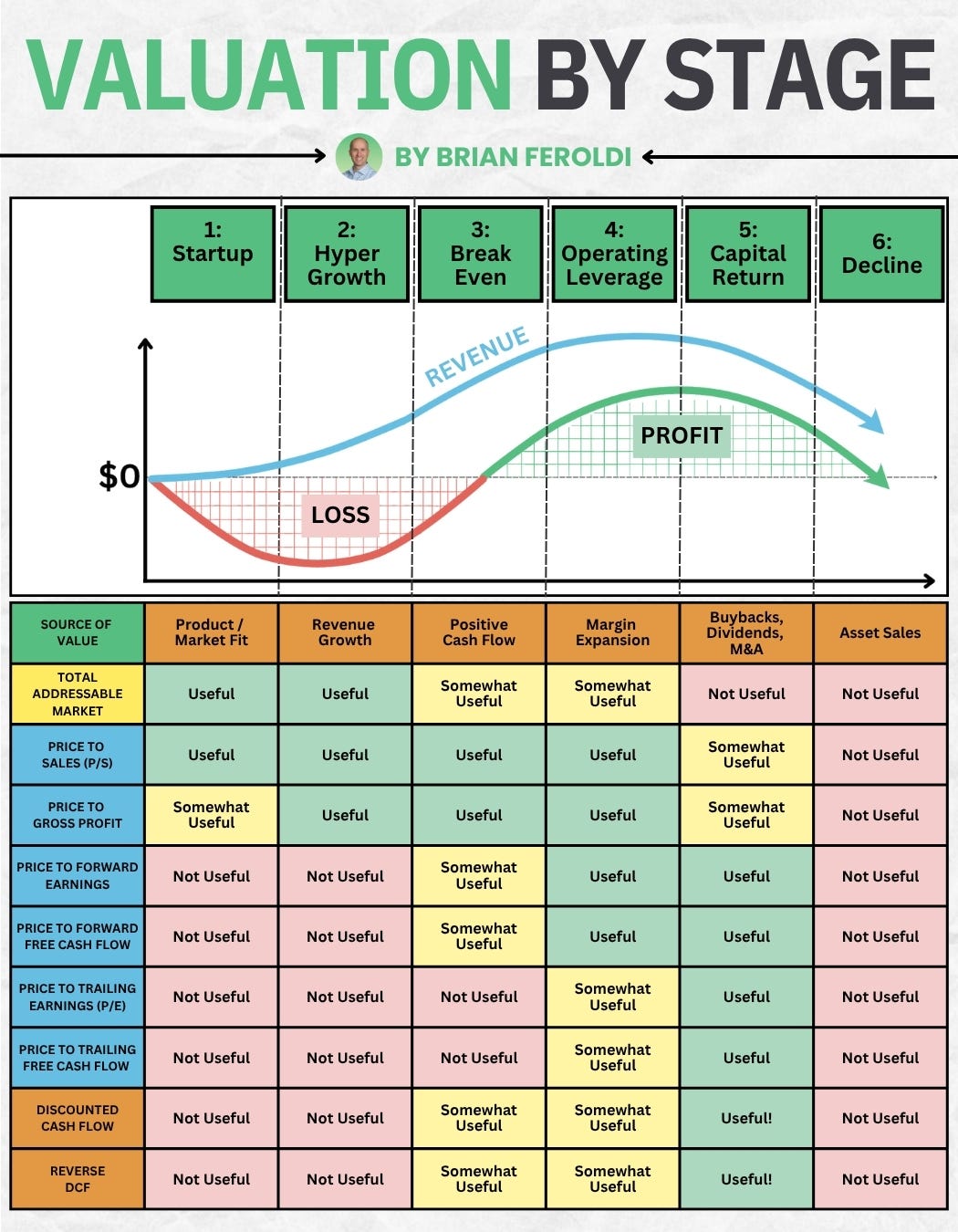
Like building a discounted cash flow model, using a reverse DCF is a multi-step process.
Shameless promotion: Those who sign up for our Valuation Explained Simply course receive an accompanying tool that automates much of this process. If you’re interested, use the link in the footer to get the course material.
Let’s briefly walk through these steps together:
Step 1: Enter trailing twelve-month free cash flow.
Using the company’s free cash flow statement, you can calculate free cash flow by subtracting capital expenditures from operating cash flow.
There are also several investment research platforms, such as fiscal.ai, that provide this information.
Step 2: Estimate the company’s terminal growth rates.
The terminal growth rate is the constant rate at which a business’s expected free cash flow is assumed to grow in perpetuity.
A good proxy is the gross domestic product (GDP) for the country in which the company is located. GDP growth numbers can be volatile, but 2% - 3% is usually a reasonable estimate.
Step 3: Enter an appropriate discount rate.
As we learned last week, the discount rate is the annual return you wish to realize by owning company shares.
There are many ways to calculate a discount rate, some of which get complex.
As a rule of thumb, the riskier the cash flow is from a company, the higher the rate of return you should demand from owning it.
Conversely, companies that generate more predictable cash flow streams should be expected to produce lower rates of returns.
Here is a very rough guide for finding the proper discount rate:
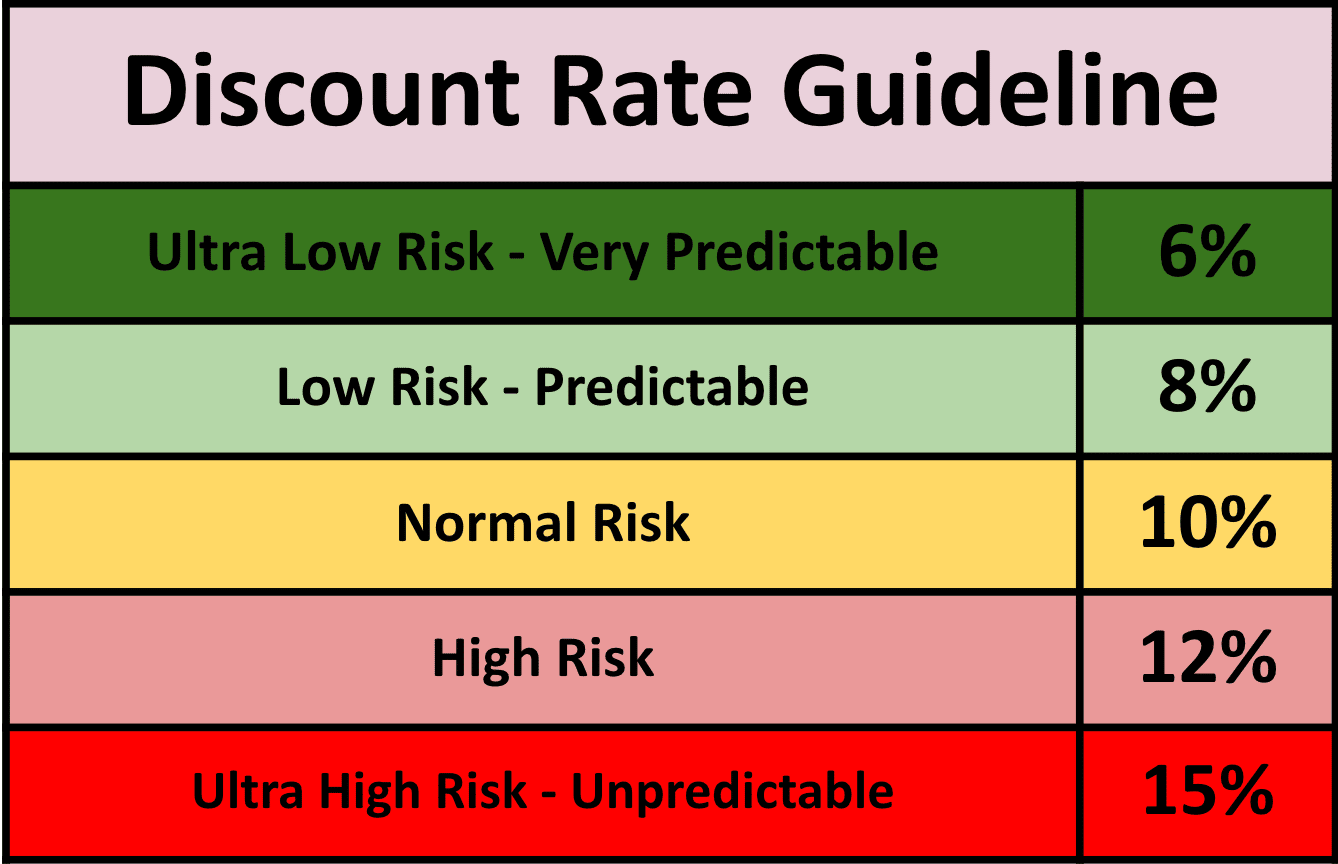
In other words, investors might use an 8% discount rate when valuing Coca-Cola but a 12% discount rate for a hot cybersecurity stock.
Step 4: Reconcile current and intrinsic values by finding the assumed growth rate.
Since we know the current stock price, we will now determine what growth rate assumptions are baked into the company’s current value.
Use the same DCF process we learned last week to plug in different growth rates to see what is required to make the current stock price a fair value.
Step 5: Ask yourself, “Does this seem too pessimistic/optimistic/fair?”
Once we calculate the growth assumptions, investors can check if this is higher or lower than the company’s historical growth rates.
This can be done by finding the company’s historical free cash flow on its cash flow statements from years past or using investment research platforms such as fiscal.ai.
If the growth rate is higher than its historical average, investors need to ask themselves questions like:
Is the company’s revenue recurring? Is it recession-proof?
Does the business possess a widening or stable moat?
Are the company’s margins stable or expanding?
If a company can check off these boxes, it might deserve a higher assumed growth rate than what is currently baked into the price.
If these questions are answered negatively, the business might deserve a lower assumed growth rate than its historical average.
Wishing you investing success!
Brian
No posts
Comments
Nothing yet. Say the first thing.
Sign in to join the conversation.