
Scite AI – The tool that Grades those citations!
If you have ever stared at a paper that has a lot of citations and thought “Wow! But is this actually good?” – then welcome to the club. Citation count is not always a good thing; it is more of blunt instrument and Scite.ai tries to sharpen that and it seem to work.
Now, the whole idea is simple, at the same time, clever. What scite does is that it reads the sentence where a particular article is cited and tags as one of the following: Supporting, contrasting or just a passing mention. So, that paper with a huge citation count, you can actually see and understand whether people actually agree with it or quietly thinking it is wrong. The difference between “this is popular” and “this actually holds up”, which has a lot of weight, especially if you do literature reviews.
As you know with all AI platforms, even Scite has an assistant built in. This is a game changer in my opinion. You can ask it in plain English a research question or even a topic in which you are working in interested in working, to look for the present literature and give any gaps that can be dug up for research and it comes up with a clean information regarding the present literature and gives you ideas and even form a protocol of sorts for the proposed studies.
Going forward, always there is a catch, no good thing comes free, as is Scite. It isn’t free – there’s a trial for which you’ll need a card on file and mind you, if you forget to cancel, you’ll be charged (I hope I don’t forget or maybe I will like it so much that I will continue to pay). And, as with all AI tool, mind you, not a substitute for reading the paper yourself.
A Shoulder You Can Experiment On—Without Entering the Lab
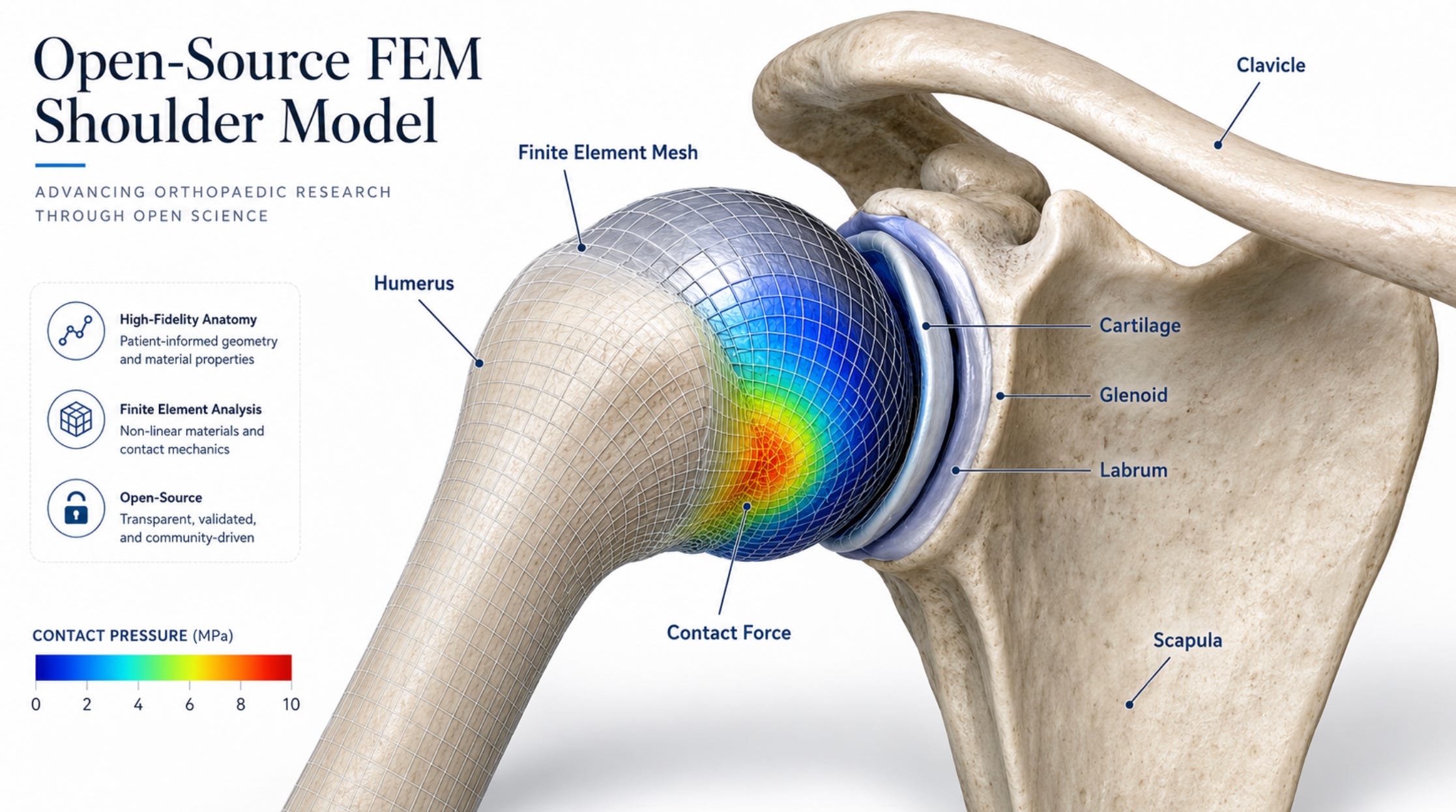
Finite element modelling is often discussed as a powerful research tool, but for many orthopaedic researchers, the entry barrier remains high. Building a shoulder model from CT data requires segmentation, mesh generation, tissue-property assignment, boundary conditions, muscle-force inputs and, most importantly, validation. A recently published open-source shoulder finite element model removes much of this groundwork.
The model was created using publicly available CT images from the Visible Human Project. It includes the humerus, scapula, clavicle, glenoid, articular cartilage, labrum and acromioclavicular ligament, with muscle–tendon forces represented for the rotator cuff, deltoid and pectoralis major. The authors validated the model by simulating humeral abduction and comparing the predicted glenohumeral contact forces with published in-vivo measurements. The predicted forces remained within one standard deviation of experimental values through most of the tested abduction range.
For shoulder researchers, this is a useful starting platform rather than a finished answer. It can potentially be adapted to study implant positioning, glenoid components, anchor constructs, cuff tears, cartilage contact, labral mechanics and altered muscle-loading patterns. Researchers can build on an already segmented and mesh-converged model instead of beginning from zero.
There are important limitations. The model was validated only for glenohumeral contact force during controlled abduction. It represents one male shoulder, fixes the scapula, simplifies muscles and does not include the complete capsule or all ligaments. Any major modification will therefore require fresh verification and validation.
The model files are freely available, although running them currently requires Abaqus. Even with that limitation, this is a valuable shared resource—especially for teams looking to begin computational shoulder research without spending months creating the basic model first.
Lost in a sea of papers? Litmaps hands you a map
Every orthopaedic surgeon who has attempted a review knows the drill. You fire a search into PubMed, it flings back four hundred abstracts, and somewhere in that ocean sits the one landmark paper your reviewer will absolutely ask about. You scroll. You squint. You worry. There has to be a better way to brew through the literature — and there is.
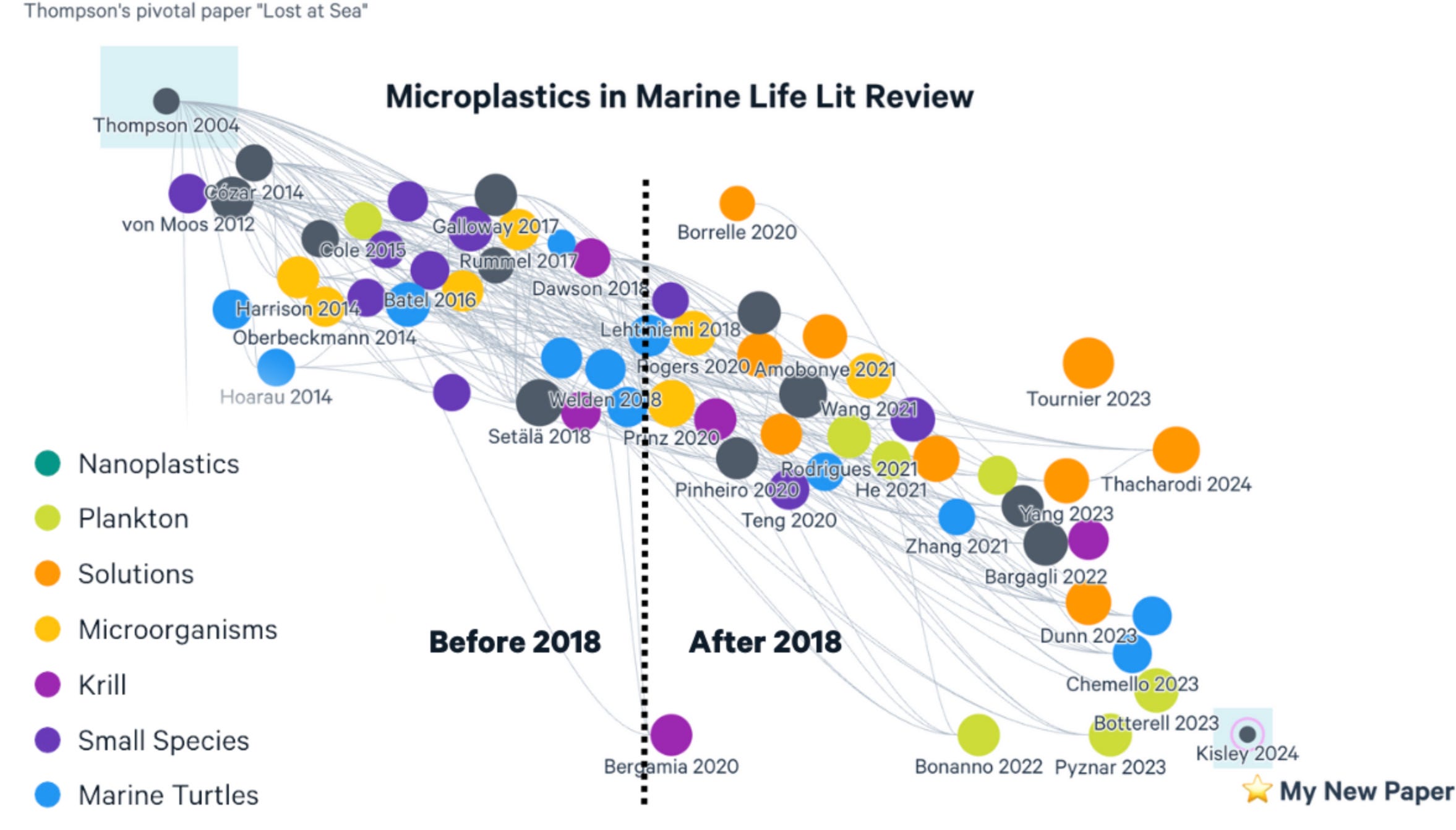
Litmaps takes a different route. Instead of another endless list, it draws your field as an interactive picture. You feed it one paper you already trust — your “seed” — say a trial on prophylactic negative-pressure wound therapy or an S2AI screw fixation study, and Litmaps grows a map outward through the citation network. Every paper becomes a dot, every citation a thread, laid out by year and by how often each has been cited. So rather than reading a thousand titles, you literally see how the field hangs together — and spot the gaps nobody has filled yet.
And it does not just sit there looking pretty. Switch on Monitor and Litmaps emails you when fresh papers matching your map appear — handy for fast-movers like orthobiologics, where something new lands every other week. Already living in Zotero? Zotero Sync keeps your library and your maps talking to each other, so you are not copy-pasting references at midnight.
Now, honesty over our brew. Litmaps is a discovery tool, not a reference manager — keep your Zotero or Mendeley handy for the heavy lifting. It leans on citation data, so very new or poorly-indexed work can hide from it, and the interface takes a coffee or two to get comfortable with. Fair trade, we would say.
The best bit for our crowd: the free plan gives you two maps to play with, and if you are at a university, an Educational Licence knocks a hefty 75% off the standard price. Labs and units can grab a team licence and map together.
So next time you are drowning in abstracts, do not scroll harder. Map smarter. ☕
Medable – Breeze through clinical trials
We have all been there. Recruiting for a study can feel like convincing Neo to take the red pill while navigating a bureaucratic desert. Usually, it involves mountains of paper and chasing follow-up data until you question why you didn’t just open a bakery instead. But what if we could simplify patient engagement without them feeling like they are filing tax returns?
Enter Medable, a platform built specifically for decentralized clinical trials. They offer a suite of digital solutions, including eCOA and electronic informed consent, which effectively digitize the research workflow. It allows patients to participate from home, skipping the endless clinic visits.
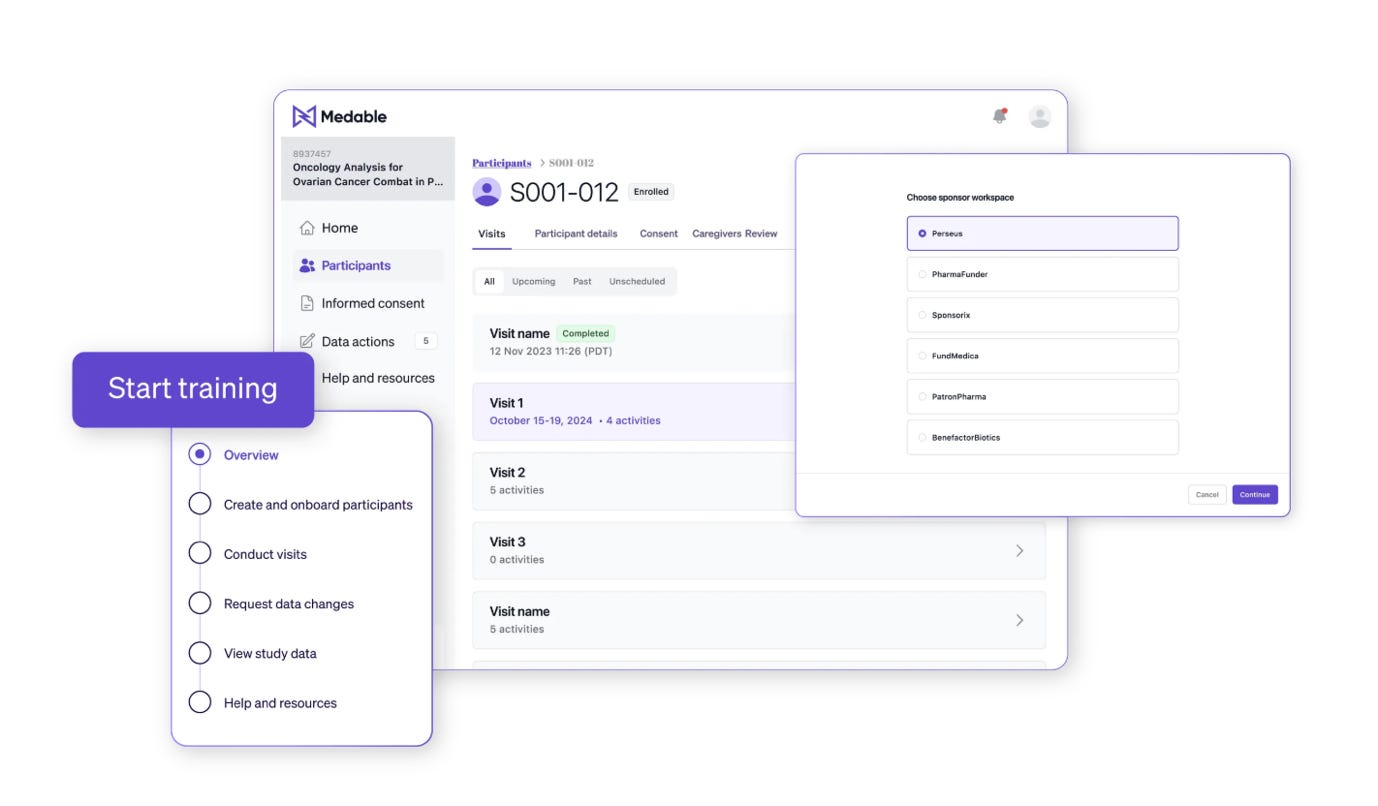
For those running long-term orthopaedic studies, patient retention is the final boss. Their eClinical platform reports significant boosts in engagement and data quality, lightening the load on site staff while keeping the audit trail pristine.
They claim 90+% participant adherence, 34% reduction in translation timeline and 1 day trial build time. They also have AI agents which are pre-built or custom made to aid you in trials.
Events to check out:
46th SICOT Orthopaedic World Congress 29 Sep – 1 Oct 2026 Kyoto, Japan
IASCON 2026 (23rd Indian Arthroscopy Society Congress) 8 – 10 Oct 2026 Kolkata, India
NASS 41st Annual Meeting 14 – 17 Oct 2026 San Antonio, USA
AAHKS 2026 Annual Meeting 5 – 8 Nov 2026 Dallas, USA
Comment about your favorite research tools so that we can write about them. See you all next month guys!
Comments
Nothing yet. Say the first thing.
Sign in to join the conversation.