
Ibstock (15.4%)
WH Smith (12.3%)
Wizz Air (12.3%)
Vistry (12.1%)
Greggs (10.3%)
*Please read the disclaimers at the base of this report. The author may maintain either short or long positions in the companies mentioned below. Does not constitute a recommendation to buy or sell the securities mentioned herein. Do your own due diligence. For Permitted Recipients only (UK - see disclaimers).
I thought I would continue below my irregular update on the “Top of the Pops” shorts in the UK - those shorts with the highest disclosed short interest in the UK. To be clear, these are not shorts that represent my own positions though I have historically had a short position in Vistry (no longer) and maintain a modest one in Ibstock. But they are significant in that they are the largest disclosed positions (as a % of market cap) in the UK. So worthy of consideration on both the long and short side of the equation.
Ibstock
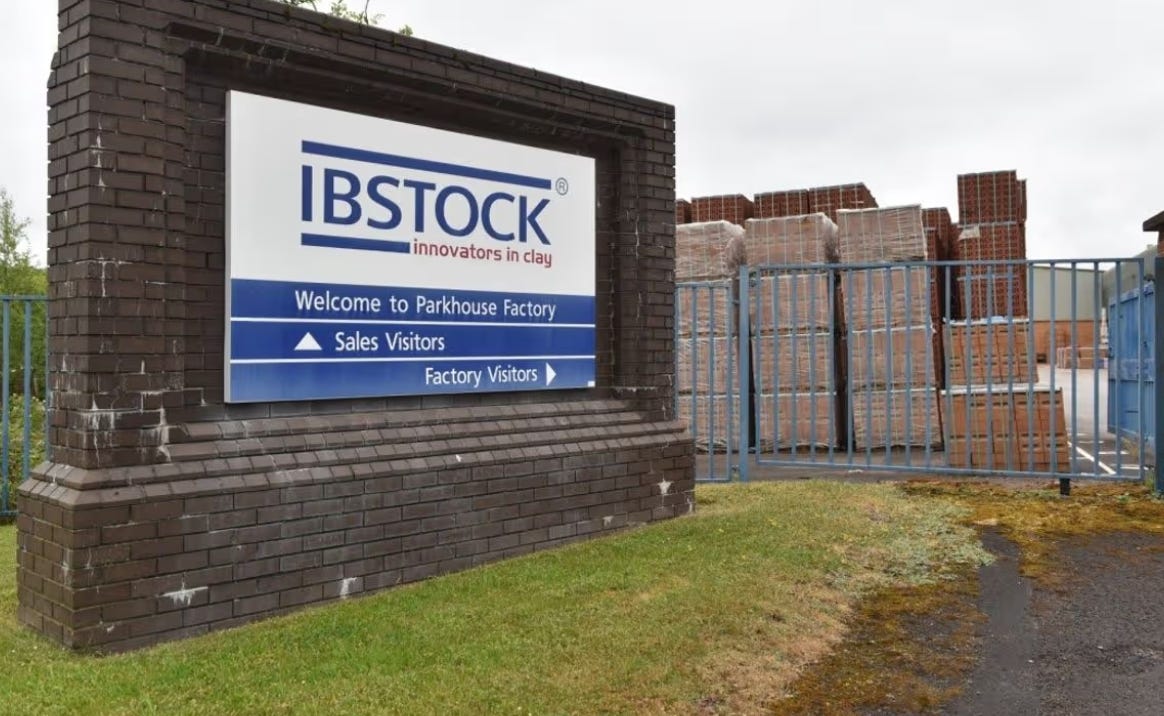
We’ve already looked at Ibstock and the short thesis appears to be playing out with the stock down some 20%+ since the “double whammy” of their results announcement and the Iran war. Ex asset sales the cash burn in 2025 was £15m+ (£30m including the dividend payment). On top of that sales of receivables flattered operating cashflow to the tune of nearly £5m. Exceptionals of £20m or so are not that unexceptional judged by recent Ibstock history - redundancies, closures, inventory impairments etc. So it is arguably challenging to have confidence in the companies adjusted EBITDA number of £71m.
The company (bricks! kilns!) is highly exposed to energy prices given how much gas it has to burn to maintain the temperature of its brick kilns. Meanwhile the UK housing market remains in the doldrums with house-builders facing increased red tape and depressed and weak demand from house-buyers. (For more of a detailed background on the company see our previous notes on here). The recent AGM statement suggested revenues down 10% on a LFL basis with pre cast concrete faring worse than bricks. Note that the sale of roofing business Forticrete will mean that translates into revenues being down 15-20% yoy. Margins were thin last year; a double digit like-for-like shrinkage could see them evaporate entirely. Similarly cashflows could be impacted by stubbornly high inventories and a dwindling ability to sell receivables invoices forward.
As for energy, while Ibstock is 85% hedged on those costs for most of the year there will still have been an energy impact at the margin in costs for the unhedged portion, while Q4 2026 looks exposed if gas prices spike in the winter (65% hedged).
And to cap it off there’s a new CFO who may wish to bury some bodies if trading continues to be weak. Net debt last year was saved from ratcheting higher by selling a chunk of the pre-cast division. Will they be able to do the same in 2026? Covenants of 3x net debt to adjusted EBITDA and 4x interest cover may not prove as generous as they appear if the housing market remains frozen for much longer. £510m of EV with the risk of net debt ballooning higher means there is still red meat to bite into for shorts.
WH Smith
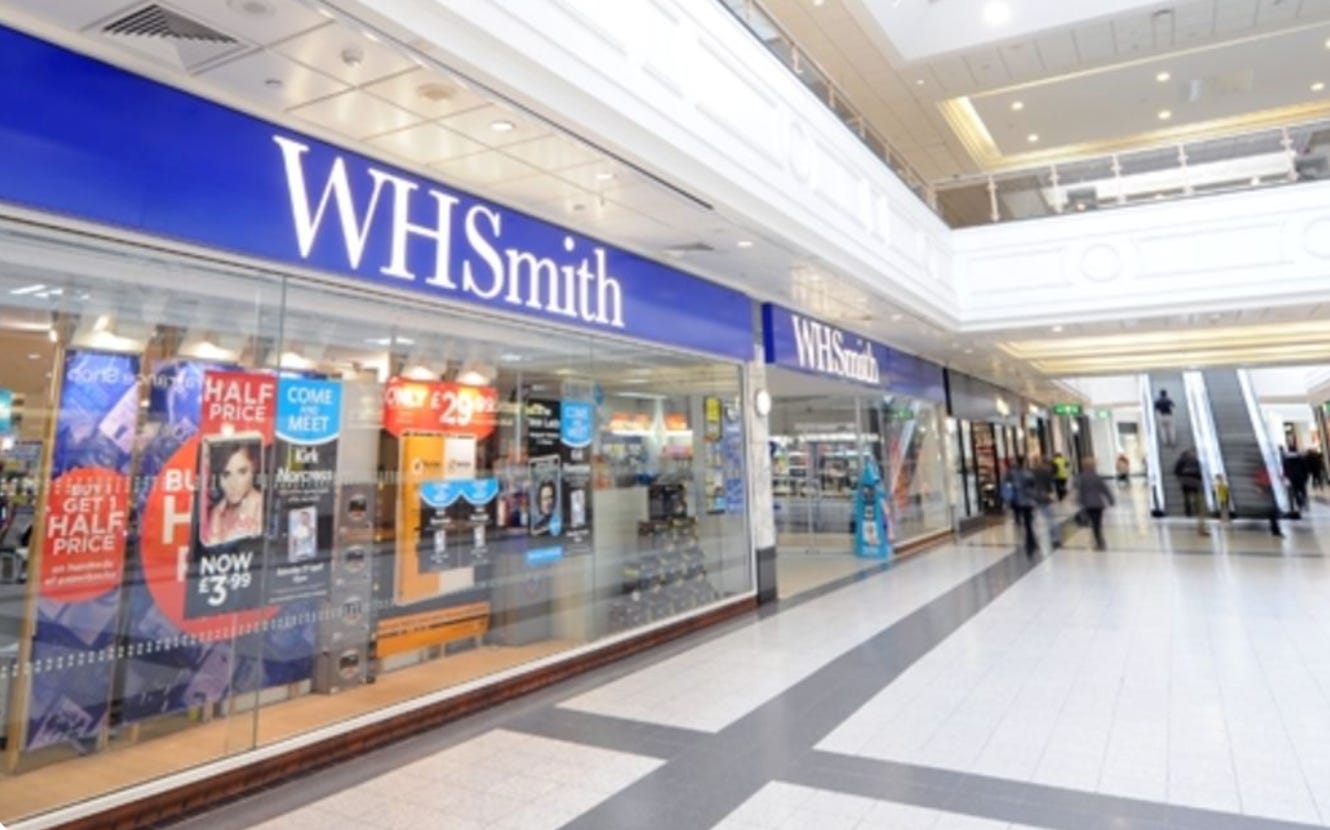
WH Smith PLC, the former newsagents ubiquitous on the high streets of Britain, is now reduced to a rump chain of stores in airports, hospitals, railway stations and resorts (in North America). Declared shorts are nearly where they were in 2013 back when it was still a high street chain. That chain was hived off in mid 2025, and shortly afterwards an accounting scandal concerning payments from suppliers linked to promotions - the North American division recognised these instantly rather than over time (as items were sold) inconsistent with accounting standards. Deloitte’s review of these processes suggested that income had been overstated by perhaps as much as £50m. Inventory was also overstated. The CEO resigned and an FCA probe followed which is still live (quelle surprise!).
After a period of having an interim CEO in place, the incoming Executive Chair Leo Quinn referenced the need to stabilise the business and noted “costs trending in the wrong direction”, while cash levels were insufficient. It wasn’t an especially encouraging start for investors, but at least we can appreciate the candour.
So right now from the short perspective there remains a lack of trust - an overhang from the accounting scandal, mounting debt with net debt up to £496m at the interim results. Additionally there is the obvious current impact of reduced air travel as a consequence of the uncertainty created by the Iran war, higher jet fuel costs and flight cancellations.
And with the debt pile, a recent refinancing has come with higher interest costs. The situation looks pretty precarious with negative FCF in H1 of £61m. Then there’s the balance sheet. Apart from the debt, there’s £222m of payables vs £217m of inventory and receivables, with presumed question-marks about the £140m of inventory given the historic accounting issues. It certainly looks a stretch to reverse the debt situation in the second half given the disruption in travel and other economic headwinds. On that basis £625m of market cap or £1.1bn plus of EV (non IFRS) for around 6x trailing EBITDA doesn’t seem a steal on the long side.
Below the paywall I discuss the other names at the top of the FCA short disclosure list: Wizz Air, Vistry and Greggs. Please consider a (very modestly priced) subscription!
Brevarthan Research is a reader-supported publication. To receive new posts and read below the paywall, consider becoming a free or paid subscriber.
Comments
Nothing yet. Say the first thing.
Sign in to join the conversation.