

Picture: Autopista Siervo de La Nacion, Mexico
*Please read the disclaimers at the base of this report. The author may maintain a short position in the company (or companies) mentioned below. Does not constitute a recommendation to buy or sell the securities mentioned herein. Do your own due diligence. This report constitutes opinion journalism and commentary and should not be read as investment advice. For Permitted Recipients only (UK - see disclaimers).
A few weeks back we had a look at the lawsuit from Muddy Waters (an activist short firm) against Mota-Engil, the large Portuguese construction company, with projects all over Africa and Latin America. You can read our original piece here and it is worth reading it before reading this post. In its law suit Muddy provided a summary list of red flags regarding Mota-Engil, including related party trades, insider trades that advantaged the Mota family vis a vis the rest of the shareholder base and cashflow and earnings predominantly coming from NCIs (subsidiaries with large minorities). However the most significant question hangs over Mota’s debt, which is concentrated in 100% owned entities, while the majority of profits and cashflow are concentrated in less accessible subsidiaries with high NCIs.
In this note, we identify (inter alia) the following potential red flags:
Cash interest expenses up to double the implied rate of 7.6% stated by Mota-Engil
Visible debt aggregated from the main subsidiaries and parent company appearing to materially exceed stated group debt
Extremely high debt churn and interest rate range especially in overdrafts/revolver
Fractional perimeter ownership changes in Mexican subsidiaries/associates allowing recourse debt to move off balance sheet appearing to mask a steeper rise in underlying debt over the last 3 years
High level of group factoring and working capital management alongside debt churn and consolidation of a factoring company in Mexico that factors related party invoices.
Securitization and apparent multiple pledging of material credit agreements in Mexico often with upstream recourse to the group.
To recap, here is the relevant excerpt from the Muddy Waters lawsuit (taken from Pacer):
“Muddy Waters found that Mota-Engil’s accounts indicate that the company owes more (and more expensive) debt than it had publicly reported….In its 2023 accounts, Mota-Engil disclosed an “average cost of gross debt plus” to communicate its cost of debt to shareholders. According to Mota-Engil, its “average cost of gross debt plus” reached 7.6% on December 31, 2023….Muddy Waters determined that Mota-Engil’s “average cost of gross debt plus figure understates the company’s true cost of capital and is not a useful indicator…For example, after Muddy Waters compared Mota-Engil’s reported liabilities with its profits and losses and cash interest expenses, it determined that Mota-Engil’s 2024 effective debt rate was 10.5-14.1%—which was significantly greater than Mota-Engil’s reported averages and suggested either larger intra-period debt, higher pricing, or undisclosed or incorrect balance sheet liabilities….Similarly, when Muddy Waters calculated a weighted interest rate from Mota-Engil’s disclosure, it arrived at a higher weighted average cost of debt and was still left with an unexplained approximately €50 million shortfall in implied interest versus what Mota-Engil reported. This analysis led Muddy Waters to conclude that Mota-Engil had unreported debt and/or an inaccurate or misleading balance sheet at year end.”
As we wrote before, the company quoted a 7.7% cost of debt in 2024. And now they are claiming even lower for 2025: 7.1% average cost of debt. Yet in 2024 total loans were €2.3bn at the year end (€2.03bn the previous year), and interest expenses were €287m. At approximately the average of the 2024 and 2023 year end debt figures (ie €2.15bn) the implied interest expense rate is 13.3%. If we include the other financial liabilities such as factoring and confirming etc, the implied rate is 11.7%. Assuming the interest expense is correct, being the numerator, then the denominator (average gross debt) is wrong using a simple point to point average. [In fact if anything the interest expense in the P&L statement is too low - in the cashflow statement interest and similar expense is listed as €390m for the year.]
The gross average debt denominator being wrong, lets try to solve backward from the quoted 7.7%. Using that as a “cap rate” we get average gross debt for the year of €3.7bn, a number that is a whopping €1.55bn higher than the point to point average (€2.15bn for gross loans; €1.15bn higher if we include factoring etc). Either the year-end numbers are wrong or the gross debt swings wildly higher outside the year-end snapshot levels.
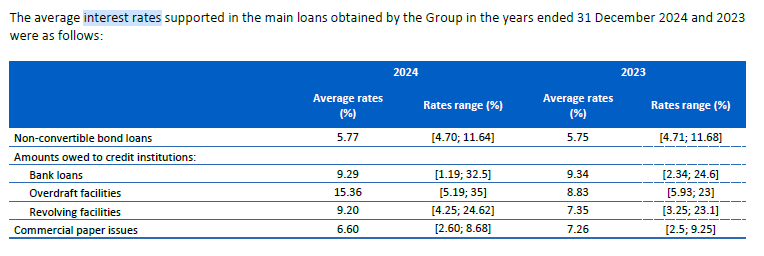
An interesting connection could be made with the interest rate ranges in some of the loans below (from the 2024 annual report) - the breadth of the range might be indicative of considerable churn and potential stress in the balance sheet:
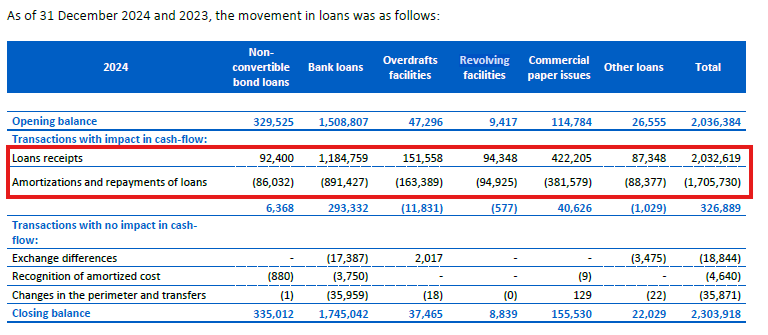
On its own this might not add up to much but if we factor in the churn in debt in the table below it would appear to point to much higher levels of in year debt than we see at balance sheet year end dates (note especially the overdraft movements):
No wonder then that at balance sheet date we see such a high level of factoring and other supply chain liquidity tools (quite what “Anticipation of Credits” is remains unclear):
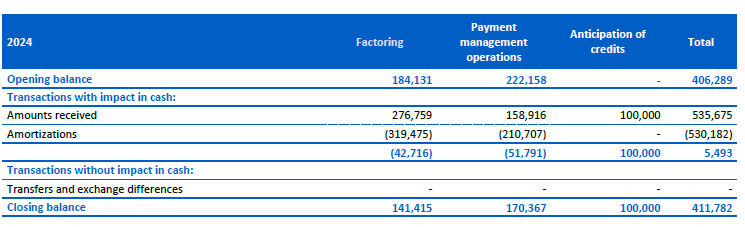
Does money flow out of debt intruments and more into facilities like these at year end date? Certainly these are punchy numbers in the context of overall debt balances (nearly 20%). Indeed, enough to make even Lex Greensill blush! As we will see further down the note, a factoring company in Mexico (Alana Capital) is majority owned and consolidated in the group accounts.
However, that still doesn’t entirely solve the riddle of gross debt, versus interest expense versus reported cost of debt. Could there be debt that is “missing” in the consolidated accounts?
We’ve tried to do an exercise for Mota-Engil where we compare the quoted debt reported in the consolidated year end accounts with the levels reported in the component parts of the business - the parent and consolidated subsidiaries. Fortunately due to high quality Portuguese filings we can stitch together a pretty comprehensive list of debt balances:
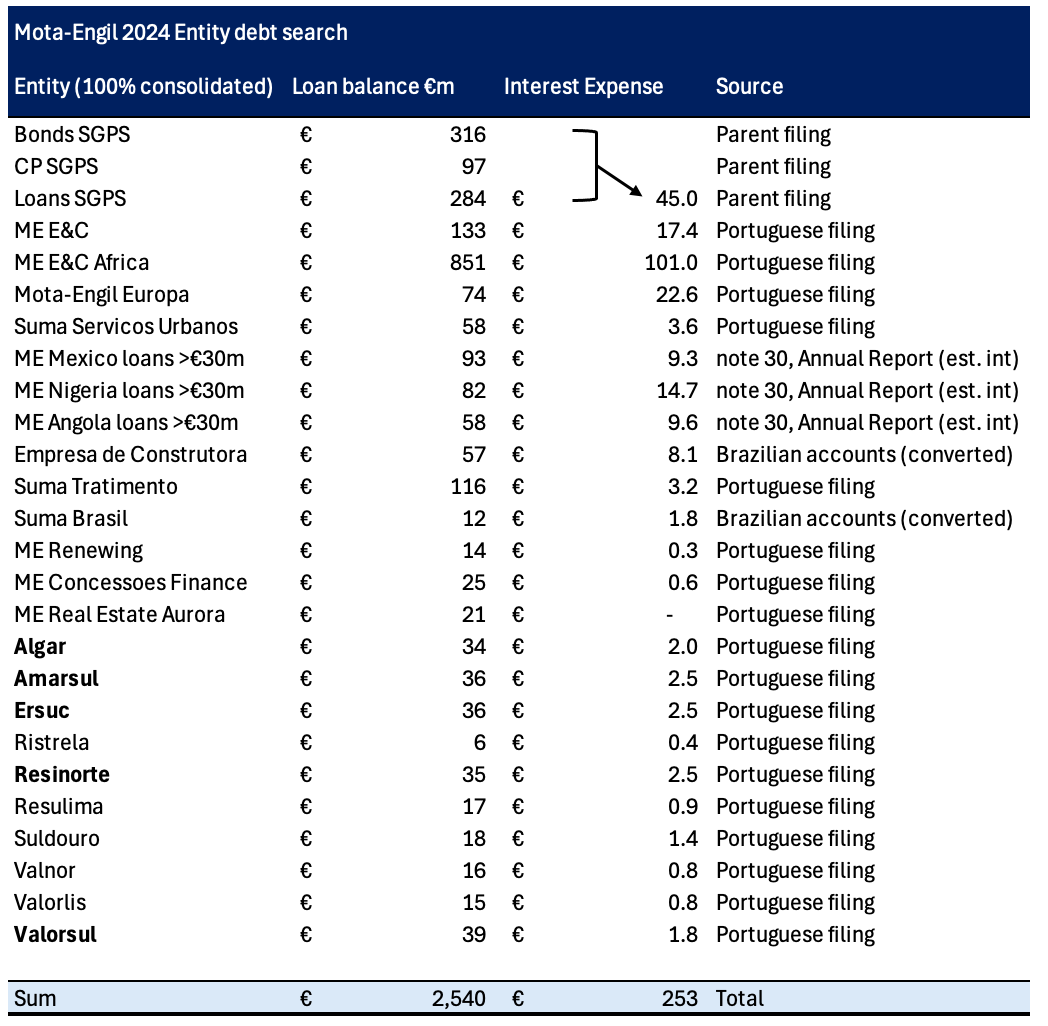
Just adding up all these individual company (and parent co) filings and selected disclosures for 2024 seems to get us to a materially higher year end loan balance figure than the €2.303bn lodged in the group accounts. Furthermore, the loan amounts are clearly demarcated in these individual accounts as loans from “credit institutions and financial companies”. I have not included any loans from these individual accounts that could be construed as “intercompany” and Portuguese filed accounts are helpfully specific on this point.
Meanwhile the interest expense on these accounts is well over 10% on a point to point average as the balances in the loan column have all moved up materially from the previous year. And we are still short by >€30m of accounting for all of the interest costs shown in the consolidated 2024 accounts.
So why the difference with the consolidated accounts? Especially given that the list above is far from comprehensive (mostly Portuguese filings). Maybe individual accounts use different accounting standards from group accounts. It is certainly a reasonable question for the auditors, PWC.
To recap, we have an apparent excess €240m of “unaccounted for” debt here, with interest expense under-accounted for in the table above (although it may derive from factoring etc). Beyond that however we have the movements in the perimeter of consolidation that have seen many Mexican entities de-consolidated.
Below the paywall we investigate the movements in ownership in these Mexican entities, and look into Muddy Water’s claim of considerable and material debt securitizations in Mexico with possible recourse to the group, as well as the eye catching ownership of factoring company Alana Capital…
Comments
Nothing yet. Say the first thing.
Sign in to join the conversation.