
Why the Concerning Cohort Matters
Not every customer at risk of churn shows obvious signs of disengagement. The concerning cohort sits in a critical middle ground—these customers are still active, but their behaviors suggest a decline in engagement, feature usage, or retention signals. While they haven’t fully disengaged yet, the warning signs are present.
Understanding and addressing this cohort is key because:
Early intervention prevents churn – By acting now, you can re-engage customers before they enter the "at-risk" category.
These customers already see value – Unlike dormant users, concerning customers have engaged with your product before, making them more likely to respond to proactive efforts.
A second chance to reinforce adoption – If feature usage has dropped, it may indicate that onboarding, education, or support gaps need to be addressed.
These customers require targeted intervention—not just generic outreach. The right strategy at this stage can reignite their interest and get them back on track toward becoming long-term, engaged users.
The Importance of Early Intervention
One of the most common mistakes businesses make is waiting too long to act on declining engagement. By the time a customer reaches the "at-risk" category, the recovery process is much harder. Instead, the key is to:
Monitor usage signals early – Identify patterns such as reduced logins, lower session duration, or declining feature adoption.
Personalize intervention strategies – Understand the specific challenges a customer is facing rather than applying a one-size-fits-all approach.
Provide timely value reinforcement – Show customers why they originally chose your product and help them rediscover its impact on their workflow.
The goal is not just to retain these customers, but to reactivate and deepen their engagement so they don’t slip further into disengagement.
Zooming Out: Where Concerning Customers Fit In
To understand the full engagement journey, here’s how concerning customers compare to other segments:
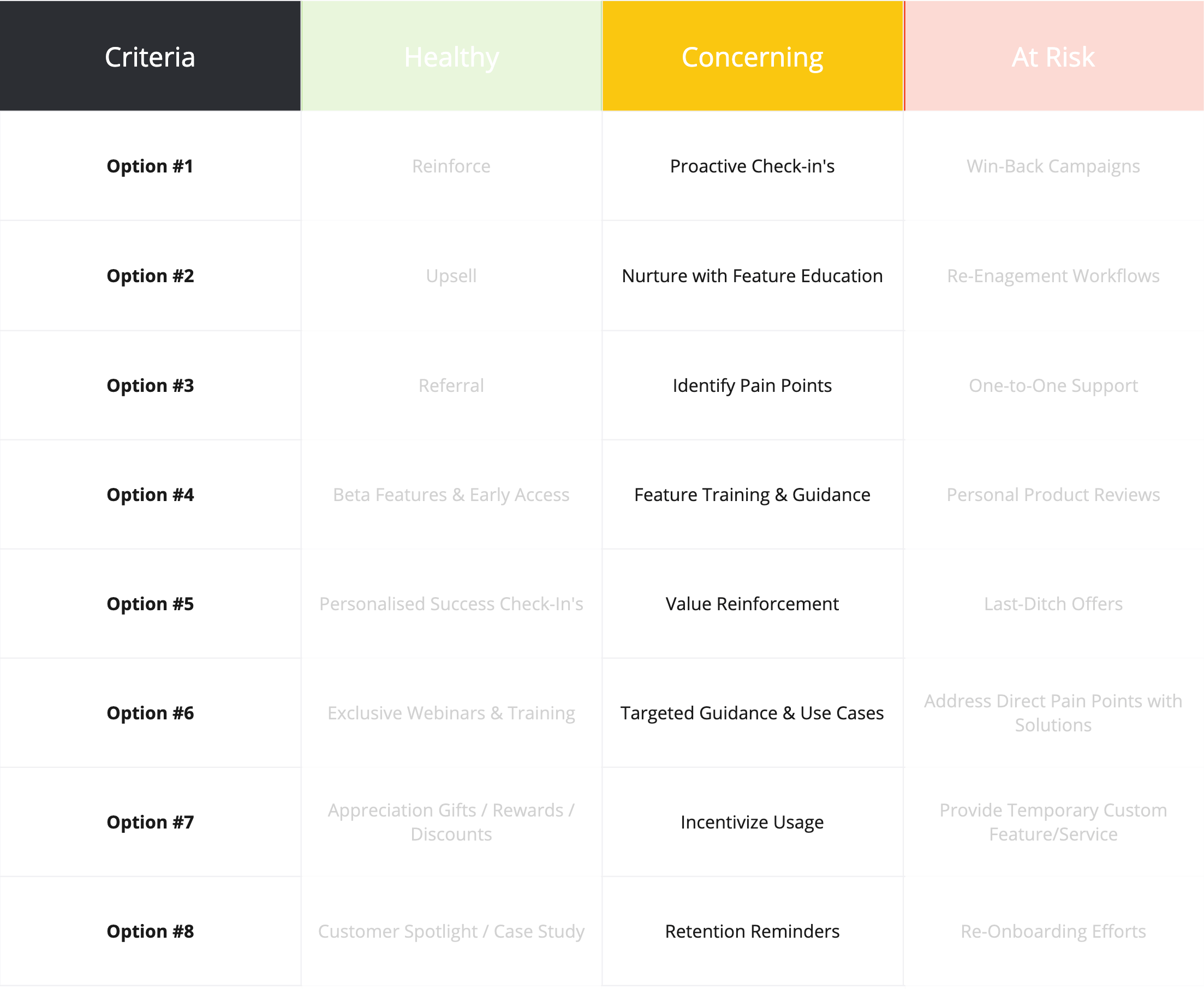
In this post, we’ll focus exclusively on the concerning column, outlining actionable strategies to reconnect and reinvigorate engagement before it’s too late.
How to Re-Engage Concerning Customers
Re-engaging concerning customers requires a structured and proactive approach to identify gaps in their engagement and provide the right support at the right time. Unlike disengaged or at-risk customers, this cohort has not yet fully checked out, which means there is still an opportunity to reinforce value and prevent further decline.
The key to success in this stage is strategic personalization—generic messages won’t work. Instead, businesses need to leverage behavioral insights, tailored communication, and proactive interventions to reignite usage and keep these customers from slipping away.
By implementing the following eight proven strategies, you can ensure these customers reconnect, re-engage, and continue seeing value in your product. Let’s dive in.
Enjoying the content? Subscribe now for free and to ensure you don’t miss the next update!
1. Proactive Check-Ins
The first step in preventing churn is identifying why engagement has dropped. A direct, personalized check-in can surface roadblocks before they escalate.
Example Message:
"Hey [Customer Name], we noticed your team hasn't been as active in [Product Name] lately. We’d love to check in and see if there’s anything we can do to better support you. Let’s set up a quick call to discuss any challenges and how we can help. [Schedule Link]"
2. Nurture with Education
Sometimes, concerning customers disengage because they don’t fully understand how to extract value from the product. A well-timed educational resource can refresh their knowledge and highlight underutilized features.
Example Message:
"Noticed you haven't explored [Feature Name] yet? Many teams in your industry use it to [benefit]. Check out this quick guide and see how it can help: [Link to Resource]"
3. Identify Pain Points
Instead of assuming why engagement is declining, directly ask customers what’s blocking their success. This feedback helps you tailor a retention approach to their needs.
Example Message:
"We’d love your input! If there’s anything slowing you down in [Product Name], let us know. Your feedback helps us improve, and we’re happy to assist. [Survey Link]"
4. Feature Training & Guidance
If a customer isn’t using certain features, they might not know how. A personalized walkthrough or training session can make a big difference.
Example Message:
"We see your team is active in [Product], but haven't explored [Feature]. Our experts can walk you through it in 15 minutes—let's book a session! [Schedule Link]"
5. Value Reinforcement
Reiterate the ROI and impact your product brings to their team. A simple data-driven insight can remind them why they signed up in the first place.
Example Message:
"Since joining [Product Name], your team has completed [X] tasks, saving [X] hours. Let’s build on this momentum—here’s how you can optimize even further: [Resource Link]"
6. Targeted Guidance & Use Cases
Sometimes, customers disengage because they don’t see how the product aligns with their evolving needs. A use-case spotlight can showcase new ways to benefit.
Example Message:
"Other teams in [Customer’s Industry] are using [Feature Name] to [Outcome]. Want to explore how this can work for you? Let's discuss: [Schedule Link]"
7. Incentivize Usage
A gentle push through exclusive incentives can motivate re-engagement.
Example Message:
"For a limited time, unlock [Feature] free for 30 days! We’d love to help you explore its impact—activate your trial here: [Activation Link]"
8. Retention Reminders
Sometimes, all a customer needs is a simple nudge—especially if they’ve been distracted by competing priorities.
Example Message:
"Hey [Customer Name], just checking in! Your [Subscription/Trial] is still active—let’s make sure you’re getting the most out of it. Here’s a quick way to get back on track: [Resource Link]"
Final Thoughts: The Power of Proactive Engagement
The concerning cohort sits at a crucial turning point—they are neither fully engaged nor completely lost. By recognizing early warning signs and applying strategic interventions, businesses can pull them back into full engagement before they churn.
In the next playbook, we’ll explore the at-risk cohort, where we discuss high-priority save strategies for customers on the brink of leaving.
Want access to the full retention framework? Subscribe now for exclusive insights on reducing churn and maximizing customer success!
💚 Missed the Healthy Cohort Playbook? Check it out here!
❤️ Missed the At-Risk Cohort Playbook? Check it out here!
Comments
Nothing yet. Say the first thing.
Sign in to join the conversation.