
Dear Reader,
This interview continues my Soy/Somos conversations with people in the U.S. rooted in more than one culture. Aquí estoy. Aquí estamos. This is who I am.
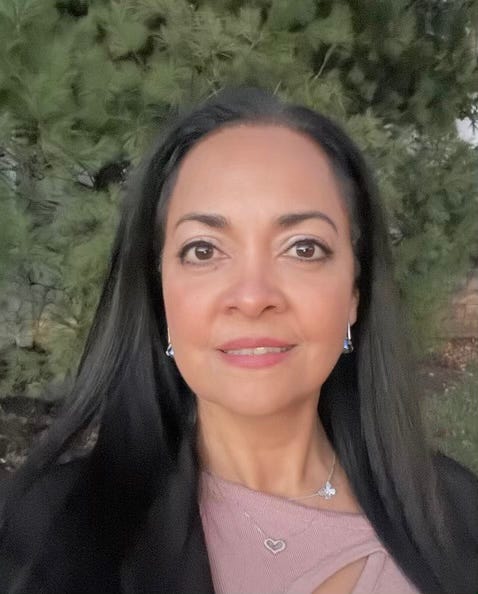
Elba Burrows, small, with long black hair, full of enthusiasm for life, is the kind of person you never forget. I’d interviewed her for Soy/Somos as long ago as 2017. About a month ago Elba introduced me to Nancy Jalowiecki Sullivan at a literary event. Here is someone else I will not forget.
Nancy’s story is a love story that begins with devastating loss.
Nancy lost her husband Ed five months after he was diagnosed with acute myeloid leukemia. They had been married almost ten years and had two girls, Kaya, seven; Navah, five. Mike lost his wife Maria to a second bout with breast cancer, leaving him with five-year-old Molly and Keeva, who was three.
The two families met at a bereavement camp in Pennsylvania hosted by the non-profit group, Cancercare. The children became friends. The parents exchanged phone numbers to set up playdates for the children. One year later, they married.
Nancy, you’re an award-winning New York City teacher. You have written a beautiful book, Grief and Gratitude. I want to speak with you about all of this. But now, what I’m thinking about is the four girls, now sisters.
How are they now?
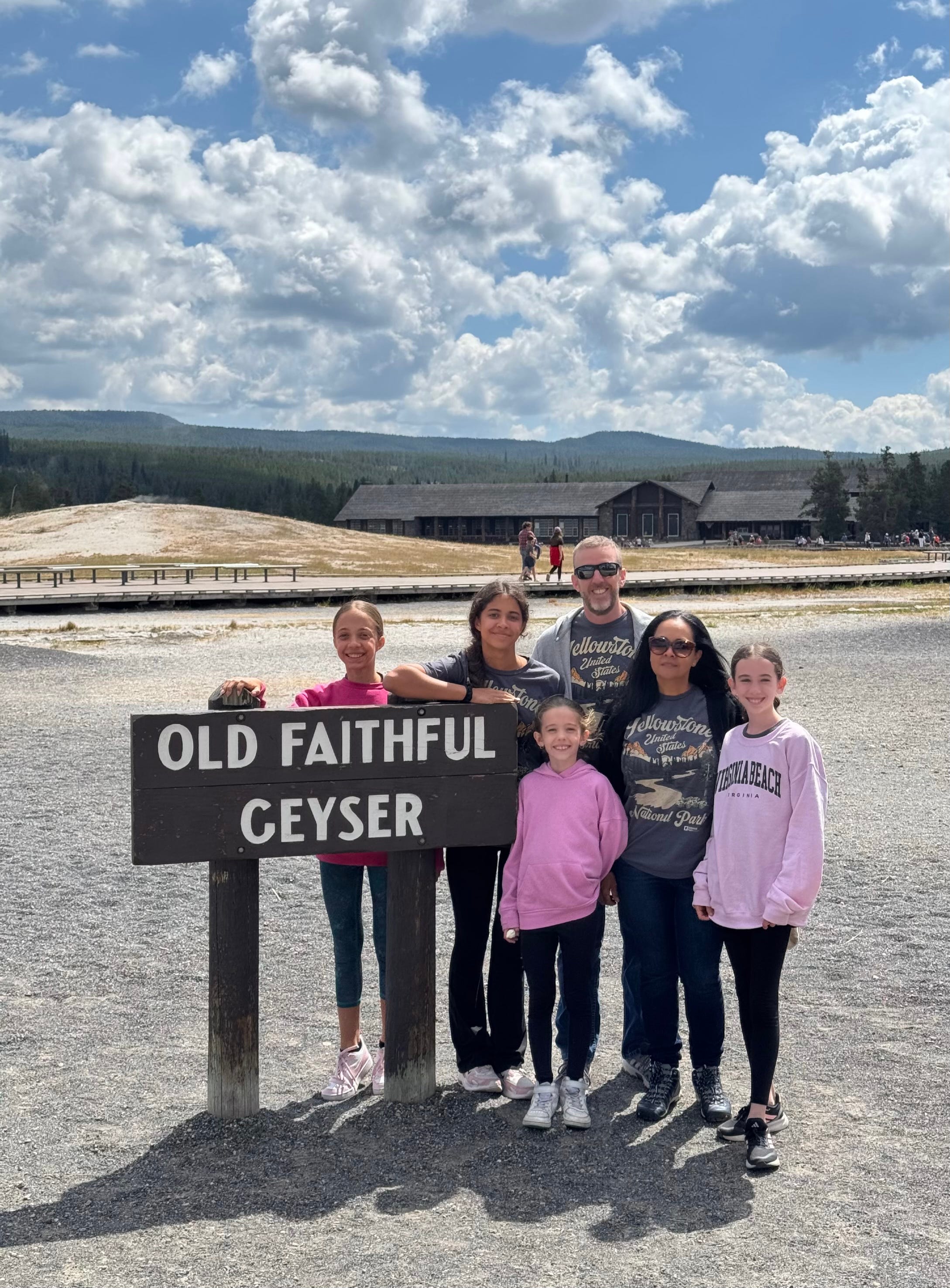
Kaya our eldest is fourteen, and she just started high school. Navah and Molly are both 12. I call these two my twinsies.They’re in the same grade and very close. Keeva is nine. When I met Mike, she was three. It’s been six years since Mike and I met. Five years since we were married.
The girls were friends before they became sisters. We all met when both Mike and I went to a bereavement retreat that I didn’t know I would be going to. Ed’s social worker at the Columbia Presbyterian Hospital reached out to me soon after he died and encouraged me to apply to this Healing Hearts retreat. “It will be good for your daughters to be around other children who also lost a parent to cancer.” I was postponing. I didn’t want the social worker to think I was being ungrateful. I decided to apply.
I was asked to write a biography about Ed. I had to explore that part of me that was hurting so much. I cried with every word. I needed that time without realizing it.
I was asked to bring artifacts from Ed’s life, pictures of all of us. I brought one of his guitar picks. Ed played the guitar--we have many here. Ed was a jazz musician.
You didn’t include many details about Ed or Mike in the book—which was appropriate. I wonder if you’d tell us a little about their work life.
Ed was a music therapist, also a mentor to interns. He worked in the psychiatric unit of the North Central Bronx Hospital. With music he was providing an outlet for the patients in his unit to connect and to create, to free themselves for a while from what they were going through.
Even though he was German, Polish, and Russian—I believe third generation—Ed had learned Spanish. He was the person the hospital could ask to translate for a new patient who didn’t speak English.
What does Mike do?
He is an elementary school principal in Bloomfield, New Jersey, 45 minutes from where we live. He is one hundred percent Irish; also speaks Spanish. When I met him, he could speak it very well.
Both men were predisposed to you naturally. They were ready for you.
Eager to know more about me, where I come from, what I liked. (I see a big smile in Nancy’s face.)
I was thinking that your name Nancy—maiden name Morales—Jalowiecki Sullivan represents the kind of nation we are. The United States has offered opportunities to people from all over the world. There was often resistance. Eventually people integrated into the society. It is who we are.
What are your girls named?
Our girls Kaya and Navah are Jalowiecki Sullivan, like me. Molly and Keeva are Sullivan only, because they are not related to Ed.
When Mike and I got married, we went through the legal process of adopting each other’s children. This is important. I hope it will be an eye opener for people who read this article. When Ed was sick, we had a moment to think about this. We were at the hospital and Ed’s mother, Sharon, was there using a walker. Navah who was five said, Daddy, if my Mommy gets leukemia, what’s going to happen to us?
Ed and I looked at each other. We told Navah, we have a family that will take good care of you and Kaya.
Years later, when Mike and I decided to adopt the girls, we had to update our wills and make sure that if anything happens to Mike. the girls go to me. If anything happens to me, the girls go to Mike. If anything were to happen to both of us, our friends Elba and Mark would have four children plus their own two boys!
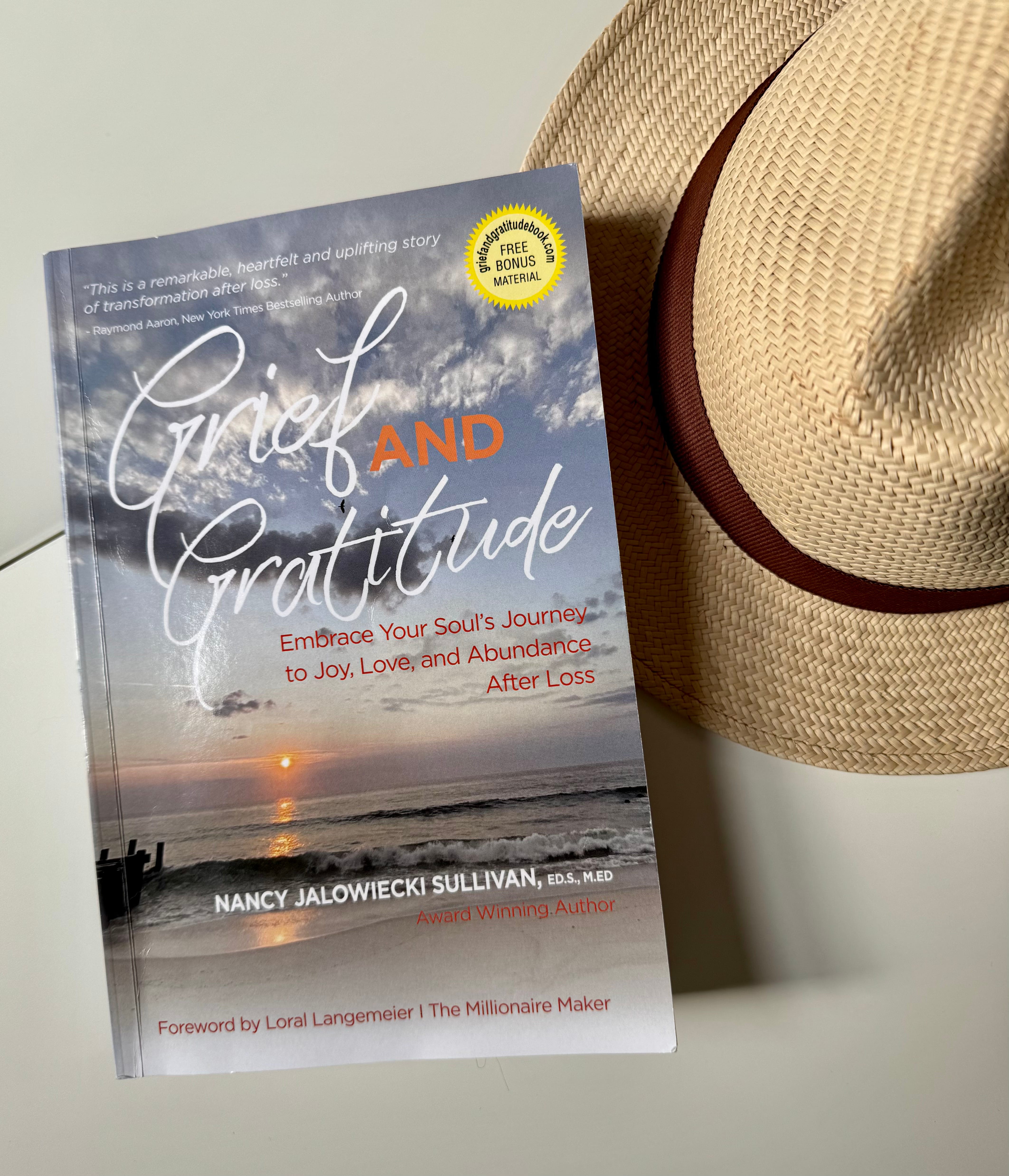
Nancy, your book, Grief and Gratitude, is deeply affecting. It’s a story of loss but also of triumph. You are trusting yourself to love again.
Your protectiveness towards the children is another memorable part of this book.
I wrote the book over nine months. I thought of it as a pregnancy.
The working title was Worthy Widow. I was trying to say, I am worthy of love.
Yo tengo valor.
When I was going through grief, I would talk about Ed. I would cry if I needed to cry. Someone said to me you shouldn’t be doing that in front of the girls. It’s worsening it for them.
¡Si lo último que quiero es que mis hijas se olviden de su padre! I don’t want my girls forgetting about their father. And I thought about me, what if it was me who was gone? Would I want him to stop talking about me? People do not talk about grief.
They’re afraid.
Death doesn’t need to be taboo. If we need to speak about loved ones, let’s do it. Crying is healing. You cannot bottle these big emotions. Let them out, as long as you are safe.
There is a lot of work to be done. People who I didn’t know were sent to me, “Ve a hablar con Nancy. Ve a hablar con Nancy.”
When I’d share my story, they’d open up and share theirs. If I didn’t share my own story, I don’t believe others would open up honestly and from the heart.
I was moved from the very beginning. You dedicated the book to Ed and to Maria, the two late spouses. It’s evidence of the beauty of this book and the joy that’s in it.
We have many pictures of them in our house. Our ending prayer every night is, God, please watch over Maria and Ed. Maria and Ed, please watch over us. There is no us without them. The young woman I see in your book is resilient—very much so. I wonder what kind of child you were.
I was a very happy girl. I loved climbing mango and coconut trees in the Dominican Republic. Swimming in the creeks, birds surrounding us. I was the eldest and helped with my siblings, two boys and one other girl. I learned how to cook—I am teaching my girls to do the same.
I recognized I didn’t have a choice at certain points in my life. When I was nine, my father left our family. My mother was so young, four young children.
Eventually my mother immigrated to this country. She worked two jobs to find an apartment in Queens for all of us, to bring me and later my sister and brothers. I came when I was fourteen.
When I first came to this country, I said, Oh! Is this America? I saw all these simple buildings, everything looking dull. This is what everybody talks about?
I stayed with my aunt at first. My mother was working as a home attendant, taking care of an elderly female at her home. She’d be working a double shift. I saw her on Saturdays. She would pick me up; we would go to eat; she would buy me ice cream; we would go to the park.
One day at the park she began to cry. I am getting emotional now. She was going through so much by herself to bring my siblings here legally, putting money in her bank account. I felt for my mom. I knew it was hard.
She said to me, “I want you to become a US citizen as soon as you can, which will be in five years. Your visa is a ten-year visa. It’s a blessing to be here.”
My mother became a US citizen. I remember applying to become a citizen before the five-year mark—maybe two months short—so that all the paperwork would be processed as soon as I got to year five.
My father was nowhere to be found at that time. I understood at fourteen that you make sacrifices for what you want. Her goal was to bring us here. I was proof of that. “I want you to keep studying. It’s the only thing I’m asking,” she said to me. “I wanted to be a nurse, but I couldn’t. I had too many kids, then I was abandoned.”
When I am going through hardships in my life, my mother is a reminder that things are possible.
So you were wise at 14, but it must have been hard going to school in English for the first time.
My mother and my aunt thought it would be better to have me start with the eighth grade at the middle school, so I could learn English before I was faced with more challenges in high school. I was placed in ESL classes. It turns out that it was a very difficult year. Not only was I dealing with learning a language, but I was also dealing with bullying.
Because you were Latina?
No, because of my long hair.
There was a girl with a boyfriend who when he saw me said, “Boy, her hair is so beautiful.” My hair has always been long.
At one point this girl and her friends jumped on me, pulling at my hair. I thought I was going to be bald the next day. Luckily one of my friends came to my rescue, and I was able to escape. I was all marked up. My mom went to the school. We had meetings, but I always felt I was not safe. In high school, I felt safe.
In your acknowledgments in the book, you thank many family members and friends.
My family was deeply supportive. My siblings from my mom and my dad have always been there for me. My father’s children from his second marriage, we became close. There is my mom, my stepmom Mama Deny, my friends from college.... I graduated from SUNY New Paltz with a bachelor’s degree in psychology. I went back for a second bachelor’s degree in speech, language, and audiology from Lehman College. After that, I got a double master’s degree in early childhood education with a bilingual extension. I am a certified bilingual teacher and therapist.
I went back to school more recently for a post-graduate degree in School Leadership and Administration.
What are you doing today in your current job?
I work at an elementary school in New York City. I wear many hats. I teach pre-K students. I am a mentor and a parent advocate. We help parents with their children’s transition from home into the public school. I am also the liaison and coordinator for a program called “Cool Culture,” a program that I helped bring to our school ten years ago.
What is “Cool Culture” about?
It’s about offering families a pass that allows them to visit more than ninety cultural institutions in New York City for free. Unlimited admission for a whole year for up to five members of the family. It is critical. It helps families get out and about, learning about our museums, talking with their children, promoting language and the arts.
The program is not free; the school budget must cover it. Our principal is very supportive. Families take advantage of it every year. It’s my baby. I nurture it.
Recently I’ve become involved in a partnership with Cornell University that helps train families in health and nutrition. I’ve run those workshops myself because I want to become knowledgeable. I want to learn about healthy eating and how to promote it with our families.
When we provide the support our families need, we are empowering not only the parents, we are building success for the students.
I am amazed with how you are managing. Doing your work. Four teenage daughters, almost!
Mike and I are a very good team. When he is helping them with homework I am making meals. If I’m busy, like today, Mike is bringing dinner home. I prepare school lunches and snacks the night before.
Mike and I know what it is to lose someone you love. It is giving us a second chance at loving and being kind, not acting from the ego. We are asked to act from the love that we are, to listen. Being mindful of that.
You know how fragile life is.
The girls have experienced grief. Most recently they lost Sharon, Ed’s mom, their grandma. It was something that caught us by surprise. They too are resilient.
I felt the truth in the book especially with the section on staying open and feeling the pain, times when you are past it and times when you will go back to the hurt. As you know, I lost my sister ten months ago.
The love changes when you go through grief. You don’t have your loved one in the physical form, but they are so close to you.
I did bereavement and mental health training after I lost Ed. I wrote the book to help others. I volunteer my services to help those going through grief.
Is there something that you wish I asked you that I didn’t?
We’ve touched on a little bit of everything, being a mother, being a life-long learner. I want my daughters to be proud of me. I want them to know that if I did it, they can do it as well. We need to move past comfort and pursue our dreams.
Marlena, I am grateful for the contribution you are making, getting our stories out there. I remember the pendant you were wearing when I met you, the seed of life.
Did I tell you it belonged to my sister?
Yes, you did.
Así continuamos. Yo usando lo que ella usaba. We go on. Me using what she wore close to her heart.
Exáctamente, keeping memories alive.
Nancy and Mike’s story was featured on CBS Morning News with David Begnaud in March of this year. If you click on this link you’ll be able to access the video. It’s really wonderful.
Talk to me, dear reader. As you know this is a conversation. What here moved you?
I’d be grateful if you’d show the love by checking the heart.
Comments
Nothing yet. Say the first thing.
Sign in to join the conversation.