
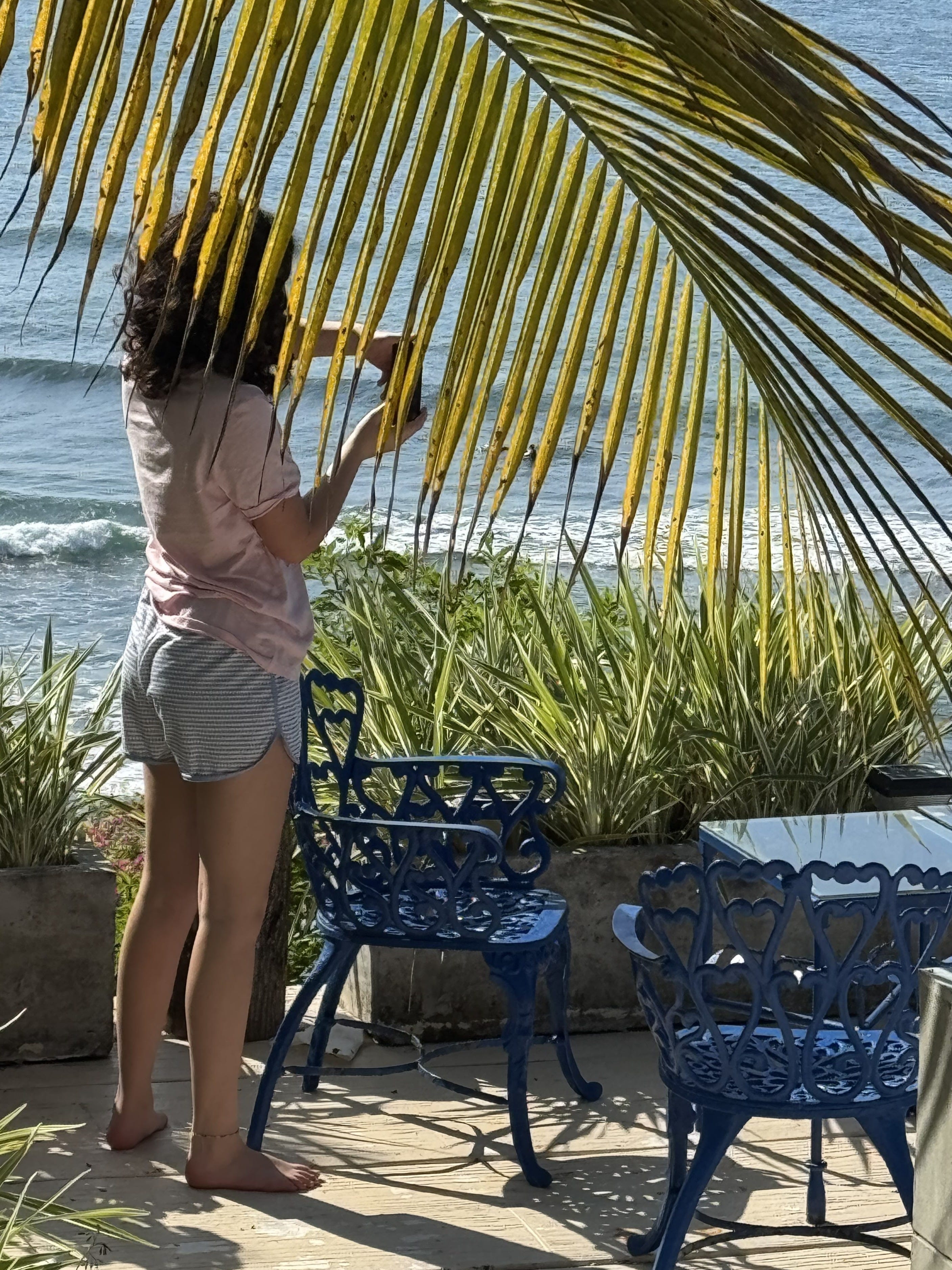
We wake up to el quiquiriquí of the roosters. I hear mine from far behind the cottage towards the East, where my husband and I are sleeping.
Mi nuera, daughter-in-law Emily, tells me, “My rooster was right next to my window” (on the other side of the house we are renting). For her, this means lack of sleep. For me, the rooster’s crow is the music of my childhood at the beach and other places in the countryside.
Buenos días queridos amigos, at 4 o’clock in the morning. QUIQUIRIQUÍ
In Spanish se dice, el quiquiriquí del gallo. Italians say, i chicchirichi; the French, le cocorico; the Russians, kukareku. In English, it’s cock-a-doodle-doo (What!!?)
Cultures steer the “music” we hear.
We are in the countryside in my homeland of Panama for the winter break. My husband and I, our two sons, their wives and children, my brothers, mi cuñada, sobrinas, chicas y chicos.
I hug the eldest grandchild who lives in California to my New York. At seventeen, he is almost a man, long brown-and-yellow hair draping to his shoulders. His back remains stiff; it does not respond. His brother is surprised by my sudden caress on his arm. A grandmother they have not experienced enough with moments of tenderness.
In the early morning, the birds whistle over the Flamboyant tree that arcs over one side of the property. The long, heavy pods contribute their own kind of beauty. A dove is cooing. The birds here are lighter, thinner, their music more lyrical—it seems—than the birds by my old cherry, maple, and pine trees in New York. The warm air clings to you like water.
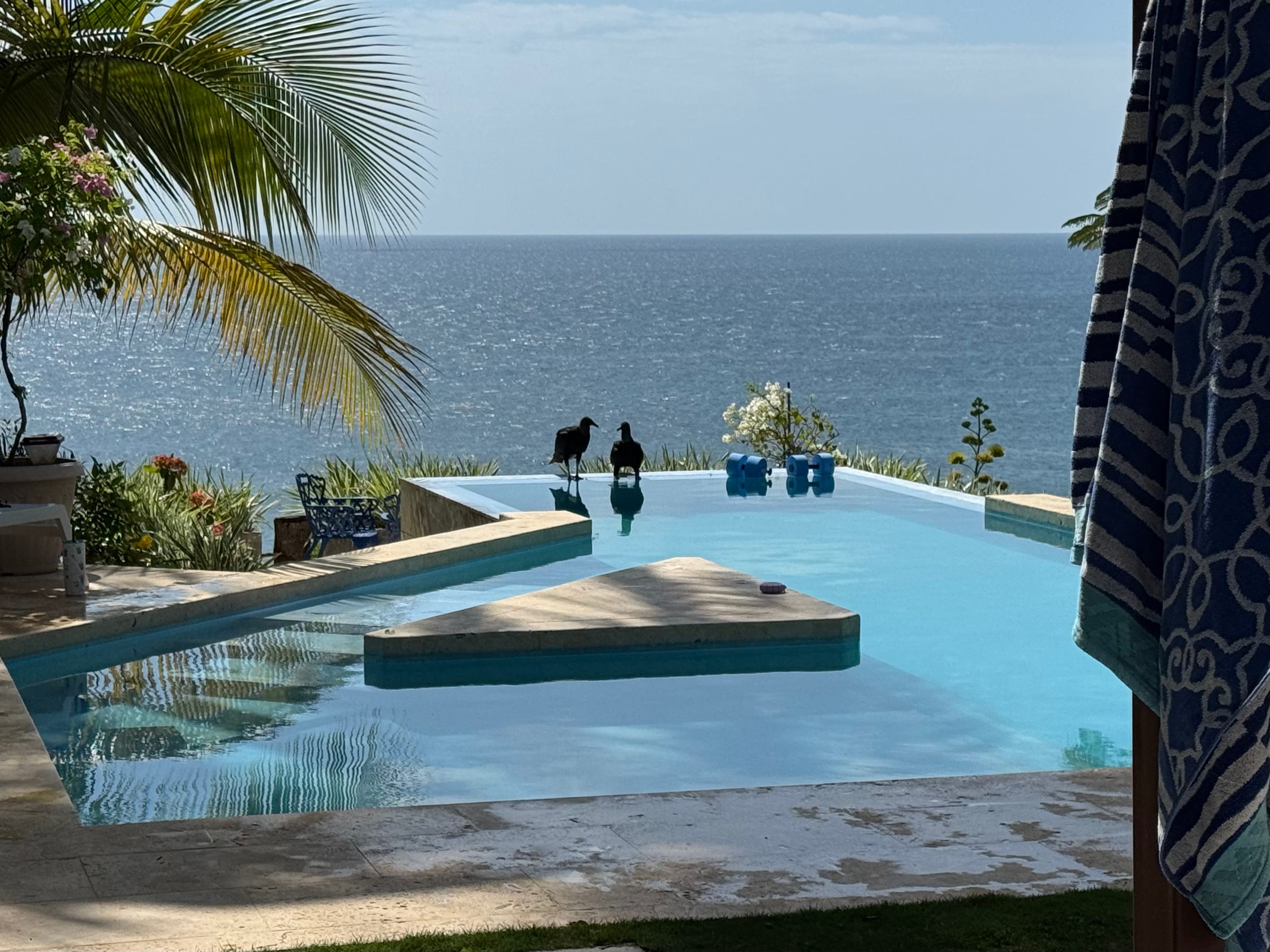
We have a narrow infinity pool (a very large bathtub) and can see the ocean beneath the cliff. The flat, smooth blues of the pool reflect the sky.
The wrinkly horizontal blues deepen the ocean below.
Two buítres have come to visit us at the far edge of the pool. ¡Son buítres! I have never seen vultures for real. They sit there like they own the landscape, and the pool is their lake. We flail and yell, “¡Vete! ¡Vete!” They sweep up—finally—to the tall branches of a nearby tree.
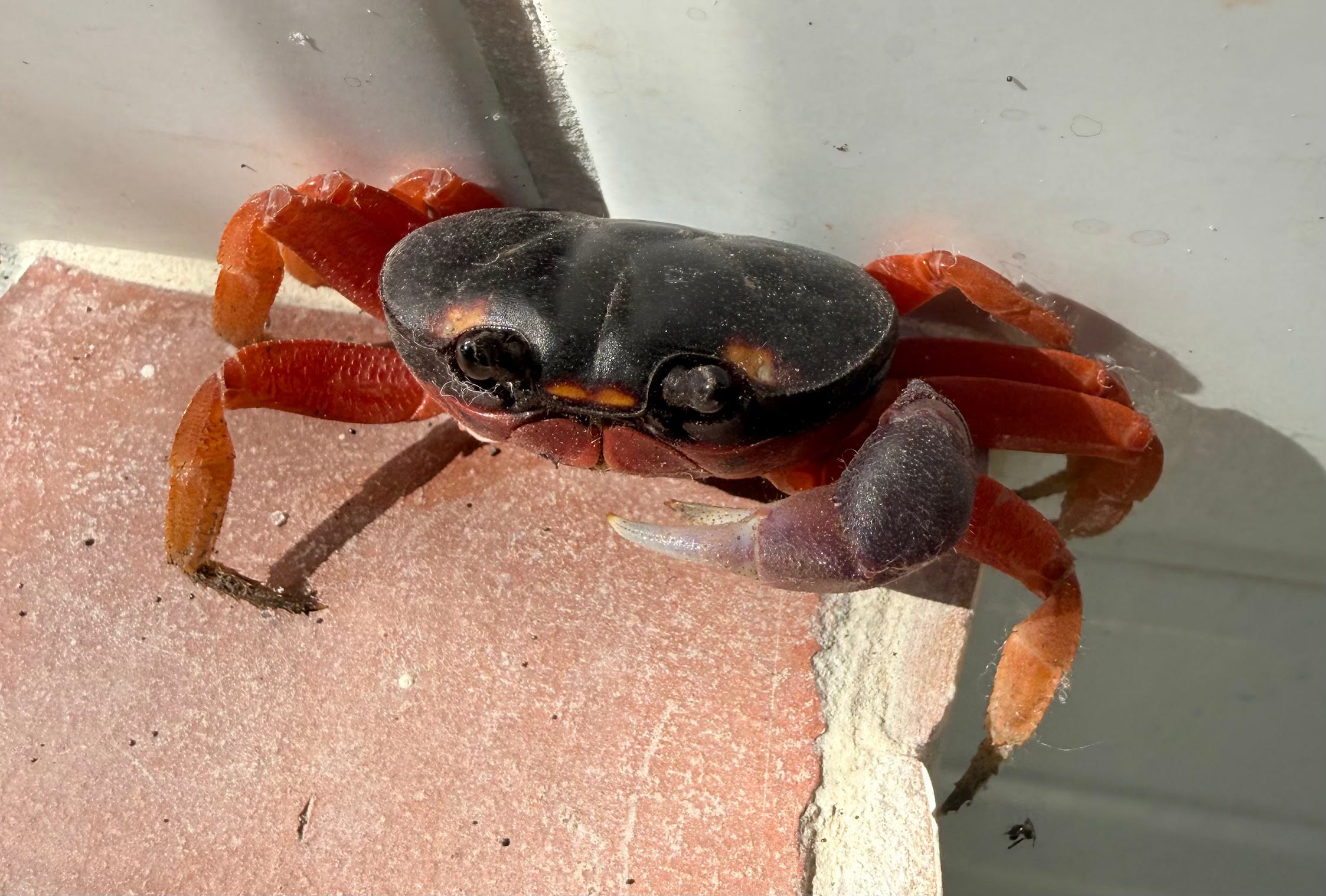
One of my sons reaches for his crocs lying against the wall and jumps back sharply in alarm. “¡Qué pasó? ¡Qué pasó?” It must be, at the least, una tarántula. He peeks nervously from the side of the wall and finds a land crab. Orange claws and feet and what looks like a blindfold across its face, two round eyes behind it. A toad clings to one of our damp towels in the evening.
Riptides layer on the beach below. They create a soft rhythm. Not the crashing tides of other beaches in my childhood.
Children are playing in the shallow river below that spills into the ocean. The children squeal. The lower registers of adults are wafting up to me.
Text within this block will maintain its original spacing when published
Practice your animals:
Text within this block will maintain its original spacing when published
EL GALLO - rooster
LA GALLINA - hen
EL BUITRE - vulture
EL CANGREJO - crab
EL SAPO - toad
EL PÁJARO - bird
Dear reader - Did you find a way to reset at the turn of the year? I am trying to hold on to the love, and that is enough.
Where is home? What are the sounds and images that take you home?
Please leave a comment. Click the heart. Share with someone.
Comments
Nothing yet. Say the first thing.
Sign in to join the conversation.