
Welcome! Every week I analyze the 5 most important things that happened in the world of medicine (as well as some quick hits, to make sure nothing’s missed). It’s been busy, with conferences on cancer, kidney, diabetes, blood, immunology… let’s get into it!
1. The RAS revolution continues
After decades of minimal progress, a couple of weeks ago we saw the first step change in survival for metastatic pancreatic cancer — with the RAS inhibitor, Daraxonrasib.
This week a Boston company, Tango Therapeutics, revealed new data that layers a new therapy on top of Daraxonrasib. Their approach depends on a concept called synthetic lethality.
Synthetic lethality
Two defects that are tolerable separately are lethal together — this is useful to target cancer cells (which often inactivate genes as they transform) while sparing normal cells.
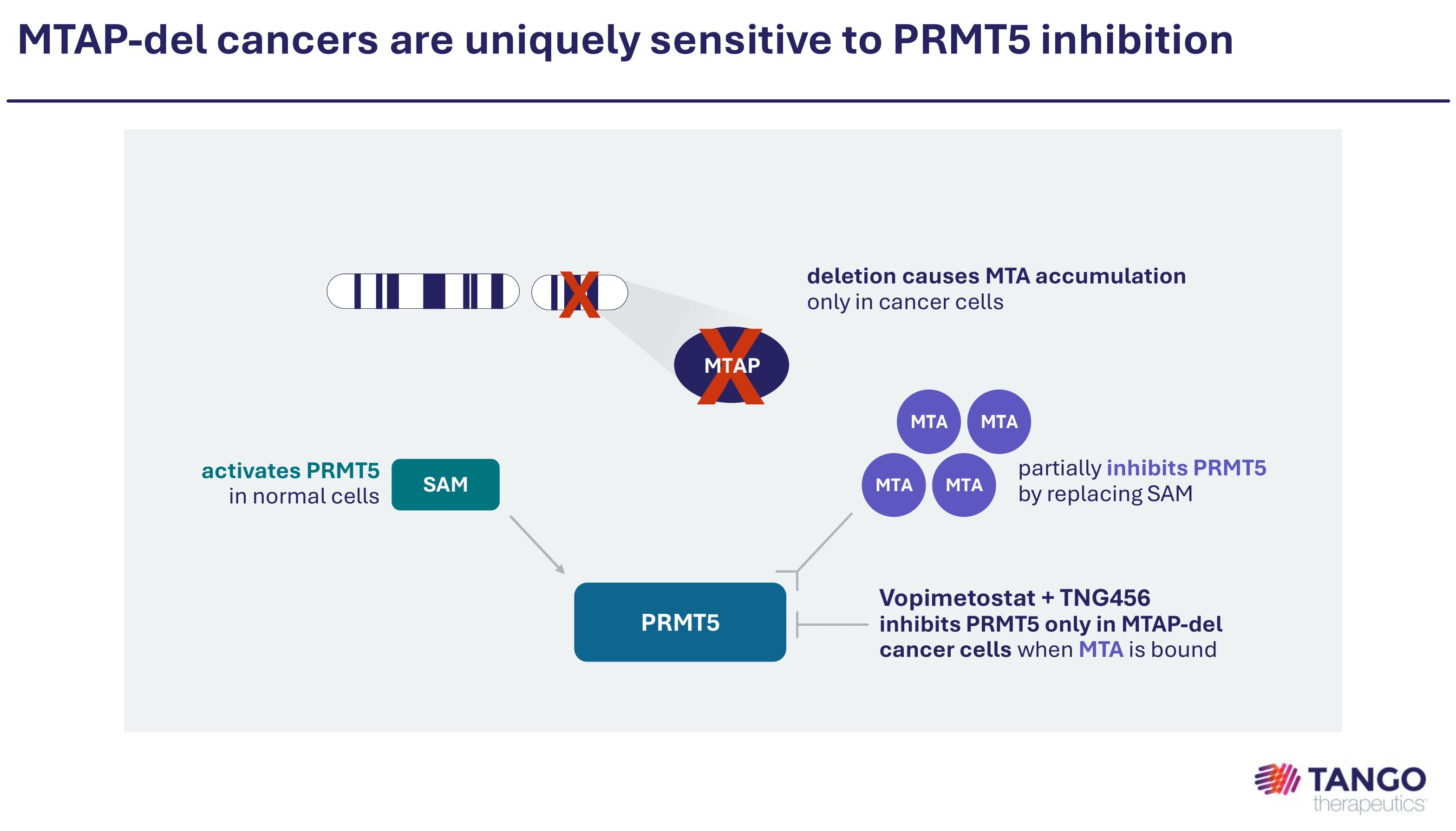
Tango’s approach is rooted in a couple of discoveries from 2016 (the first and the second). About 40% of pancreatic cancers are deficient in the metabolic enzyme MTAP, which clears a metabolite called methylthioadenosine (MTA). This means MTA accumulates, partly suppressing an epigenetic enzyme, PRMT5, and making tumor cells hypersensitive to pharmacological PRMT5 inhibition (with Vopimetostat). PRMT5 is an essential gene; without it, cancer cells die.
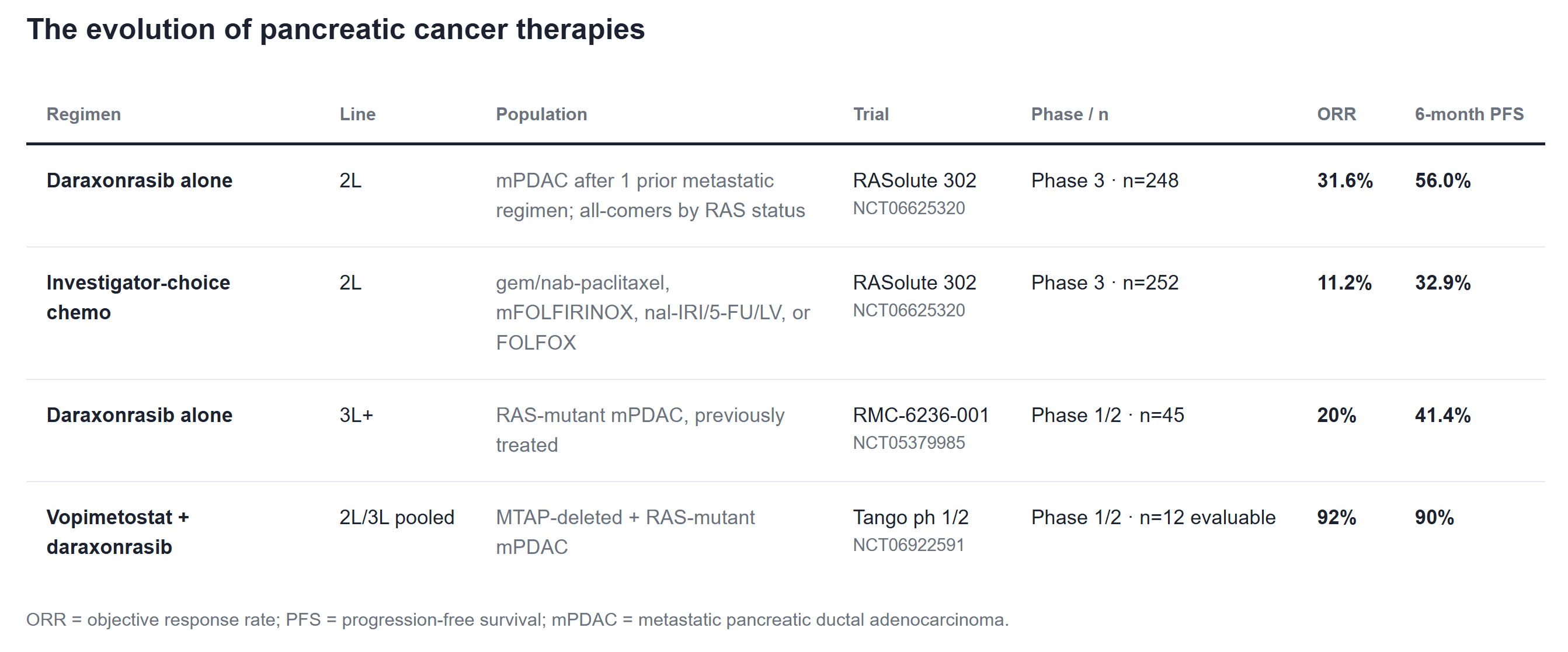
I am comparing cross-trial here — and this is only a phase 1/2 trial — but the numbers look good. In MTAP-deficient pancreatic cancer, the objective response rate and 6-month progression-free survival were 92% and 90%, respectively, with the Vopimetostat-Daraxonrasib combination, compared with 20-32% and 41-56% with Daraxonrasib alone (and 11% and 33% with the current standard-of-care chemotherapy).
The synthetic lethality itself is independent of RAS, but it looks like PRMT5 inhibition (in MTAP-deficient cancers) might also be synergistic with RAS inhibition.
This layering of therapy is likely to continue, and could continue to improve outcomes, with RAS inhibition as the foundation. Since most pancreatic cancer still presents as metastatic, what we need alongside this is better early detection.
Subscribe to keep up with the cutting edge of medicine.
2. A potentially best-in-class ulcerative colitis drug
Last July, a small French biotech company dropped some data that led to the biggest stock price jump in Nasdaq history. That company is Abivax, who have an experimental new drug for inflammatory bowel disease.
Trials in inflammatory bowel disease happen in two stages: first, induction of remission, and then maintenance of remission. Last July’s data were for induction, and this week (actually it was last week, I am a bit late) Abivax dropped new maintenance data.
Their drug is Obefazimod, a daily oral pill, and the indication here is ulcerative colitis (though they’re also running a trial in Crohn’s). The mode-of-action is a bit up in the air, but it seems to work by inducing expression of miRNA-124, an anti-inflammatory miRNA. The way Obefazimod probably does this is through modulation of the aryl hydrocarbon (AH) receptor. Strangely enough, this was discovered not by Abivax, but by another company with a similar drug, Equillium.
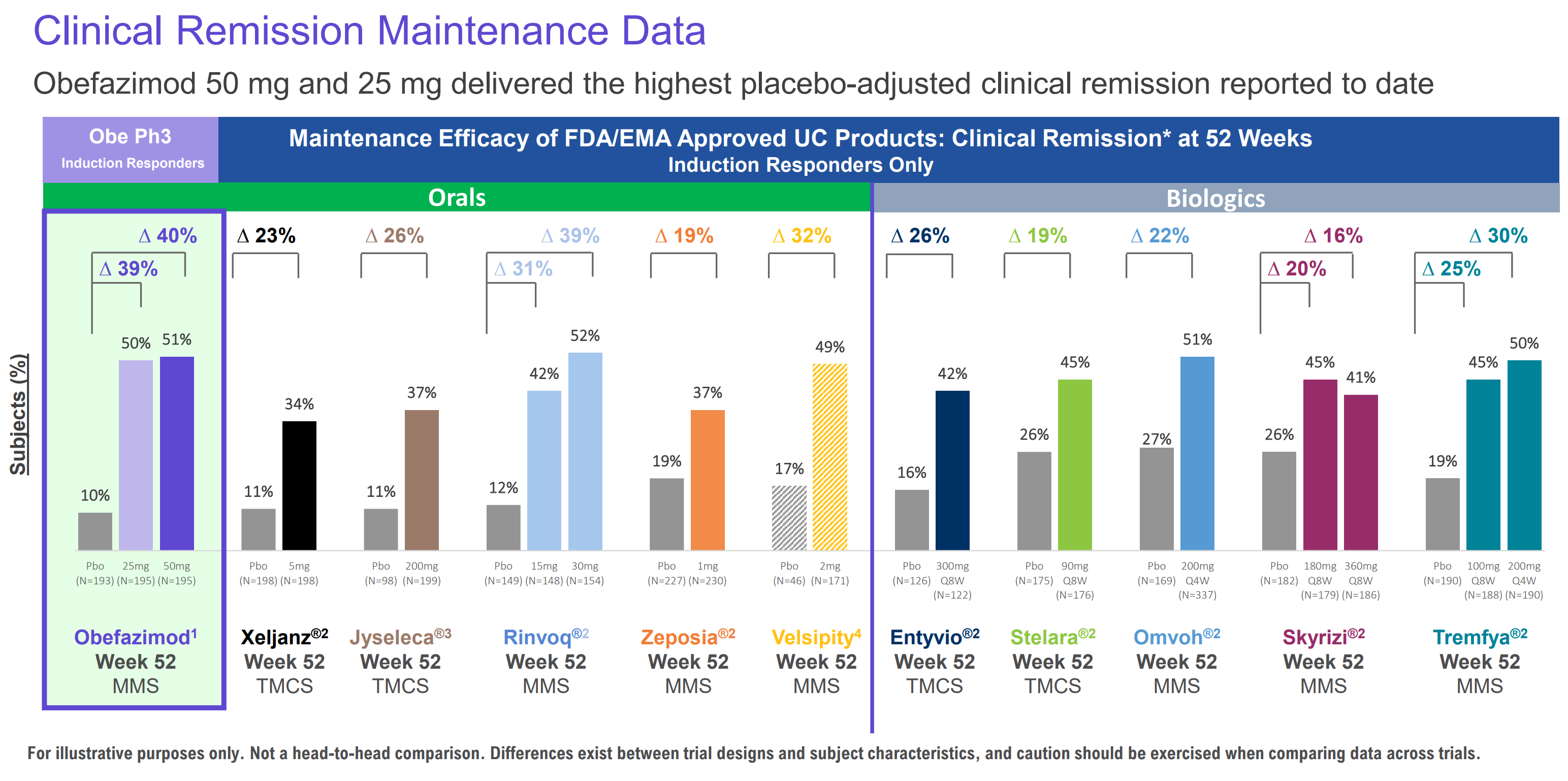
Here are the data, looking at clinical remission (stool-frequency score, rectal-bleeding score, and Mayo endoscopic subscore). Efficacy looks like it might be best in class — better even (cross-trial) than the injectable biologics:
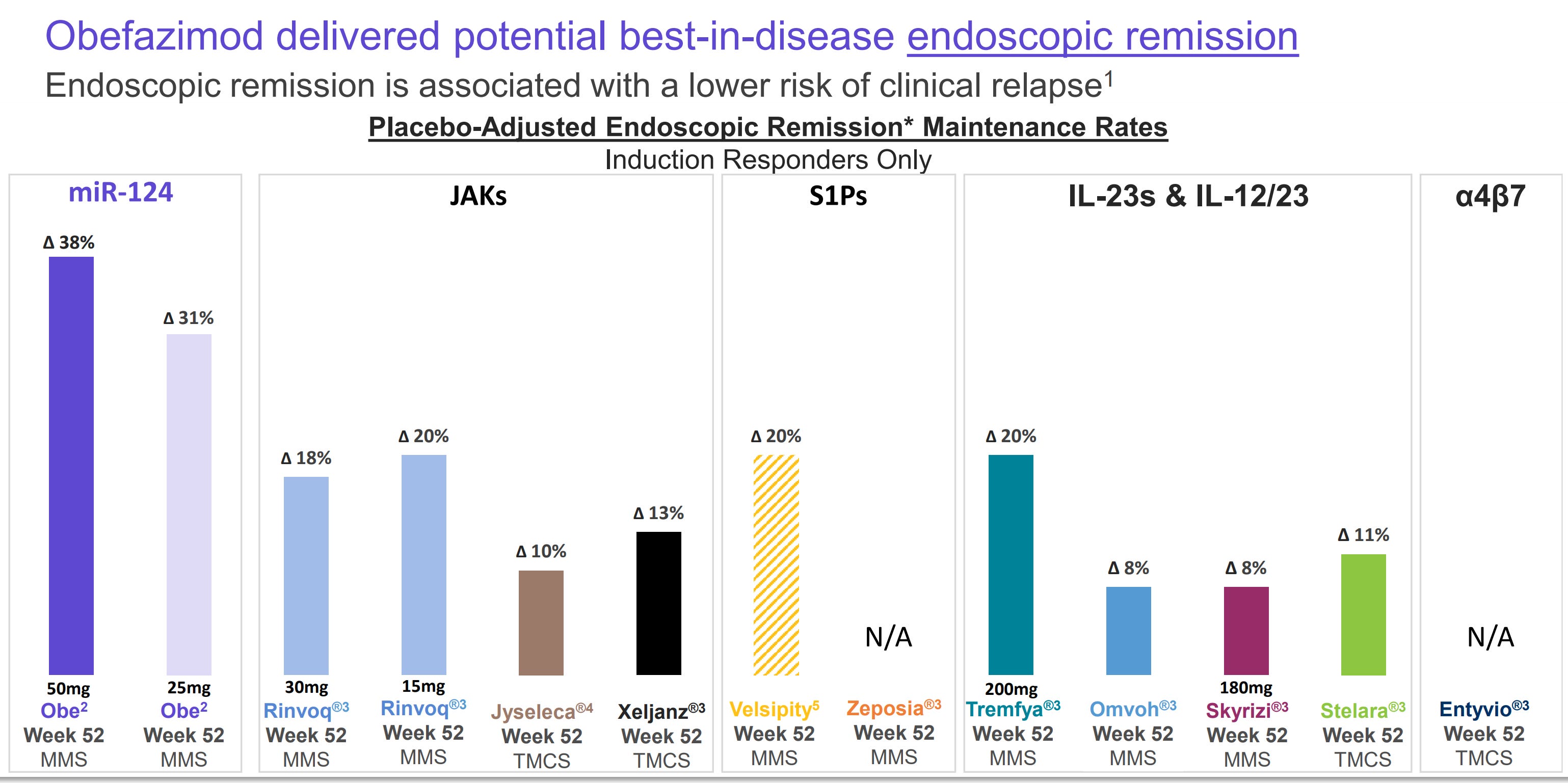
Endoscopic remission is a more objective endpoint, which measures remission on colonoscopy. Here, the data are arguably even better:
Clearly safety is essential here. The safety endpoint I’m most interested in is opportunistic infections, which can happen with some of the other ulcerative colitis drugs, given their immunosuppressive nature. With Obefazimod, the risk of opportunistic infections was 1% with placebo, 1% with low-dose Obefazimod, and 0.5% with high-dose Obefazimod: no clear concerns — the drug is not immunosuppressive.
Listening to gastroenterologists discuss this, Obefazimod has potential first-line use as well as later-line use — indeed, patients in this trial had typically failed 1, 2, 3, or even 4 prior therapy classes before Obefazimod.
The next landmarks here are submission to the FDA this year, and the Crohn’s phase 2 trial next year.
3. Discovery of a defined subtype of inflammatory bowel disease
In inflammatory bowel disease (Crohn’s disease and ulcerative colitis) there is a small amount of therapy tailoring, but it’s really limited to a few things — disease severity, prior biologic exposure, drug safety profile. Choice of therapy itself is pretty much based on trial and error: try one drug, and move to the next if it doesn’t work.
This is partly because the causes of inflammatory bowel disease are still poorly defined, and no established, common molecular mechanisms exist. This study, from the New England Journal this week, changes that.
Comments
Nothing yet. Say the first thing.
Sign in to join the conversation.