
Hello readers,
Welcome back to The BREAK–DOWN’s now weekly newsletter, where we bring you the best writing and discussion straight to your inbox.
This week, we have two brand new things for you to enjoy, you lucky lucky people. But before all of that, a reminder: you have just one day left to take advantage of our Four-Issues-For-The-Price-Of-Two-Limited-Time-Only-December-Sale (full title tbc). Subscribe to a print subscription before the end of Friday 12th December using this link and we will not only send you the next two print issues of The BREAK–DOWN, we will also send the first two issues completely free. Plus you’ll get the lovely warm feeling of helping us continue publishing the best climate writing both online and in print.
Now, to business: first up, our podcast, where this week editor-in-chief, Adrienne Buller, interviews the political scientist Alyssa Battistoni about her latest book, Free Gifts: Capitalism and the Politics of Nature, which has just come out with Princeton University Press. Both the book and the discussion are superb—engaged and incredibly wide-ranging; one of our favourite books of the year.
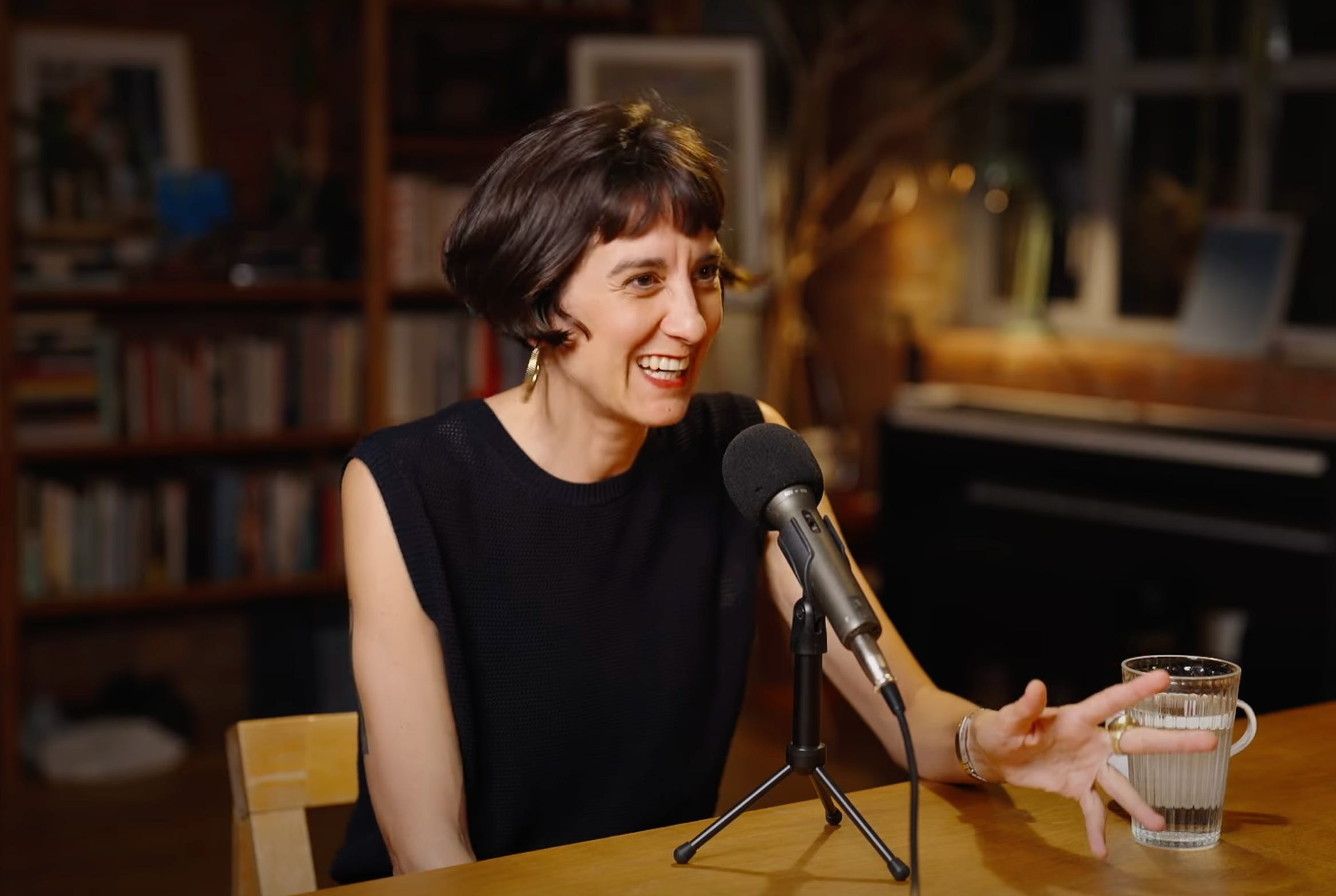
On the podcast, Battistoni and Buller interrogate one of the great ideological pillars of capitalism: freedom. We hear endless talk of the freedom that capital apparently affords, whether via “free markets”, or the endless free choice of the consumer. For many on both the right and the liberal centre, capital and freedom are so intertwined as be to almost synonymous. Added to this, we can count the huge number of things that are, within market systems, “free” insofar as they are assigned no value, from the free gifts of nature to uncompensated environmental destruction and the unpaid labour that creates and sustains life. Marx, meanwhile, described workers under capitalism as “free in the double sense”: “free” to sell their labour power in the market, and “free” or divorced from the means of production: the land, machinery or materials to sustain themselves on their own. In other words: not particularly free at all.
What, then, does freedom really mean within a capitalist society?You can listen to the discussion wherever you usually get your podcasts. Or you can watch the full episode along with all our others on our YouTube channel.
If that isn’t enough for you, also new this week is an essay by the Danish ecosocialist writer, Mikkel Krause Frantzen.
The opens the essay with a gambit: what if we were to place the concept of care as centrally in our writing and thinking on the climate crisis as we do the concentration of carbon dioxide? What then opens is a brilliant and generative piece of writing, by turns lyrical and theoretical, about how we must take care, and all of the endless labour it entails, seriously to in order to both understand the world that capitalism and the climate crisis have created, as well as to find potential routes out of the ruins of the present. Below, we have a preview of the essay, and you can read the full piece as always on our website.
I also want to take this opportunity to thank the hundreds of people who sent in pitches for our forthcoming issue, AIRBORNE. We’re making our way through them this week, and if you sent an idea to us you should hear back very soon. The standard of pitches gets better every time we solicit, and from those we received this time around the next issue looks set to be our best ever. We’ll have more information about that in the new year.
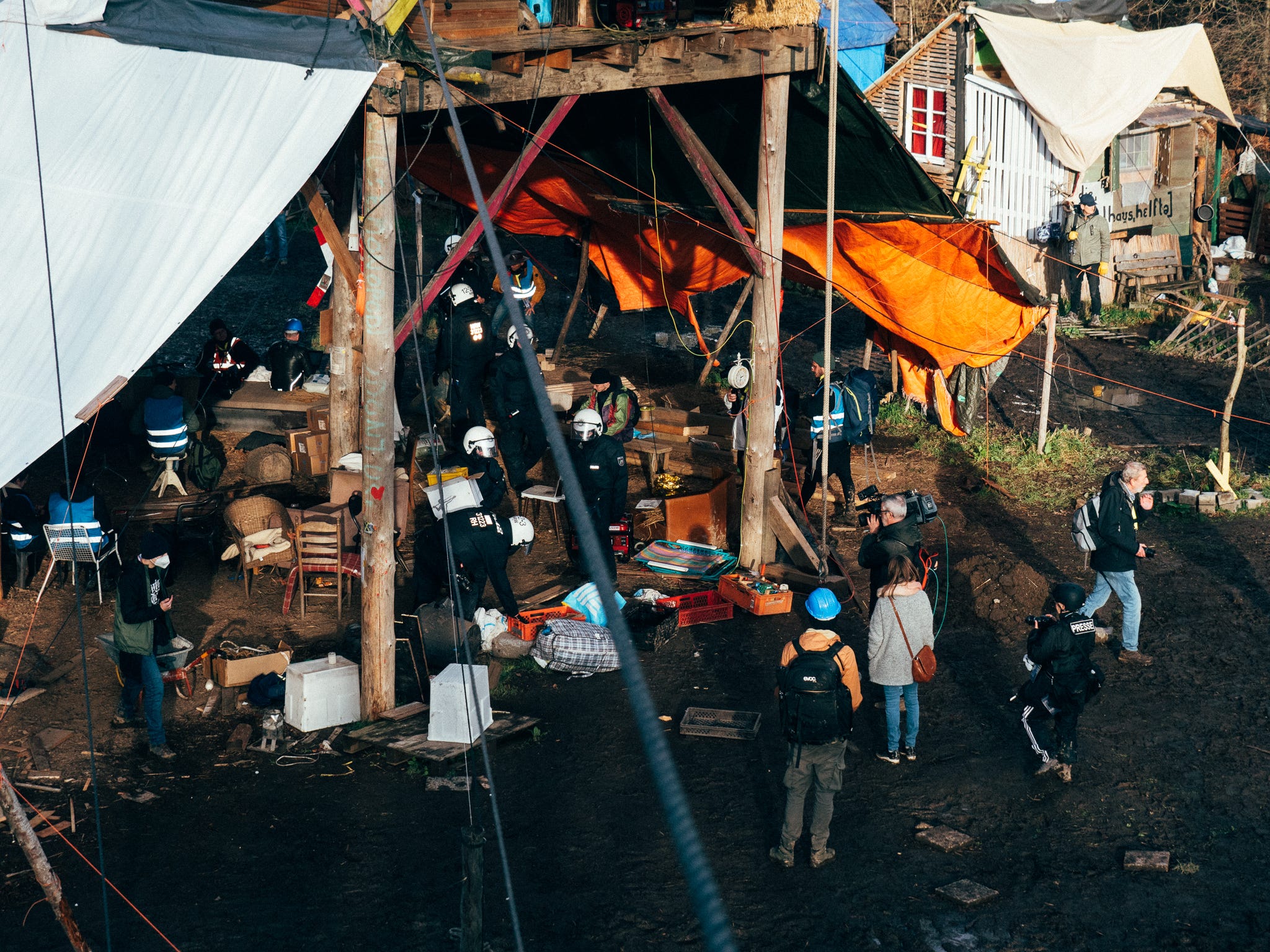
During the “climate endgame”, our survival hinges on rebuilding the systems of interdependence that make life in the ruins possible.
Stephen Markley, in his 2023 novel, The Deluge, captures the essence of what he calls capitalism’s “ultimate endgame”: “All the years of talk about the end of the world, but that’s not what’s happening. It’s the beginning. And no one can wrap their minds around what it’s the beginning of yet.”
This endgame is not an apocalyptic finale. There will be no Avengers style battle between heroes and villains, but an ongoing, cascading series of crises, a chronic condition. “Sea levels would rise by 230 feet eventually,” Markley writes. “Earth was on its way to four, five, or possibly six degrees of additional temperature rise. It was an endgame that would push the planet past anything a human could conceive of.” This might now happen sooner than even the bleakest models suggest, and those alive to witness it would see “civilization entering its violent disintegration with a breakdown of the social order, mass starvation, disease, and armed conflict over water and arable land.”
As a critical and unpredictable new phase of the climate crisis, the climate endgame is not an end but a beginning, and no one can quite wrap their minds around what it’s the beginning of yet.
Despite these impending scenes of mass devastation, however, at the heart of the idea of the climate endgame is a more mundane concept: care. Care not as some secondary concern, but as the most urgent political question. To put it another way: The concept of care is as central to the climate crisis as the concentration of carbon dioxide itself.
The first thing to understand is that everyone needs care, though some need more than others. All human beings are dependent on other human (and non-human) beings. It takes care to maintain life, whether we are speaking of infants, the elderly or those in the so-called prime of their lives. Interdependency is a condition, not a choice, and privilege does not mean not needing care; it means being able to take for granted the care you do need. The second thing to understand is that care is work. While you can have empathy without lifting a finger, to care ultimately means to work, be this physical, manual, or mental labour. It means carrying out repetitive jobs: doing laundry, washing dishes, cooking meals, and countless other less immediately obvious tasks.
The third thing to understand about care is that it is not a neutral concept but a highly fraught one, evoking both ambivalence and anxiety.[1] Alongside its recent elevation into an academic and political buzzword, care readily gives rise to a series of fantasies and temptations: of romanticization (“care is wonderful!”), essentialization (“women and mothers are the primary caregivers of family and society because they are women and mothers!”), and exclusion (“only members of this family, or this nation, or with this particular background, deserve care!”). Embedded in these are many unfortunate dualisms. Some lead us toward a kind of fascism, where exclusive or exclusionary care is directed solely toward that which resembles and belongs to “us”. Others lead to positions where care is perceived as something soft in opposition to the hardness of society and the economy. Care is not, however, inherently soft; it can be as hard as stone: “Care is not an unqualified good. It is not always about hot tea and hugs.”[2]
Instead, and following the tradition of eco-feminism and Marxist feminism, we can define care work as a form of labour that, by meeting a concrete need, is directed, either immediately or in the longer term, toward the reproduction of life. Care is the affective, embodied and practical labour that sustains ongoing interdependence over time—a continuous response to need, rather than a temporary form of relief. Care is thus repetition, an ongoing maintenance. As an activity within a capitalist economy, care may be paid or unpaid, formal or informal, but it always pertains to both biological and social reproduction. In this way, care unfolds across private, political and planetary scales: it can take place in a family, in a hospital or at the scale of the Earth itself.
It is no great revelation or insight to say that care is in crisis. In Western societies, social care, healthcare and eldercare are under systemic strain. In the UK, austerity compounded by private equity-backed ownership models have hollowed out the care sector, stripping time and staff from already overburdened systems. In Denmark, meanwhile, “efficiency measures” have steadily eroded and exhausted care work across professions, from midwives to early-childhood educators. For the US, social neglect has been the political baseline for decades. As the historian Gabriel Winant has shown, deindustrialization since the 1970s has gone hand in hand with a massive growth of the care economy. “In the US labor market,” Winant notes, “the category called ‘health care and social assistance’ is the largest sector of employment, accounting for about one in seven jobs.”
This new economy exhibits a strange resistance “to the kinds of productivity increase that we associate with capitalist industry.” The nature of care work—the embodied, time-consuming and relational aspects of tending to others—defies standard capitalist logics of efficiency and surplus extraction. You can’t double the efficiency of tending to a dying patient without stripping out the very thing that makes it care. Market logics may try, with shorter visits, more paperwork, fewer hands—but care keeps refusing. There is something in commodification that makes care impossible, and something in care that makes commodification impossible. This contradiction bleeds into daily life as frustration, exhaustion and quiet collapse: nurses who know what a patient needs but who can’t give it under institutional constraints; elder-care workers doing the labour of three; teachers who leave the job not because they stop caring, but because they cannot care enough inside the assembly-line schedule.
The crisis is global, stretched along “care chains” that bind continents: a Filipina nurse in Copenhagen, a Ghanaian elder-care worker in Berlin, a Peruvian nanny in Madrid, all leaving someone behind who must in turn find someone to look after them. Needs go unmet or multiply, or both. The steelworker’s daughter becomes a nurse. She hires childcare. The childcare worker hires someone else, often unpaid, to watch her own children back home. Ultimately, this crisis is not just about social reproduction being undermined; it is also that this is happening at the same time that the need for care escalates, a paradox that the COVID-19 pandemic made all too clear.
In other words: the problem with care is not biological but social, cultural, ecological and, above all, political—the dysfunction that arises when the necessary conditions for life’s reproduction are neglected or distorted. The care crisis is not merely about absence; it is not just a void. It is also an active organization of care neglect. Helpful in this regard is Ruth Wilson Gilmore’s concept of organized abandonment, which illustrates how the deficit in care is not an unfortunate side effect but a direct result of political and economic priorities. It is a systematic displacement and abdication of responsibility, where entire populations, land areas and life forms are left without access to basic care and infrastructure. This resembles what The Care Collective calls “structural carelessness”, understood not as a total absence of care but as care that has been centralized, controlled, and distributed among the unholy trinity of state, market and family—a form of care that, in its current organization, perpetuates inequality and exclusion.
Comments
Nothing yet. Say the first thing.
Sign in to join the conversation.