
Chapter 1
And Bill Gates Has to Say
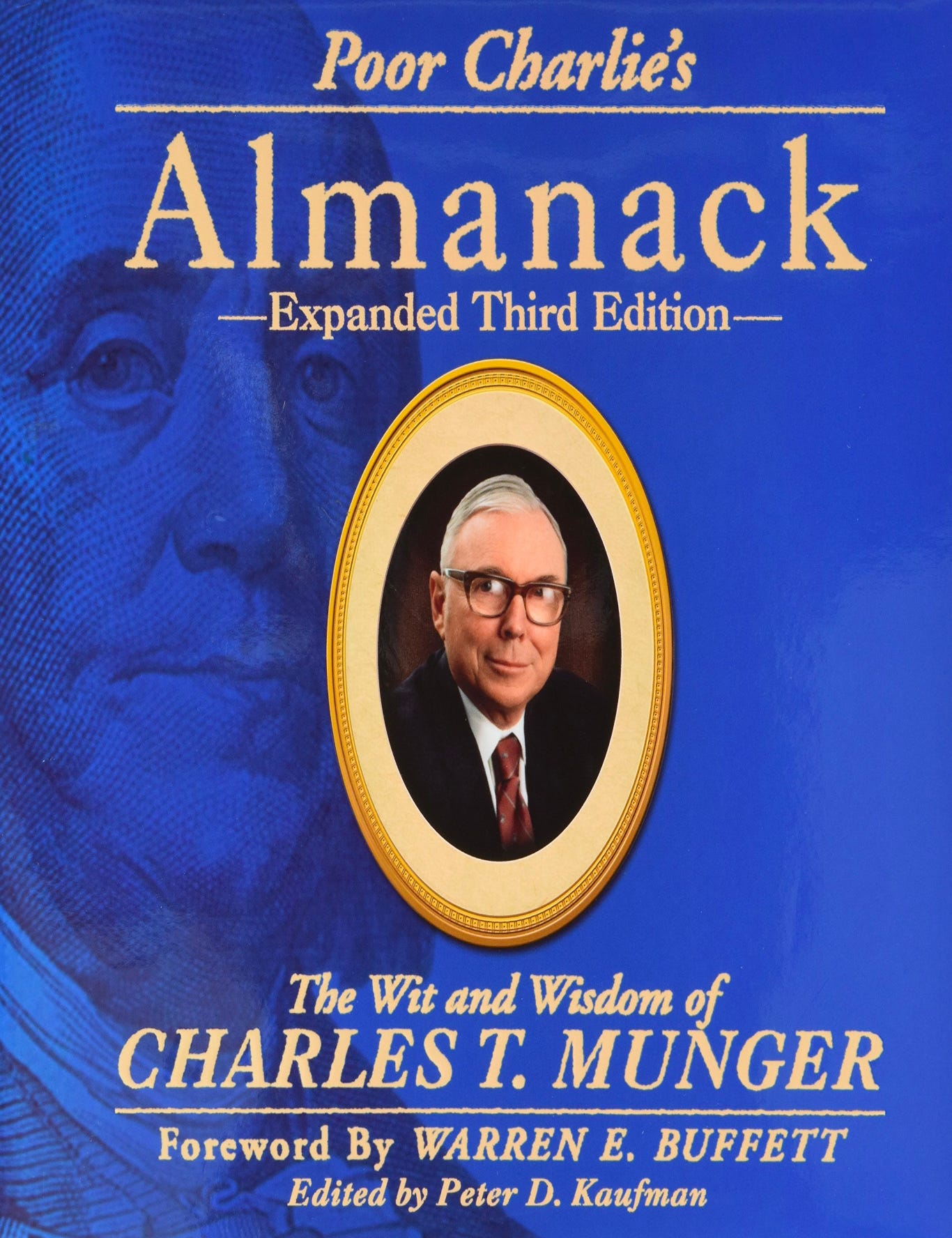
The final section of Chapter 1 of Poor Charlie’s Almanack gives readers a unique perspective on Charlie Munger through the eyes of Bill Gates. Unlike a conventional endorsement, Gates’ tribute is a thoughtful reflection on why Munger stands apart from almost every other successful businessman he has ever known. It is particularly significant because it comes from someone who has spent decades working with many of the world’s brightest entrepreneurs, scientists, executives, and investors. If Bill Gates considers Charlie Munger one of the most extraordinary thinkers he has ever encountered, investors should pay close attention to the reasons why.
Gates begins by borrowing an observation from Benjamin Franklin, who once wrote that the Infinite Father neither expects nor requires praise because He exists far above human admiration. Gates uses this idea to describe Charlie Munger’s personality. He suggests that no matter how many compliments or accolades people offer, Charlie himself remains his own toughest critic. External recognition simply does not matter very much to him. In fact, Gates jokes that Charlie probably appreciates his own jokes more than anyone else’s compliments. This opening immediately reveals one of Munger’s defining characteristics: genuine intellectual independence. He does not seek approval, popularity, or admiration. Instead, he evaluates himself using standards that come from within rather than from public opinion.
Bill Gates then recalls Warren Buffett’s introduction before they first met. Buffett described Charlie as the greatest business partner anyone could hope for. At the same time, Buffett humorously warned Gates not to expect much opportunity to speak during conversations with Charlie. According to Buffett, Charlie would sometimes hold up his hand during a cocktail party to prevent others from interrupting while he paused only long enough to take a drink before continuing his explanation. Buffett also shared a funny story illustrating Charlie’s occasional lack of attention to ordinary practical matters. Despite being an exceptionally rational thinker, Charlie once managed to sink a boat on a perfectly calm lake by putting the engine into full reverse at high speed. These stories remind readers that extraordinary intelligence does not necessarily translate into perfection in every aspect of daily life. Like many exceptional thinkers, Charlie’s mind was often so occupied with important ideas that routine details occasionally escaped his attention.
When Gates finally met Charlie, he discovered that Warren’s descriptions had actually understated the experience. Charlie exceeded every expectation. Gates describes him as the broadest thinker he has ever met. What impressed him most was not Charlie’s knowledge of investing alone, but the astonishing breadth of subjects he had mastered. Whether discussing business strategy, economics, architecture, university dormitory design, engineering, or even catamaran construction, Charlie displayed remarkable depth of understanding. Gates suggests that he had never encountered another individual capable of moving so comfortably across so many unrelated disciplines while consistently producing valuable insights. This multidisciplinary approach lies at the heart of Munger’s philosophy and helps explain much of his investing success. Rather than viewing companies through a purely financial lens, Charlie integrated ideas from psychology, biology, engineering, mathematics, history, law, and economics to build a far more complete understanding of reality.
Gates also highlights the unusual nature of his correspondence with Charlie. Their most memorable exchange involved stock options and the ways they can distort corporate financial results and management incentives. This reflects Charlie’s lifelong concern with incentives, one of the central ideas running throughout Poor Charlie’s Almanack. Munger believed that understanding incentives explains much of human behavior, both in business and in life. Poorly designed incentive systems often produce unintended consequences, while properly aligned incentives encourage rational decision-making and long-term value creation. Gates admired Charlie’s ability to cut through accounting complexity and identify the underlying economic reality behind business decisions.
Interestingly, Gates notes that their longest correspondence had nothing to do with investing. Instead, it focused on the mating habits of naked mole rats and what humans might learn from studying them. At first glance, this topic seems entirely unrelated to business. Yet it perfectly illustrates Charlie’s lifelong commitment to multidisciplinary learning. Munger believed that every field of knowledge contains ideas capable of improving decision-making in completely different areas. Nature, biology, evolution, engineering, psychology, and economics all provide mental models that can be applied to investing. Gates clearly appreciated that Charlie’s curiosity had no boundaries. He did not study subjects because they were immediately useful. He studied them because understanding the world from many perspectives ultimately leads to better judgment.
One quality Gates particularly admires is Charlie’s ability to compress complex ideas into unforgettable phrases. Throughout his career, Munger became famous for expressing sophisticated concepts in remarkably simple language. Gates offers several examples. When discussing why some children succeed more than others, Charlie often referred to the “genetic lottery,” reminding people that luck plays a significant role in life. When criticizing venture capitalists who defended excessive stock option compensation, Charlie compared them to “the piano player in a whorehouse,” suggesting they had become so immersed in their environment that they no longer recognized obvious ethical problems. Discussing cost-plus contracts, which reward suppliers for spending more money rather than less, Charlie liked to observe that “even the mule knew to slow down,” illustrating how incentives naturally shape behavior. These expressions demonstrate one of Charlie’s greatest communication skills: transforming abstract economic principles into vivid mental pictures that people remember for years.
For investors, Gates’ observations reveal why Munger’s wisdom extends far beyond stock selection. Charlie did not become extraordinary because he memorized financial ratios or predicted markets more accurately than others. He became extraordinary because he developed a better way of thinking. His greatest competitive advantage was not information but judgment. He consistently asked better questions, drew knowledge from more disciplines, understood incentives more deeply, and avoided simplistic explanations. Gates suggests that this intellectual framework made Charlie uniquely valuable not only as Buffett’s partner but also as an advisor, teacher, and friend to many of the world’s leading business figures.
Another important lesson emerging from Gates’ tribute is the value of intellectual humility. Despite Charlie’s immense knowledge, Gates never portrays him as someone seeking recognition. On the contrary, Charlie constantly questioned his own conclusions and remained his own harshest evaluator. This humility is one reason he continued learning throughout his life. Investors often become dangerous when early success convinces them they already know enough. Charlie avoided this trap by remaining permanently curious and continuously expanding his mental models. His confidence rested not on believing he was always right but on maintaining a process that constantly reduced the likelihood of being wrong.
The section also reinforces an important theme that appears repeatedly throughout Poor Charlie’s Almanack: true excellence comes from combining depth with breadth. Many professionals specialize narrowly within one field. Charlie mastered investing precisely because he refused to think only about investing. He believed reality does not organize itself according to academic departments, and therefore neither should our thinking. The best investment decisions emerge when economics, psychology, engineering, biology, mathematics, history, and human behavior are considered together. Gates’ admiration reflects his recognition that Charlie’s greatest achievement was building one of the most complete intellectual frameworks ever applied to business.
Bill Gates closes his tribute by observing that a book collecting Charlie Munger’s wisdom was long overdue. That conclusion feels entirely justified after reading his reflections. Gates does not praise Charlie because of his wealth or investment record, impressive as both may be. Instead, he celebrates the quality of Charlie’s mind—its curiosity, breadth, originality, clarity, and relentless pursuit of truth. For stock investors, this may be the most valuable lesson of all. Superior investment performance begins long before analyzing financial statements or valuing companies. It begins by building a disciplined way of thinking, remaining curious about the world, understanding how incentives shape behavior, communicating complex ideas simply, and never allowing success to end the learning process. Bill Gates’ tribute ultimately reminds readers that Charlie Munger’s greatest legacy is not merely the fortune he helped create at Berkshire Hathaway, but the timeless intellectual framework he leaves behind for anyone willing to study it.
Enter your email below and receive more content like this delivered fresh to your inbox.
Did you enjoy it? Then click below and share it with your friends!
Comments
Nothing yet. Say the first thing.
Sign in to join the conversation.