
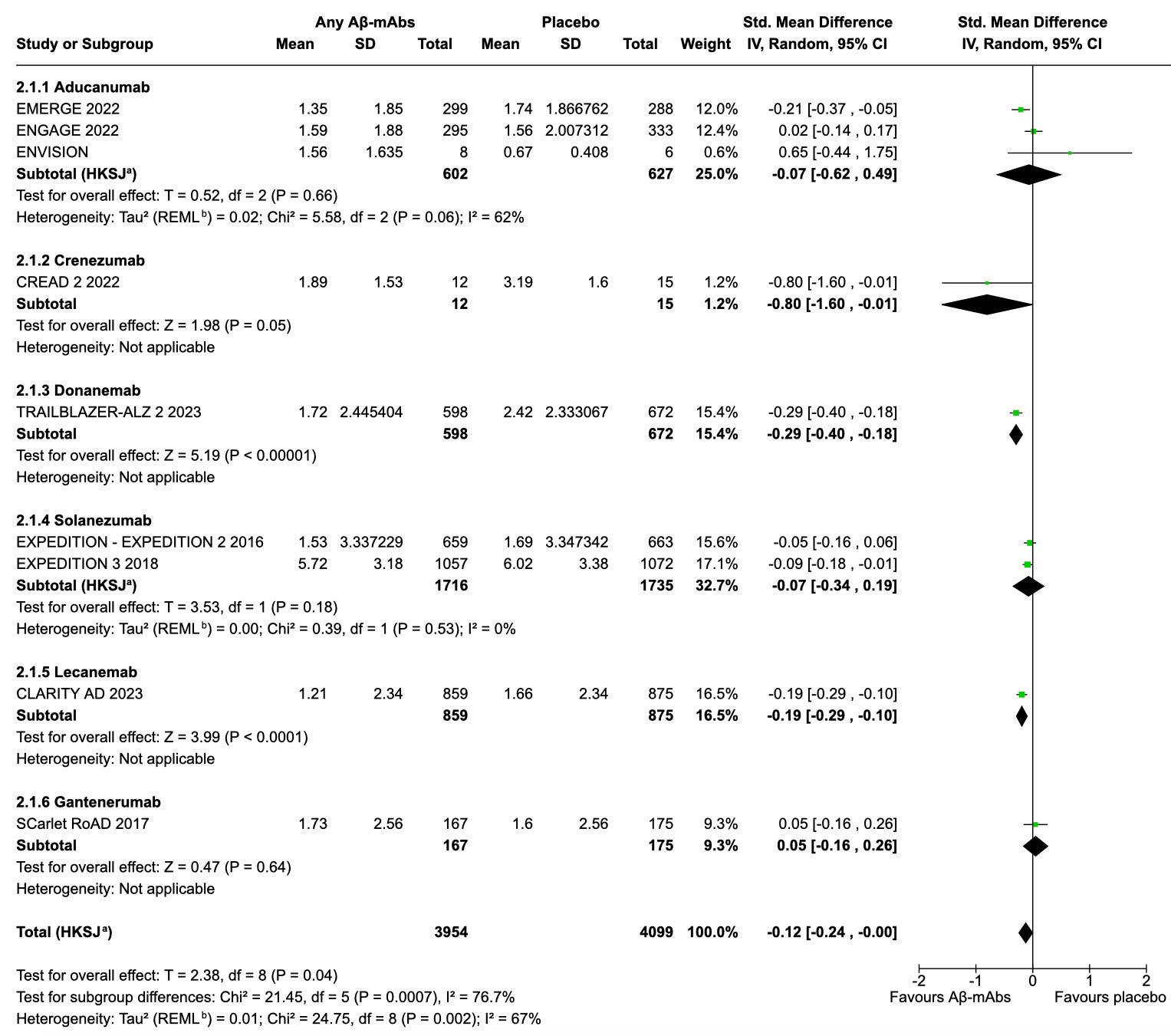
A new Cochrane meta-analysis on amyloid-targeting therapies (ATT) in Alzheimer’s disease concludes that these drugs provide little to no clinically meaningful benefit.
Predictably, this has been interpreted (again) as a broad indictment of the amyloid hypothesis. That interpretation is too coarse. The more relevant question is methodological: what question is this analysis actually answering?
The review pools ~17 trials across seven antibodies, spanning more than a decade of drug development. It combines recently approved agents with statistically significant effects (such as lecanemab and donanemab) with multiple late-stage failures, including gantenerumab, solanezumab, crenezumab, and bapineuzumab. The result is a class-level estimate that trends toward negligible benefit.
That outcome is, to a large extent, predetermined. Here is why:
1. Mechanism is not a class
“Amyloid-targeting therapy” is not a pharmacologically coherent class. These antibodies differ across epitope specificity, binding kinetics, patient selection (including biomarker enrichment), and dosing strategies. Pooling them assumes exchangeability of effect.
That assumption is analytically convenient, and biologically wrong.
2. The distortion introduced by failed programs
More importantly, the analysis aggregates across the full distribution of outcomes in amyloid drug development, including multiple agents that definitively failed.
Drug development is a selection process: ineffective molecules are eliminated; marginal ones are optimized; a small subset demonstrates reproducible signal and reaches approval.
By pooling both failed and successful programs, the analysis effectively reverses that selection. It reintroduces known inefficacious agents into the estimate, diluting the signal from the few that cleared the clinical and regulatory bar.
In effect, it estimates the impact of the average amyloid antibody ever tested, not the effect of the best available therapies today.
Those are not the same question.
3. Signal vs. aggregation
Recently approved antibodies show modest, statistically significant slowing of cognitive decline. Whether that effect is clinically meaningful is a valid debate. But “modest” is not “nonexistent.”
Average a small positive signal with multiple null results, and the output converges toward zero. That is not a biological insight, it is a statistical inevitability.
4. This is not unique to Alzheimer’s disease
Apply the same logic elsewhere.
Between 2000 and 2015, hundreds of kinase inhibitors entered clinical development across dozens of targets (mostly in oncology), with high attrition driven by toxicity, poor selectivity, and limited efficacy. A meta-analysis pooling all of these agents, alongside highly effective drugs such as imatinib or osimertinib, would likely conclude that “kinase inhibition has limited clinical benefit.”
That conclusion would be technically correct, and clinically misleading. It would describe the historical difficulty of executing on kinase biology, not the therapeutic potential of well-designed, biomarker-driven agents.
Iteration matters. Selectivity matters. Patient selection matters. Averaging across generations can obscure the progress that made the difference.
What this meta-analysis actually tells us
The Cochrane review is somewhat informative, but at a specific level of abstraction.
It tells us that, historically, most amyloid-targeting antibodies have not produced a clinical effect in Alzheimer’s disease: this is true, the field is relatively nascent and currently there are only two availble ATT (lecanemab, donanemab).
However, it does not tell us whether the current generation of therapies (developed with better biology, better biomarkers, and improved trial design) has a real, if modest, effect.
Those are distinct questions: one about the history of a mechanism, the other about the state of a therapeutic class.
Importantly, the meta-analysis does not include an “approved-only” sub-group analysis. This is not a minor omission, it reflects the fact that the analysis was designed to answer a class-level question, not a clinical or product-level one.
The real takeaway
This analysis underscores how difficult amyloid has been to drug, not that it is undruggable. The issue is not meta-analysis itself, nor the null result. It is the interpretation of a heterogeneous, class-level average as a definitive statement about therapeutic reality.
Readers - what are your thoughts on this publication? Can you think of other therapeutic classes where this issue would also apply?
Thanks for reading. If you found this entry interesting, please, share it so that others can receive more like this in their inbox.
Views expressed here are my own and not necessarily those of my employer. All data mentioned and discussed are publicly available.
For nearly two decades, I’ve worked as a neurologist and clinical trialist. Over time, I realized that the people who most need clear information about trials are often the least served by academic writing.
That’s why I wrote A Patient’s Guide to Clinical Trials: Navigating the Promise and Pitfalls of Experimental Treatments (Bloomsbury), a plain-language guide to how trials work, what to expect, and how to weigh risks and benefits.
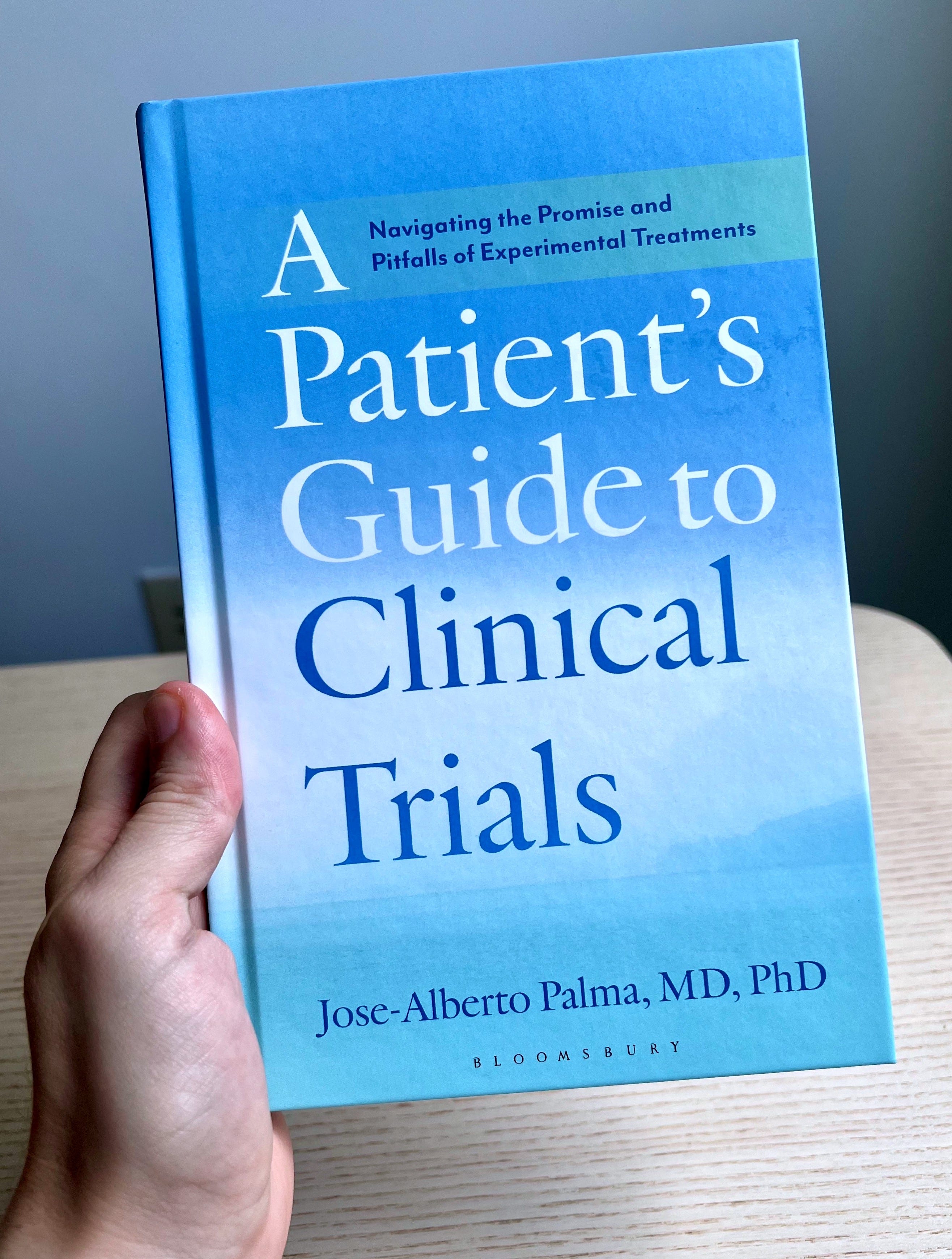
Now available wherever books are sold.
Comments
Nothing yet. Say the first thing.
Sign in to join the conversation.