
As a neurosurgeon who has spent decades treating traumatic brain injuries, I view the field of play differently than most fans. Where others see a spectacular goal or a gritty sack, I see the physics of trauma. Cristiano Ronaldo and Tom Brady represent the pinnacle of athletic longevity, yet they also serve as a profound case study in how the human brain absorbs repetitive force. One faced thousands of intentional jolts; the other, fewer but more violent collisions. Both illustrate the brain’s inherent vulnerability.
Ronaldo: The Cumulative Toll of the Header
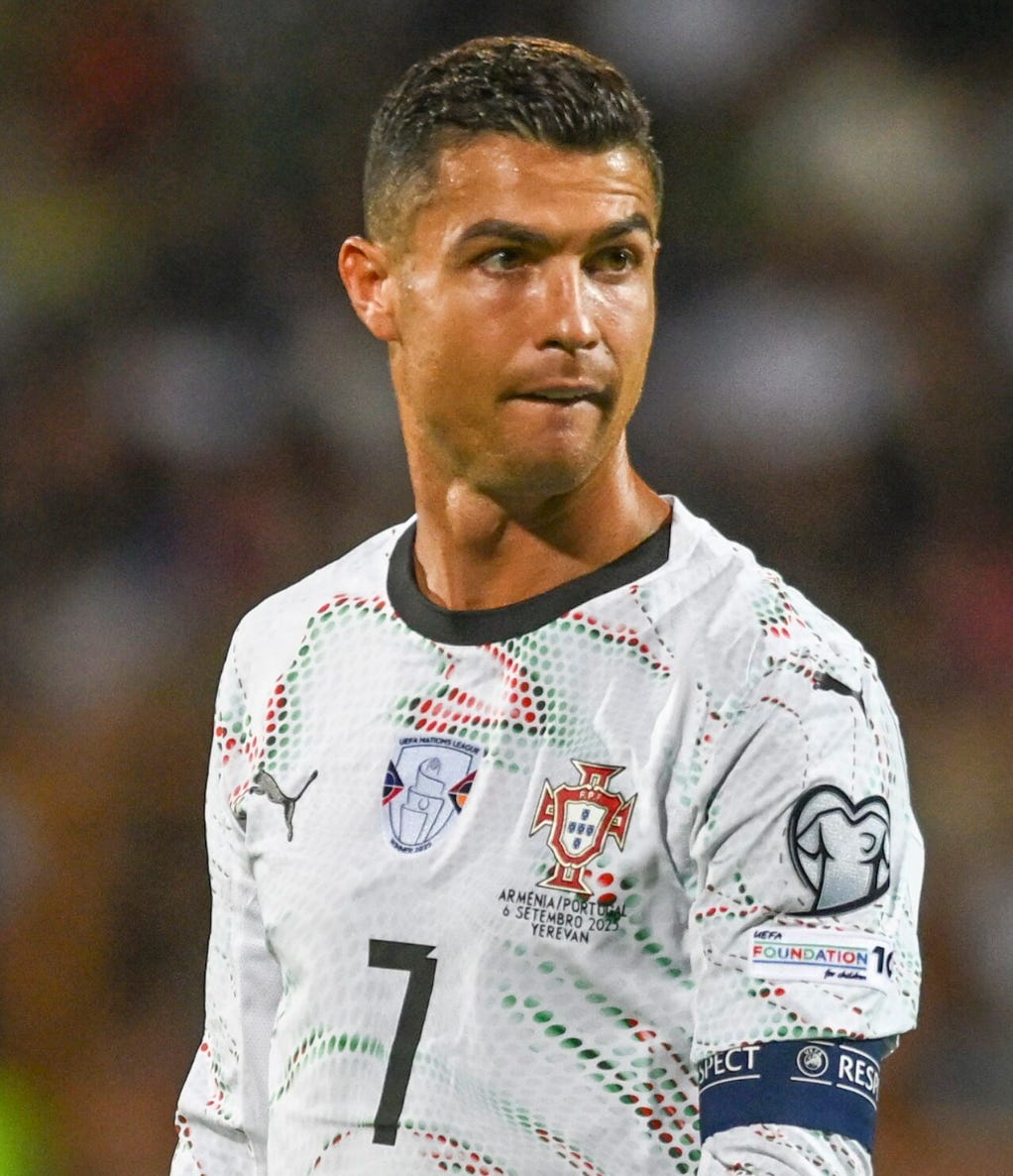
Ronaldo’s aerial dominance is a marvel of mechanics. Across 1,300+ matches, he has executed thousands of deliberate headers, more than 150 for goals. In soccer, the skull is the equipment. Each header delivers linear forces ranging from 15g to over 100g. Unlike a helmeted football player, a soccer player has no external buffer; the impact is absorbed directly by the frontal lobes and orbitofrontal cortex—areas essential for executive function and memory.
Recent studies on amateur players suggest that exceeding 1,000 headers annually causes measurable microstructural changes in white matter and a blurring of the gray-white matter boundaries. Even without a diagnosed concussion, these sub-concussive impacts can lead to subtle declines in verbal learning. Ronaldo’s career-long exposure—particularly during his Real Madrid peak—places him in a high-volume category where the damage isn’t a single event, but a slow, decades-long accumulation.
Brady: The Physics of Rotational Shear
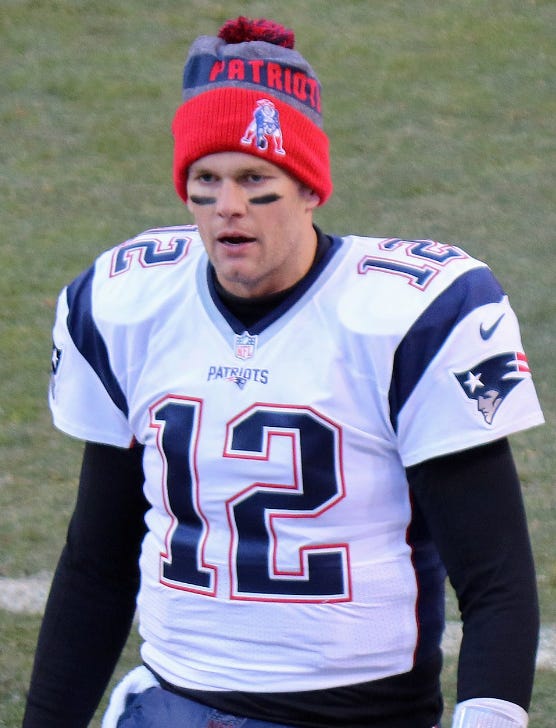
Tom Brady’s 23-season tenure in the NFL is a miracle of durability, yet he was sacked a record 565 times. While the volume of impact is lower than Ronaldo’s, the intensity is far higher. NFL collisions often exceed 100g and, crucially, involve high-velocity rotational acceleration. This is the “twisting” of the brain inside the skull, which shears axons and is a primary driver of Chronic Traumatic Encephalopathy (CTE).
Remarkably, Brady has zero publicly reported concussions. This may be due to his legendary pocket awareness, elite neck strength, or perhaps the culture of underreporting. Regardless, his brain has navigated hundreds of high-magnitude events that, even with world-class padding, subject the neural tissue to significant inflammation and stress.
The Clinical Reality
The patterns differ, but the risk remains. Ronaldo faces chronic, high-volume repetition that gradually alters brain architecture. Brady faced acute, high-magnitude violence. In my practice, I see the “after” of these careers: former athletes struggling with mood instability, memory gaps, and executive dysfunction. They “played through” the very forces we are now beginning to quantify.
The Path Forward
Prevention is our best tool. This means strengthening the neck musculature to stabilize the head, refining technique to reduce unnecessary impact, and—most importantly—protecting youth players whose brains are still myelinating.
Elite sports celebrate the limits of human achievement, but the brain always keeps the score. As we admire these legends, we must also advocate for the protocols that protect their greatest asset.
How do you balance the thrill of the game with the health of the player? Let’s discuss below.
No posts
Comments
Nothing yet. Say the first thing.
Sign in to join the conversation.