
We live in a world that constantly bombards our senses. Your phone buzzes. Traffic roars. Your to-do list grows. This constant noise leaves your brain locked in a state of low-grade, chronic anxiety.
From Brain to Mind is a reader-supported publication. To receive new posts and support my work, consider becoming a free or paid subscriber.
But what if the antidote to this modern chaos isn’t a pill? What if it is a color?
Blue isn’t just a wavelength of light. It is a neurological reset button.
Welcome to the Blue Art Tour. Today, we are analyzing three iconic masterpieces by Paul Gauguin, Wassily Kandinsky, and Claude Monet. We will explore how these legendary artists used blue to activate specific neural circuits. These circuits reduce anxiety, sharpen awareness, and restore emotional balance.
The Neuroscience of Blue
To understand how art heals, we have to look inside the cranium. When you stare at a deeply blue canvas, your eyes transmit signals that stimulate the Salience Network. This complex neural system connects the insula with the anterior cingulate cortex.
Think of the Salience Network as your brain’s personal importance filter. It decides which external sights and internal feelings deserve your attention. When blue tones activate this network, it helps you process intense emotions and sensory input without getting overwhelmed.
Neuroscience shows that this specific activation lowers anxiety. It boosts focus, enhances memory formation, and drives productivity. Blue quite literally bathes your brain in tranquility.
1. Paul Gauguin: The Calm of Introspection
Our first stop is the Baltimore Museum of Art to look at Paul Gauguin’s Woman with a Mango.
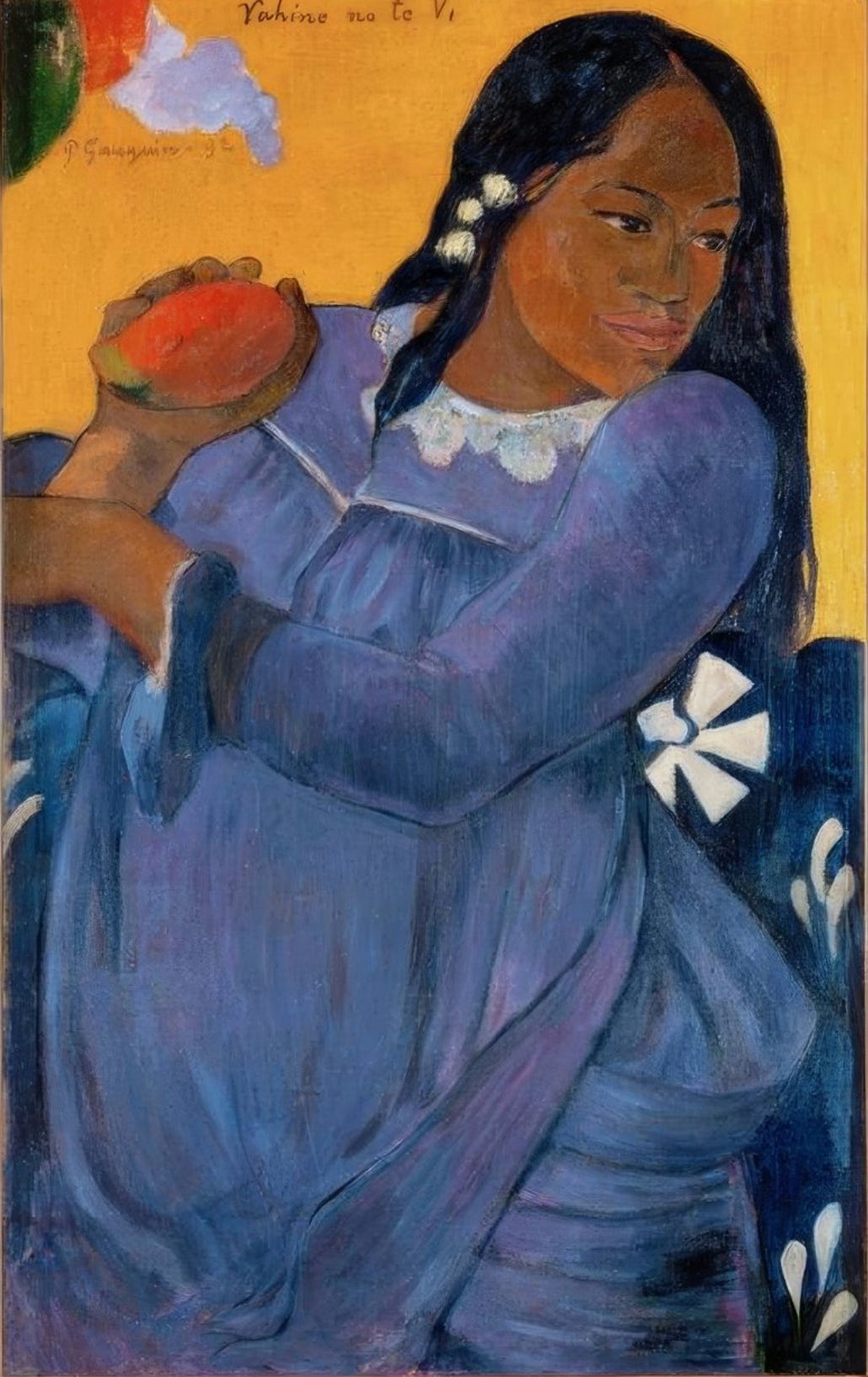
Gauguin dominates the background and the central figure with deep indigo shadows and cool ultramarine tones. This palette creates an introspective, exotic mood. These moody blues envelope your visual cortex in peace.
As you look at the canvas, your Salience Network comes online. It shifts your brain away from panic and toward self-awareness. It grounds you in a calm, present state. This makes it an incredible mental tool for melting away anxiety during awkward or stressful moments.
2. Claude Monet: Organizing the Chaos
Next, we travel to the Kunstmuseum Den Haag (the Art Museum of the Hague) to witness Claude Monet’s Wisteria.
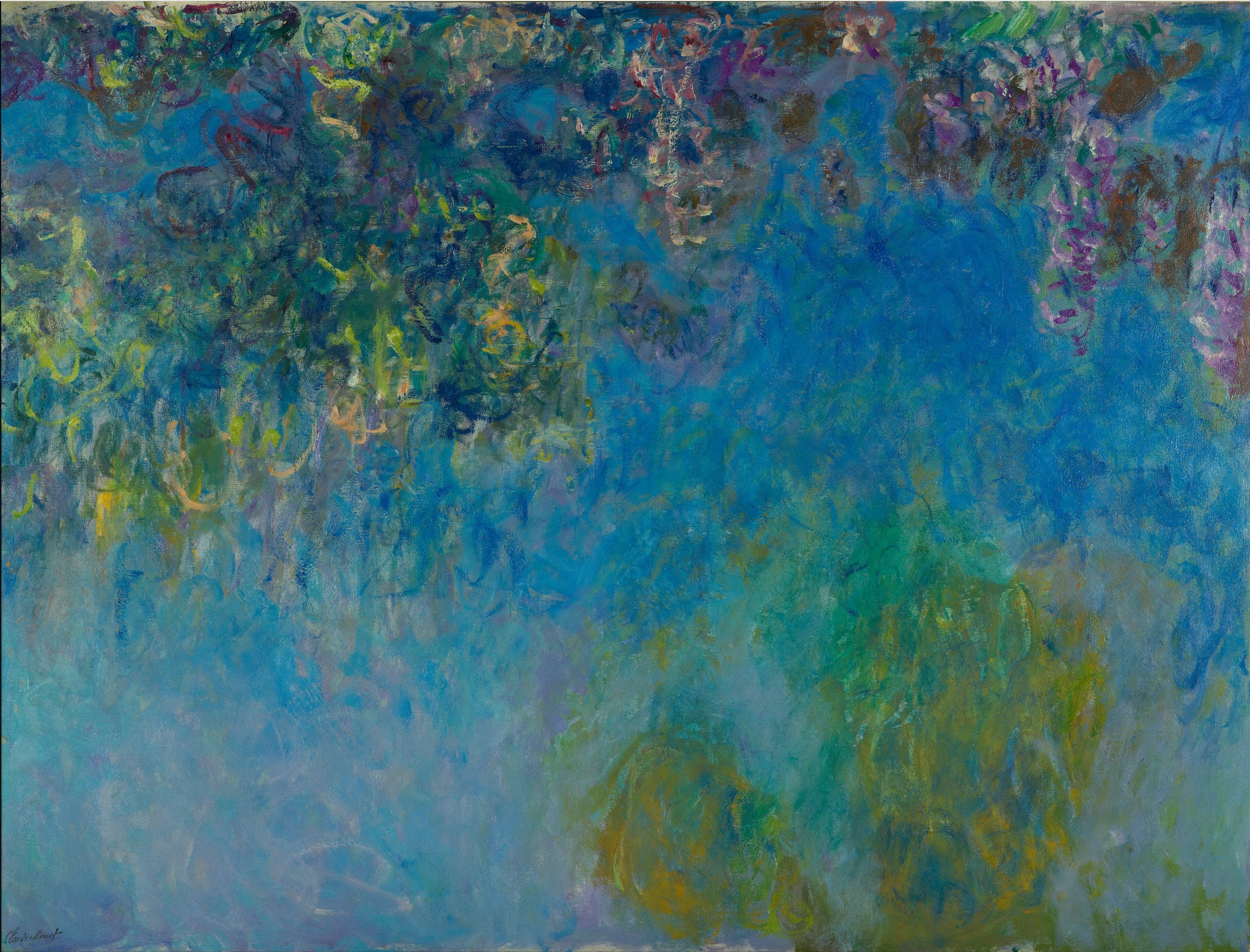
Here, impressionistic brushstrokes meet a serene blue harmony. Monet’s cool blues work wonders on the human nervous system. They trigger the Salience Network to improve emotional regulation and environmental awareness.
The magic of Wisteria lies in its composition. The interplay of organic, fluid forms and serene blue hues helps your brain organize chaotic thoughts. It structures raw data into a coherent, peaceful mental framework while simultaneously boosting your memory formation.
3. Wassily Kandinsky: Centering the Racing Mind
Our final stop brings us to the Guggenheim Museum in New York City for Wassily Kandinsky’s Composition VIII.
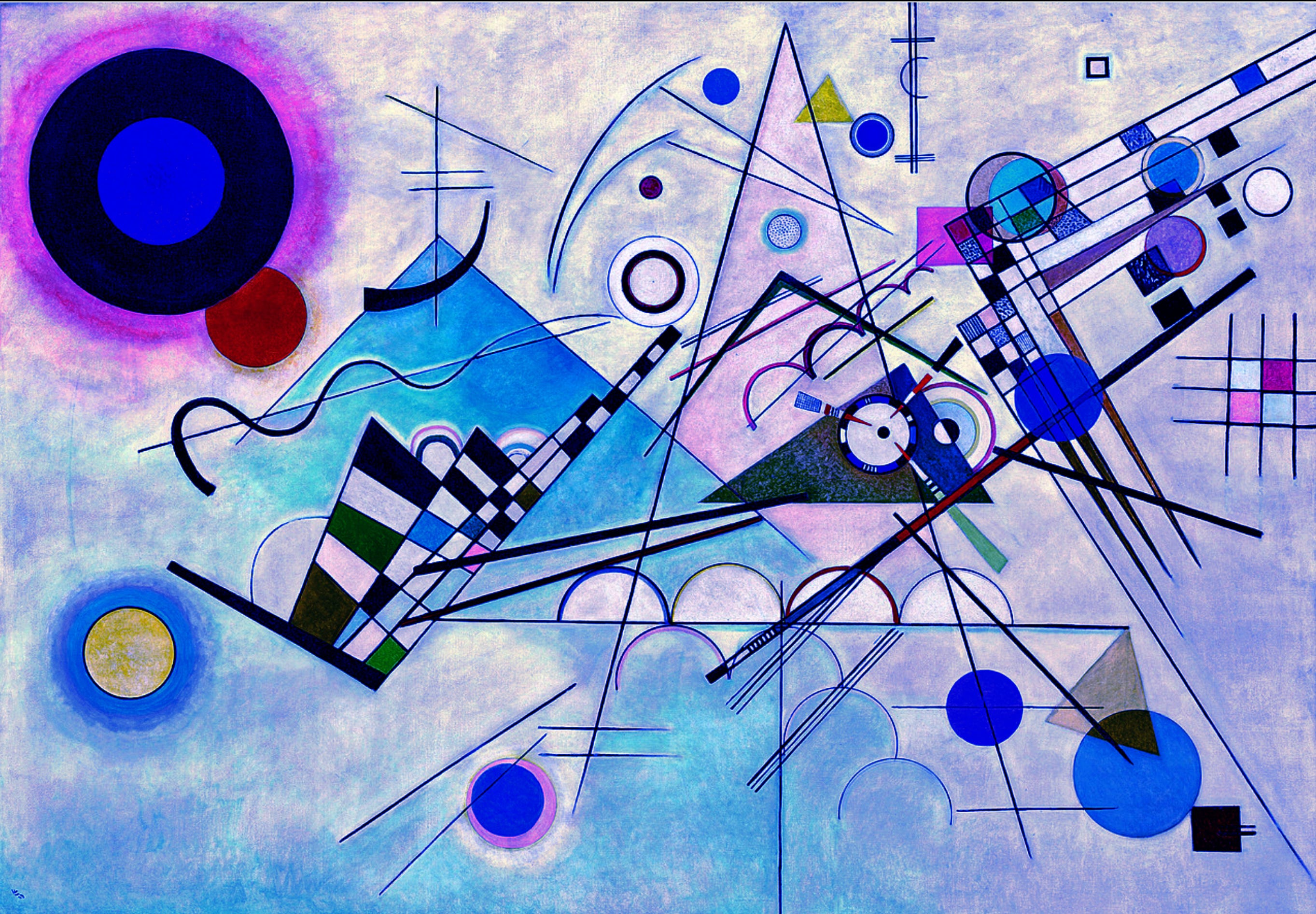
Kandinsky was famous for his synesthesia—he could hear colors and see sounds. In this piece, cool blues weave through sharp geometric circles and lines. This creates a powerful, rhythmic harmony right in the middle of dynamic energy.
These serene blue tones promote instant emotional balance. They offer the perfect visual anchor for centering a racing mind. As the Salience Network activates, it channels your frantic, nervous energy into enhanced focus and productivity.
Your Built-In Antidote
Art is not just a luxury for your walls. It is medicine for your mind. Blue is your built-in anxiety antidote and awareness amplifier.
You can visit these three paintings virtually or stand in front of them in person. Either way, you are giving yourself an instant brain upgrade.
Which of these blue masterpieces resonates most with your mind right now? Let me know in the comments below.
From Brain to Mind is a reader-supported publication. To receive new posts and support my work, consider becoming a free or paid subscriber.
Comments
Nothing yet. Say the first thing.
Sign in to join the conversation.