
A quick note: over the next couple of weeks, I’ll be continuing to write about women’s circles and community leadership as I share about my course, Circle Craft. This work is deeply woven into my life and writing, so it felt honest to name it rather than tuck it away. If it’s not for you right now, feel free to skip along. I’ll be back to my usual reflections soon. Thank you, always, for being here.
One of the most common fears I hear from women who feel called to gather others is deceptively simple:
What if I invite people and no one comes?
It’s usually said quickly, sometimes with a nervous laugh, as if naming it aloud might make it less true. But underneath that question lives something much more tender - a fear of being seen wanting something, a fear of misreading the moment and a fear that the longing for connection might not be shared.
Often, this fear is paired with another one:
Who would I even invite?
Suddenly the idea of hosting a circle feels exposed and overwhelming. Do you invite everyone you know? Do you risk hurting feelings if you don’t? Do you wait until you feel more confident, more established, more certain that people will show up?
So many women get stuck right here. Not because they don’t care about community, but because they care so deeply.
Here’s what I want to say clearly, from years of doing this work:
The fear that no one will come isn’t a sign that you shouldn’t gather. It’s a sign that you’re standing at the edge of leadership.
I’ve felt this fear myself more times than I can count. And I want to name something else that’s equally important and far less often said: sometimes, no one comes - not because they don’t care, not because you failed, and not because you were wrong to try.
Sometimes the timing simply doesn’t work.
I have hosted gatherings where schedules simply didn’t line up. Where calendars were full. Where kids were sick. Where the season was heavy. Where everyone I invited genuinely wanted to come and simply couldn’t.
It did not mean no one liked me.
It did not mean I wasn’t meant to lead.
It did not mean the idea was wrong.
It meant I needed to try again with a different date, a different rhythm, and a little more spaciousness.
This is part of learning to gather. It’s not personal, even though it can feel that way at first. But over time, you learn something essential:
Circles don’t become meaningful because they are full, they become meaningful because they are true.
This is where the idea of generous exclusion becomes such a relief.
Priya Parker uses this phrase to describe a practice that runs counter to how most of us were socialized: that meaningful gatherings require clarity and edges. That being clear about who something is for is not unkind — it’s actually an act of care.
When I share about this, I often see people’s shoulders drop.
“Oh,” they say.
“I thought I had to invite everyone.”
No wonder the fear felt unbearable.
When we imagine inviting everyone we know - acquaintances, neighbors, people we feel vaguely obligated toward - the stakes skyrocket. If no one comes, it feels like rejection. If the wrong people come, it can feel awkward, draining, or unsafe.
But circles aren’t meant to be catch-alls. They are containers, and containers need edges.
One of the most important questions you can ask before hosting a circle isn’t how many people might come, but:
Who is this for, really?
Not in a branding sense, but in a human one.
Is it for mothers in the thick of early parenting?
Women craving slower, deeper conversation?
People who are spiritually curious but allergic to performative “woo”?
Women navigating a particular season of transition?
When you answer this honestly, the invitation changes and this is where so many gatherings succeed or fail.
A clear invitation doesn’t try to convince. It doesn’t explain everything. It simply names who the space is for, what kind of experience it will be, and what season it’s meant to serve.
Instead of “I’m thinking of hosting a circle, would you want to come?”
it sounds more like: “I’m gathering a small group of women who are longing for slower, deeper conversation about the midlife transition. If that’s you, I’d love to have you.”
Clarity is what allows the right people to recognize themselves in your invitation and to say yes without pressure.
And here’s something else that deserves to be said:
Some of the most powerful circles I’ve ever been part of started with three women. Sometimes four. Once, just two. Those gatherings were not failures. They were intimate. They were formative. They were where trust grew quickly and where I learned how to listen, guide, and lead without hiding.
A small circle isn’t a consolation prize, it’s often the perfect beginning.
When women tell me they’re afraid no one will come, I sometimes ask a different question:
What happens if you never try?
What happens if you keep waiting for certainty, confidence, or perfect timing? Most of the women I know who carry regret don’t regret hosting a circle that was small, they regret waiting. They regret assuming they needed to feel ready and they regret underestimating how much community grows through practice.
Community doesn’t appear fully formed. It grows because someone sends the invitation. Because someone is willing to sit with a little awkwardness and because someone chooses to begin imperfectly.
This is the work I teach inside Circle Craft.
Not how to be charismatic or polished, but how to create a grounded container, how to invite with clarity, how to trust small beginnings, and how to lead without abandoning yourself. We talk about who to invite, how to invite them, and how to hold the vulnerability that comes with gathering others.
If you’ve been caught between the fear that no one will come and the pressure to include everyone, you’re not doing it wrong.
You’re standing at a threshold, and thresholds don’t ask for certainty.
They ask for courage.
Whether or not you ever join me inside Circle Craft, I hope you hear this:
Your longing for community is not a flaw.
Your fear is not a stop sign.
And your circle does not need to be big to matter.
Sometimes, it just needs another date on the calendar and a woman willing to begin.
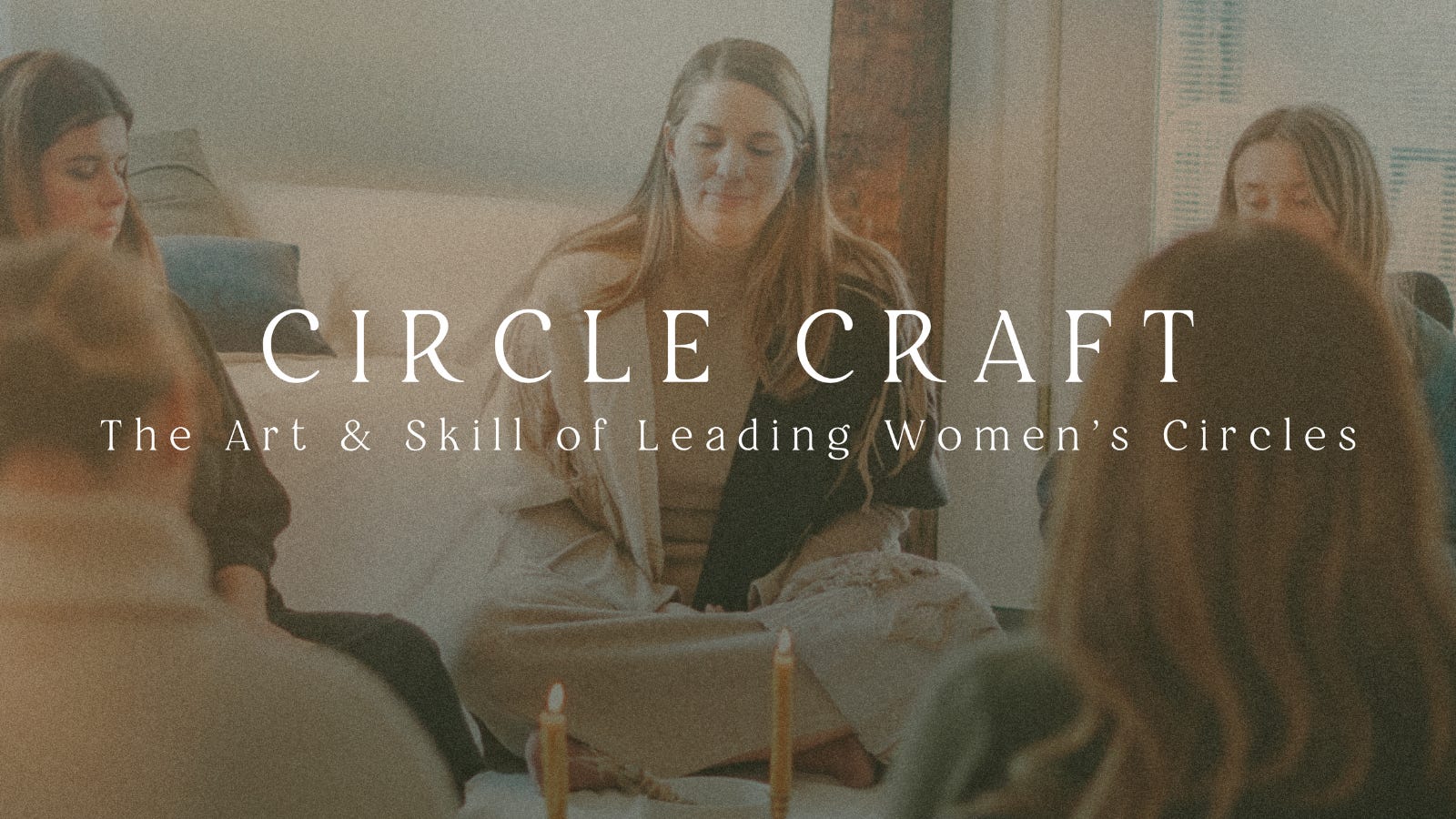
If this essay is stirring something in you, the fear of inviting and not being met, the pressure to include everyone, the quiet longing to gather women in a way that feels true, this is the work I teach inside Circle Craft. It is a winter apprenticeship in the art and skill of leading women’s circles, where we practice writing clear invitations, creating strong containers, trusting small beginnings, and leading without abandoning ourselves. We begin January 15th, in the quiet season that supports this kind of learning. If you feel the tug to begin, I would love to walk with you.
No posts
Comments
Nothing yet. Say the first thing.
Sign in to join the conversation.