
What if the generation that was handed a burning planet, a broken economy, and a political system in freefall is actually the most prepared generation alive to deal with all of it?
I know. Stay with me.
Because the story we’ve been telling ourselves about being millennials is a story of loss. We were the unlucky ones. The ones who did everything right and still couldn’t afford a house. The avocado toast generation, the therapy generation, the burnout generation. The ones who arrived at adulthood just in time to watch adulthood stop making sense.
And look, the grievances are real. The economic crashes were real. The institutions that were supposed to hold did not hold. The planet is genuinely on fire and the systems designed to protect it have spent decades looking the other way.
But I’ve been wondering lately if we’ve been telling ourselves the wrong story.
My friend Sarah Davidson who is a mother, community steward, and witch with an MBA, came to me a while back with a theory that I haven’t been able to stop thinking about.
She’d been reading about generational archetypes: the idea that history moves in roughly 80-year cycles, and that the same four types of generations appear again and again, shaped by the world they’re born into. And millennials, according to this framework, are the hero generation. The same archetype as the Greatest Generation. The ones who also came of age in chaos. Who also watched the familiar world dissolve. Who also had to decide, in the middle of an unraveling, what they were going to build.
They built the national parks, clean water legislation, and the social infrastructure that held this country together for decades.
And Sarah’s question, the one that lit something up in me when she said it across my living room coffee table, was simply: what are WE going to build?
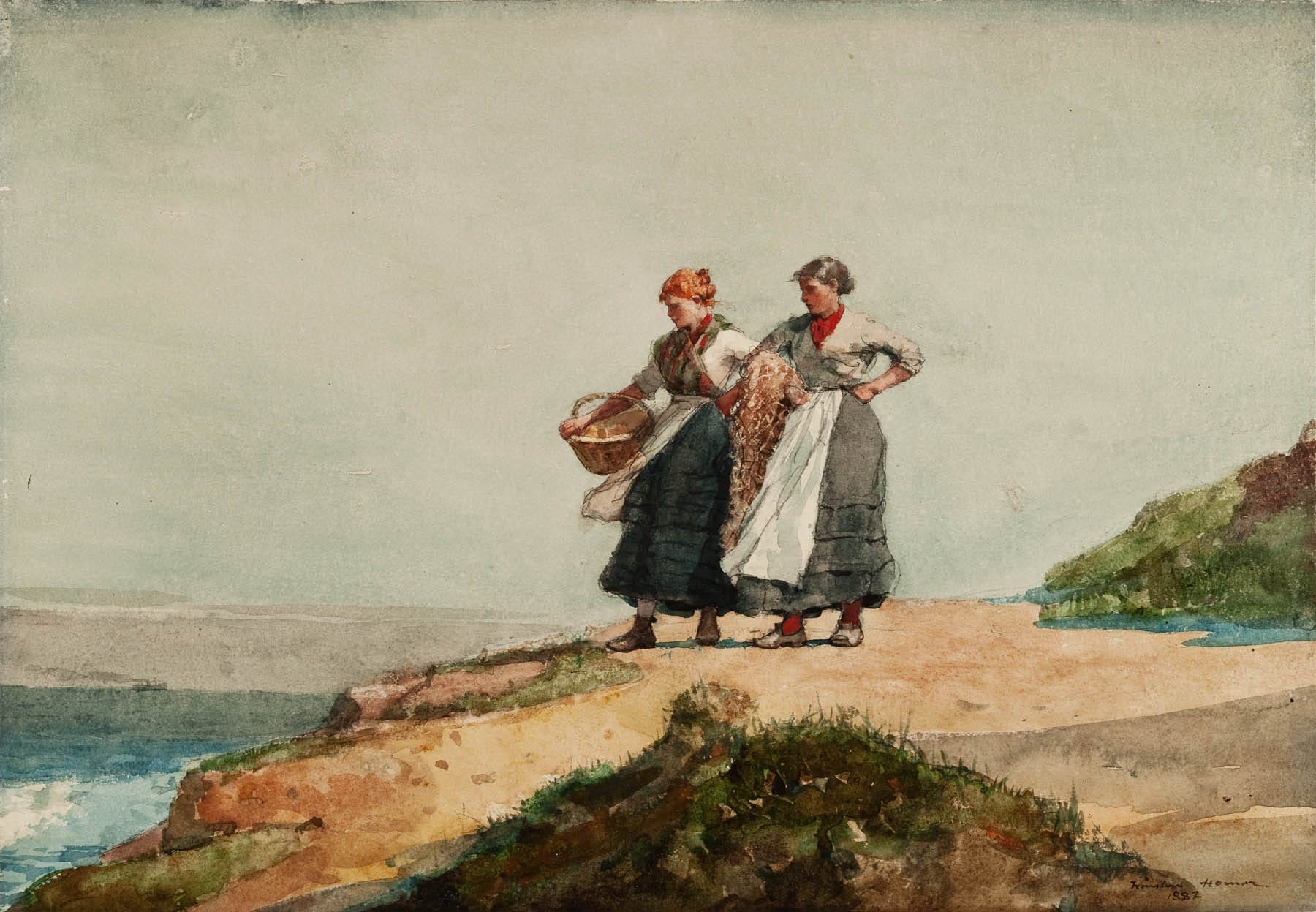
Looking Out to Sea, 1882 by Winslow Homer
Here’s what makes this moment different: so many of us are the hinge. We remember both worlds. We have a body memory of the before, of a life that existed entirely offline, of slow summers and the particular freedom of being unreachable. And we came of age watching every institution we were handed begin to crack.
The twin towers fell when we were just old enough to understand what we were watching but not old enough to have any framework for it. Facebook arrived in our college dorms and we thought it was just a fun way to find out who was dating who. Everyone got a phone. Then everyone got a better phone. Somewhere in there a sheep got cloned and we filed it under weird news and kept moving.
We didn’t know we were living inside a turning, we just thought this was growing up.
And if you’re reading this and you’re not a millennial, I don’t think this lets you off the hook. If you’re alive right now, you’re in this. You remember a before too. You’re watching the same unraveling. The assignment belongs to all of us.
That experience, of straddling the before and the after, of watching the unraveling in real time while still being young enough, or awake enough, to imagine something different, that is not a wound. That is a qualification.
I want to be careful here though. I am not talking about toxic positivity. I am not talking about bypassing real hardship, real grief, real financial precarity. Some of us are barely keeping our heads above water and being told we were “made for this” can feel like one more way of asking people who are already exhausted to do more. That is not what I mean.
What I mean is both smaller and larger than saving the world.
Smaller: finding the thread. The one thing in front of you that feels like it matters. The neighbor you check on. The garden you tend. The table you set. The conversation you refuse to stop having.
And larger: if you have resources, or are about to, this is the moment to think critically about where they flow. We are living through the greatest wealth transfer this country has ever seen, from boomers to millennials, and most of us aren’t talking about what we do with that intentionally. Local currencies. Bioregional financing. Community-led investment. The question of who controls capital and what it is asked to do is not abstract. It is the question of our generation. And we are, for the first time, in a position to answer it.
Because we are, right now, stepping into the era of our lives where that question becomes real. We know where we live. We know who our people are. We’ve done enough therapy to know our patterns, enough loss to know what matters, enough joy to know it’s worth protecting. The unraveling we grew up inside of, the one we thought was just the wallpaper of adolescence, turns out to have been our training ground.
We were being prepared for exactly this.
I don’t say this to bypass the horror of what’s happening in the world right now. Some days the news is genuinely undigestible, too large and too brutal for our animal brains to metabolize. I know that. I feel that. But the more I cannot control what is happening out there, the more intentional I want to be about what I can control in here.
The table I set. The land I tend. The women I gather. The conversations I refuse to stop having even when everything feels too heavy for conversation.
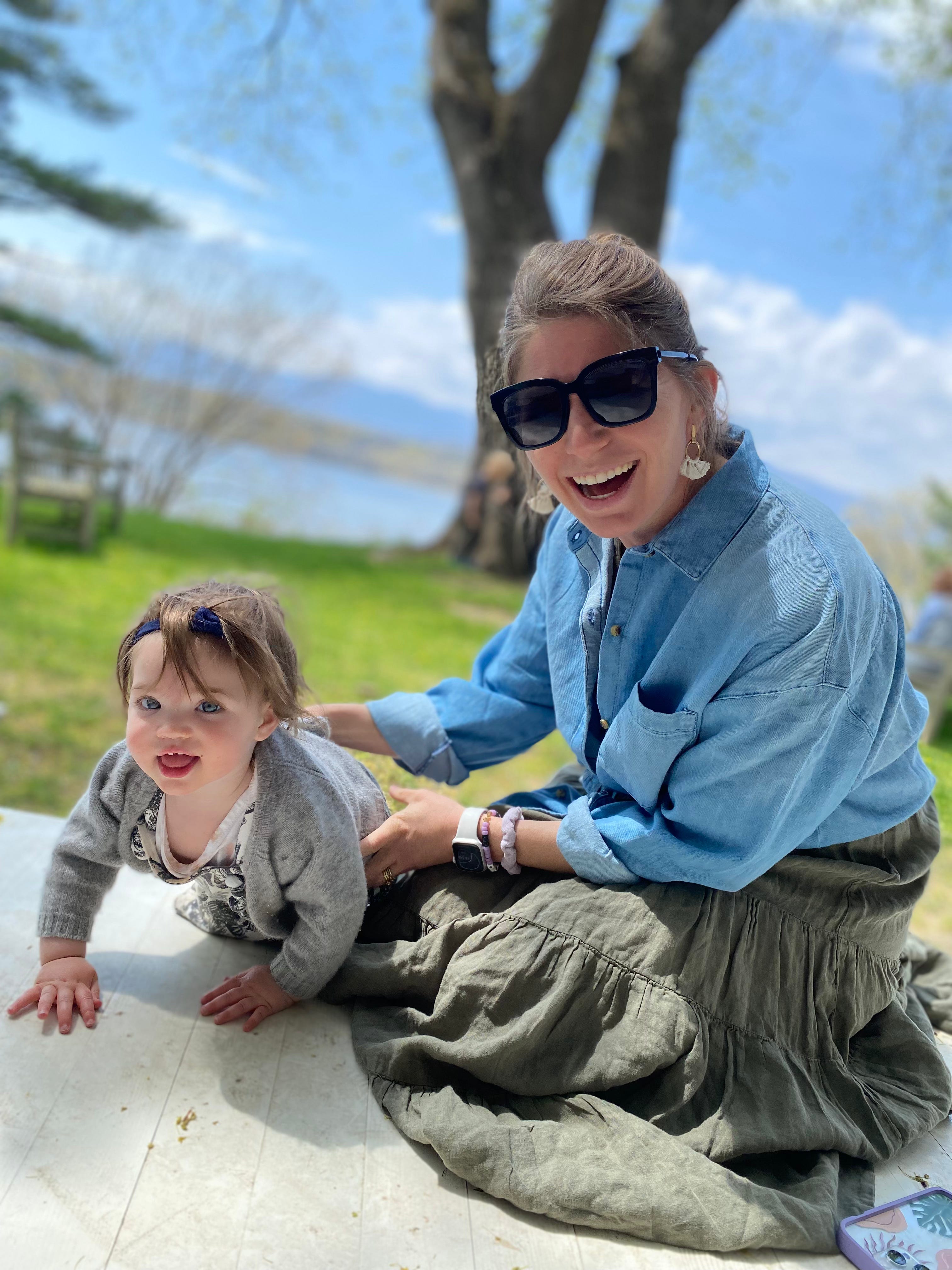
My friend Sarah Davidson (witch with an MBA) doing the sacred motherhood thing while envisioning and working on a more just, equitable and well cared for future
No posts
Comments
Nothing yet. Say the first thing.
Sign in to join the conversation.