
Hello there! You’re receiving this because you subscribed to my newsletter (hi, I’m Becca Piastrelli) or directly to this Substack, How We Come Back. I’ve recently woven together my writing about life on our regenerative farm here in the Hudson Valley with my reflections on seasonal living, ritual, and community. I’m so glad you’re here and reading along.
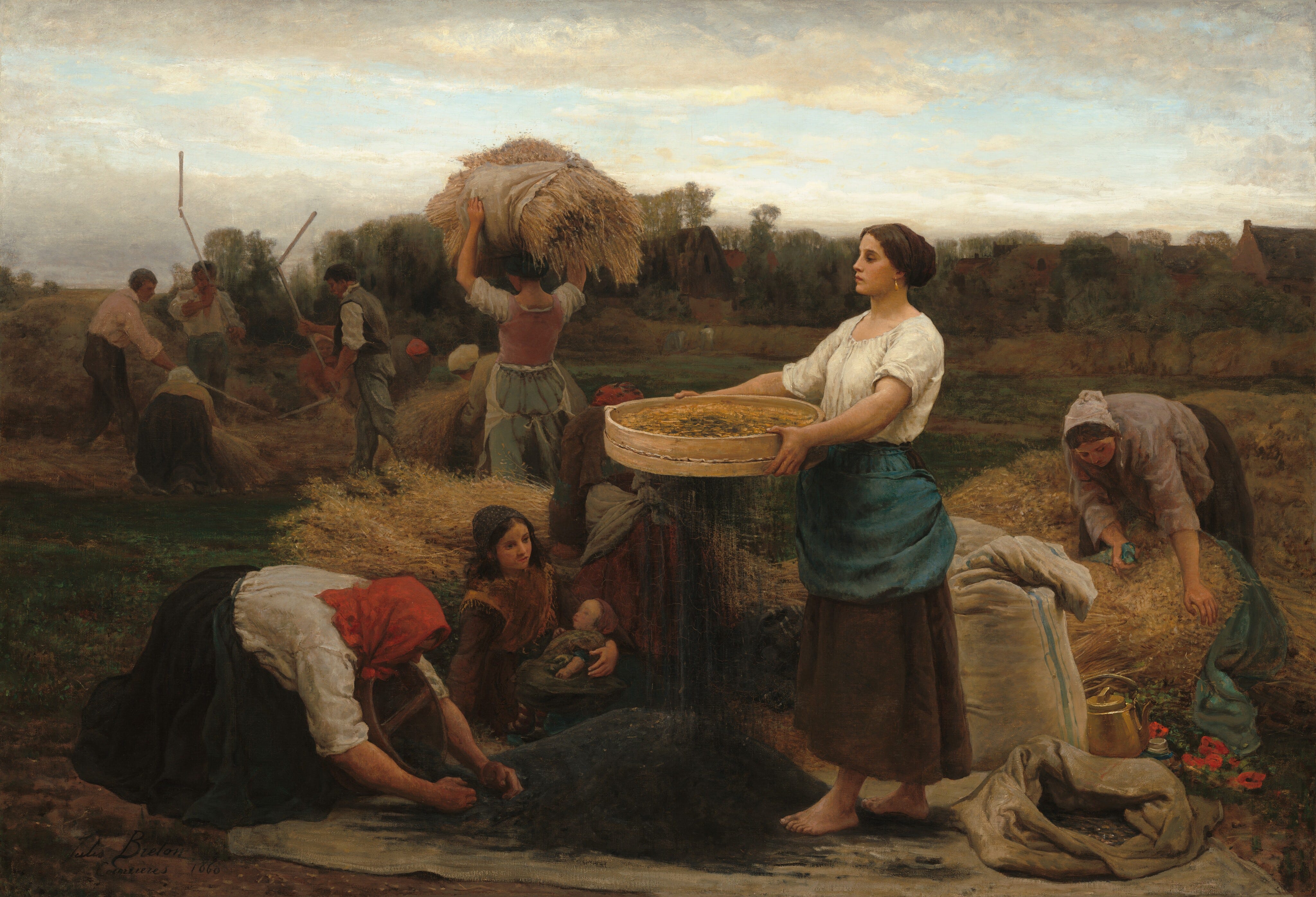
The Colza (Harvesting Rapeseed), 1860 by Jules Breton
I’ve been gardening for nearly two decades now, and yet, the practice of saving seeds has always mystified me. I could grow a tomato, sure, plant it, tend it, harvest it, but when it came to the part where you keep the seeds for next year, I somehow drew a blank. My colonized brain had learned the rhythm of consumption: when you want something, you buy it. You need more seeds? Order them from the catalog. Simple. Convenient. Entirely disconnected from the pulse of reciprocity that makes life possible.
It’s wild to me now, how a single seed can become a plant that bears ten, a hundred, even a thousand more seeds. How life, when given half a chance, insists on living. Insists on multiplying. Every plant in my garden is a little engine of generosity. The zinnia gives. The calendula gives. The beans, if I can manage not to eat them all, give too. The abundance is staggering once you start to pay attention.
But it took me a long time to see it. To see that seed saving isn’t just a quirky homesteader hobby. It’s a practice of faith. A practice of remembering. When I save a seed, I’m saying: I believe there will be another season. I believe this life is worth tending again. In an age when everything feels so precarious, politically, ecologically, spiritually, that belief feels radical. To save a seed is to plant a prayer for continuity.
Of course, seed saving has its own complexities. You have to learn about cross-pollination, proper drying, and storage conditions. You have to accept that some seeds lose viability after a few years. But all of that can be learned. What matters more is the orientation it calls forth in us. The patience. The attention. The long view.
I think often of my ancestors, who didn’t just garden but saved the means of life itself. They selected the strongest plants, passed the seeds through their hands, their families, their villages. They were saving stories, flavors, medicines, and ways of being that stretched across generations. Seed keeping was never a solo act; it was an act of belonging.
These days, I’m learning to do the same. I’m labeling envelopes, trading with neighbors, tucking little paper packets into drawers for next spring. It feels small, but it isn’t. It’s a way of saying: I’m still here. I’m still believing in the possibility of life continuing.
My five-year-old seems to know this instinctively. I find seeds in the pockets of her jackets and backpack, tiny maple wings, acorns, dried berries, milkweed fluff, all nestled together with pebbles and bits of string. Her pockets are like miniature seed banks, full of curiosity and quiet reverence. She saves without anyone teaching her to, as though her body remembers something mine had to relearn. Maybe that’s what saving seeds really is: remembering that life wants to live, and that we’re a part of that great remembering too.
To save a seed is to stand in solidarity with the earth’s will to live. It’s to remember that abundance isn’t something we purchase, it’s something we participate in.
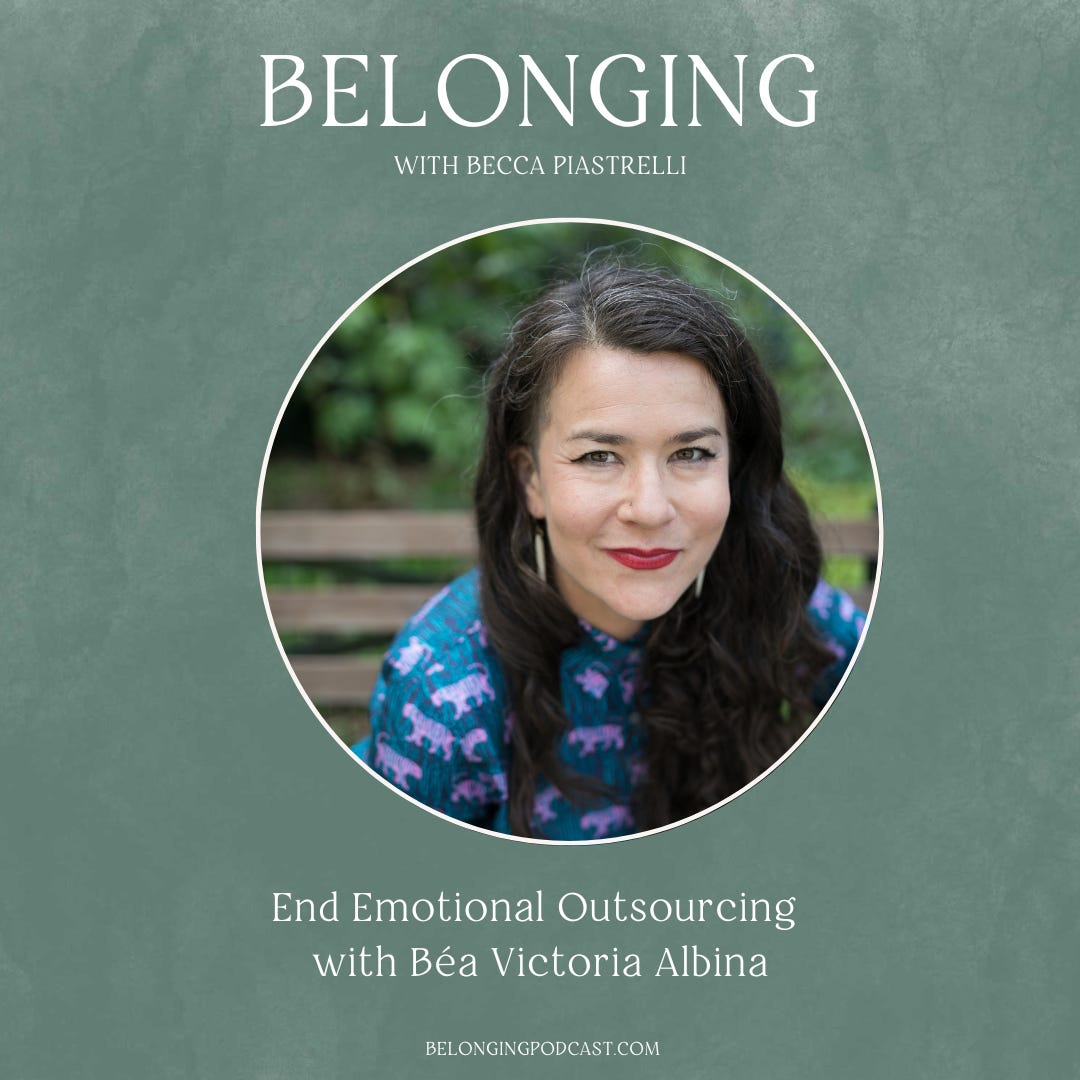
It’s an interview with the magnificent Béa Victoria Albina about her new book, End Emotional Outsourcing: How to Overcome Your Codependent, Perfectionist, People-Pleasing Habits, and it’s gooooood. We talk about the cost of chronically and habitually outsourcing our sense of safety, belonging and worth. We dive into the root of these behaviors from a cultural and historical perspective and Béa shines a light on how we were trained up to be disconnected from the earth, magic and our own inner wisdom. Listen here or wherever you listen to podcasts.
No posts
Comments
Nothing yet. Say the first thing.
Sign in to join the conversation.