
You’re reading How We Come Back, my ongoing collection of field notes on returning to what matters: to one another, to the land, to love that endures. I write these reflections from our farm in the Hudson Valley, where the rhythms of the seasons keep reminding me what’s worth tending.
Today’s reflection is about something that’s been sitting heavy on my heart: how we talk about our male partners, especially when we’re frustrated with them.
There’s a certain kind of conversation that leaves me with a pit in my stomach.
It usually starts innocently enough: friends gathered around a table, a bottle of wine open, the ease of familiarity loosening our tongues. Someone makes a joke about their husband not pulling his weight, another rolls her eyes, and before long we’re trading stories about the ways our partners have fallen short.
It’s not that I don’t understand the frustration. I do. I’ve been there, feeling like the weight of the household, the parenting, the invisible labor of emotional tending has fallen squarely on my shoulders. I can be really frustrated with my husband sometimes. I can talk about that frustration honestly and still hold him in the highest regard.
Because I love my husband. He is a king among men to me. And I want to speak about him in ways that honor that truth, even when I’m hurt or angry or bone-tired from the inequities that still exist in our marriages and our world.
What I’ve noticed is that there’s a difference between sharing a truth and tearing someone down. Between “I’m feeling really alone in the parenting load right now” and “My husband is the literal worst.” One opens the door to connection, empathy, and possible repair. The other feeds a culture of quiet resentment and disconnection between us and our partners, but also between women and men as a whole.
I say this as a tried and true patriarchy abhorring feminist who sees clearly how toxic masculinity harms us all. I don’t want to gloss over the ways men have been conditioned to be disconnected, self-protective, or avoidant. But I also don’t want to mirror that harm by speaking of my partner in a way that strips him of his dignity.

Receiving his reflections of my growth during my (romantasy themed) 40th birthday ritual celebration
In the words of my wise friend and intimacy + relationship coach Ginny Muir (who recently wrote a piece about this) I’m rooting for the men.
I’m rooting for my husband. I’m rooting for partnership that heals the wounds of patriarchy rather than reenacts them.
It’s taken me years to realize that the way I speak about him when he’s not around is part of that healing. It’s a practice of respect, not perfection. Of saying, “I’m really frustrated with him right now, and I also love him deeply. I want to believe that he’s trying.” Of venting in a way that doesn’t erode the sacredness of what we’re building together.
Because when I speak about him as though he’s disposable or incompetent, I’m shaping my own perception of him. And when I speak about him with care, even when I’m mad, I’m tending the invisible threads that hold our partnership.
This isn’t about silencing myself or bottling up what’s real. It’s about choosing integrity when I speak.
When I need to talk something through about my marriage, I’m learning to pause and ask myself: Who am I sharing this with, and what do I hope to get from it?
Do I want someone to take my side, to validate that I’m right and he’s wrong? Or do I want to feel seen and supported so that I can return to the conversation with him more grounded and clear?
It’s usually the latter and that difference matters.
Sometimes I need to talk to a friend who can hold both realities: that I’m frustrated and that my partner is human, learning, trying in his own way. I want to speak to people who are rooting for us, who can hold the nuance of partnership in this messy, modern, post-patriarchal world.
Because what I’ve noticed is that when the tone of the conversation turns toward mockery, dismissal, or subtle contempt, something in me contracts. I leave those conversations feeling less in love, less open, more cynical. It’s like pouring poison into the well I’m still drinking from.
But when I can share vulnerably, “I’m feeling so tired of being the one who notices everything that needs doing,” and someone responds with empathy instead of derision, something softens. There’s space for truth, and for tenderness.
I want the language I use about my partner to be language that fortifies our bond, that honors the mystery of what we’re learning together, that recognizes how radical it is to love a man in this culture, to hold both the grief of what men have lost under patriarchy and the possibility of what partnership can become when we’re willing to do the work side by side.
This, to me, is what it means to be in right relationship.
To be honest, but never cruel.
To be discerning about what stories I speak aloud.
To hold his humanity, and mine, with reverence.
Because every time I choose respect over ridicule, I feel us move one small step closer to the world I want to live in. We live in a culture that teaches us to relate through complaint and to bond over shared frustration and make light of the sacred by turning it into a punchline.
But I think we’re hungry for something deeper: for friendships where honesty doesn’t require cruelty and for conversations that build rather than erode what we love.
So much of partnership is invisible work: the tending, the noticing, the forgiving, the choosing again. Speaking with reverence is one way I remember that what we’re doing here (two people, trying to love each other well in a time of deep disconnection) is holy work.
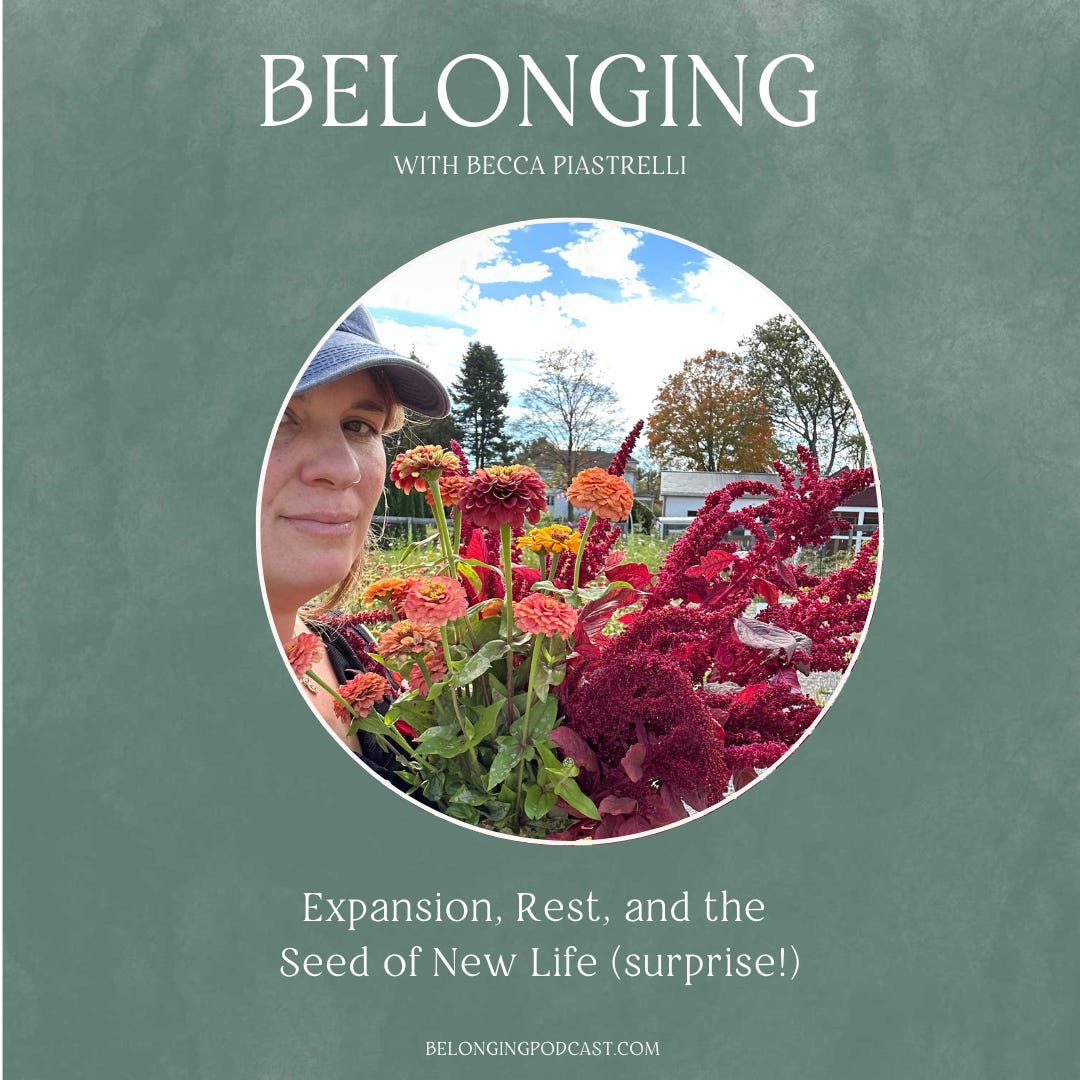
In this solo episode, I reflect on this past year and look forward at what’s ahead through the lens of the seasons. I muse on my experience of the second full year on our farm and how we have expanded, moved through challenges and triumphs throughout the growing season. I also talk about my upcoming winter plans and what I’m generally looking forward to during the darker months. Also…I’m pregnant! Surprise! Listen here or wherever you listen to podcasts.
No posts
Comments
Nothing yet. Say the first thing.
Sign in to join the conversation.