
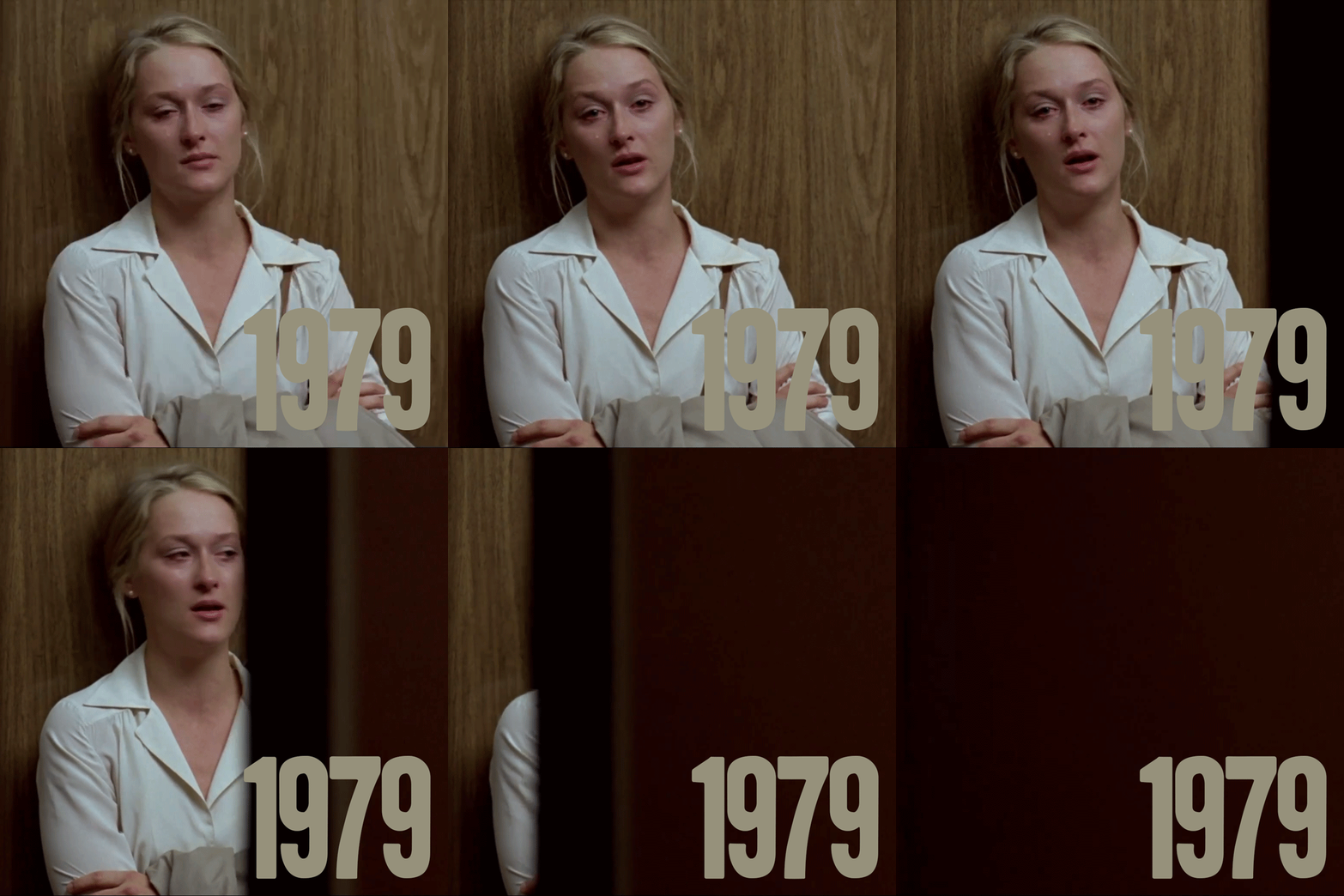
Part two, which is six paragraphs about the history of divorce and the movies, for you marital breakdown fans, is here.
I was 16 when Kramer vs. Kramer came out. I’d never known anyone get divorced. People we knew didn’t do that sort of thing. It was a decadent habit of the upper classes, celebrities, famous novelists and so on. Also people in Hollywood movies, obviously. Actually, I remember some neighbours of ours had divorced when I was little, in the late sixties. They were both exotics, though: long-haul flight attendants for a prestige airline: hyper-modern, borderless aliens - tall and good-looking. This couple’s lifestyle granted them additional freedoms not available to ordinary folks. So they didn’t count.
It obviously can’t be a coincidence that 1979 is the peak year for divorces in the USA1. I mean the absolute peak: never matched before or since. First-generation boomers feeling their freedom. Or possibly loser hippies feeling their epic self-centredness. From this distance it’s hard not to favour the latter explanation but there’s obviously a neatness to the 30-year gap2 between the absolute peak for marriages and this second peak - the peak in abandonment, giving up, walking out.
In Kramer vs. Kramer you can tell from the poster - and from the film’s legalistic name - that we’re in the post-liberation world, where divorce is not only possible but codified and available as a routine service, without judgement, from specialist providers. Attorneys like Shaunessy (Howard Duff) - who represents Ted Kramer (Dustin Hoffman) - and might even advertise for business as ‘divorce lawyers’ - essentially a branch of contract law that didn’t really exist before about 1969 - promising to ‘win’ cases in the combat zone of the court room.
Around here it was once only possible to secure a divorce via an act of Parliament, truly an elite pursuit (Britain is a protestant country now because a monarch wasn’t allowed to walk away from his marriage). In most of the Western world divorce had become available to some by the late 19th Century. The new urban bourgeoisie, living in new ways, in rows of nice houses, taking the train into town and riding the lift up to their office jobs, shopping and dining out: these moderns needed the freedom to move on, to escape from an abusive or charmless or boring marriage. They couldn’t tolerate the stasis of pre-industrial marriage as a life-long lock - and, more to the point, capital needed them to be free, mobile - unencumbered units of labour. Divorce in this period wasn’t easy: it was expensive and unfair and it required that one party was at fault - there’d be notoriety - but it was possible and in industrial societies it was added to the menu of life choices for free men and women.
The April sale is still on - subscribe before the end of this month for 50% off an annual subscription. That’s £25/year (34 of your Hollywood dollars) to support the GROSS project for a whole year!
The status and value of marriage itself continued to change under these pressures and in the decade that preceded the release of this film marriage was finally fully translated, almost everywhere, from sacrament or institution or instrument of control to ‘relationship’. This is the version of marriage described in Kramer vs. Kramer - a partnership freely entered into and just as easily exited from - on the whim of one party to the contract in the case of the Kramers.
There’s something grimly capricious about that party, Joanna (Meryl Streep), the party who ups and leaves. She caricatures the new language of the era. She’s a young woman who has somehow passed through the revolution of second-wave feminism and acquired only the most selfish of the available motivations, none of the lofty ones. It’s liberation but of the simplest ‘me’ generation kind. I’ve not read the best-selling 1977 novel3 (and you can’t make me) so I can’t tell you if this pretty basic misogyny comes through from the source or was overlaid in the movie. It’s dialed up when Joanna returns, to kick off the final act and to paradoxically assert the ancient, pre-political, pre-social, right of the mother to care for her child.
Comments
Nothing yet. Say the first thing.
Sign in to join the conversation.