
I’m simplifying the presentation here a bit, trying to reduce the labour involved in producing these pieces - so no forest of links at the top any more. Let me know if you actually like it when I link to the cast and IMDb etc., though. I might be persuaded to add the links back in.
I’ve really been struggling in the seventies. I mean this is the era of Star Wars asnd Rocky and now - two-thirds of the way through the decade that brought you, among other things, neoliberalism, Margaret Thatcher, the many indignities of Richard Nixon, the Islamic Republic of Iran and Abba - we have Grease. I’ve tried a number of approaches to this grim work of art. I considered, for instance, satirically treating it as if it were an adaptation of Wuthering Heights1.
You’ll see what I mean: the film’s greaser gang - the T-Birds - are the residents of Wuthering Heights, Danny (John Travolta) is Heathcliff. The Pink Ladies are the Thrushcroft Grange crowd. Sandy (Olivia Newton-John) is obviously Cathy, Rizzo (Stockard Channing) Isabella. See what I mean? I think I could have made this work. In fact I was having fun assigning members of the two gangs to the novel’s dramatis personae2.
Beyond the cast I think I could plausibly have connected Brontë’s amorality with the stark cruelty of the Rydell High School community. When Rizzo’s period is late it’s obvious her life could now just unravel overnight (it’s the mid-fifties, abortion won’t be legal for another ten years) but everyone laughs or even mocks her dilemma, it’s Brontë bleak. Like when Heathcliff scorns his own sickly son and we’re left open-mouthed. And from the perspective of 2026, after the coming and going of woke - and the decade of thin, phoney ‘kindness’ in art and culture that we’ve been putting up with - both seem alien; fantastically, gothically nasty.
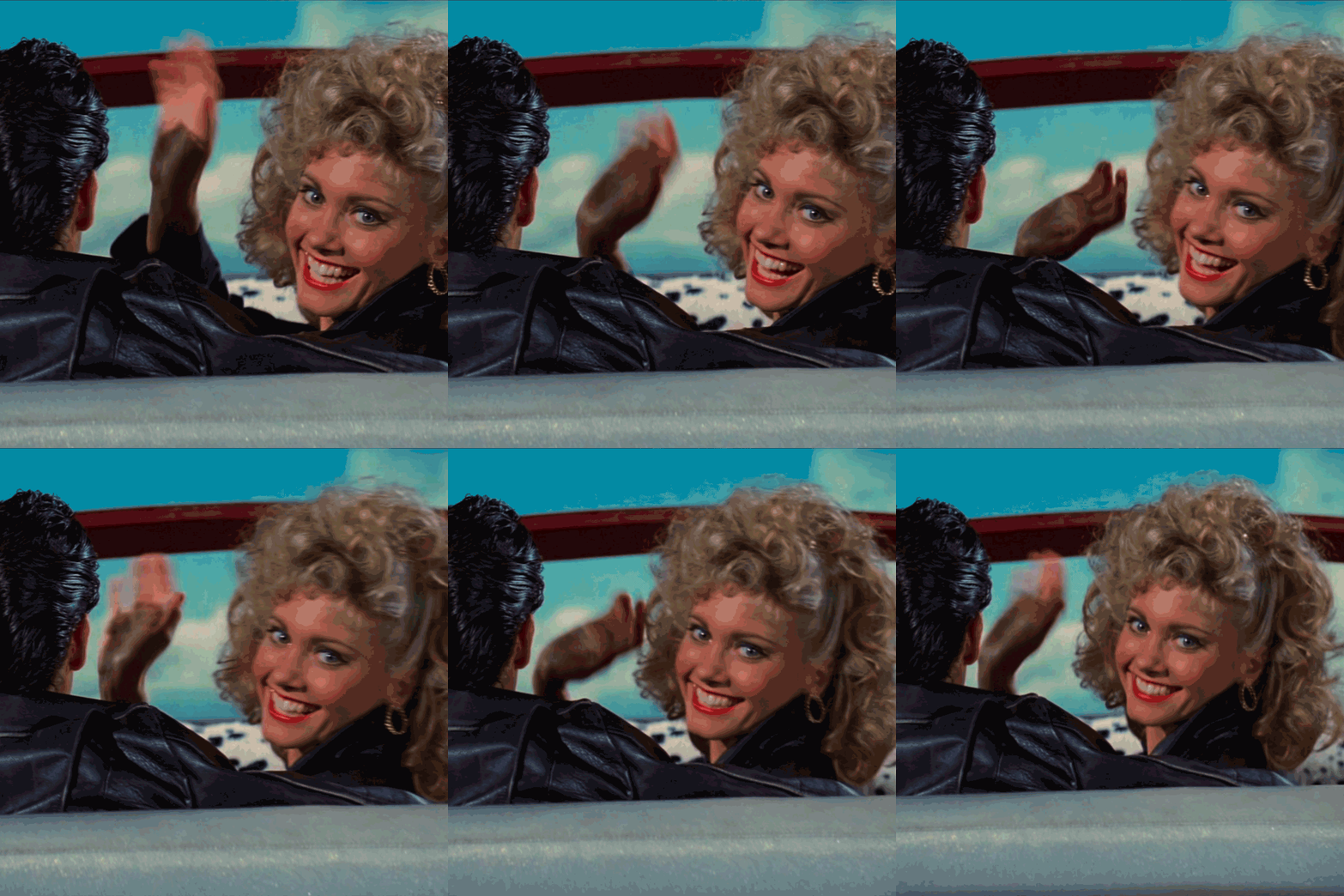
Actually, the fun part of this comparison would have been in the endings. At the end of Wuthering Heights we’re pretty sure that Brontë’s lovers are going to be reuinted after death. It doesn’t make any sense, but then what does up on the moors? Importantly, this is not spiritual: there’s no grace, no sacrament. It’s got nothing to do with faith. It’s essentially paranormal. Spooky. Wuthering Heights, of course, is a fully gothic work of art. We don’t for a minute think that these two weirdos are going to heaven or even, for that matter, to hell. Where they’re going is sacred to no one. And at the end of Grease, when Sandy and Danny literally drive away into the sky in the Ford (you’d forgotten that bit hadn’t you?), it’s the same. They’re going somewhere magical, somewhere beyond the ordinary life of Rydell High and their hateful small town. It’s unexpected, unexplained but it’s got nothing to do with transcendence. It’s magic realism.
In fairness it might also be a lazy resolution to a tortured and resistant text that honestly needed something. I mean a conventional, ground-based happy ending was obviously an option but, in the final scene of Grease you can almost feel the director (a man who, let’s face it, had already peaked, here in his first feature) grasping for something, anything really, that might lift the ending beyond the grinding nothing that is the rest of the movie.
Kenickie (Jeff Conaway) is Hareton and Coach Calhoun (Sid Caeser) Mr Earnshaw, obviously - but who is Nelly? Answers in the comments, please.
Comments
Nothing yet. Say the first thing.
Sign in to join the conversation.