
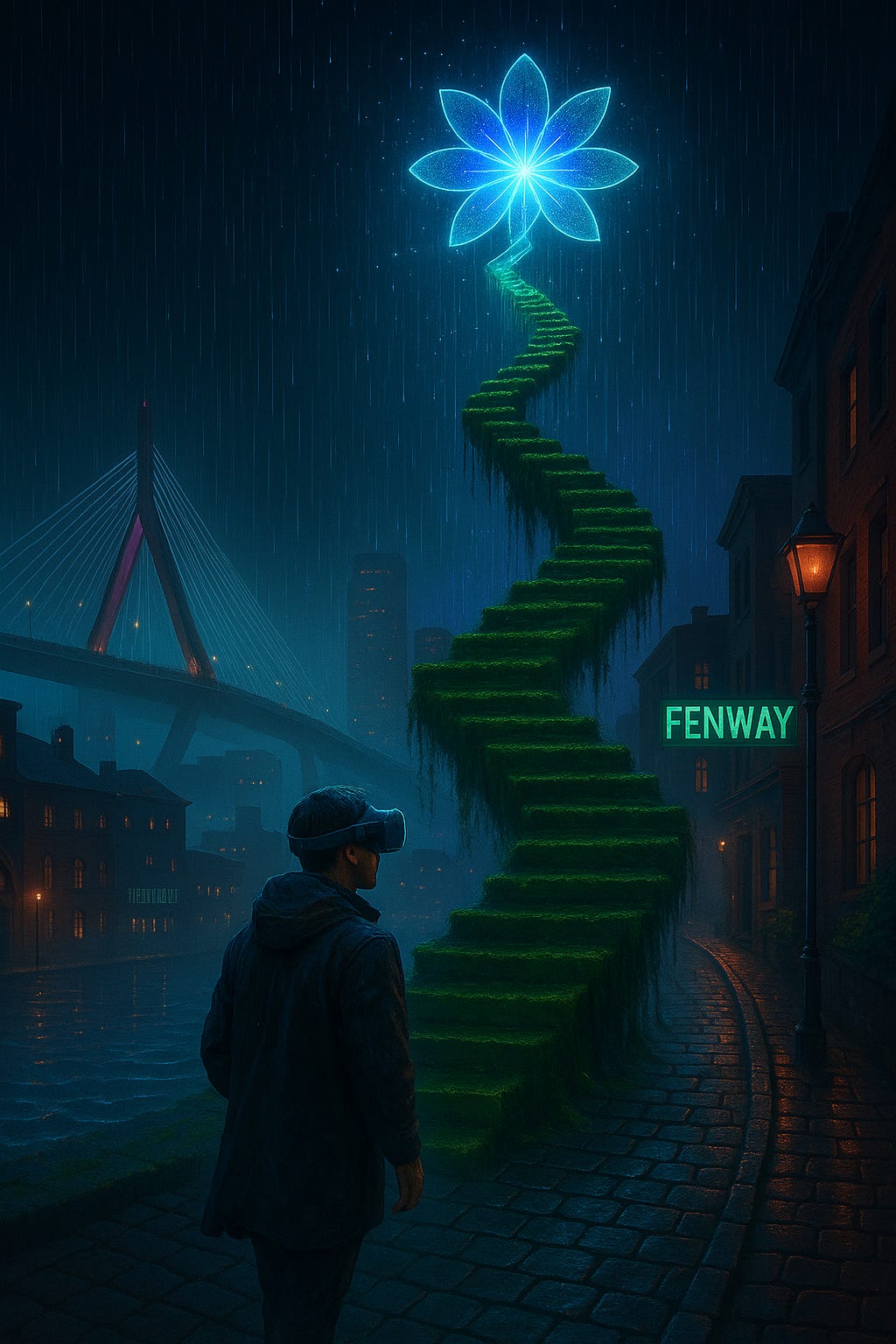
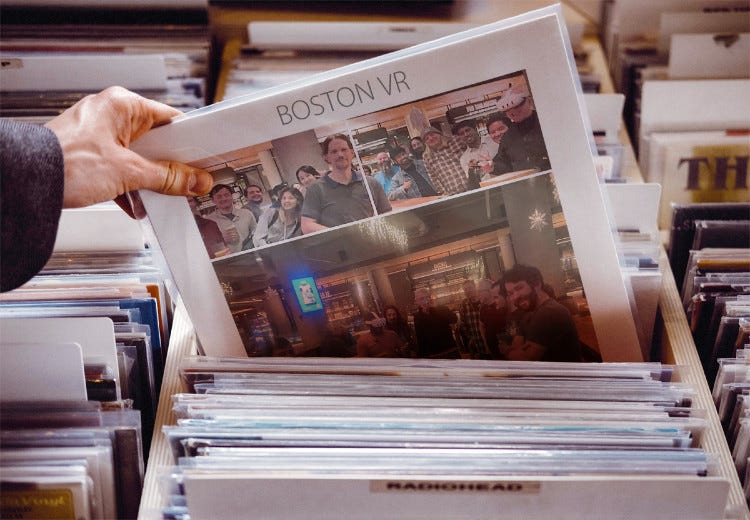
The organizers and volunteers of Boston VR are continuing our monthly socials at TimeOut Market.

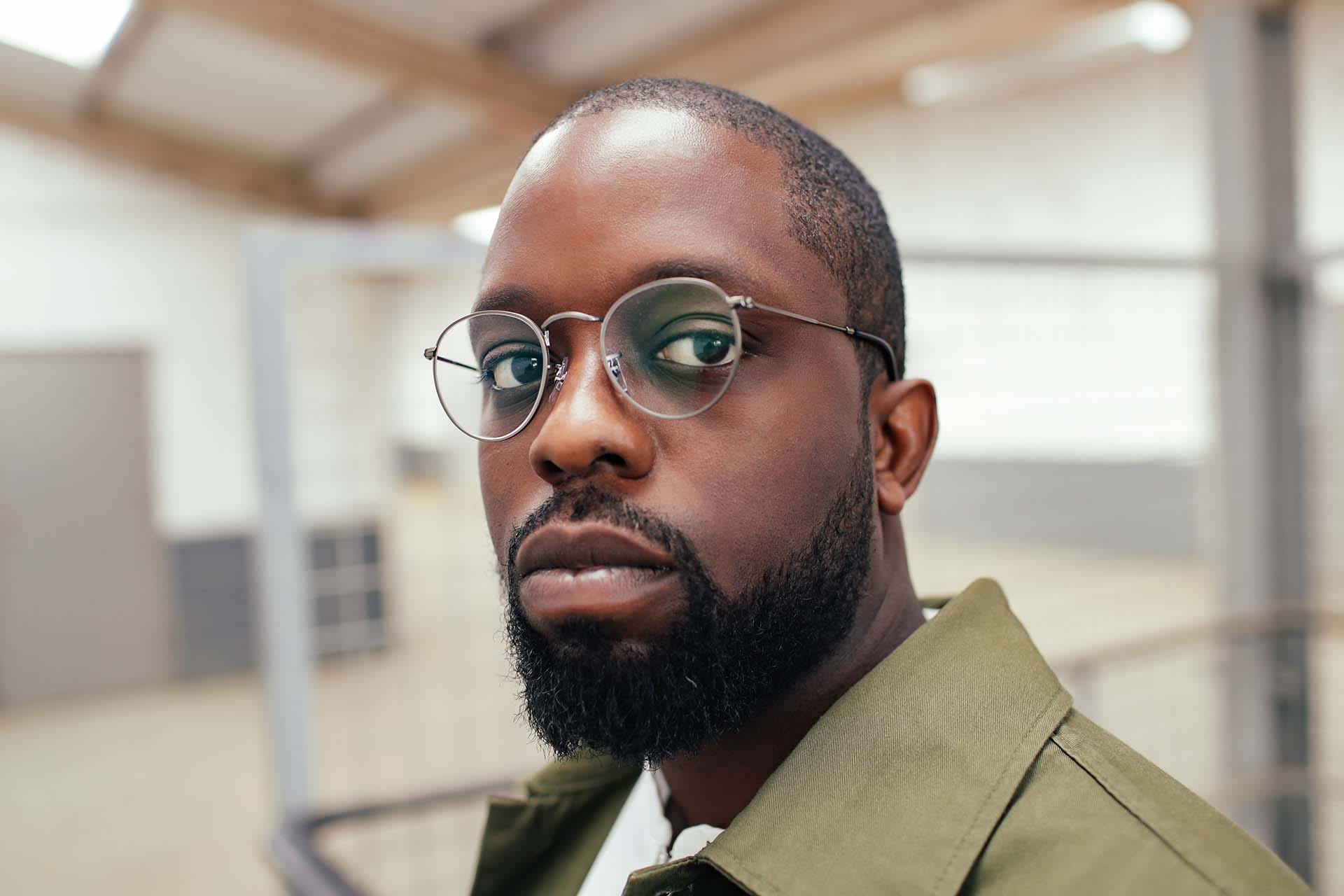
Source: https://www.rcwlitagency.com/authors/fadugba-femi/
For this month’s newsletter, I had the unique opportunity to interview Femi Fadugba—a fellow member of Boston VR, founder of ShepherdXR, and author of The Upper World (soon to be a Netflix movie starring Academy Award winner Daniel Kaluuya, with a new sequel just released, The Mirror World). Femi holds a Master’s degree from the University of Oxford, where he published research in quantum physics. We discussed his thoughts on the VR industry.
Chris: How did you get into the XR industry, and what kind of work are you currently doing in it?
Femi: I think that the two things that I work in and have worked in for a long time, really, actually, are STEM and storytelling. And I've kind of alternated between the two at different phases of my life. So at one point, I was doing quantum computing work at Oxford University with the quantum computing department.
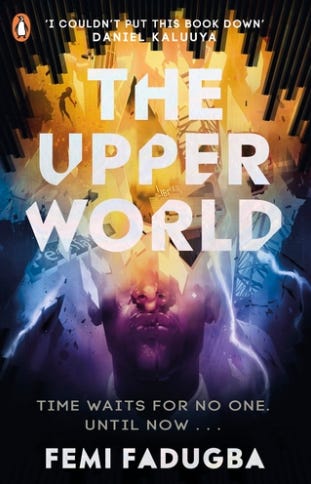
From a kid, I really enjoyed physics and math. And about five years ago, I wrote a book called The Upper World that got published, and it will be a Netflix film and all that sort of stuff.
Source: Penguin
But although the book is a fictional thriller. The fundamental reason I wrote it was as a piece of physics outreach. Within the text is a pretty comprehensive explanation of Einstein's theory of relativity. And it's kind of just covered in story, just because I felt like that was the best way to tell that story of relativity. The best way to explain something has always been to tell a story.
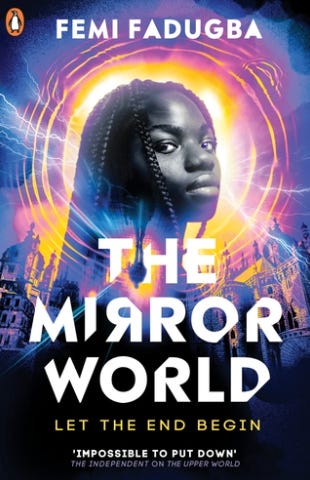
And my second book, The Mirror World, will be released on Thursday (Editor’s Note-This was April 24th 2025). And that one tackles quantum mechanics. And so that's the second branch of physics that I get to tell the story of.
So between them, those are the two biggest branches—the two main branches of theoretical physics. And so the idea was to, yeah, as a piece of outreach for kids to get curious about the subject.
And so, how did I come to XR? I don't think I had a pure passion for XR in the same way that other technologists do. I don't think it was necessarily that the technology captivated me first, then I needed to figure out something to make in it. It was very much the other way around where, as I was working on a lot in physics and doing outreach there, I realized this kind of strange coincidence that most people realize when you spend a lot of time in physics, which is that nature just so happens to be written in this language and the language isn't English, it's actually mathematics.
Source: https://shepherdxr.com/
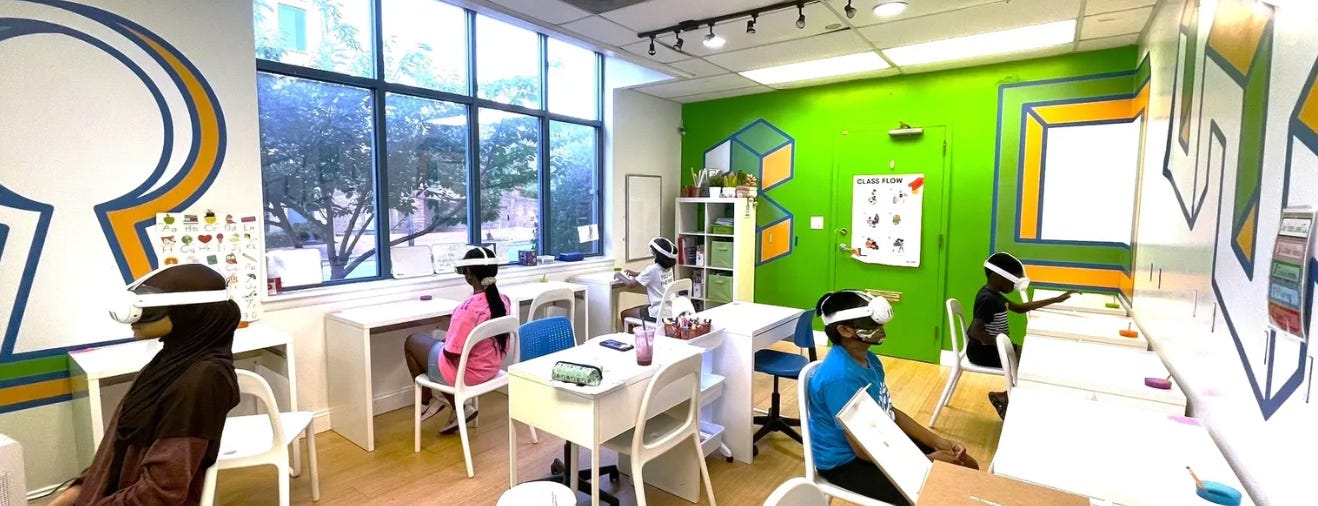
And so as you're trying to understand physics, there's also this question, hold on, where's this math stuff coming from? So I've gone down many rabbit holes trying to understand math. And I feel like I've learned a lot going down that route and became a lot more passionate in math and decided, hey, I think this is the next adventure—to get kids to understand math. And so I'm creating a video game and it's in XR. I think XR has a lot of advantages for this kind of thing.
Chris: That’s amazing. What's the reasoning behind using XR in math education?
Femi: There's plenty of places where XR doesn't work and honestly should not be used. In the same way, you don't use a toilet to blend your tomatoes. You don't use a blender to do your business. XR has some strengths and weaknesses.
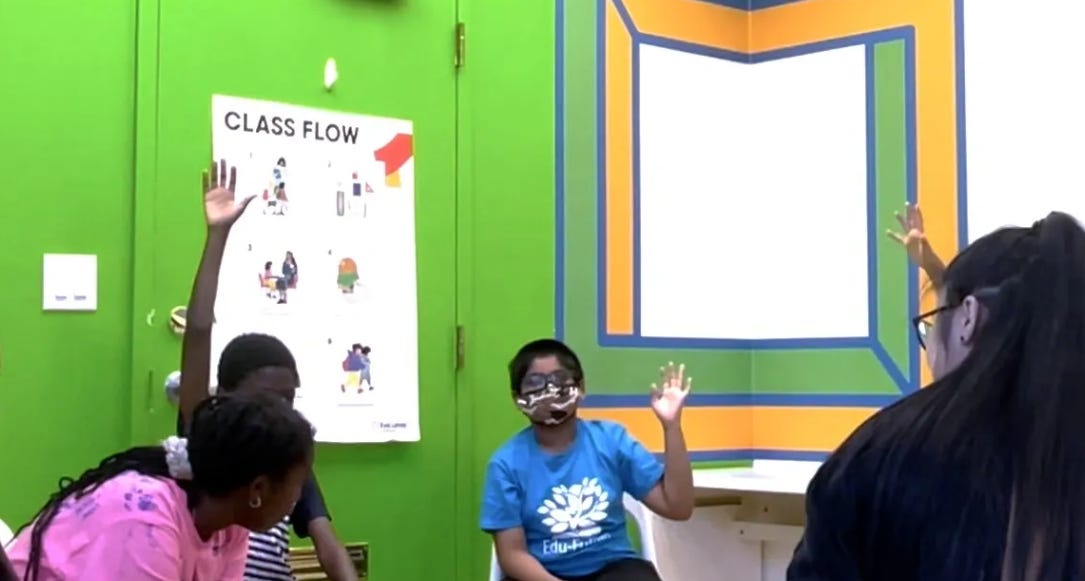
But I think the strengths that it has are perfect for what we're doing — the first being that it really effectively blocks out distractions. See, maths is quite hard for a lot of kids, especially the kids we're targeting - including neurodivegent learners and children living or working in difficult environments. And so the first thing they want to do is look out the window or look at their phone. With XR, they're kind of cordoned off in the learning experience. So ironically, that's an advantage.
The second thing is, we're using hand tracking. So it makes the process of learning math—and in our game, we’re walking across the perilous bridge from arithmetic to algebra—it makes that process very tactile. You’re literally manipulating numbers and operators with your hands. Like lego, almost.
And then finally - and this is buzzword is completely overused at this point so forgive me - there’s the immersion. VR makes everything a lot more immersive. So as you're doing operations, the entire—it's an underwater environment—and the entire environment is mimicking, mirroring, and reinforcing the association between the math that you're doing and the real life expression of it.
Chris: So if you don’t mind me asking, where does this passion for kids come from?
Femi: I think it's probably just a sense of obligation, really. I remember when I was a kid, and I wasn't very good at math or science—or really any other subject—but I was a skilled drawer.
At one point, my teachers were telling my mom, because I was doing so badly in school, to send me to a specialist school just for doing art and not to do other stuff. But I was very fortunate that I had a number of teachers and specific adults, actually even outside of the school system, who intervened at critical moments and completely changed the course of my life. I would say they advanced my career opportunities but career is too small a word. It touched a lot of parts of my life. I wasn't on track to go to Oxford, that's for sure!
Source: https://shepherdxr.com/
On top of that, I would say just that sense of curiosity, that spark, and then feeding that spark. I think I'm just incredibly fortunate and lucky that some people went out of their way to intervene in my situation. It's kind of a scary thought to think that there might not be enough people in our generation who are doing that for the next generation. That’s a big part of what drives me.
Chris: What advice would you give to someone who's just getting into the industry versus someone who is a seasoned professional?
Femi: I think the first thing is to just know your audience, I guess, and be careful who you speak to for input. One general pitfall is asking advice and input from your peers when your peers aren't your audience. Every person I speak to, every adult I speak to about XR, when I say we're doing the math stuff in VR, they always go, "Oh," and it's sort of like a doubting, questioning confusion, like, "Oh, is VR really worth it for teaching math to kids?"
In fact, I actually find that the more technical someone is, the more doubt there is about what we’re doing versus excitement. But then, whenever I tell a kid we're doing a game in VR, their immediate reaction is, "Wow!!! That’s sooooooo cool.” They just want to play—plus VR is new, it's cool, it's immersive. So, if I spent all my time around adults, I'd be pretty discouraged!
Which links to a broader point: just drowning out the noise, or not letting the noise drown you.
Another thing is being really clear on scope and being ruthless with scope because there's just so much that's new about the format. Whether it's the interaction schema that you have to use, there's a lot that's new—not just for the developer—but also for the person, the student who's going to use it. They have to learn it all too.
You have to really ruthlessly narrow down the kind of option set so that somebody who's brand new to XR doesn't have to learn a bunch of, you know, twenty different controls just because we thought it would be cool for our menu selection.

Source: https://www.new.ox.ac.uk/femi-fadugba
I think that goes for all parts of the experience. We're still figuring out how to tell stories in XR. We've got almost a century of film legacy, decades of people refining the format. At this point, we've gone past perfecting the medium of film if you ask me. You see a lot of films these days like Barbie, all these kinds of TV shows like I May Destroy You, Metamodernism is like the coolest genre now—Black Mirror is a great example—which is a genre that says, it’s not just about critiquing things about life and society anymore, let’s go beyond that now, and deconstruct the medium of film itself. Films now are very self-referential because film has become so developed and mature that all we're left to do now is kind of deconstruct it, versus continue constructing it. Whereas XR is in a place where we're still constructing things, still figuring it out for the first time.
I think that's exciting on one hand, but it also means you've got to be pretty humble. If you try and do a bunch of things all at the same time, one or two things might work, but chances are most of it won't—just because that's where we are.
Chris: Fascinating—so, what excites you most about the industry?
Femi: I think, to me, the most interesting feature of XR is identity. What levers can you pull—positive levers, I should say—with identity. It's exciting and scary. It's powerful, therefore terrifying too.
Don’t get me wrong, XR is still a form media - i.e. there's still something intermediating the experience between the person who's using it and whatever they're meant to be experiencing on the other end. You have this headset that's doing it, but it's about as close to an embodied experience as we've gotten. At times, it really feels like there’s no medium just there - just you and (a new) reality.
If you're watching TV, the characters are on the screen and they're completely separate characters with their own lives. If you're playing a video game and you're Batman or Lara Croft—even if it's a first-person shooter game—it is meant to be you, but you're still ultimately looking at somebody else. You feel as if you're controlling someone else remotely.
Whereas with XR, you are in their eyes and hands - you’re walking in their shoes so to speak - and so you feel embodied. At one with the avatar. I think therefore asking the question of what that can really do when it comes to shaping identity is the most powerful aspect of VR.
With storytelling, any author's primary goal—the holy grail really—is to tell a story that transforms someone, transforms how they see themselves, and therefore how they identify, how they behave, and what impact they have on the world.
This format is going to introduce all kinds of levers to do that. And I just pray that the good guys get there first.
—-
For more info on Femi and his work,
Please visit his Linked-In here (@Femi_Fadugba)
Visit his company’s website, Shepherd XR: here
Buy his first critically acclaimed book, The Upper World click here
or his recently published NEW BOOK, the sequel: The Mirror World: here
Source: Penguin
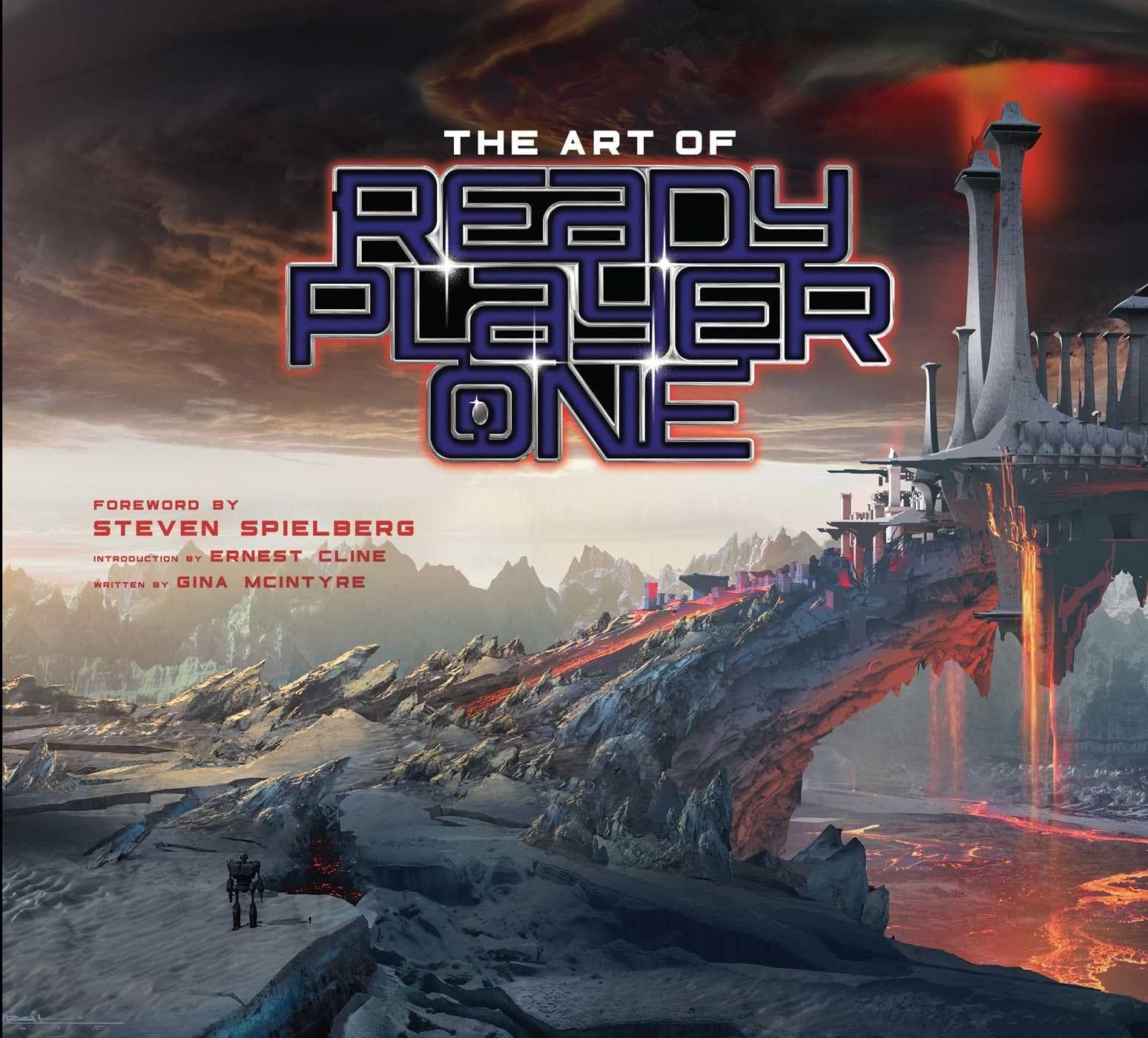
From the publisher’s website:
Discover the captivating art of Steven Spielberg’s Ready Player One.
Our dystopian world lies on the brink of chaos and collapse, but the people have found their salvation in the OASIS, an expansive virtual reality universe created by the brilliant and eccentric James Halliday. When Halliday dies, he leaves his immense fortune in the form of a digital Easter egg hidden somewhere in the OASIS, sparking a contest that grips the entire world.
Wade Watts, an unlikely young hero, decides to join the contest and embarks on a reality-bending treasure hunt through a fantastical world of action, danger, and mystery.
Directed by Steven Spielberg and based on author Ernest Cline’s internationally best-selling book, Ready Player One is a hugely imaginative sci-fi adventure set in a rich virtual world. The Art of Ready Player One explores the creation of the incredible design work for this much-anticipated film, showcasing a wealth of concept art, sketches, storyboards, and other stunning visuals. The book also features exclusive interviews and commentary from the creative team, forming the perfect companion to one of the most exciting films of 2018.
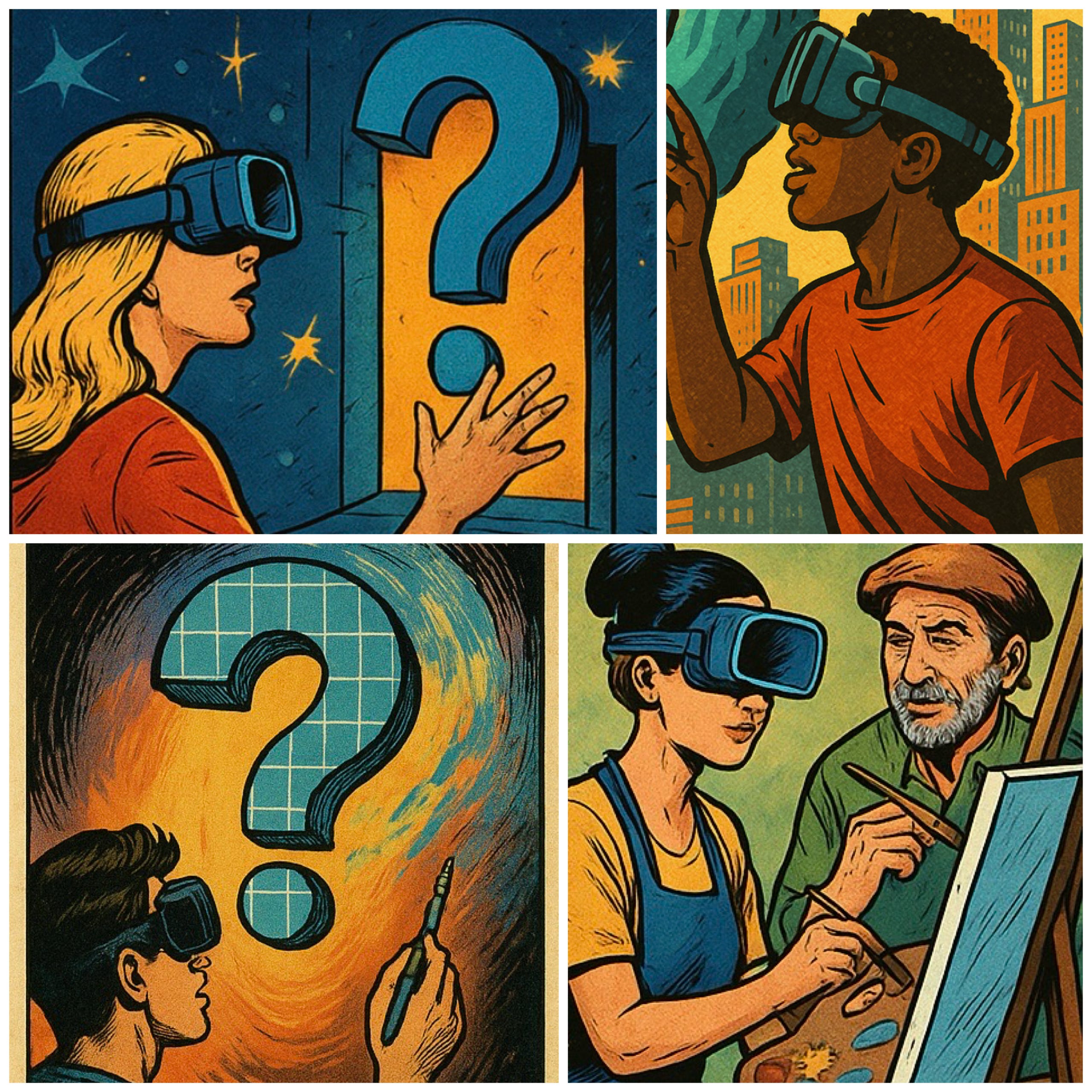
1. If you had the opportunity to speak with a superhero through a fun virtual or mixed reality experience, what would you both do—fly with Superman, climb buildings with Spider-Gwen, or ________—and what advice would they give you for taking your next step toward conquering a current challenge you’re facing?
2. If you painted alongside Picasso, Frida Kahlo, or ________ through a virtual or mixed reality experience, what meaningful question would you ask them unrelated to art while painting together?
3. What assumptions about virtual or mixed reality are worth challenging in order to spark provocative new insights?
4. What question could you ask right now about XR that would ignite excitement to discover the answer later?
-Chris von Spitzer
For more QQs to enrich and enhance your creative thinking, follow me on X @letsaskqqs
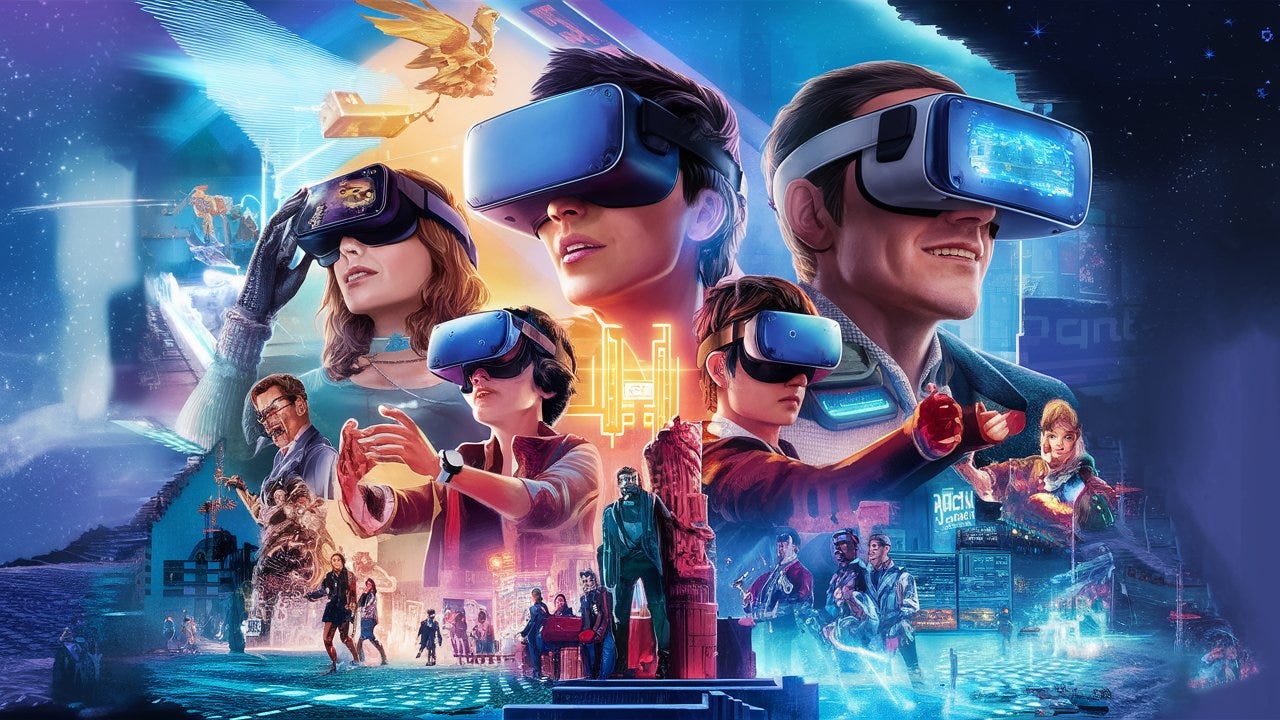
Boston VR is committed to fostering a welcoming and innovative community for XR enthusiasts and professionals.
Whether you're a developer, creator, researcher, or just plain curious, we're excited to explore the future of XR with you.
For more detailed discussions and to share your thoughts or experiences, don't hesitate to join us at our next meetup or reach out through our community channels.
See you in the virtual world!

To join, click here
Email Casey We need help with marketing, event planning, dev jams, sponsorship, and more!
AMXRA is the premier medical society advancing the science and practice of medical extended reality, https://amxra.org/.

AMXRA has generously committed to being a premium sponsor for Boston VR over the coming years. We are immensely grateful for their support and partnership in exploring the forefront of XR technology.


No posts
Comments
Nothing yet. Say the first thing.
Sign in to join the conversation.